

You know that moment when you walk into your bedroom, look around, and think, why does this still feel like the leftover room? The laundry basket is lurking in the corner, the lighting is doing you zero favors, and the whole space feels more random than restful. I’ve been there. And honestly, it’s such a missed opportunity, because your bedroom should be the one place that gives you a little exhale at the end of the day. The good news is you do not need a giant suite or a designer budget to make it feel better. A thoughtful remodel can shift everything. Better layout. Softer lighting. Smarter storage. Materials that feel warm instead of cold. And those little details that make the room feel pulled together, not staged. In this post, I’m sharing 17 master bedroom remodel ideas that feel elevated but still livable. Think sanctuary, not showroom. Some are bigger upgrades, some are simple switches, and all of them can help your room feel calmer, prettier, and way more you. Here’s what actually works.
Start With a Layout That Lets the Bed Breathe
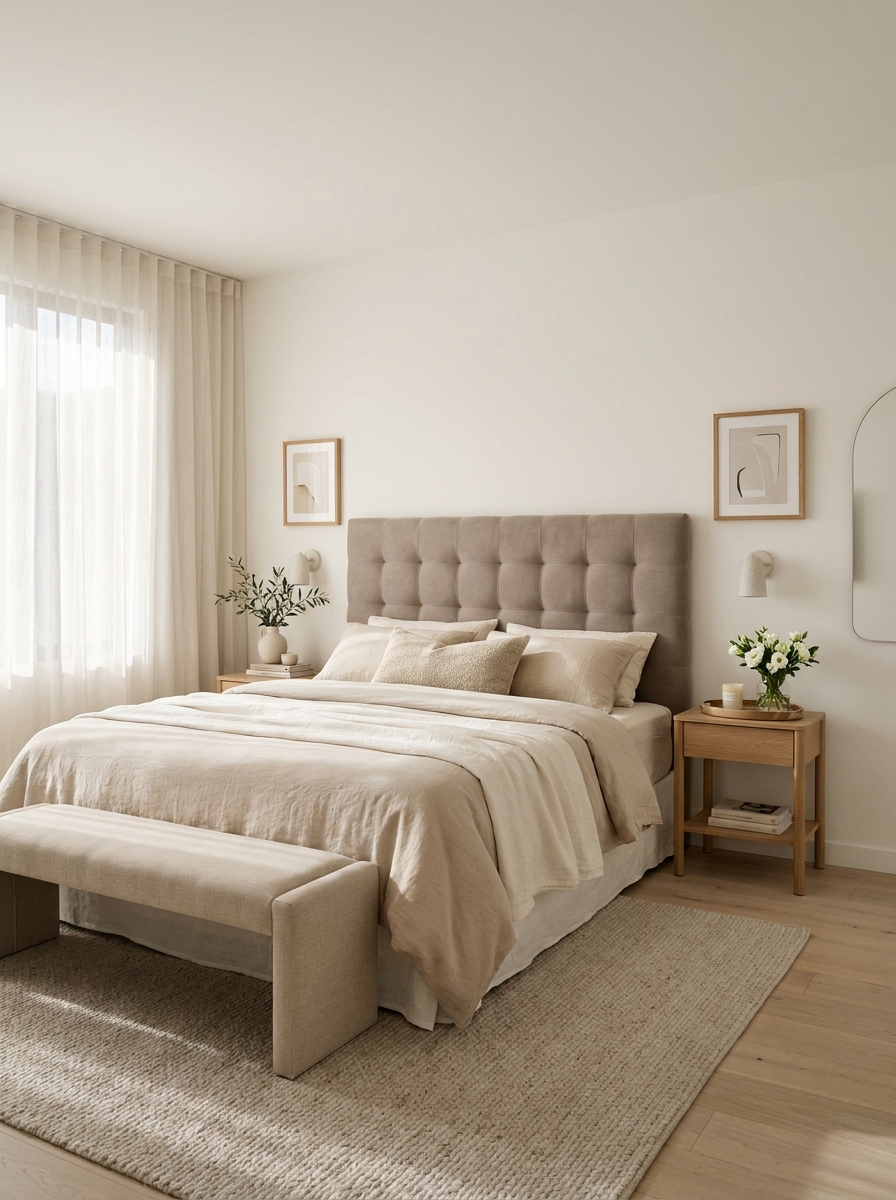
If your room feels off, the layout is usually the first thing to blame. I see this all the time. The bed gets shoved wherever it fits, nightstands are squeezed in like an afterthought, and walking around the room becomes a weird obstacle course. A remodel is the perfect time to reset that. Give the bed the best wall, let it sit centered if you can, and make sure there’s enough space on both sides to move comfortably. That one change can make the whole room feel more expensive. Truly. Symmetry calms the eye, and in a bedroom, that matters more than people think. You want the room to feel grounded the second you walk in. And don’t forget the view lines. What do you see from the doorway? From the bed? From your bathroom if it connects? A good layout makes every angle feel intentional. Even in a smaller primary bedroom, you can create breathing room by removing bulky pieces that don’t earn their keep. Less furniture, better placement, bigger impact. It’s not magic, but it kind of feels like it.
Pro Tip: Leave at least 24 to 30 inches of walking space around each side of the bed so the room feels open instead of cramped.
Choose an Oversized Headboard Wall for Instant Presence

A statement headboard wall changes the whole mood of a bedroom. It gives the room a clear focal point, which sounds very designer-y, but really it just means your eye has somewhere lovely to land. Upholstered panels, wood slats, limewash paint, or even a dramatic painted accent wall can make the bed feel anchored instead of floating. My favorite version is a tall upholstered headboard that stretches wide enough to visually connect the nightstands. It feels custom. It feels expensive. And it softens the room in a way plain drywall just can’t. If you want that boutique hotel look, this is such a strong move. But there’s also room to play. Maybe your style leans organic modern and you want vertical white oak slats. Maybe you love a tailored look with channel tufting in a warm mushroom fabric. Either way, scale matters. Go bigger than feels safe. Small headboards tend to disappear, especially once pillows pile on. A remodel is your chance to create real presence behind the bed, not just fill a blank wall and call it done. Let that wall do some heavy lifting.
Pro Tip: Mount your headboard or wall treatment at least 6 to 12 inches wider than the bed on each side for a custom built-in look.
Layer Lighting Like You Actually Live There

One lonely ceiling fixture is not going to make your bedroom feel like a sanctuary. It’s just not. Bedrooms need layers of light so the room works in real life, not only at 2 p.m. on a sunny day. Think overhead lighting for function, sconces or lamps for reading, and softer glow sources that make the room feel calm at night. This is one of those remodel ideas that sounds small but changes everything. Dimmer switches alone are worth the effort. They let you shift the mood in seconds, and suddenly your room feels softer, warmer, and more forgiving after a long day. I also love mixing fixture types so the room feels collected. Maybe a pretty flush mount overhead, sculptural bedside sconces, and a petite lamp on a dresser across the room. That balance keeps the space from feeling flat. And if you’re reworking wiring anyway, add outlets where you actually need them. No more awkward lamp cords sneaking across the room like tiny little trip hazards. Better lighting is practical, yes, but it’s also emotional. It tells your nervous system to calm down. That matters.
Pro Tip: Put every bedroom light source on a dimmer, including sconces, so you can shift from bright morning energy to soft evening calm.
Bring in Built-In Storage That Hides the Chaos
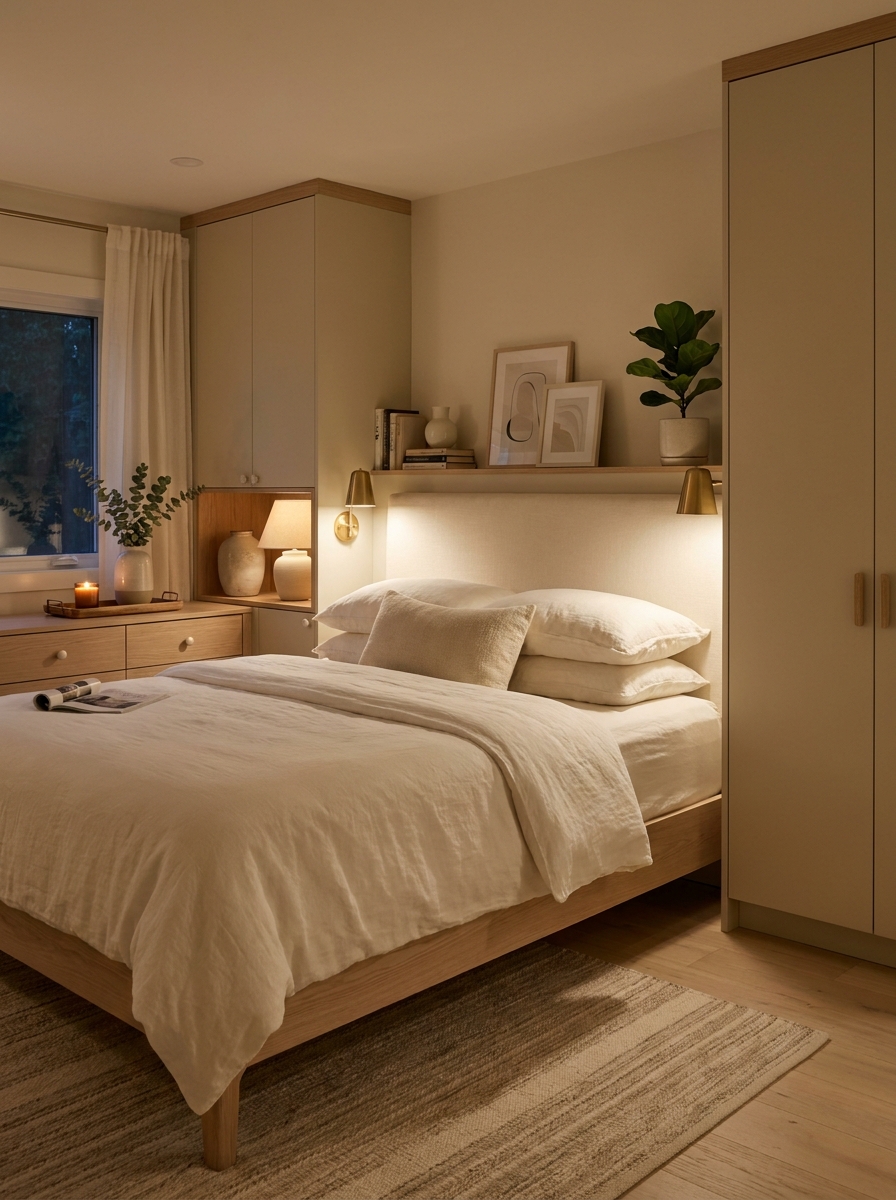
Nothing ruins a calm bedroom faster than visible clutter. I mean it. Piles on the dresser, shoes hiding in corners, random chargers everywhere. Built-in storage can fix so much of that without making the room feel heavy. A wall of shallow wardrobes, custom drawers under a window, or sleek cabinets flanking the bed can make the space feel finished and way less stressful. And here’s the thing: built-ins don’t have to look traditional or bulky. Done right, they disappear into the architecture. That’s the sweet spot. You get more function without adding visual noise. If your room doesn’t have a great closet, this remodel move is huge. Even a simple bank of lower drawers under a TV or beneath a window can free up so much space. Use touch-latch doors, paint them the same color as the walls, and keep hardware minimal if you want a cleaner look. Then style just the open surfaces with intention. A lamp, a vase, maybe a stack of books. That’s enough. When storage works quietly in the background, the whole room feels calmer. And honestly, calmer is the dream.
Pro Tip: Paint built-ins the exact same color as your walls to make them blend in and keep the room feeling spacious.
Swap Basic Flooring for Something Warm Underfoot
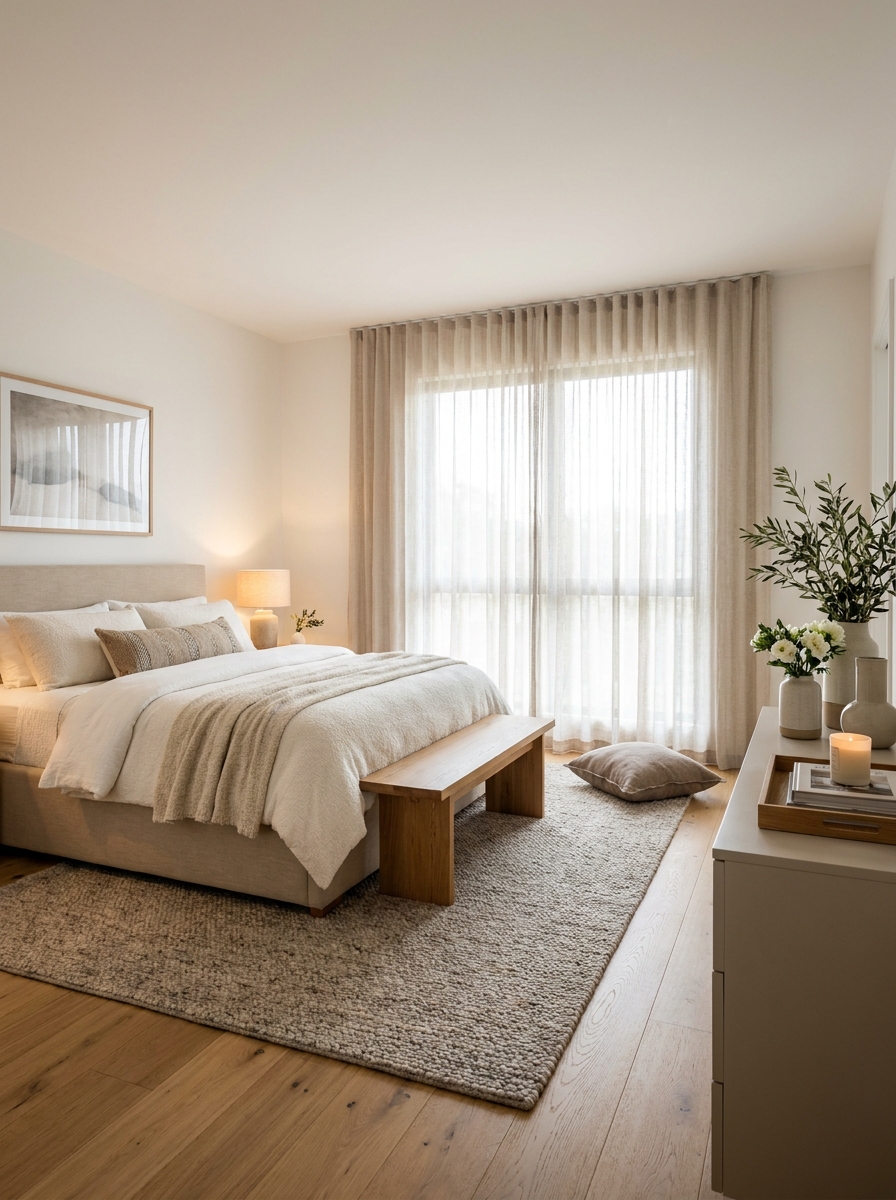
Flooring matters more in a bedroom than people expect. You feel it first thing in the morning, and that little sensory moment sets the tone. If your current floor is cold tile, scratched laminate, or a tired carpet that has seen too much life, a remodel is the time to upgrade. Wide-plank wood, quality engineered oak, or even a plush carpet in the right tone can make the room instantly feel more grounded. I lean toward warm wood whenever possible because it works with so many styles and ages beautifully. Then I layer a large rug underneath the bed so the room feels softer and more finished. The rug should support the room, not steal the show. And yes, practicality matters. Bedrooms need flooring that’s easy to clean and quiet to walk on. If you love the look of hardwood but want extra comfort, pair it with a thick rug pad and a larger area rug that extends past the bed. It feels better, looks better, and softens sound too. One material swap, and suddenly the room feels less builder-basic and more deeply considered. That’s the kind of remodel choice you never regret.
Pro Tip: Choose planks with a matte or low-sheen finish so your bedroom floors feel softer and hide dust better in everyday life.
Use a Calm Color Palette That Doesn’t Fight You

Paint can do a lot of heavy lifting in a master bedroom remodel. And no, it doesn’t have to be all-white to feel calm. The trick is choosing colors that lower the visual noise. Soft greige, warm mushroom, dusty blue, muted sage, creamy beige. These shades have enough depth to feel intentional but not so much that they start shouting from the walls. A soothing palette helps every other element look better too. Bedding feels richer. Wood tones look warmer. Metal finishes stand out in a softer, more elegant way. It’s all connected. If you’re unsure where to start, look at the undertones already in your room. Flooring, stone, fabrics, and even your natural light will tell you what works. North-facing rooms often like warmer neutrals. Bright sunny rooms can handle cooler softness without feeling icy. And if you love contrast, bring it in through accents instead of the whole envelope. A bedroom should never feel like it’s arguing with itself. The best palettes feel cohesive and a little quiet. Like they know exactly what they’re doing, which is honestly the dream for any room.
Pro Tip: Test paint on at least two walls and look at it in morning, afternoon, and evening light before committing.
Add a Sitting Area, Even if It’s a Tiny One

There’s something about a bedroom seating area that instantly makes the room feel more grown-up. Not fussy. Just complete. And it doesn’t need to be a huge lounge setup with a fireplace and a chandelier situation. Sometimes one beautiful chair, a small table, and a lamp by the window are enough to create a quiet little zone that feels special. This works especially well in larger primary bedrooms that have awkward empty corners. Instead of letting that space become a dumping ground for half-worn clothes, give it a purpose. Reading, morning coffee, a place to sit while putting on shoes. Real life stuff. If the room is tighter, try a petite slipper chair or a slim bench with a side table. Keep the scale light so the bed still leads the room. That balance matters. You want the sitting area to support the sanctuary feeling, not compete with it. And honestly, even if you only use it a few times a week, it changes how the room feels every single day. It says this room is meant for more than sleeping. It’s meant for slowing down.
Pro Tip: Anchor a small sitting area with a compact chair and table near natural light so it feels intentional instead of like leftover furniture.
Make the Ensuite Connection Feel Like a Spa Flow

If your bedroom opens into an ensuite, that transition matters more than most remodel plans give it credit for. You don’t want the bedroom to feel lovely and then suddenly hit a jarring bathroom with harsh light and zero softness. The spaces should talk to each other. Not in a matchy-matchy way, but in a calm, connected way. Start with materials and tones. Maybe the bedroom has warm oak, brushed brass, and creamy textiles, so the bathroom echoes that with oak cabinetry, soft stone, and warm metal details. Even repeating one color or finish can make the whole suite feel more intentional. And think about what you see from the bed. Is it a pretty vanity light and a beautiful tile floor? Or is it towels on the floor and a bright toilet paper tower situation? Be honest. A remodel lets you improve those sight lines with pocket doors, better lighting, or a partial wall where needed. I love when the bedroom and bath feel like one longer exhale. That’s luxury to me. Not just nice materials, but a sense that every transition has been thought through and softened.
Pro Tip: Use one repeating finish, like brushed brass or warm oak, in both the bedroom and ensuite to create a seamless suite feeling.
Upgrade Window Treatments for Softness and Privacy

Window treatments are one of those details people leave until the end, and then wonder why the room still feels unfinished. I get it. They’re not as exciting as a new bed or pretty sconces. But they make a huge difference. The right drapery adds height, softness, and that cocooned feeling every bedroom needs. I almost always suggest hanging panels higher and wider than the window frame. It makes the ceilings feel taller and lets more light in during the day. And if privacy matters, which in a bedroom it usually does, layer drapery with shades so you get both softness and function. Fabric matters too. Linen blends, light filtering textures, and lined panels all change how the room feels. You want drapes that fall well and look substantial without becoming heavy. A remodel is a great time to add recessed tracks or custom rods if you want a cleaner finish. And yes, blackout lining can still look beautiful. Your bedroom should feel dreamy in the evening and gentle in the morning. Good window treatments help with both. They’re not extra. They’re part of the whole mood.
Pro Tip: Mount curtain rods 8 to 12 inches above the window frame and extend them beyond the frame for a taller, fuller look.
Mix Refined Finishes So the Room Feels Collected

A beautiful bedroom usually isn’t built on one finish repeated over and over. It has a little contrast. A little tension. That’s what gives it depth. Maybe you pair warm oak with matte black lighting, or creamy upholstery with brushed brass hardware and a stone-top dresser. Those layers make the room feel designed, not one-note. The key is keeping the mix intentional. Choose two or three main finishes and repeat them just enough that the room feels connected. Too many, and things start getting noisy. Too few, and it can look flat. It’s a balancing act, but a very doable one. I especially love mixing soft and hard surfaces in a bedroom. Upholstery, linen, wood, metal, maybe a touch of marble. The contrast feels rich without needing bold colors or flashy decor. And because bedrooms are all about comfort, those materials should still feel warm and approachable. Nothing too cold or precious. A remodel is the perfect time to upgrade the little finish details that quietly shape the whole room. Drawer pulls, lamp bases, mirror frames, hardware. Tiny things, yes. But together? They make the room feel layered, calm, and very much finished.
Pro Tip: Stick to one wood tone, one warm metal, and one dark accent finish to keep your mix polished instead of chaotic.
Wrap the Room in Real Texture, Not Just More Stuff

One of my favorite remodel moves is adding texture in ways that make the room feel rich without making it feel crowded. A master bedroom should feel soft the second you walk in. That usually comes from the quiet layers you can see and touch. Think limewash walls with a cloudy finish, a slatted wood ceiling detail, plaster-like nightstands, or a boucle bench that breaks up all the smooth surfaces. When every finish is flat, even a pretty room can feel a little lifeless. Texture is what gives a bedroom that deep exhale feeling. It catches light. It softens corners. It makes a neutral palette feel intentional instead of boring. I love mixing one nubby fabric, one natural wood tone, one matte finish, and one slightly polished surface so the room feels balanced and grown-up. It is subtle, but it changes everything. The key is restraint. You do not need ten materials fighting for attention. A few beautiful textures repeated around the room will make the whole space feel calm, expensive, and very pulled together. It is the difference between a room that looks decorated and one that feels like a sanctuary.
Pro Tip: Choose four main textures for the whole room, then repeat each at least twice so the space feels layered but still calm.
Carve Out a Quiet Corner for Getting Ready Without the Bathroom Rush

If you have the square footage, a dedicated getting-ready spot inside the bedroom is such a dreamy upgrade. I am talking about a small vanity moment, not a harsh makeup station that feels clinical. It can be as simple as a slim desk, a beautiful mirror, a cushioned stool, and one really good drawer for the things you reach for every day. Suddenly the room works harder, and your morning feels less chaotic. What I love most is how personal this area can feel. It is where perfume lives. Jewelry gets a proper home. A little dish holds the earrings you take off at night. It adds a soft ritual to the room, which is exactly what a sanctuary should do. And if you place it near a window, the natural light is a total game changer. Keep the styling clean so it still feels restful. A cluttered vanity can pull the whole room out of calm mode fast. Think one tray, one vase, one lamp, and only the essentials out on display. Pretty and practical is the sweet spot here.
Pro Tip: Install a drawer outlet inside the vanity so your hair tools can charge out of sight instead of taking over the surface.
Give the Ceiling a Job Beyond Just Existing

Ceilings get ignored all the time, and honestly, they are such a missed opportunity in a bedroom remodel. When the room needs a little more architecture, look up. A subtle beam treatment, wood paneling, wallpaper, or even a soft tonal paint shift can make the whole space feel more finished. It draws the eye upward and gives the room that custom, designed-on-purpose feeling. This is especially helpful in bedrooms that feel boxy or plain. A ceiling detail can add warmth without taking up any floor space. I love a pale wood treatment in a modern room, or a soft wallpaper with barely-there pattern in a more tailored space. It creates interest in a way that still feels restful. Nothing too loud. Just enough to make the room memorable. You want it to support the sanctuary vibe, not steal the show. Think of the ceiling as the fifth wall that quietly helps the whole room feel wrapped up and complete. It is one of those remodel ideas that people do not always think of first, but once it is done, the room feels instantly elevated.
Pro Tip: Paint crown molding and ceiling the same soft tone if you want the room to feel taller and more seamless around a decorative ceiling treatment.
Rework the Closet Entry So It Feels Seamless and Intentional

A bedroom can be beautiful, but if the closet entry feels awkward, the whole flow gets a little clunky. This is one of those remodel details that makes daily life so much easier. Maybe that means widening the opening, replacing a basic hinged door with something cleaner, or framing the entry so it feels connected to the bedroom design instead of tacked on. Small change, huge payoff. I love when the path from bed to closet feels easy and graceful, especially in a primary suite. No weird door swing. No cramped corner. No visual interruption that breaks the calm. Arched openings, slim pocket doors, fluted panels, or even a beautifully cased doorway can make the transition feel polished. It is practical, yes, but it also changes how luxurious the room feels. The best part is how this kind of remodel move cuts down on visual stress. When storage zones are easy to access, the bedroom stays tidier without much effort. And that is really what a sanctuary needs. Less friction. Better flow. A room that supports you from sleepy morning to tired evening without making you work for it.
Pro Tip: Measure the full door swing and walking path before choosing a closet door style so you do not block nightstands, benches, or dressers.
Build in Sound Control So the Room Actually Feels Peaceful
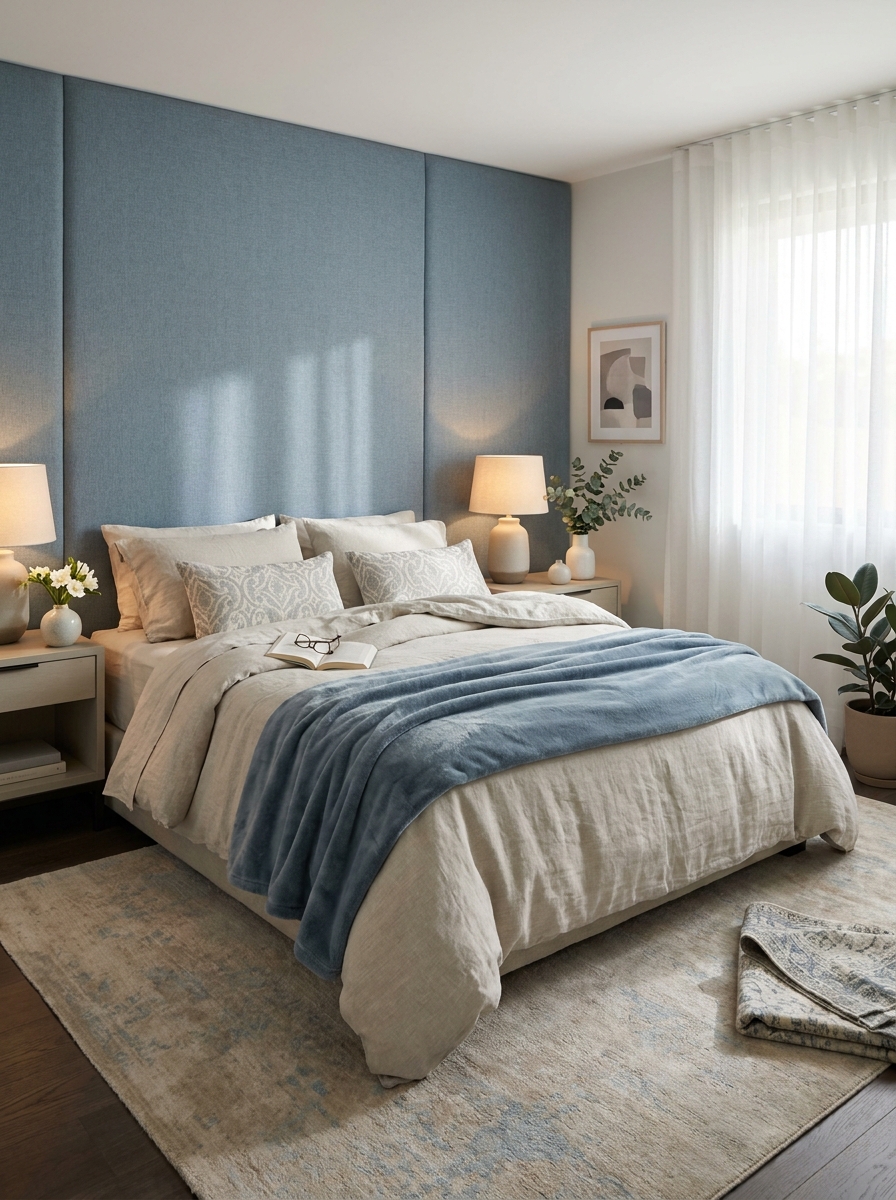
This one is not flashy, but wow, it matters. If your bedroom picks up hallway noise, bathroom echoes, or every little sound from the street, the space never fully settles. A remodel is the perfect time to think about acoustics. Better insulation, solid-core doors, upholstered wall panels, thicker drapery, and even strategic millwork can help absorb sound and make the room feel softer in every way. There is something deeply luxurious about a bedroom that feels hushed. Not silent in a weird way. Just calm. Protected. Like the outside world got turned down a few clicks. It changes how you sleep, how you read, and how you wind down at night. I think people often chase the visual side of a sanctuary and forget that sound is part of the mood too. You do not have to turn the room into a recording studio. Even a few smart upgrades can make a dramatic difference. If the room feels less echoey and more cocooned, your finishes look better too because the whole space reads as warmer and more intimate.
Pro Tip: If you are replacing the bedroom door, choose a solid-core version and add quality weatherstripping to cut down noise fast.
Introduce a Fireplace Feature That Turns the Bedroom Into a Retreat
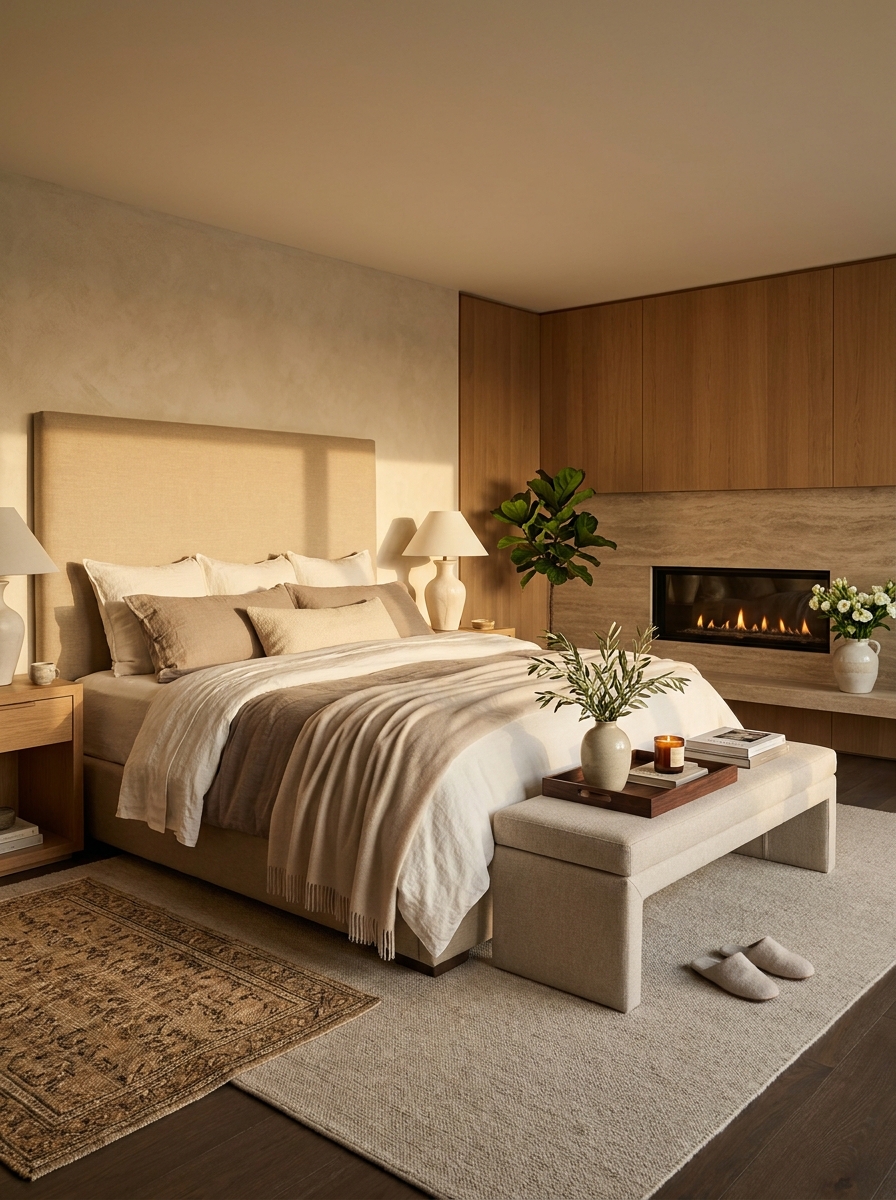
A bedroom fireplace is one of those remodel ideas that instantly makes the whole suite feel special. Even a sleek electric version can bring that soft, cocooning glow that makes you want to climb into bed early with a book and never leave. It gives the room a focal point beyond the bed and adds a layer of comfort that feels very grown-up and a little indulgent. I especially love a fireplace opposite the bed or tucked into a quiet corner with a simple mantel or stone surround. It does not need to be ornate. In fact, the cleaner the design, the more relaxing it feels. A floating hearth, plaster finish, or slab stone detail can make it look beautifully built-in and modern. It adds warmth visually, even when it is not on. The trick is keeping the styling restrained. Let the fire be the mood-maker. A couple of objects on the mantel, maybe one piece of art, and that is enough. You want the room to feel restful, not themed. When done well, this feature makes the bedroom feel less like just a place to sleep and more like a private escape.
Pro Tip: Mount the fireplace low enough that you can enjoy the flame line from bed without craning your neck or breaking the room’s calm sightlines.
Use Bedroom Tech That Disappears the Moment You Walk In

I am all for convenience, but nothing kills a peaceful bedroom faster than cords, blinking lights, and screens shouting for attention. A smart remodel can hide the tech while keeping all the function. Think recessed outlets behind nightstands, motorized blackout systems tucked into clean pockets, hidden charging drawers, a Frame-style television, or integrated controls that do not clutter the walls. The goal is simple. You want the room to feel calm first and clever second. Technology should support sleep, comfort, and ease without becoming the main character. I love when the bedroom can shift with one tap from bright morning mode to soft evening mode, and yet you barely notice where any of it lives. This is especially important in a luxury-feeling space. Visual quiet matters. When surfaces stay clean and the little daily annoyances disappear, the whole room feels more expensive and more restful. It is not about adding more gadgets. It is about editing the visible noise so the bedroom keeps that sanctuary energy all day long.
Pro Tip: Put charging ports inside one drawer on each side of the bed so phones can power up overnight without sitting out in view.
Quick Guide
Quick Guide: DIY vs. Buy for a master bedroom remodel DIY: paint, curtain swaps, styling a bench, changing lamps, upgrading drawer pulls, adding peel-and-stick wallpaper inside a nook. Buy or Hire Out: custom headboard walls, electrical work for sconces, built-in storage, flooring installation, window treatment tracks, ensuite layout changes. Best splurge: lighting and a larger upholstered bed or headboard wall. Those pieces change the whole feel. Best save: decor accents, pillows, art, and bedside styling. Mix high and low and nobody will know. If your budget is tight, start with layout, paint, lighting, and textiles. That combo gives the biggest sanctuary effect without a full gut remodel.
The Room You End the Day In Matters
A master bedroom remodel doesn’t have to be dramatic to feel life-changing. Sometimes the shift is in the quiet things. Better lighting. Softer colors. A bed wall that feels grounded. Storage that keeps the mess out of sight. And those layered details that make the room feel like it belongs to a real person with real routines, not a catalog spread. That’s what I love most about these 17 ideas. They’re not about chasing perfection. They’re about creating a space that supports you. A room that helps you rest, reset, and maybe even enjoy folding that one basket of laundry a little more. Maybe. So if your bedroom has felt unfinished, overly practical, or just a little blah, take that as your sign to start. Pick one idea. Then another. Let the room evolve into something calmer and more beautiful over time. You absolutely deserve a space that feels like a retreat at the end of a long day. And if you’re planning your own remodel, save your favorite ideas and start building your sanctuary one thoughtful choice at a time.
Frequently Asked Questions
What are the best master bedroom remodel ideas for creating a relaxing sanctuary?
The best remodel ideas usually focus on layout, lighting, storage, and materials. Start with a centered bed wall, layered lighting, calming paint colors, and better hidden storage. Those changes make the room feel peaceful fast, even before you add decor.
How do I remodel a master bedroom on a budget without losing the luxury look?
Focus on the upgrades that change the feeling most: paint, window treatments, lighting, and bedding. You can fake a custom look with taller curtains, a larger headboard, and warm layered textiles. Save the big money for anything structural or electrical.
What colors work best for a modern master bedroom remodel?
Warm whites, greige, mushroom, soft sage, dusty blue, and creamy beige all work beautifully. They feel calm, easy to live with, and flexible with wood, brass, black, or stone finishes. The key is choosing tones that work with your flooring and natural light.
How can I make a small master bedroom feel more luxurious during a remodel?
Keep the layout simple and give the bed the best wall. Use fewer, better pieces, hang drapes high, add soft layered lighting, and choose furniture with cleaner lines. A small room can still feel very luxe when it feels intentional and uncluttered.