

You know that moment when you’re making the bed and have to do a weird little side-step just to get around the corner? Yep. Small bedrooms can feel cramped fast, especially when real life is happening in them. Laundry basket in one spot, nightstand stuffed with chargers, one chair doing the work of five. It doesn’t take much for a tiny room to start feeling tight and messy. But here’s the good news: a small bedroom doesn’t need more square footage to feel better. It needs better visual flow, smarter storage, and a few design moves that trick the eye in the nicest way. Think lighter layers, furniture that works harder, mirrors that bounce light around, and layouts that stop the room from feeling boxed in. This isn’t about creating a showroom nobody actually lives in. It’s about making your bedroom feel calm, pretty, and surprisingly roomy when you walk in at the end of the day. And honestly, that kind of makeover is my favorite. Here’s what actually works.
Start With a Layout That Gives You Real Walking Space

Before you buy one cute basket or swap a single pillow, look at the layout. Really look at it. In a small bedroom, the way you place the bed changes everything. If you’re squeezing past furniture every morning, the room will always feel smaller than it is. Usually, the biggest win is pulling the bed into the most natural position and clearing the path around it. That might mean centering it on the main wall, or pushing it slightly off-center so one side has a cleaner walkway. It sounds simple, but it changes the whole mood. Suddenly the room feels easier to move through, and your eye reads that openness first. I also like to be honest about furniture that’s just taking up air. That oversized bench. The bulky accent chair covered in half-worn clothes. Gone. In a compact room, every piece should earn its keep. Once the layout works, everything else feels lighter too. And that’s the magic. You’re not adding space, exactly. You’re removing friction. The room starts to breathe, and you do too.
Pro Tip: Leave at least 24 inches of walking space on one main side of the bed so the room feels comfortable instead of pinched.
Choose a Low-Profile Bed to Open Up the Whole Room

A tall, chunky bed can make a small bedroom feel top-heavy in about two seconds. That’s why I love a low-profile frame here. It keeps the sightlines open, lets more wall show, and somehow makes the ceiling feel a little higher too. It’s one of those quiet upgrades that does a lot without shouting. And no, low-profile doesn’t mean cold or flat. You can still have softness. An upholstered headboard in oatmeal linen or a simple wood frame with clean lines feels warm and modern without eating up visual space. Pair it with bedding that isn’t too puffy, and the whole room instantly reads calmer. There’s also something nice about how grounded a lower bed feels. The room looks less crowded because the furniture isn’t towering at different heights. If your bedroom already has awkward proportions, this helps smooth them out. It’s subtle, but powerful. Tiny rooms need that kind of design choice. Less bulk. More air. Honestly, once you see the difference, those big heavy bed frames start looking a little dramatic for no reason.
Pro Tip: Pick a bed frame with legs or a slim base under 14 inches high so more wall space stays visible and the room feels taller.
Paint It Light, But Not Flat and Boring
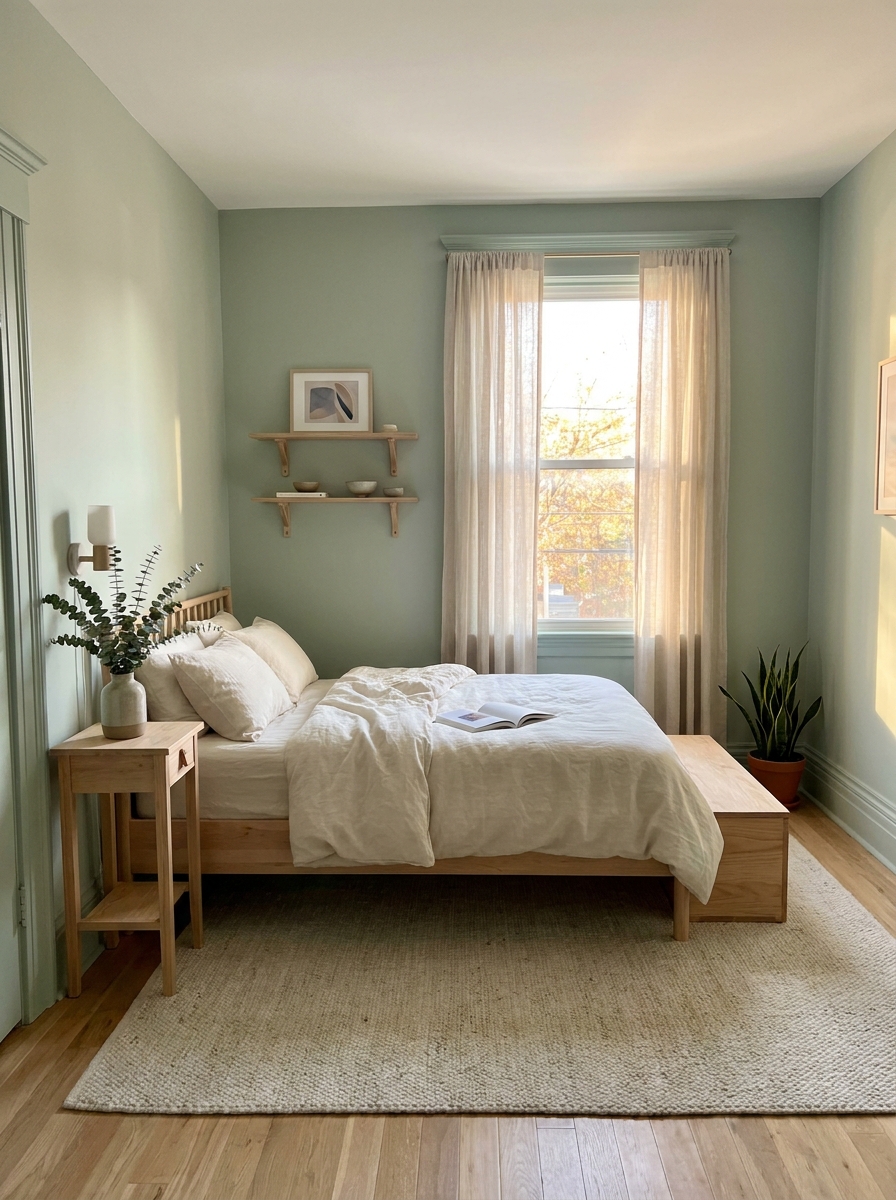
If you want a small bedroom to feel bigger, color matters. A lot. But that doesn’t mean everything has to be stark white and slightly depressing. The trick is choosing soft, light tones with a little warmth or softness in them, so the room feels open without feeling clinical. Think creamy white, pale greige, soft sage, dusty blue, or the prettiest mushroom tone. These shades bounce light around, blur hard edges, and make the walls feel less close. I especially love when the trim and walls are painted in a similar value. It keeps the eye moving instead of stopping at every contrast point. And here’s the part people skip: finish matters too. Flat paint can sometimes absorb light in a small room. An eggshell or soft matte with a tiny bit of reflectivity can feel gentler and brighter. Add in bedding and curtains close to the wall color, and suddenly the room feels layered instead of chopped up. It’s a quiet kind of luxury. Soft color, soft light, soft edges. Small rooms really respond to that.
Pro Tip: Test paint swatches on two walls and look at them morning and evening before choosing, because light changes everything in a tiny room.
Use One Large Mirror Instead of Lots of Tiny Decor
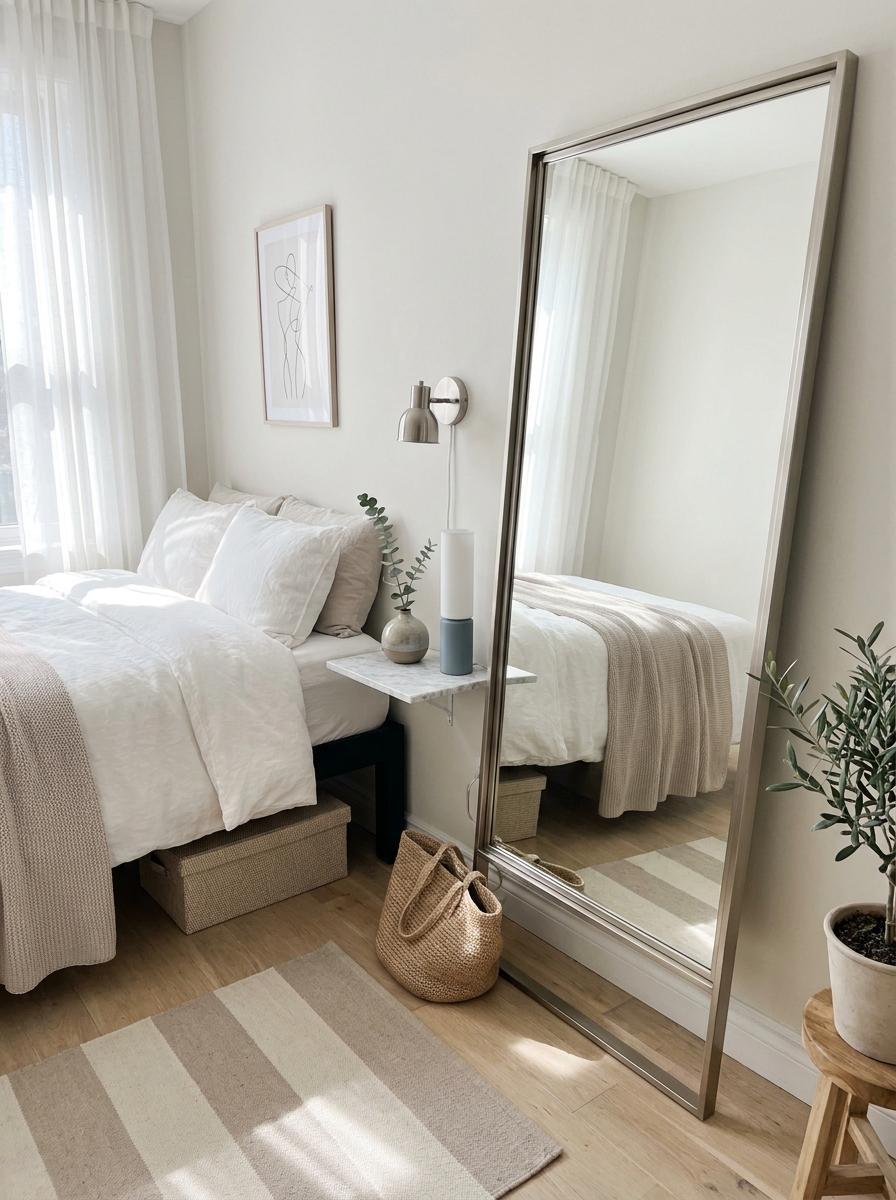
Tiny wall decor can make a small bedroom feel busy fast. A bunch of little frames, shelves, and cute extras might seem harmless, but visually they break the room into pieces. One larger mirror does the opposite. It reflects light, stretches the view, and gives the eye one strong thing to land on. I love a tall leaning mirror or a simple wall-mounted one with a thin frame. Put it across from a window if you can, or even where it catches the soft side light. That bounce is gold in a small room. It brightens shadowy corners and makes the whole space feel less boxed in. And yes, it’s practical too. You get the full outfit check without sacrificing floor space to a clunky vanity setup. My favorite mirrors in small bedrooms are clean and unfussy. Nothing too ornate, nothing too heavy. Let the reflection do the work. If the rest of the room is calm, that mirror almost acts like another window. Which, in a tiny room, is kind of a dream. Big impact, very little effort.
Pro Tip: Place a full-length mirror where it reflects natural light or the longest view in the room, not where it bounces back visual clutter.
Go Vertical With Storage So the Floor Stays Clear

Floor clutter is the fastest way to make a bedroom feel tiny. Shoes in the corner, baskets beside the dresser, random stacks that somehow become permanent. So when I’m trying to make a small room feel bigger, I look up. Vertical storage is your best friend here. Floating shelves, tall narrow dressers, wall hooks, and cabinets that rise instead of spread out all help keep the footprint lighter. You’re using the room’s height, which means more function without sacrificing walking space. And visually, that draws the eye upward. That’s always a win in a small bedroom. The key is keeping it edited. Vertical storage works beautifully when it feels intentional, not overloaded. A couple of baskets, a few books, one plant, maybe a box for things you don’t want to stare at every day. That’s enough. You want useful, but still calm. I’ve found that once the floor is mostly clear, the whole room shifts. It feels cleaner, yes, but also more grown-up. Less “where do I put this?” and more “oh, this actually works.”
Pro Tip: Install shelves 12 to 18 inches above your nightstand height so they feel useful without crowding your headboard area.
Swap Bulky Nightstands for Slim, Hardworking Pieces

Nightstands are sneaky space hogs. Especially the chunky ones with deep drawers and thick legs that look cute online but eat up half your bedside in real life. In a small bedroom, a slimmer piece almost always works better. Think narrow tables, floating shelves, or tiny cabinets with just enough storage for the things you actually use. You really don’t need a giant nightstand to hold a lamp, a book, lip balm, and your water glass. A pared-back piece keeps that area feeling open, and it gives your bed a little breathing room. I love wall-mounted options because they free up floor space underneath, which makes the room look lighter instantly. And if your bedroom is extra tight, don’t be afraid to mismatch a little. Maybe one side gets a floating shelf and the other side gets nothing at all. That’s okay. Good small-space design is about what the room needs, not what tradition says belongs there. The smaller the footprint, the more every inch matters. Tiny bedside furniture can make the whole room feel easier. Less crowded. Less fussy. More chic, honestly.
Pro Tip: Choose a nightstand under 14 inches deep so it doesn’t crowd the bed walkway or interrupt the room’s visual flow.
Layer Sheer Curtains to Let the Light Do the Heavy Lifting

Nothing shrinks a small bedroom faster than heavy window treatments that block precious light. If your room already feels tight, thick dark curtains can make it feel like it’s closing in by 4 p.m. Sheer curtains are such an easy fix. They soften the window, keep privacy, and still let the room glow. I love hanging them a little higher and wider than the actual window frame. That tiny trick makes the window look bigger, which makes the whole wall feel grander. And in a small bedroom, every visual illusion helps. Soft fabric moving with the breeze also adds that airy, relaxed feeling you want in a bedroom. You can still layer if you need darkness for sleep. Just keep the look light overall. A simple roller shade behind sheers works beautifully and doesn’t add bulk. The point is to make the window feel like an asset, not a heavy block on the wall. More light, softer edges, prettier mornings. It’s one of those changes that feels instant. You walk in and think, okay, why does this room suddenly feel twice as nice?
Pro Tip: Mount curtain rods 6 to 10 inches above the window frame and extend them beyond the sides to visually widen the wall.
Use Under-Bed Storage That Actually Hides the Mess

Let’s be honest. In a small bedroom, under-bed storage can either save the day or look like you shoved your life into the shadows and hoped for the best. The difference is in how intentional it feels. If it’s neat, concealed, and easy to access, it’s one of the smartest upgrades you can make. I’m a big fan of drawers, low bins with matching lids, or a lift-up bed if you really need serious storage. This is the spot for off-season clothes, extra linens, backup toiletries, gift wrap, or all those random things that don’t need to live in plain sight. Once they’re tucked away, the closet and dresser breathe a little easier too. What matters most is that it doesn’t look accidental. Bed skirts can help, but so can choosing containers that fit perfectly and disappear. No crammed plastic bins poking out at odd angles. We want calm, not chaos in hiding. The beauty of under-bed storage is that it gives you function without stealing visual space. And in a tiny room, that’s gold. Hidden storage is kind of like good shapewear for your bedroom. Supportive. Invisible. Very effective.
Pro Tip: Measure the clearance under your bed before buying storage, and leave one inch of extra height so bins slide out easily instead of scraping.
Keep Bedding Light and Simple So the Bed Feels Less Massive

The bed is usually the biggest thing in the room, so whatever you put on it matters more than people think. Heavy comforters, too many pillows, and thick layers can make a small bedroom feel swallowed. Pretty? Sometimes. Spacious? Not usually. I like bedding that feels soft and relaxed but visually lighter. A quilt, a coverlet, linen sheets, maybe one lumbar pillow instead of six giant shams. It still looks cozy, just not overstuffed. And when the bedding stays in the same color family as the walls, the bed blends in more instead of dominating the room. This is one of my favorite “less is more” moments. You don’t need hotel-level fluff to make a bedroom inviting. In fact, small rooms often look better with a cleaner bed silhouette. It feels fresher, calmer, and easier to maintain too. Which, honestly, matters. If making the bed feels like a wrestling match, you’re not going to love your setup for long. Light bedding keeps the room from feeling visually heavy. It’s a simple shift, but wow, it makes a difference.
Pro Tip: Use two sleeping pillows, one accent pillow, and one lightweight top layer to keep the bed looking soft without overwhelming the room.
Pick Furniture With Legs to Create More Visual Air

Furniture that sits flat on the floor can make a small bedroom feel heavy, even when the pieces themselves aren’t that large. Beds, dressers, benches, and nightstands with visible legs let you see more floor, and that tiny bit of openness matters. Your eye reads it as extra space. Sneaky, but effective. This doesn’t mean everything needs to look spindly or delicate. You still want substance. But pieces with raised bases feel lighter because they don’t create one solid block from wall to wall. Mid-tone wood legs, slim metal frames, and open-bottom storage all work beautifully in modern small bedrooms. I especially like this trick when a room feels visually crowded even after decluttering. Sometimes the problem isn’t stuff. It’s weight. Swapping just one or two grounded pieces for leggy ones can shift the whole balance. The room starts feeling less packed and more polished. Plus, there’s an everyday bonus: it’s easier to clean under things. Which is not glamorous, I know, but very real. More visible floor, more lightness, fewer dust bunnies staging a takeover. I’ll take that every time.
Pro Tip: Aim for at least 5 to 7 inches of visible clearance under one or two larger furniture pieces to help the floor feel more open.
Let One Wall Do the Work With a Quiet Focal Point

In a small bedroom, the eye needs somewhere calm to land. If every wall is trying to be interesting, the room starts to feel busy fast. I love choosing just one wall to carry a little extra personality. Maybe it is a soft panel molding detail, a painted arch behind the bed, or a subtle wallpaper with barely-there pattern. Nothing loud. Nothing shouty. Just enough to give the room shape. This works because it creates order. Your eye reads the room faster, and that weirdly makes it feel bigger. It also helps the bed look intentional instead of like it was just squeezed in because that was the only spot left. A gentle focal point adds depth without adding clutter, which is exactly what a tight room needs. The trick is keeping the rest of the space quiet and supportive. If your feature wall has texture or pattern, pull back on extra art and fussy color everywhere else. You want contrast, but soft contrast. Think simple, clean, and a little bit special. It is one of those remodel moves that changes the whole feeling of the room without stealing any actual square footage.
Pro Tip: Paint a tone-on-tone arch or rectangle behind the bed that is 6 to 8 inches wider than the headboard on each side to make the bed wall feel larger and more grounded.
Replace Swinging Doors That Eat Up Precious Room

This one is not the flashy makeover move, but wow, it matters. Regular doors need clearance to swing open, and in a small bedroom that space is kind of sacred. The door swings, the furniture shifts, and suddenly your best layout idea falls apart. Swapping a standard hinged door for a pocket door, a slim slider, or even a bifold in the right spot can free up room you did not realize you were losing every single day. I have seen this make a tiny bedroom feel instantly less awkward. You can place a dresser where the door used to hit. You can stop doing that little side-step dance near the closet. And the whole room starts working better because the edges are usable again. That is a huge deal in a small footprint. It also makes the room feel cleaner visually. Fewer interruptions. Better flow. More control over where things go. If a full remodel is already happening, this is absolutely worth considering. It is one of those behind-the-scenes changes that does not scream for attention, but you feel the difference the second you walk in. More function usually reads as more space, and this is a perfect example.
Pro Tip: If a pocket door is not possible, use a wall-mounted sliding door with slim hardware and paint it the same color as the wall so it visually disappears.
Build In a Headboard Wall That Hides the Little Stuff

When a small bedroom feels cramped, it is often because too many little things are floating around with nowhere to go. Chargers, books, glasses, water, that one candle you keep moving around. A built-in headboard wall can solve all of that without making the room feel stuffed. I love a shallow headboard surround with tiny niches, hidden outlets, and just enough ledge space to replace extra furniture. It feels sleek because everything is tucked into one clean zone. Instead of separate nightstands, cords, lamps, and random bedside clutter, you get one streamlined wall that works harder. That gives the room a more custom look, which weirdly makes it feel more spacious too. Built-ins always make a room seem thought-through, and thought-through spaces read bigger than chaotic ones. Keep the depth shallow so it does not crowd the bed. The goal is function without bulk. Soft wood, painted MDF, or a simple upholstered panel with integrated shelves can all work beautifully. Add warm lighting and suddenly the whole room feels polished, calm, and expensive in the best way. It is a smart remodel idea because it solves storage and visual clutter at the exact same time.
Pro Tip: Plan built-in niches at shoulder height when sitting up in bed so your phone, book, and water are easy to grab without needing extra bedside surfaces.
Use a Tonal Color Wrap So the Edges Blur in a Good Way

If you want a small bedroom to feel softer and bigger at the same time, try wrapping more of the room in one tonal color story. Walls, trim, closet doors, and even part of the ceiling can sit close together instead of breaking into lots of contrasts. It is such a simple idea, but it changes how the room reads. The edges do not stop your eye as quickly, so the whole space feels smoother and more open. I especially love this in awkward bedrooms with odd corners or low ceilings. High contrast can chop those spaces up and make every angle feel extra obvious. But when the tones are close, the room feels calmer and less boxed in. It is almost like the architecture relaxes a little. You still get depth, just in a quieter way. This does not mean everything has to match exactly. That can feel flat. The magic is in using neighbors on the same color strip, then bringing in texture through bedding, art, and a rug. A pale taupe wall, slightly lighter trim, and a soft dusty blue accent can feel dreamy without making the room busy. It is understated, but really effective.
Pro Tip: Paint the trim and closet doors just one shade lighter than the walls to keep definition while still creating that seamless, expanded look.
Quick Guide
Quick Guide: DIY vs. Buy in a Small Bedroom Remodel DIY: paint walls in a soft light color, raise curtain rods, declutter styling, swap bedding, and rearrange the layout. These changes are affordable and usually give the fastest visual payoff. Buy: a low-profile bed, slim nightstands, a full-length mirror, under-bed storage drawers, and wall sconces if your current pieces are too bulky. These are worth it when your furniture is the thing making the room feel cramped. Best budget order? Start with layout, paint, curtains, and bedding. Then upgrade furniture one piece at a time. That way the room starts feeling bigger early, even if the full remodel happens slowly.
## When a Tiny Bedroom Finally Starts to Exhale
A small bedroom can feel frustrating when it’s working against you. Too much furniture, not enough storage, awkward corners, bad flow. It adds up. But the lovely thing is that this kind of room usually doesn’t need a dramatic overhaul to feel better. It needs thoughtful choices. When you clear the walkways, lighten the palette, let in more light, and choose pieces that don’t crowd the room, the whole space shifts. It feels softer. Easier. Prettier in a way that actually supports your everyday life. And that’s the goal, right? Not a perfect showroom. Just a bedroom that feels calm when you walk in and functional when you need it to be. The best part is you don’t have to do all 14 ideas at once. Start with one thing that’s bugging you most. Maybe it’s the heavy bed frame. Maybe it’s the cluttered floor. Maybe it’s those curtains that are doing absolutely no favors. Small changes really can create that big, airy feeling. And once you see it happen, you’ll want to keep going.
Frequently Asked Questions
How can I remodel a small bedroom to make it look twice as big?
Focus on visual space first. A better layout, light wall color, slim furniture, mirrors, and clear floors make the biggest difference fast. You don’t need more stuff in the room. You usually need less bulk and better flow.
What colors make a small bedroom feel bigger and brighter?
Soft whites, warm greiges, pale sage, light mushroom, and muted blue tones work beautifully. They reflect light without feeling harsh. I’d skip anything too dark or too high-contrast if your main goal is an airy, expanded look.
What furniture works best in a very small bedroom remodel?
Low-profile beds, slim nightstands, furniture with legs, floating shelves, and tall narrow storage pieces are all great choices. They keep the floor more visible and use vertical space well. That combination helps the room feel open instead of crowded.
Is under-bed storage a good idea for a tiny bedroom makeover?
Yes, if it’s tidy and intentional. Matching drawers or fitted bins can hide a lot without adding visual clutter. It’s one of the easiest ways to gain storage in a small room without making it feel smaller.