

You know that moment when you step back from your front porch and something still feels off? The planters are cute, the wreath is doing its job, and the door color is lovely, but the whole space somehow floats instead of feeling finished. I’ve been there. And more often than not, the thing that’s missing is a rug that actually grounds everything. A front porch rug does so much heavy lifting. It can make a tiny stoop feel styled, help a wide porch feel pulled together, and give your entry that layered Pinterest look without needing a full makeover. And no, it doesn’t have to feel fussy or overdesigned. The right rug under the right pieces just makes the whole porch exhale. We’re talking about real styling ideas here. Things you can actually use whether you have a narrow front step, a pair of rocking chairs, or one stubborn concrete slab that’s begging for help. Some looks are classic. Some are a little more relaxed. All of them make the rug feel like the foundation, not an afterthought. Here’s what actually works.
Layer a Jute-Look Rug Under a Simple Welcome Mat

If your porch feels bare but you don’t want to overthink it, this is the easiest move. A larger jute-look or woven neutral rug underneath a smaller welcome mat instantly gives the entry more presence. It creates shape, softness, and that collected look you see in those porches that somehow always feel done. Even if all you have is one door, two planters, and a dream, this combo works hard. What I love most is how forgiving it is. A striped coir mat can sit on top of a soft-looking flatweave, and suddenly your plain concrete stoop has depth. The larger rug says, this is the zone. The smaller mat says, yes, people actually live here. It’s polished without being precious. And if you’re styling for real life, this layered approach makes things feel warmer right away. Add a wreath, maybe an old watering can, and you’re set. It doesn’t scream for attention. It just quietly makes the whole porch look intentional, which honestly is the sweet spot for outdoor decorating.
Pro Tip: Choose a base rug that’s at least 18 to 24 inches wider than your top welcome mat so the layered effect actually shows.
Use Stripes to Make a Narrow Stoop Feel Wider

Tiny porch? No problem. A striped indoor-outdoor rug can visually stretch a narrow stoop and make it feel more generous than it is. This trick is so simple, but wow, it changes the whole read of the space. Horizontal stripes pull the eye side to side, which helps a skinny entry feel less pinched and a lot more welcoming. I especially like this for townhomes or little suburban entries where you don’t have space for a full seating setup. The rug becomes the styling moment. Add one sharp planter, a clean-lined sconce, and maybe a slim basket by the door, and it feels thoughtful instead of cramped. Sometimes less really does look better. Keep the stripe soft and classic. You want movement, not chaos. Black and ivory is always a winner, but muted taupe or faded blue-gray can feel just as pretty if your exterior is lighter. And because stripes already bring pattern, you don’t need much else. Let the rug do the flirting. The rest of the porch can stay simple and still look pulled together.
Pro Tip: Run stripes across the width of the stoop, not front to back, if you want the porch to look visually wider.
Anchor Rocking Chairs With a Rug That Extends Past the Legs

A pair of rocking chairs without a rug underneath can feel like they were placed there five minutes ago. Add a properly sized outdoor rug, though, and suddenly it’s a seating area. That’s the magic. The rug creates a little room on the porch, and the chairs feel connected instead of floating around like polite strangers. Size matters here more than people think. You want the rug to extend beyond the front legs and ideally the sides too, so the whole arrangement feels framed. If the rug is too small, it makes the porch look choppy. And nobody wants choppy. We want relaxed, grounded, come-sit-for-a-minute energy. This setup is especially lovely on farmhouse porches. Think black rockers, a small table between them, maybe a striped pillow and a potted fern. Nothing wild. Just enough to make the space feel lived in and easy. If you sip coffee out there in the morning, even better. The rug helps the porch shift from pass-through zone to actual hangout spot, and that’s where outdoor styling starts to feel really good.
Pro Tip: For two rocking chairs and a small side table, choose a rug large enough that at least the front two-thirds of each chair sits on it.
Try a Subtle Geometric Rug for a More Modern Porch

If your style leans cleaner and a little less cottage, a subtle geometric rug is such a good choice. It still adds pattern, but in a quieter way. Think soft diamonds, simple grids, or faded linear designs that feel current without stealing the show. It’s the porch version of wearing gold hoops with a white button-down. Easy. Sharp. Done. This works especially well with modern farmhouse or transitional exteriors. Black door, streamlined sconces, square planters, maybe a bench with straight lines. A geometric rug keeps all of that feeling polished while softening the hard surfaces underfoot. And because outdoor areas already have enough visual action from plants, shadows, and architecture, a restrained pattern feels smart. I also think these rugs age well style-wise. They don’t scream trend, which means you’ll still like them next year. Or the year after. Pair one with olive trees, a simple wreath, and one or two accessories with texture, and the whole porch looks elevated in a very low-drama way. It’s understated, but not boring. That’s a tricky balance. This look gets it right.
Pro Tip: Stick with low-contrast geometric patterns if your front door or planters already make a strong statement.
Match Your Rug Shape to the Doorway for a Cleaner Look
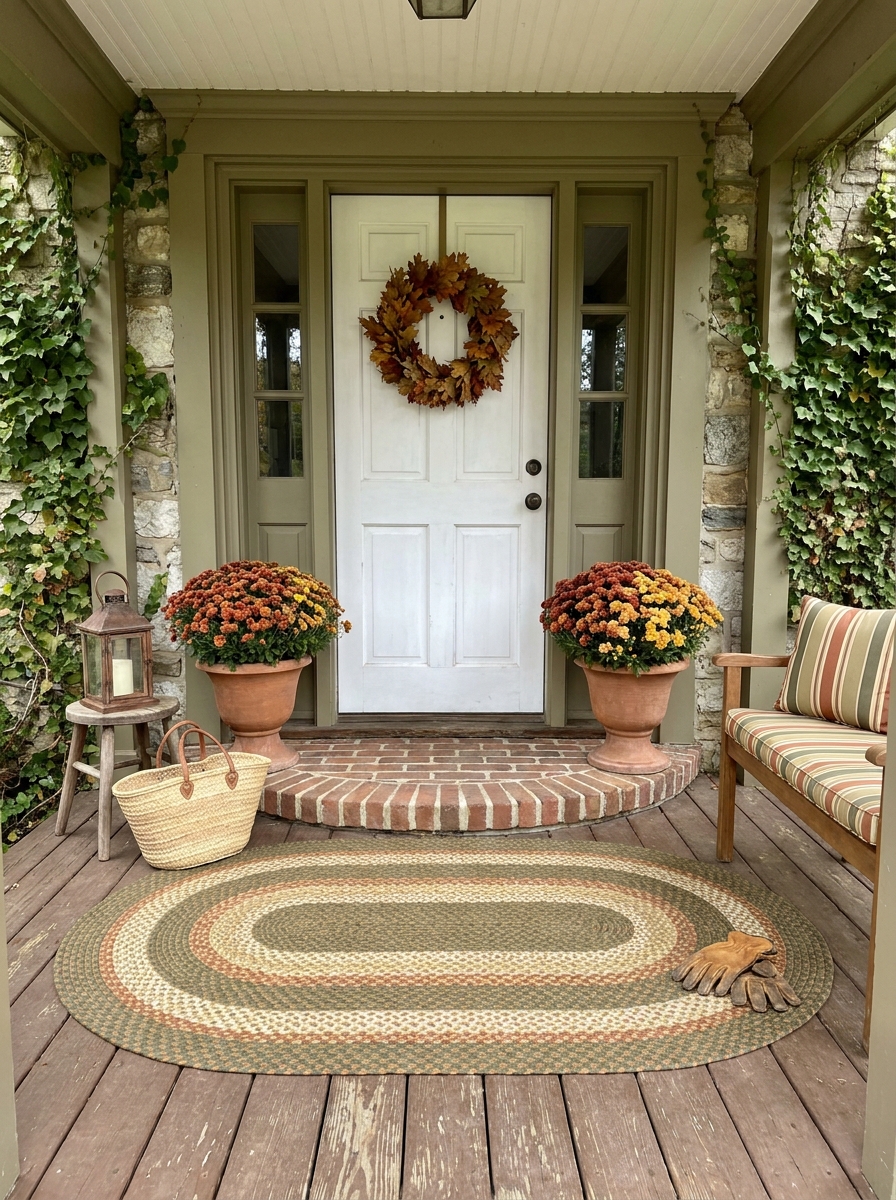
Sometimes the porch doesn’t need more decor. It just needs better proportions. If you have a single front door with a fairly boxy entry, a rectangular rug usually looks best because it echoes the architecture. If you have a curved step or a softer cottage-style entry, a rounded or scalloped rug can be really charming. It sounds small, but shape changes the whole mood. I think this is one of those little styling decisions that separates a random porch from one that feels considered. When the rug shape relates to the doorway, everything clicks faster. The eye reads it as balanced, even if you only have a few pieces out there. That’s the goal. Make it feel intentional without adding clutter. And if you’ve ever bought a rug that technically fit but still looked weird, this might be why. It wasn’t the size. It was the shape conversation happening between the rug, the step, and the door. Once those three are in sync, the entry feels calmer. Cleaner. More designed. Which is great, because your porch should welcome people in, not quietly annoy you every time you pull into the driveway.
Pro Tip: Before buying, tape the rug dimensions and shape on your porch floor so you can see how it relates to the door swing and step lines.
Let Symmetrical Planters Make the Rug Feel Even More Grounded

There is something deeply satisfying about a front door flanked by matching planters. Add a rug underneath, and the whole setup feels solid and finished in the best way. The planters act like visual bookends, while the rug becomes the foundation holding everything together. It’s tidy, balanced, and very easy on the eyes. This is my favorite fix for an entry that needs presence. Maybe your porch is nice but forgettable. Maybe the door is pretty, but it doesn’t pop. A rug plus symmetry gives the space structure fast. Suddenly the eye knows where to land. You don’t need ten accessories. You need a few good ones, arranged with confidence. I also love that this look works across seasons. Swap the plants, change the wreath, maybe trade out a lantern, and the rug still keeps the porch anchored. It’s the stable piece that lets everything else shift around it. And if you like decor that feels polished but not fussy, this one is for you. It’s classic for a reason. It just works, over and over again.
Pro Tip: Use planters that are at least one-third the height of your door so they visually hold their own against the entry and rug.
Use a Rug to Separate the Door Zone From the Seating Zone
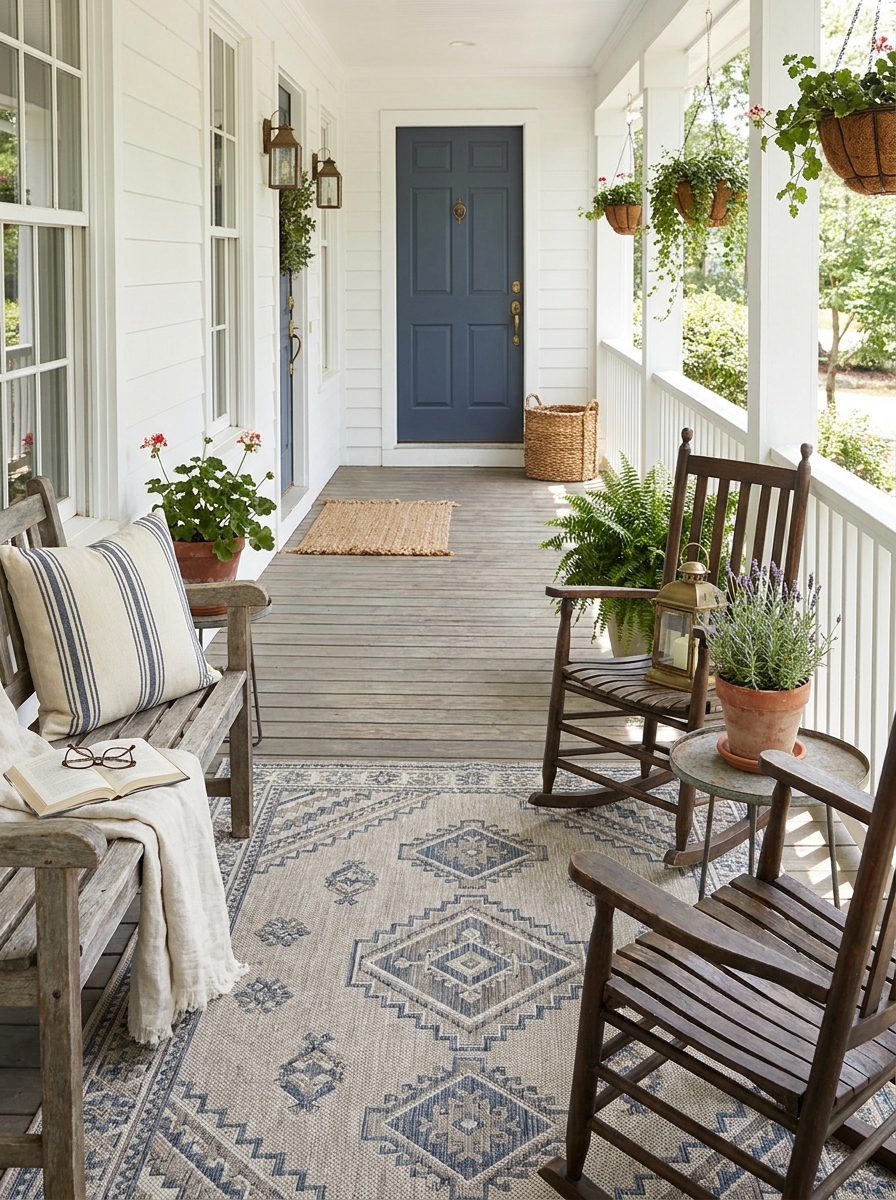
On a bigger porch, things can start to blur together. The chairs drift toward the door, the plants hover in random spots, and suddenly the whole space feels a little mushy. A rug fixes that. Actually, a rug defines that. It tells the eye where the entry ends and where the sitting area begins, even if the porch is one long rectangle. You can do this with one larger rug under the seating area and a smaller mat at the door, or with one generously sized rug that clearly sits under the chairs while leaving breathing room near the threshold. Either way, the trick is creating zones. Once you do that, the porch feels more usable. More styled. Less accidental. And this matters if your porch is where people pause, chat, drop bags, sip coffee, or wait for kids to find their shoes. Real life needs little boundaries. A rug gives you that without adding walls or extra furniture. It’s practical, but it also makes the whole porch prettier. Which, honestly, is the kind of multitasking I respect. Let the rug do the organizing while you enjoy how much calmer everything looks.
Pro Tip: Leave at least 12 inches of clear walking space between your door mat area and the start of the seating rug so the zones feel distinct.
Pick a Darker Rug If You Have Kids, Dogs, or Muddy Shoes

Let’s be honest. Not every porch can live in a white-and-beige fantasy. If your front entry sees soccer cleats, dog paws, grocery runs, and actual weather, a darker outdoor rug is just smarter. And good news, it can still be really pretty. Deep charcoal, muted brown, or a pattern with some variation hides dirt way better while keeping the porch looking styled. I like a darker rug especially for high-traffic homes because it takes the pressure off. You don’t have to baby it. You can shake it out, hose it down, and move on with your life. That’s my kind of decorating. It should work for your home, not create another chore on a Tuesday. To keep the space from feeling heavy, pair the darker rug with lighter planters or a brighter door. Mix in greenery, maybe a warm wood bench, and a lantern or two so the whole thing still feels inviting. Practical doesn’t have to look boring. It can look grounded and relaxed, like a porch that actually belongs to a busy, lovely family instead of a catalog where no one ever spills anything.
Pro Tip: Choose a multitone rug pattern instead of a solid dark color if you want dirt and leaf debris to be even less noticeable.
Bring in Soft Cottage Charm With a Faded Patterned Rug
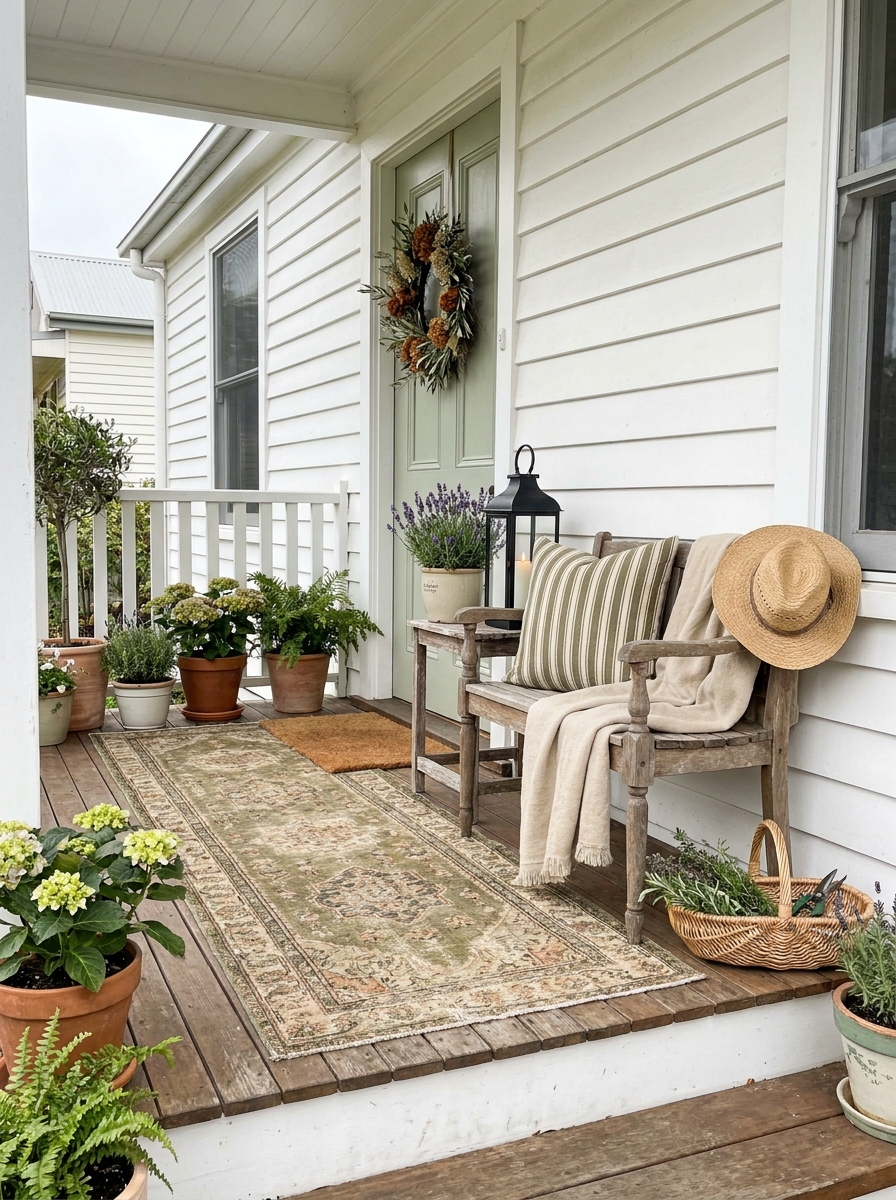
If you love a porch that feels a little romantic, a little collected, and not too crisp, try a faded patterned outdoor rug. Something with a worn-in look gives the entry softness right away. It feels less sharp than stripes and less modern than a geometric, which can be exactly what a cottage-style porch needs. This kind of rug plays really well with painted wood, vintage-inspired lanterns, and overflowing planters. It doesn’t need to be loud. In fact, the best ones look a touch sun-washed, like they’ve always belonged there. Add a bench, a floral wreath, and maybe a pillow with a tiny stripe or block print, and the whole porch starts telling a sweeter story. I think this style works beautifully when you want charm without clutter. The rug brings pattern, age, and softness all by itself, so you can keep the rest simple. That’s the trick. Let one piece carry a little personality. Then everything else can support it quietly. The result feels relaxed and welcoming, like the kind of porch where someone might hand you iced tea and insist you stay a while.
Pro Tip: Look for outdoor rugs with distressed patterning in midtones so they feel soft and cottagey without showing every speck of dirt.
Tie the Rug to Your Door Color for a Pulled-Together Entry

One of the easiest ways to make a porch feel designed is to repeat your door color somewhere in the rug. Not in a matchy-matchy way. More like a little wink. If your door is navy, bring in a rug with a soft blue thread or faded stripe. If your door is black, echo it in a border or plaid. That repeat makes the whole porch feel connected. This is especially helpful when the entry has a lot going on already. Maybe you’ve got brick, shutters, planters, and hardware all competing for attention. A rug that picks up the door color helps settle the visual noise. Suddenly the space has a rhythm. Things relate to each other. It feels intentional instead of random. And you don’t need a dramatic pattern for this to work. Even the quietest rug can tie a porch together if the color story is right. Add a couple of accessories in the same family, then stop. Seriously, stop. The porch will look better if you let that color repeat do the heavy lifting. It’s one of those little design moves that makes people think you just have an eye for these things.
Pro Tip: Pull one accent color from your front door into the rug, then repeat it only once or twice more in pillows or planters for a balanced look.
Scale Up the Rug on a Wide Porch So the Entry Doesn’t Get Lost

A wide front porch can be gorgeous, but it can also swallow your decor whole if everything is too small. That’s where a larger outdoor rug earns its keep. On a broad porch, a tiny mat by the door looks like an afterthought. A generously sized rug, though, gives the entry visual weight and helps the whole area feel anchored instead of scattered. I always say wide porches need one strong gesture. The rug can be that gesture. It stretches the eye across the space, connects the door to the seating, and keeps furniture from looking like it’s drifting around the edges. If you have room for a bench, rocker, or even a pair of planters and a little table, a bigger rug pulls them into one story. And no, bigger doesn’t mean busy. A simple woven neutral or soft stripe can still feel airy and relaxed. The point is scale, not drama. Once the rug fits the porch, everything else starts to make sense. The entry feels balanced. The decor looks more expensive. And the whole front porch finally has that settled, welcoming feeling that makes you smile before you even unlock the door.
Pro Tip: On a wide porch, aim for a rug that visually spans at least two-thirds of the door-and-seating area so the space feels connected.
Repeat One Small Pattern From Inside Your Home to Make the Porch Feel Connected
One of my favorite porch tricks is making the outside feel like a tiny preview of what’s waiting inside. Not matchy-matchy. Just connected. If your entry hall has a soft plaid runner, a ticking stripe pillow, or even a little floral wallpaper moment, pull a similar pattern onto the porch rug. It makes the whole entry feel thoughtful before anyone even turns the knob. This works especially well when your porch feels a little separate from the rest of the house. A patterned rug can bridge that gap fast. You step outside, and suddenly the porch feels less like an afterthought and more like part of the story. I love this with farmhouse-modern homes because it softens all those clean lines and adds a bit of personality right at your feet. The key is keeping the pattern in the same family, not the exact same print. Think quiet checks, soft diamonds, or a faded motif that echoes something indoors. That little visual repeat creates flow, and flow is what makes a porch feel grounded. It’s subtle, but wow, it does a lot. The rug stops feeling random and starts feeling like it truly belongs there.
Pro Tip: Stand inside your open front door and look outward; if the rug pattern picks up one print, stripe, or motif you can also see indoors, the entry will feel instantly more connected.
Quick Guide
Quick Guide: Which front porch rug style fits your home? Small stoop + simple entry: Layered jute-look rug under a coir mat. Easy, affordable, and makes a tiny space feel styled. Long narrow porch: Striped rug. It visually stretches the space and keeps the layout from feeling cramped. Farmhouse porch with seating: Larger woven or subtle geometric rug. It anchors rockers, benches, and side tables beautifully. Busy family entry: Darker multitone rug. Better at hiding dirt, leaves, and muddy little surprises. Cottage-style porch: Faded patterned rug. Softer, sweeter, and a little more relaxed. If you’re stuck, start with this rule: match the rug to your porch lifestyle first, then your style second. Pretty matters, of course. But a rug you can actually live with will always look better.
Your Porch Deserves That Finished Little Exhale
The best front porches don’t usually have the most stuff. They just have the right foundation. And so often, that foundation is the rug. It’s the piece that makes a chair grouping feel like a destination, a plain stoop feel thoughtful, and a front door feel like part of a whole story instead of a lonely focal point. What I love about all 11 of these ideas is that they work in real life. They don’t ask you to build a showroom porch or buy a dozen accessories you’ll be tired of by next month. They just help you use one hardworking layer to create warmth, structure, and a little personality right at the entrance of your home. So if your porch has been feeling almost there, start at the ground. Try the layered mat. Scale up the rug. Bring in stripes, symmetry, or a pattern that softens everything. Small shift, big difference. And honestly, once the rug is right, the rest gets so much easier. Save your favorite idea, take a look at your entry with fresh eyes, and give your porch the cozy anchor it’s been waiting for.
Frequently Asked Questions
How do I choose the right size front porch rug for my outdoor entry?
Start by thinking about what the rug needs to anchor. If it’s just the doorway, make sure it’s wider than the door and leaves a visible border around your welcome mat. If you’re styling seating too, the rug should extend under at least the front legs of the furniture so the area feels connected.
What type of rug works best for a covered front porch with high traffic?
A polypropylene indoor-outdoor rug is usually the easiest win. It’s durable, easy to clean, and holds up well to shoes, dirt, and changing weather. If your porch gets a lot of daily action, go for a multitone pattern or darker color so it stays looking fresh longer.
Can you layer a welcome mat over an outdoor rug on a small front porch?
Yes, and it looks so good on a small porch. Layering adds depth and makes even a basic stoop feel styled and intentional. Just keep the bottom rug proportional to the space so it doesn’t overwhelm the doorway.
What colors look best for front porch rug styling in a modern farmhouse home?
Black and ivory is the classic choice, but soft blue-gray, greige, sage, and warm wood tones also work beautifully. The sweet spot is a palette that feels calm and ties into your door, planters, or hardware. You want the porch to feel connected, not overly matched.
How do I make my front porch rug look more expensive and pulled together?
Use the rug as the base for a few intentional pieces instead of filling the porch with too much decor. Symmetrical planters, one bench or pair of chairs, and a wreath can go a long way. The trick is good scale, a cohesive color story, and letting the rug clearly define the zone.