

You know that moment when you’re making coffee, the dishwasher door is open, and suddenly the whole kitchen feels like a game of human Tetris? Been there. Small kitchens can be wildly charming, but they can also test your patience when every drawer sticks, every counter gets crowded, and there never seems to be a good spot for the toaster. The good news is, a tiny kitchen doesn’t need more square footage to work better. It just needs smarter choices. The prettiest small kitchens usually aren’t packed with fancy extras. They’re thoughtful. A slimmer cabinet here, a better light there, a shelf in just the right spot. And somehow the whole room starts breathing again. That’s what this article is about: real remodel ideas that make a compact kitchen feel easier, lighter, and honestly a lot more fun to use every day. We’re talking layout, storage, color, surfaces, and those little upgrades that pull surprising weight. Some are budget-friendly. Some are worth saving for. All of them are practical. Let’s get into it.
Start With a Layout That Stops the Daily Traffic Jam
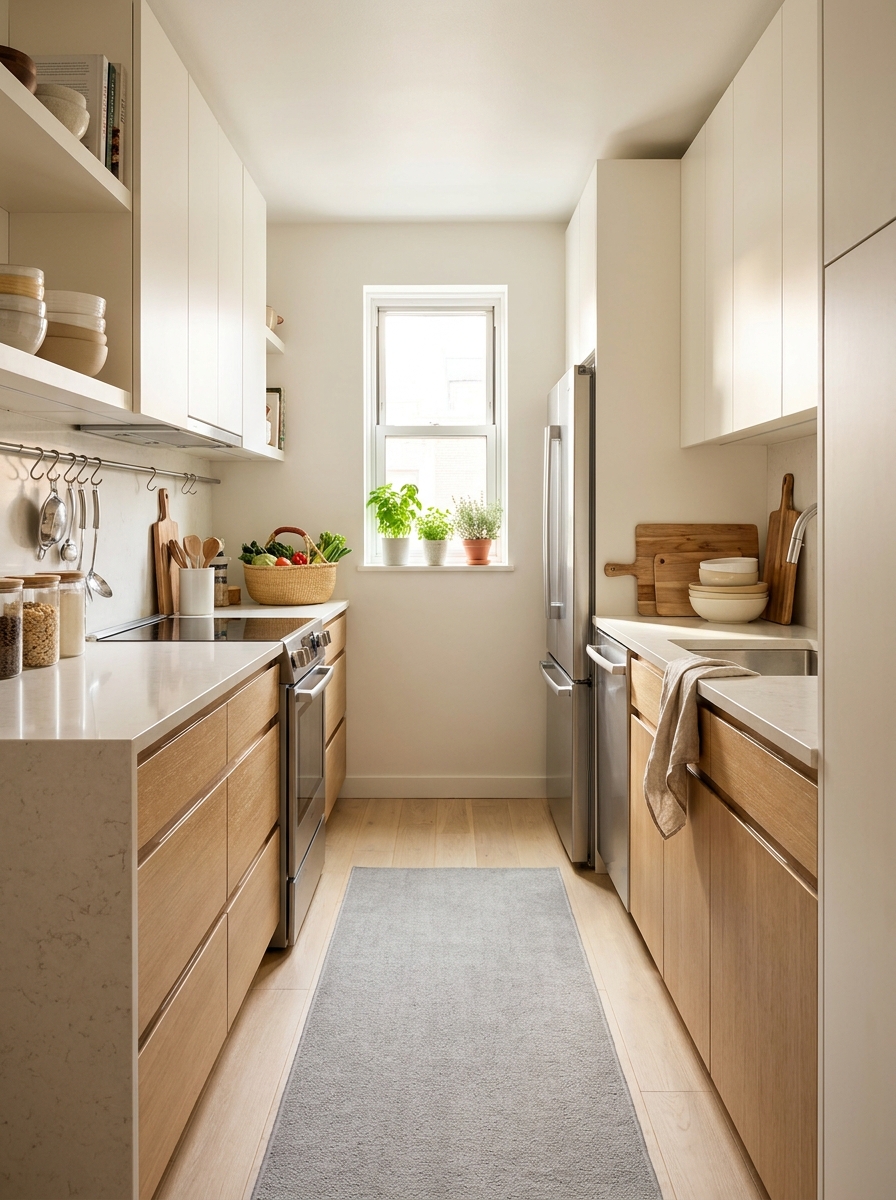
If your small kitchen feels cramped, the layout is usually the real culprit. Not the cabinet color. Not the lack of a giant island. It’s the way the room asks you to move through it. In a compact kitchen, every swing of a door and every step between the sink, stove, and fridge matters more than people think. A remodel is the perfect time to notice those annoying bottlenecks and fix them before you buy anything pretty. Sometimes the smartest move is also the least dramatic. Shift the fridge to the end of a run so it doesn’t block everything when open. Swap a standard-depth base cabinet for a shallower one near a doorway. Tighten the work triangle so cooking feels smooth instead of chaotic. And if you have a galley kitchen, keep one side focused on prep and the other on cooking and cleanup. That simple zoning trick makes a tiny footprint feel surprisingly calm. A good layout gives you breathing room. It creates those tiny pauses where a kitchen starts feeling intentional instead of overstuffed. And honestly, that’s the kind of luxury most real homes need.
Pro Tip: Mark appliance door swings with painter’s tape on the floor before remodeling so you can spot traffic problems early.
Choose Full-Height Cabinets and Use the Awkward Top Space

That dusty gap above upper cabinets? It steals visual height and gives clutter a place to audition. In a small kitchen remodel, taking cabinetry all the way to the ceiling is one of the best moves you can make. It instantly makes the room feel taller, cleaner, and more custom. Plus, you get storage that actually earns its keep instead of a weird ledge full of regret and old serving platters. The top cabinets are ideal for things you don’t need every day. Holiday dishes, extra paper goods, the giant stockpot you swear you’ll use for homemade broth. Keep daily essentials lower and let the uppermost section handle the rarely used stuff. If full custom cabinetry isn’t in the budget, even adding a stacked cabinet box or a simple soffit extension can visually finish the room. And here’s the sneaky bonus: tall cabinetry pulls your eyes up. That vertical line matters. It makes a tiny kitchen feel less chopped up and more polished, which is exactly why this upgrade works so hard in apartments and older homes with not-so-generous footprints.
Pro Tip: Use matching bins or labeled handled baskets in top cabinets so you can pull out seasonal items without climbing in and digging around.
Trade Bulky Upper Cabinets for Open Shelves in One Smart Zone
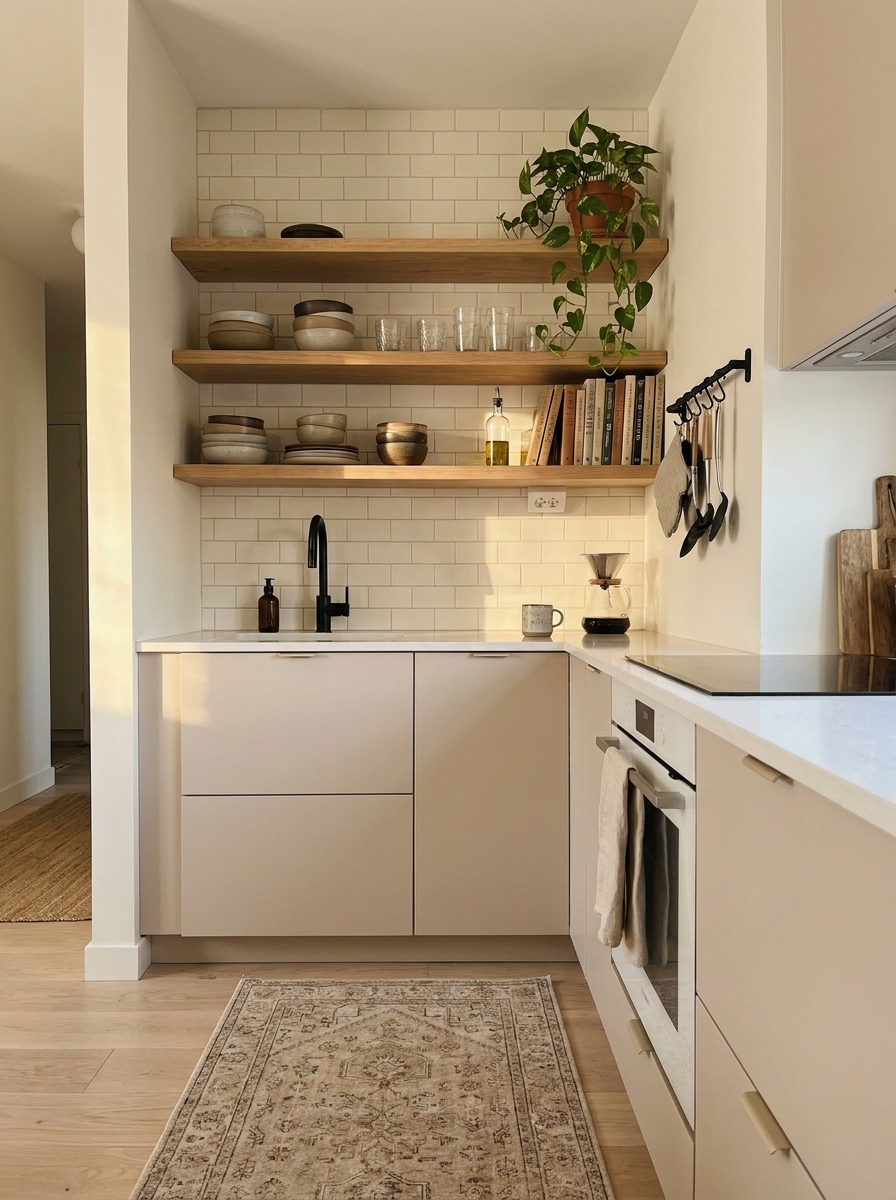
Upper cabinets can be useful, but in a very small kitchen they can also feel heavy fast. If your room is starting to look boxed in, try replacing one section of uppers with open shelves. Not all of them. Just one zone. That’s the sweet spot. You keep storage where you need it and gain visual lightness where the room most needs to breathe. The best place for shelves is usually near a window, above a coffee station, or on a short wall that feels crowded. Keep the styling simple and practical: everyday dishes, a few glasses, maybe a little olive oil bottle and a tiny plant. This isn’t the moment for twenty-seven decorative objects and a ceramic bird collection. Restraint is what makes open shelving feel airy instead of messy. And yes, you do have to keep them somewhat neat. But when done right, shelves break up a wall of cabinetry and make a compact kitchen feel more personal. A little less builder-basic, a little more collected. They also force you to edit, which small spaces secretly love.
Pro Tip: Install shelves only where you can comfortably reach them without a stool, and keep your heaviest daily items on the lowest shelf.
Use Drawers Instead of Lower Cabinets Wherever You Can
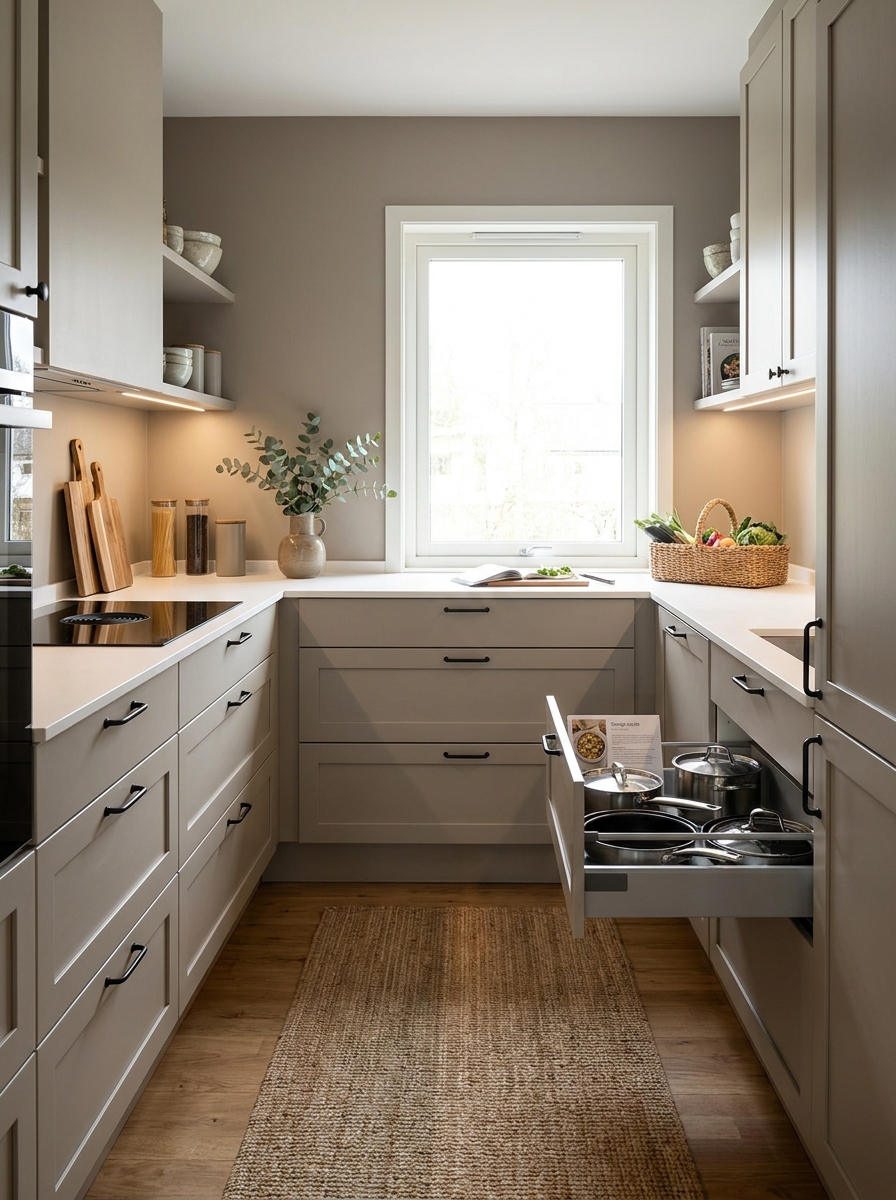
I will defend deep drawers in a small kitchen forever. Lower cabinets with dark cave-like interiors make you crouch, shuffle, and lose track of half your cookware. Drawers are different. They pull everything out into the light, which means you can actually see the skillet, the colander, and the random measuring cup set before dinner turns dramatic. In a remodel, replacing standard base cabinets with wide drawers is one of those upgrades that changes how the kitchen feels every single day. Pots and pans stack better. Food containers stop avalanching. Even spices and utensils can live in slimmer drawers near the stove or prep zone. And because the whole drawer extends, you use the full depth instead of forgetting what lives in the back corner until next spring. Visually, drawers also look cleaner. Fewer broken-up door lines. More calm. In a tiny kitchen, that matters. The room feels simpler, and simple reads as spacious. If you can only splurge in one place, I’d seriously consider putting the money here. It’s not flashy, but wow, it’s useful.
Pro Tip: Add peg organizers or adjustable dividers inside deep drawers so pots and lids don’t slide into a loud metal mess.
Pick a Slimmer Island or Peninsula That Earns Its Footprint

Not every small kitchen needs an island. There, I said it. But some absolutely benefit from a narrow one or a compact peninsula that works harder than a basic cabinet run. The trick is scale. A chunky island in a tight room is basically a stylish roadblock. A slim version with storage, seating, or prep space can be magic. Think around 18 to 24 inches deep if you’re really short on room. That gives you enough surface for chopping vegetables or setting down grocery bags without swallowing the walkway. A peninsula can be even better in a U-shaped layout because it defines the kitchen without floating awkwardly in the middle. Add one overhang with a stool, and suddenly breakfast has a home too. This kind of piece should do at least two jobs. Storage and prep. Seating and storage. Prep and serving. If it only looks cute, it’s taking up precious real estate. But when the proportions are right, a slim island makes a small kitchen feel more finished, more social, and way more useful on busy mornings.
Pro Tip: Keep at least 36 inches of clearance around a slim island or peninsula so drawers and appliances can still open comfortably.
Build Storage Into the Toe Kick and Other Forgotten Inches

Small kitchens reward people who notice the weird little spaces. The sliver beside the range. The blank toe kick under the cabinets. That narrow end panel nobody thinks about. In a remodel, these forgotten inches can quietly become some of the hardest-working storage in the room. And honestly, that’s the kind of design detail that feels genius once you live with it. Toe-kick drawers are great for flat items like baking sheets, placemats, or even pet bowls if your kitchen doubles as command central. Skinny pull-outs beside an appliance can hold oils, spices, or cutting boards. I’ve even seen end panels turned into hidden shelves for foil and parchment paper, which is weirdly satisfying. Tiny spaces love custom solutions because there just isn’t room for waste. The best part is that these additions don’t make the kitchen look more crowded. They do the opposite. They help keep countertops cleaner because more things have a real home. And when a small kitchen is tidy, it instantly feels larger. Not in a fake magazine way. In a real, I-can-actually-cook-here way.
Pro Tip: Ask your cabinet maker or contractor to map every filler panel wider than 3 inches for possible pull-out storage before final plans are approved.
Make Corners Work Harder With Pull-Outs and Lazy Susans
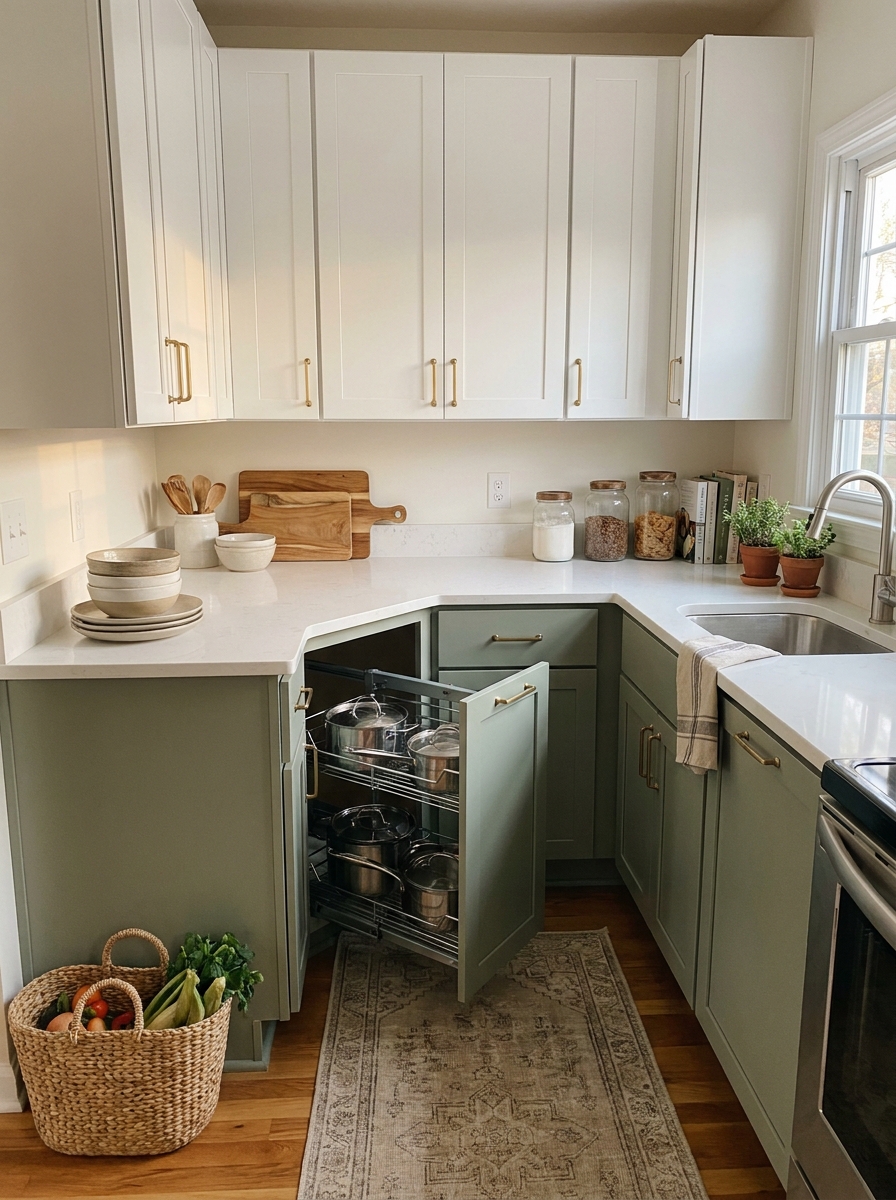
Corner cabinets are where good intentions go to disappear. You put something in the back, and suddenly it enters another dimension. In a small kitchen, that’s too much wasted space to ignore. A remodel is your chance to make corners useful instead of mysterious, and there are better options now than the old awkward cabinet where one giant pot lives alone forever. A pull-out corner system can bring items all the way toward you, which feels incredibly luxurious in a tiny footprint. Lazy Susans still work too, especially for pantry goods or mixing bowls, but look for newer versions with higher lips and smoother turning. For blind corners, swing-out trays can be a lifesaver. The right solution depends on your layout, but almost anything is better than dead space. This isn’t the sexiest part of a remodel, I know. Nobody pins a hinge mechanism and squeals. But practical upgrades are often what make a kitchen feel expensive and easy. And when your storage works with you instead of against you, even a little kitchen starts acting bigger than it is.
Pro Tip: Store bulky but lightweight items like mixing bowls or small appliances in corner pull-outs so the mechanism stays easy to use.
Quick Guide: Where to Spend and Where to Save
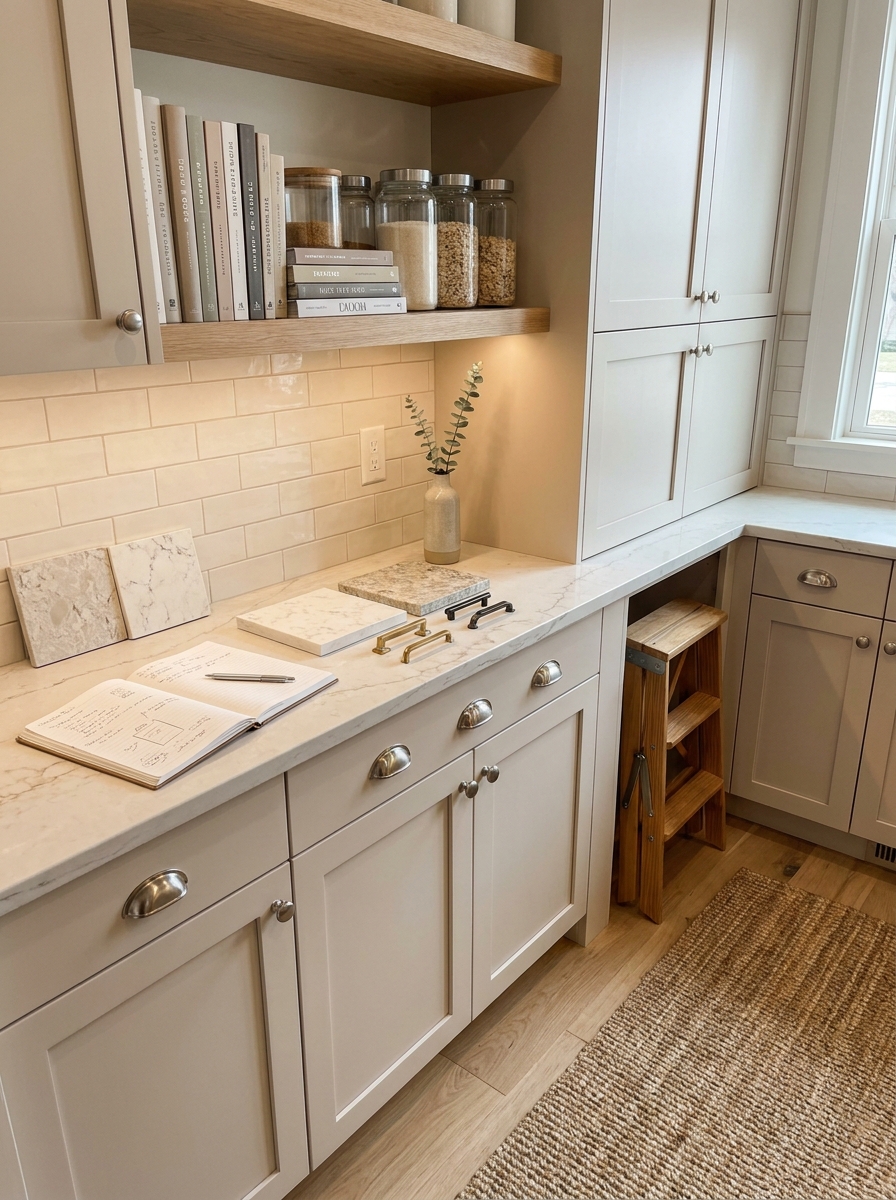
If your budget isn’t endless — same — here’s the quick version. Spend on the pieces you touch every day and the things that are painful to change later. Save on finishes that can be swapped out once the hard stuff is done. Quick Guide: Layout changes: Spend if they fix flow problems. Cabinet interiors and drawers: Spend. You’ll use them constantly. Cabinet fronts: Save with semi-custom or IKEA hacks if the fit is good. Countertops: Spend moderately. Durable quartz usually wins. Backsplash tile: Save with simple shapes installed well. Hardware: Save or splurge in a small kitchen; you don’t need much. Lighting: Spend enough to layer it properly. Open shelving decor: Definitely save. Shop your house. A tiny kitchen remodel doesn’t need a giant budget to feel polished. It needs priorities. Put the money into function first, then let the pretty details come in where they can. That’s usually the sweet spot between dream kitchen and financial spiral.
Pro Tip: Before buying finishes, list your top three daily frustrations and spend first on anything that solves those exact problems.
Use Light-Reflective Finishes to Open Up the Whole Room

When a kitchen is small, light becomes part of the floor plan. It changes how wide the room feels, how clean it looks, and whether the whole thing reads fresh or a little cramped. That’s why reflective finishes matter so much. I’m not talking about turning your kitchen into a mirrored nightclub. Just choosing surfaces that bounce light instead of swallowing it. Think satin or eggshell wall paint, glossy backsplash tile, pale quartz counters, and cabinet colors with a soft luminous quality. Even brushed metals can help if they catch light gently. These finishes work especially well in kitchens with one small window or awkward corners that stay dim all day. They brighten the room without adding visual clutter, which is a pretty big win in a compact space. The trick is balance. Mix reflective surfaces with warm textures so the room doesn’t feel cold. A glossy tile next to oak shelving. Bright counters with a woven runner. That contrast keeps the kitchen inviting. Small spaces need light, yes. But they also need softness, or they start feeling more like a lab than a home.
Pro Tip: Test backsplash samples at different times of day, because some glossy tiles look lovely in morning light and harsh under evening task lighting.
Install Under-Cabinet Lighting So Every Counter Feels Bigger
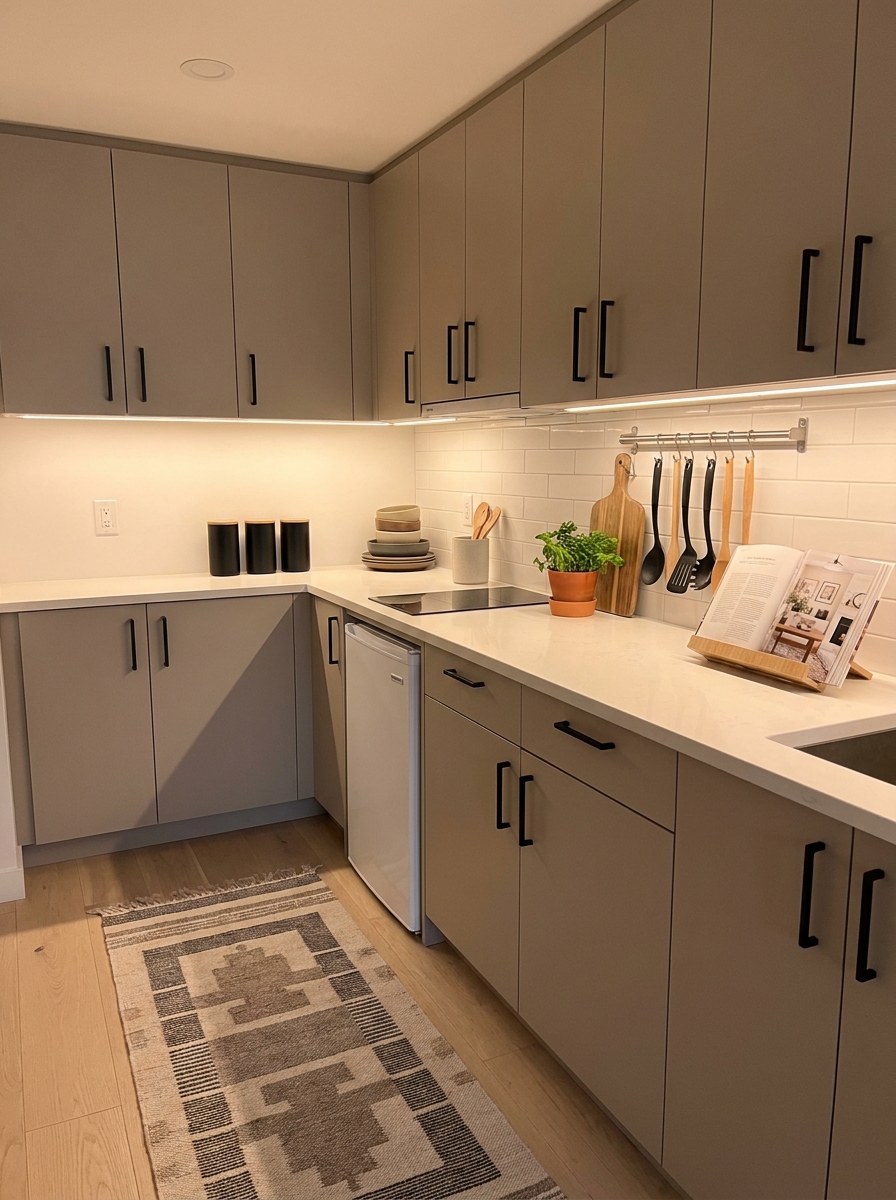
A shadowy countertop can make even a nice kitchen feel smaller than it is. Under-cabinet lighting fixes that fast. It’s one of those upgrades that seems subtle until you turn it on and realize the whole room suddenly looks cleaner, brighter, and more expensive. In a small kitchen, that extra layer of light can make prep zones feel more open and much easier to use. LED strips are usually the best choice because they’re slim, efficient, and easy to hide. Warm white light tends to feel nicest in a home kitchen, especially if your cabinets are white or pale wood. You want the counters illuminated, not interrogated. Pair that glow with overhead lighting and natural daylight, and the room gets depth instead of flatness. This is also a style move. Lighting highlights backsplash tile, pretty counters, and those little styling moments that make a kitchen feel finished. So yes, it’s practical. But it’s also mood. And in a compact kitchen, mood matters more than people admit. Nobody cooks better under sad cave lighting.
Pro Tip: Choose dimmable under-cabinet LEDs in the 2700K to 3000K range so your kitchen feels warm and flattering, not icy blue.
Hide the Microwave and Free Up Prime Counter Space

A microwave parked on the counter is one of those things you stop noticing until you realize it is stealing a huge chunk of your workspace every single day. In a small kitchen, that matters. A lot. Tucking it into a base cabinet, pantry cubby, or appliance garage instantly gives the room a calmer look and a more useful work surface. The whole kitchen feels less crowded, even if nothing else changes. I love this move because it solves two problems at once. It clears visual clutter and it makes meal prep easier. Suddenly you have room to set down grocery bags, roll out dough, or line up ingredients without doing that annoying shuffle around one giant appliance. If you are remodeling, this is the kind of detail that feels small on paper but makes the kitchen work so much better in real life. The sweet spot is keeping the microwave easy to reach without letting it dominate the room. Think built-in, not afterthought. When it disappears into the cabinetry, your kitchen looks cleaner, your counters feel bigger, and every square inch starts pulling its weight.
Pro Tip: Place the microwave in a lower drawer-style unit near the fridge so reheating and unloading groceries happen in one easy zone.
Choose a Counter-Depth Fridge That Stops the Room From Feeling Pinched

Big fridges are sneaky space hogs. They stick out farther than the cabinets, interrupt the walkway, and make a small kitchen feel tighter than it really is. A counter-depth refrigerator can be a game changer because it lines up with the cabinetry and instantly creates a smoother path through the room. That one change can make the kitchen feel more open, more polished, and way less bulky. Now, yes, you usually give up a little interior storage. But in a small kitchen, flow matters just as much as volume. If the fridge is not jutting into your body space every time you pass it, the whole room works better. It also looks more built-in, which gives the kitchen that custom, thoughtful feel people always notice right away. This is especially helpful in narrow layouts where every inch of clearance counts. You do not want to be bumping hips, elbows, and grocery bags into one oversized appliance. A sleeker fridge lets the kitchen breathe. It keeps sightlines cleaner too, which makes the room read bigger from almost every angle.
Pro Tip: Before ordering, tape the fridge depth on the floor with painter’s tape so you can test the walkway with cabinet doors and drawers open.
Turn One Wall Into a Vertical Workhorse With Rails, Pegs, and Hooks

When drawer space is tight and cabinets are already doing the most, the walls can step in and save the day. I am talking about a hardworking setup with rails, peg systems, hooks, and slim ledges that hold the things you reach for all the time. Measuring cups, utensils, mugs, tiny spice jars, even a paper towel holder. It keeps essentials off the counter but still right where you need them. The trick is to make it feel intentional, not messy. A well-planned wall system can look really chic in a small kitchen, especially when everything matches or sticks to one finish. It adds function without making the room feel heavy. That is the sweet spot. You are using vertical real estate in a way that feels airy instead of crowded. I especially love this in rentals or apartment kitchens where cabinet storage is laughably limited. It gives you a custom feel without a giant construction move. And because your most-used tools are in plain sight, cooking gets faster too. Less opening and closing. Less digging. More actual space to work and breathe.
Pro Tip: Mount a rail system on the backsplash side wall, not the main focal wall, so it stays useful without visually overwhelming the kitchen.
Add a Fold-Down Table or Pull-Out Surface for Extra Prep Room on Demand
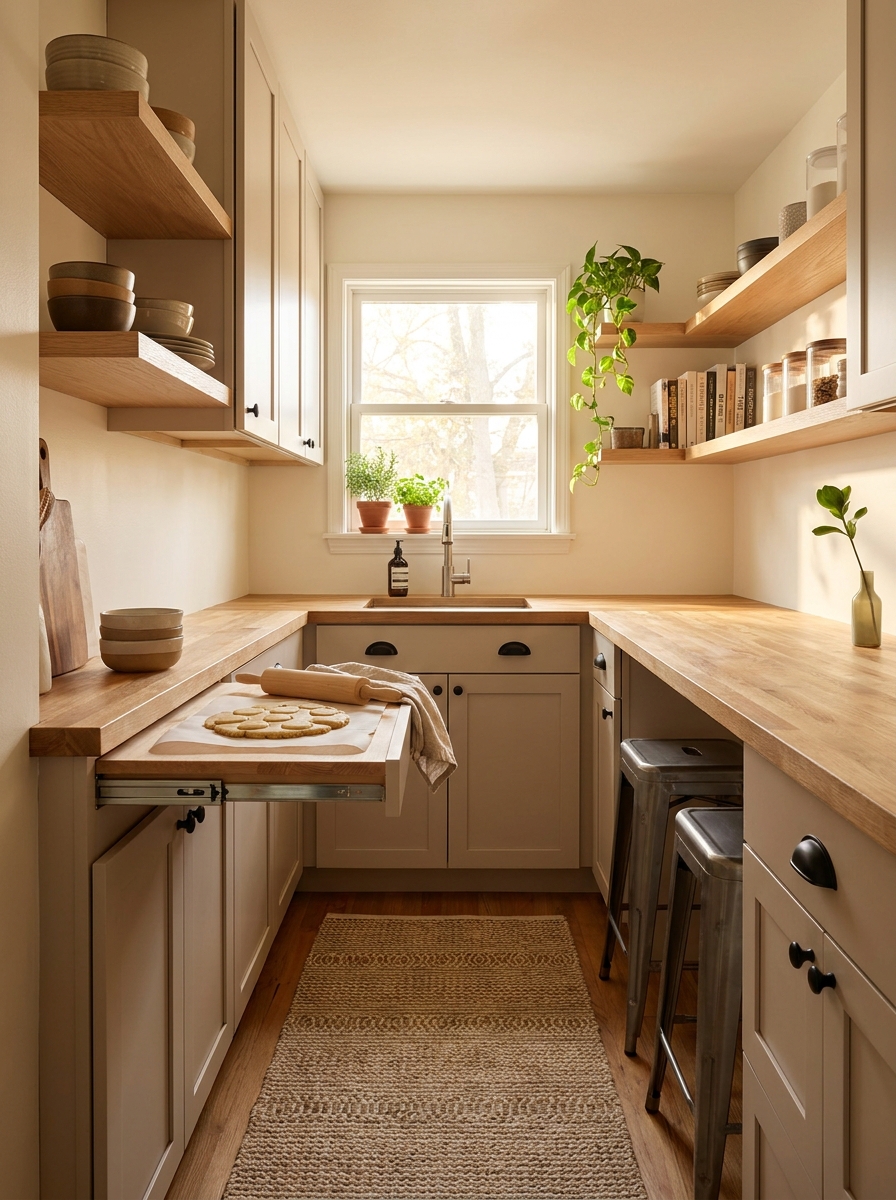
Sometimes a small kitchen does not need more permanent furniture. It just needs a smart little surface that shows up when you need it and disappears when you do not. That is why I love a fold-down table, pull-out counter, or slide-out work shelf. It gives you bonus prep space for chopping, baking, or even morning coffee, without chewing up precious floor area all day. This kind of feature is especially great in tiny kitchens where a full island would be way too much. You get flexibility instead of bulk. Need a landing spot next to the oven? Done. Need room to assemble lunches? Easy. Then it folds away and the kitchen goes right back to feeling open and easy to move through. It is one of those remodel ideas that feels clever in the best way. Not flashy. Just useful. And honestly, those are my favorite upgrades in a small kitchen. Anything that lets one square foot do two jobs is a win. Bonus points if the finish matches the cabinets so it feels built in from day one.
Pro Tip: Install a pull-out work surface 2 to 3 inches below countertop height so it can tuck away cleanly without interfering with drawers above.
Create a Hardworking Mini Pantry With Narrow Pull-Out Storage

If your small kitchen does not have room for a walk-in pantry, do not panic. A narrow pull-out pantry can do a shockingly good job in a tiny footprint. I am talking about those slim cabinet towers that slide out and hold oils, spices, canned goods, snacks, and all the little things that usually end up scattered everywhere. It is tidy, efficient, and honestly kind of satisfying to use. This works beautifully in those awkward leftover gaps beside the fridge, range, or end of a cabinet run. Instead of wasting a few inches, you turn them into serious storage. And because everything is visible at once, you are less likely to buy duplicates or lose ingredients in the back of a dark shelf. That alone can make a small kitchen feel less chaotic. What I love most is that it keeps food storage vertical and contained without needing a big pantry closet. In a compact kitchen, that is huge. The room stays streamlined, the counters stay clearer, and suddenly your tiny layout feels like it has a system. And a good system is half the battle in a small space.
Pro Tip: Use a 6- to 9-inch pull-out next to the fridge for spices and oils, and add door-mounted labels so everything stays easy to spot.
Use Glass Doors or Fluted Panels to Break Up a Solid Wall of Cabinetry
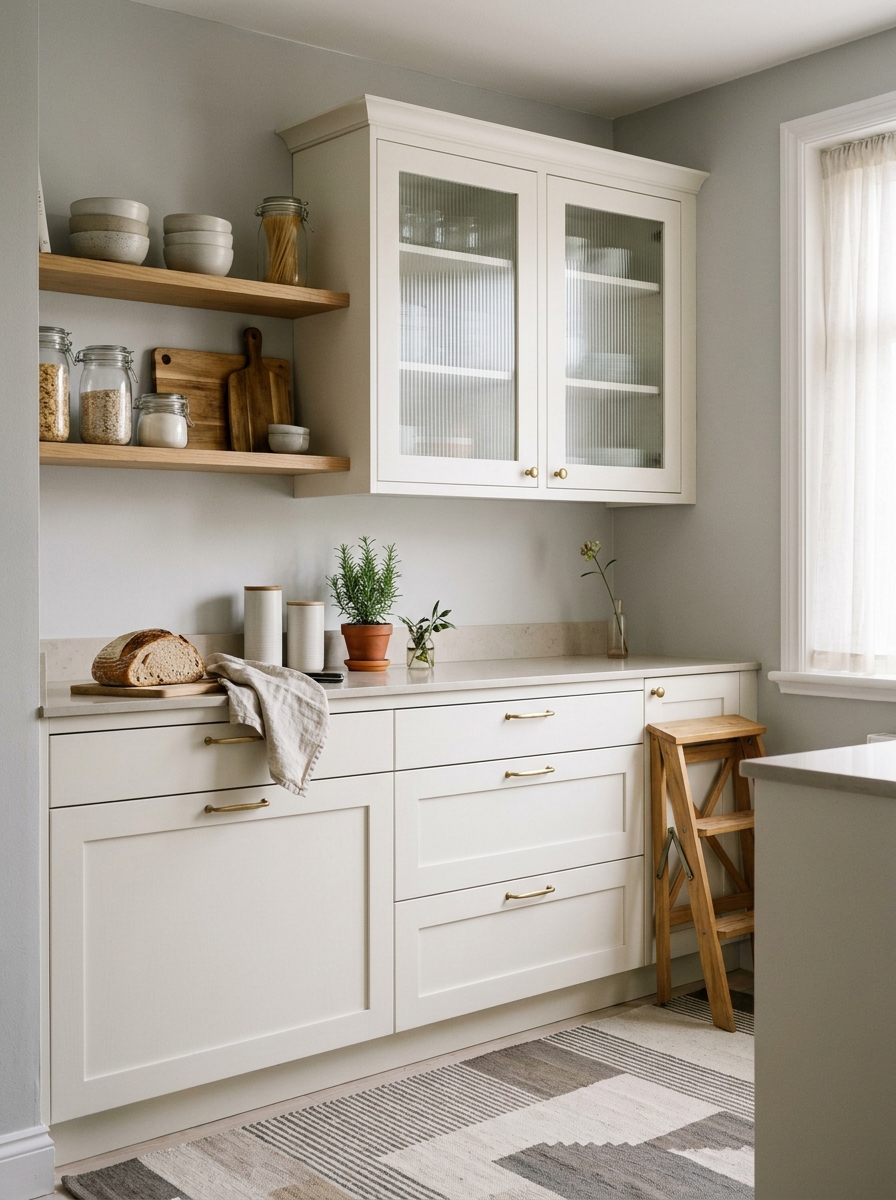
A small kitchen can start to feel boxy when every cabinet front is solid and heavy from one end of the room to the other. One of my favorite ways to soften that is by mixing in a few glass-front or fluted-panel doors. It breaks up the visual weight and adds a little breathing room without giving up storage. The room feels lighter right away. This is not about turning your kitchen into a display case. Just one or two upper cabinets with pretty dishes, glassware, or neatly arranged pantry pieces can make the whole setup feel more open. Fluted glass is especially great if you want that airy look without showing every single thing inside. It gives texture, softness, and a subtle glow when the light hits it. I love this trick because it changes the feel of the room more than the footprint. And in a small remodel, that matters. You are not always chasing more square footage. Sometimes you are chasing less visual heaviness. A few strategic cabinet fronts can make the whole kitchen look custom, layered, and much easier on the eyes.
Pro Tip: Limit glass or fluted doors to one cabinet zone so the kitchen feels lighter without creating pressure to keep every shelf picture-perfect.
Swap Swinging Doors for Pocket or Sliding Options Where You Can

This one is easy to overlook, but door swing takes up real space. In a small kitchen, a traditional hinged door can block cabinets, interrupt the walkway, and make the whole room feel fussier to use. Switching to a pocket door or a slim sliding door can give that space right back. It is such a practical move, especially near pantries, laundry closets, or doorways leading into the kitchen. The beauty is in how invisible the upgrade feels once it is done. You are not adding square footage, but you are removing friction. No more backing up so a door can open. No more awkward collisions between a pantry door and an open dishwasher. The room just flows better, and that changes how spacious it feels day to day. I have seen this make a huge difference in apartment kitchens and narrow layouts where every movement counts. It is one of those behind-the-scenes remodel choices that makes the kitchen feel smarter. And when a small space works smoothly, it always feels bigger. That is the magic. Not just how it looks, but how easily you can actually live in it.
Pro Tip: If a full pocket door is not possible, use a surface-mounted sliding door on a pantry or utility closet to reclaim floor clearance fast.
Quick Guide
If your budget isn’t endless, spend on what changes daily life. Save on what can be upgraded later. Best places to spend: layout fixes, drawer storage, quality hinges, and lighting. Worth a moderate spend: durable quartz countertops and a hardworking faucet. Smart places to save: simple backsplash tile, semi-custom cabinet fronts, open-shelf styling, and hardware if you find a good affordable line. Tiny kitchens don’t need luxury everywhere. They need clear priorities and a plan that supports how you actually cook.
A Tiny Kitchen Can Still Feel Like a Dream
The best small kitchen remodels don’t try to pretend the room is huge. They work with what is there and make every inch feel considered. That’s really the magic. A better drawer. Smarter lighting. Cabinets that reach the ceiling. A slim peninsula that gives you one more place to prep, sit, or drop the grocery bags without chaos taking over. And once those pieces start coming together, the whole kitchen shifts. It feels calmer. Prettier too, sure, but also easier. You stop fighting the room and start enjoying it. That’s a big deal when it’s the space you use on sleepy mornings, rushed weeknights, and every random snack break in between. If you’re planning a remodel, don’t get distracted by giant showroom kitchens that have nothing to do with real life. Focus on flow, storage, and finishes that make your home feel lighter and more useful. The little details really do add up. Save the ideas you love, measure twice, and trust your instincts. Your small kitchen can be hardworking and beautiful at the same time.
Frequently Asked Questions
What are the best small kitchen remodel ideas to maximize every square foot?
The best ideas usually combine smarter storage with a cleaner layout. Think full-height cabinets, deep drawers, corner pull-outs, slim islands, and under-cabinet lighting. When each feature does more than one job, a small kitchen starts feeling much bigger.
How can I make a tiny kitchen look bigger without moving walls?
Use light-reflective finishes, reduce visual clutter, and choose cabinetry that draws the eye upward. Open shelving in one small zone, pale counters, and good task lighting can make a dramatic difference. You don’t always need more space; you just need the room to breathe.
Is an island worth it in a small kitchen remodel?
Sometimes yes, but only if the proportions are right. A slim island or peninsula can add prep space, seating, and storage without blocking traffic. If it makes the walkway too tight, skip it and put that square footage to work another way.
What is the most cost-effective upgrade for a small apartment kitchen?
If the layout is decent, focus on storage and lighting first. Drawer organizers, full-height cabinetry, under-cabinet lights, and a clutter-free countertop setup often give the biggest payoff for the money. Those changes make the kitchen feel better fast.