

You know that moment when you step into your backyard with your coffee, look around, and think, this could be so much better? Maybe the patio feels bare, the fence line looks awkward, or the whole space is giving more “forgotten weekend chore” than peaceful retreat. I’ve been there, standing in flip-flops on patchy grass, trying to picture how a yard can feel cozy, lush, and pulled together without turning into a full-time job. The good news is you do not need acres of land or a landscape crew on speed dial. A beautiful sanctuary usually comes down to a few smart layers: a place to sit, a path that invites you in, plants that soften the edges, and little details that make the whole thing feel personal. Some ideas are simple weekend projects. Others are the kind you build over a season, one shovel of mulch at a time. These 21 ideas are the ones that actually make a backyard feel calmer, prettier, and more usable. Here’s what actually works.
Build a Cozy Patio Garden Around One Inviting Seating Spot
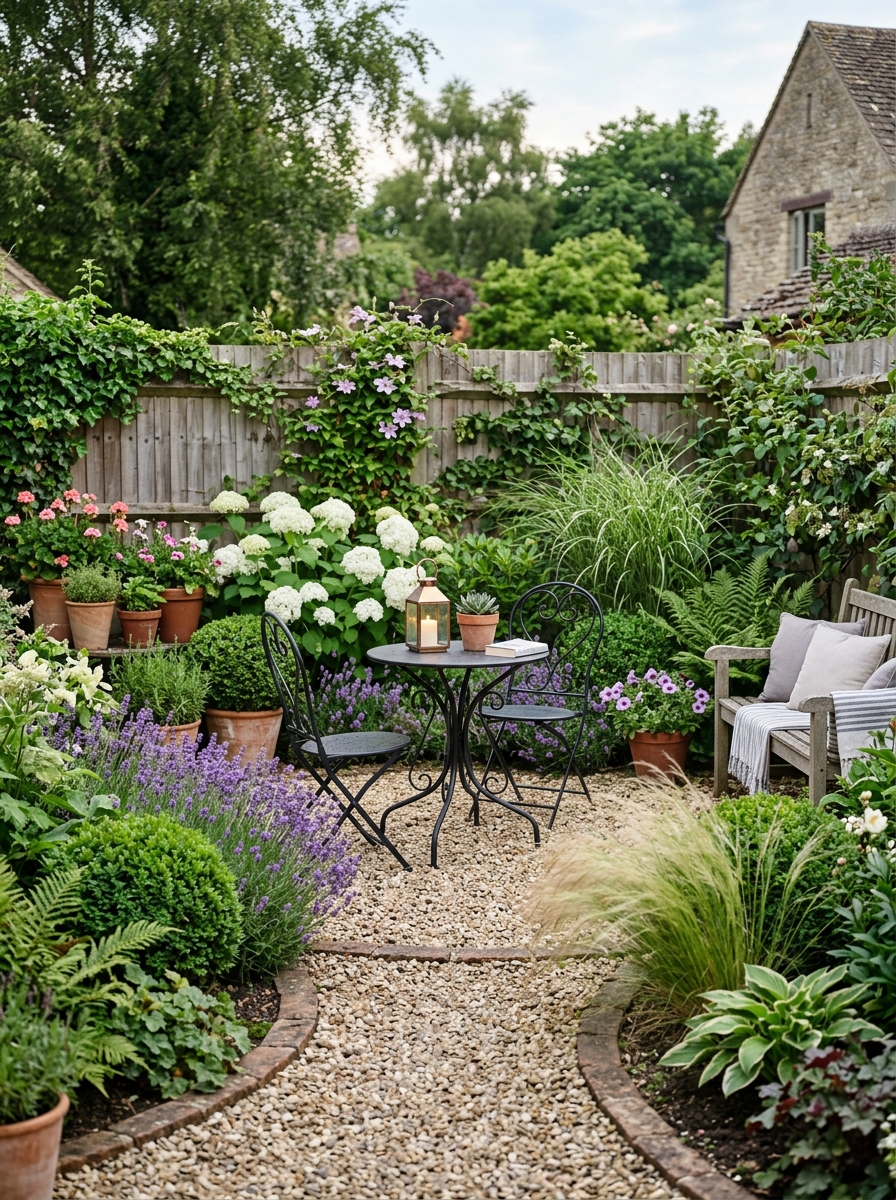
The fastest way to make a backyard feel like a sanctuary is to give it a clear reason to be used. That usually starts with one comfortable seating area, not five scattered chairs that look like they were rescued from different family barbecues. Pick a small patio corner, even if it’s just enough room for a bistro table or a weathered bench, and build the planting around it. Suddenly, your yard has a destination. If you want this to feel lush instead of exposed, soften the edges with layered pots and in-ground planting. Try hydrangeas behind the seating, lavender near the front, and a boxwood or two to anchor the scene. Add cushions in muted tones and a lantern or small side table so it feels intentional. I’ve always thought a chair by itself looks lonely, but a chair surrounded by leaves and flowers looks like an invitation. You want that little moment where the gravel crunches under your feet, the air smells faintly herbal, and you can actually imagine sitting down for ten quiet minutes before real life barges in. Once that anchor spot is in place, the rest of the yard starts making more sense.
Pro Tip: Keep at least 30 inches of clear walking space around your seating area so plants feel lush without making the spot cramped or annoying to use.
Use Layered Privacy Planting Instead of Staring at the Fence
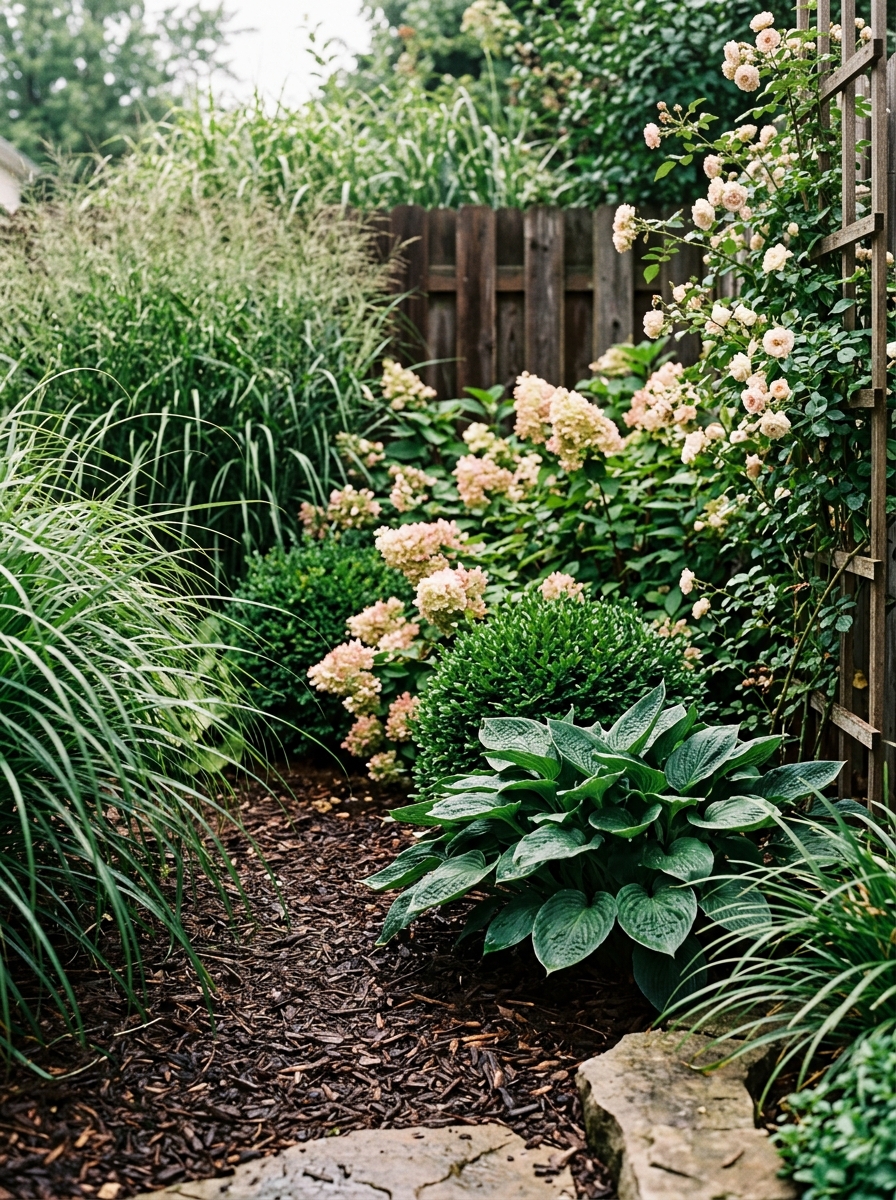
A plain fence has a way of making even a nice yard feel boxed in. The trick is to stop treating that boundary like the end of the space and start treating it like a backdrop. Layering plants in front of it creates depth, movement, and a sense that your backyard is bigger than it really is. Start with taller evergreen structure near the fence line, then bring in medium shrubs, and finish with soft, lower plants that spill toward the lawn or path. This works especially well with a mix of boxwood, hydrangeas, ornamental grasses, and hostas. The broad hosta leaves catch the light in a really pretty way, while grasses keep the whole border from feeling stiff. If your fence is dark, pale flowers like cream or soft blush stand out beautifully. If it’s light wood, richer greens give you that cocooned feeling. What you’re after is a screen that feels soft, not a green wall that looks like it’s about to swallow the shed. As the wind moves through the grasses and the leaves rustle on a quiet evening, the whole yard feels more private, more settled, and honestly a lot less like you’re sharing your dinner with the neighbors.
Pro Tip: Plant tall screening shrubs at least 3 feet away from the fence so air can move behind them and you have room to prune without a wrestling match.
Lay a Winding Path That Slows You Down on Purpose
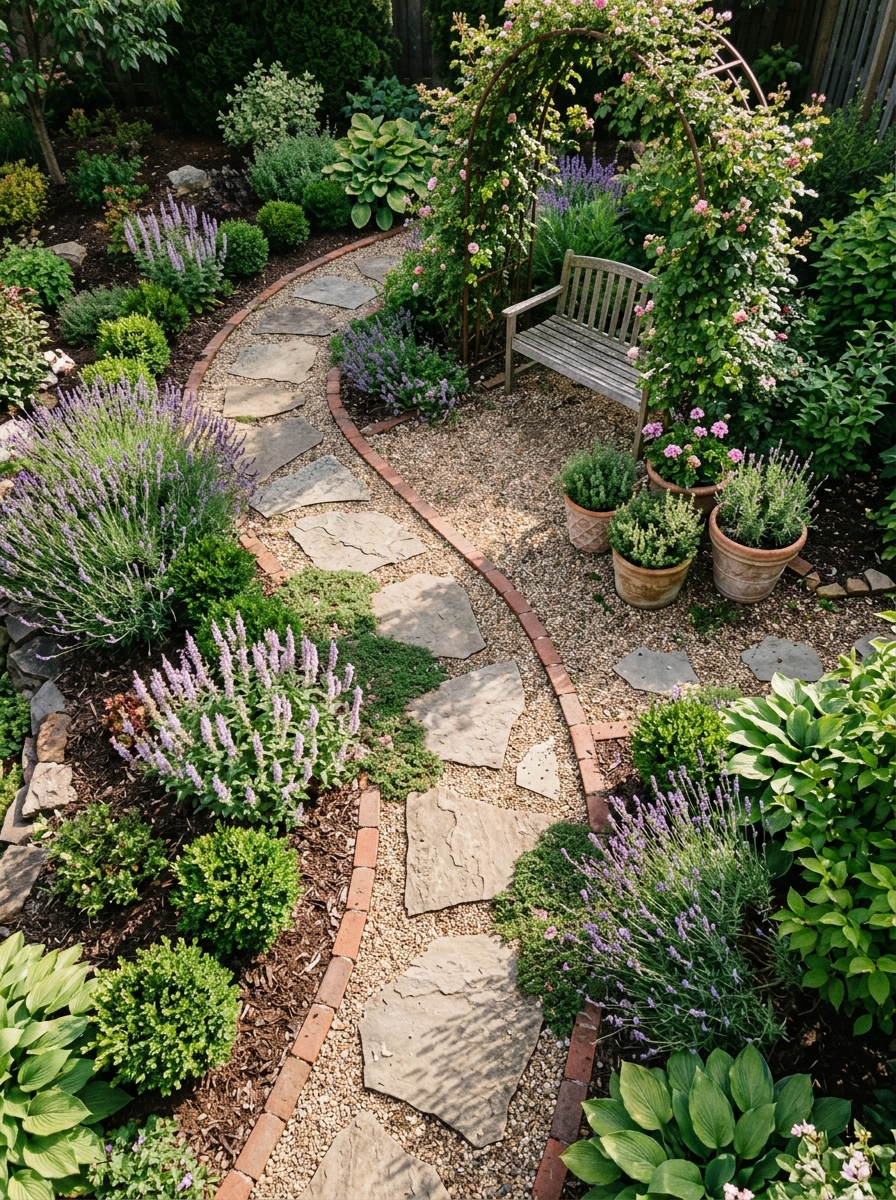
Straight paths are practical, sure, but a gently curving one feels like an experience. Even in a small backyard, a winding path creates mystery and makes the space feel softer. You do not need some grand estate setup here. A simple run of stepping stones through mulch or pea gravel can guide you from the back door to a bench, bird bath, or tucked-away seating nook with a lot more charm than a plain slab walkway. I’m a sucker for a path that makes you take the long way around. There’s something about seeing lavender lean over the edge, brushing your ankles, while gravel crunches underfoot that instantly changes your mood. Use brick or steel edging to keep the line crisp, then plant low growers along the sides so the path feels nestled in instead of stranded in the middle of the yard. Curves should look natural, not like you drew them with your non-dominant hand in a hurry. Once the route is set, your eye follows it automatically, and that gives the whole garden structure. It also encourages you to move through the space instead of just glancing at it from the patio and heading back inside.
Pro Tip: Space stepping stones so the center of each stone sits about 24 inches apart for a natural, comfortable walking stride.
Tuck a Bench Into Planting for a Hidden-Retreat Feeling
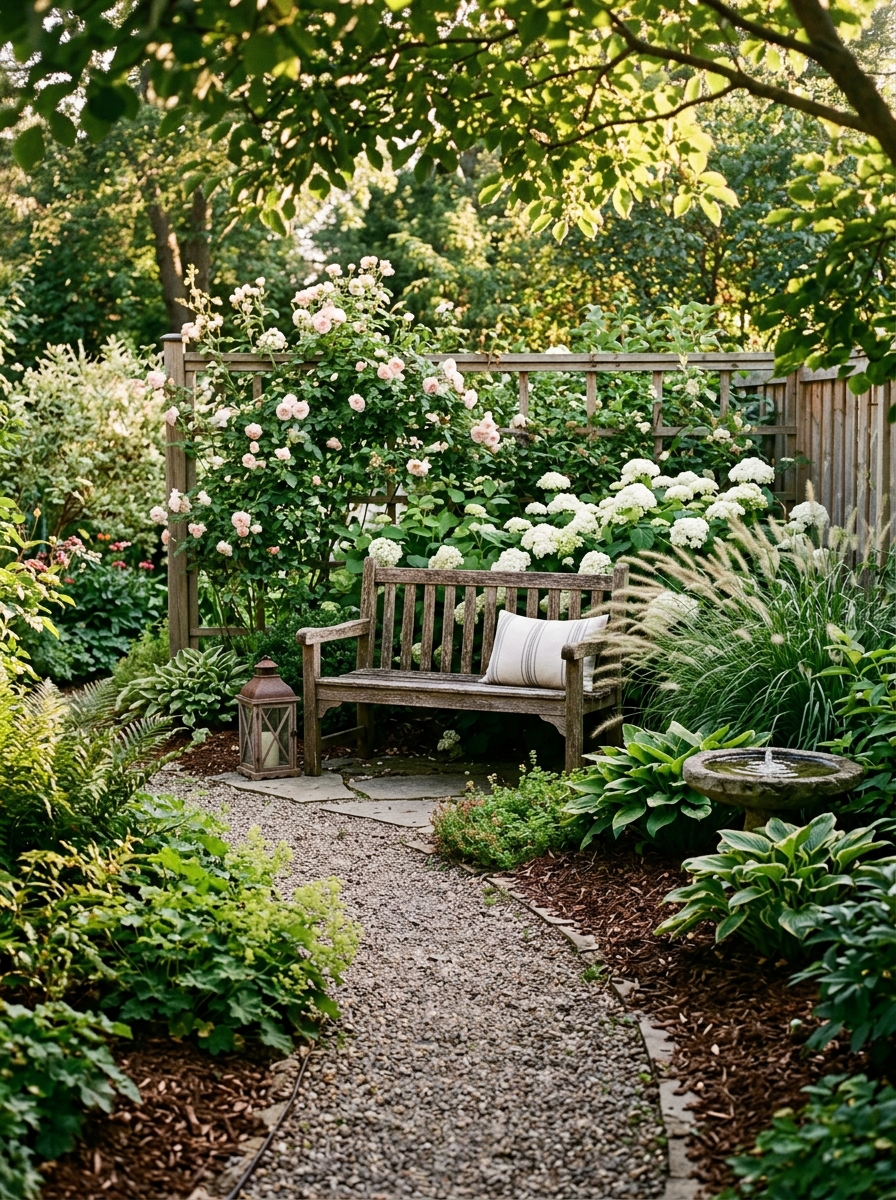
Not every seating area needs a table and a whole setup. Sometimes a single bench, placed just right, creates the best little escape in the yard. Tuck one at the end of a path, under a small tree, or against a border where taller plants can frame it. The key is making it feel sheltered without making it disappear entirely. You want a nook, not a hostage situation. Use layered planting behind and beside the bench so it feels embraced by the garden. Hydrangeas are great for soft volume, while ornamental grasses add movement and hostas fill in the lower level with broad, cooling leaves. If the bench sits against a fence, a climbing rose or clematis can help blur the hard line. Add mulch or gravel underfoot so the area feels finished, and consider a lantern or bird bath nearby for a focal point. As you walk toward it, the view should slowly open up, like the garden is revealing a secret. That’s what makes a bench feel special rather than random. Once it’s in place, you’ve created a quiet destination where you can sit after watering, smell that earthy damp soil, and pretend you’re absolutely not thinking about your to-do list.
Pro Tip: Choose a bench with a backrest and place it where it gets either morning sun or late-day shade, so it’s actually comfortable during the times you’ll use it most.
Mix Evergreen Structure With Soft Flowers for Year-Round Calm
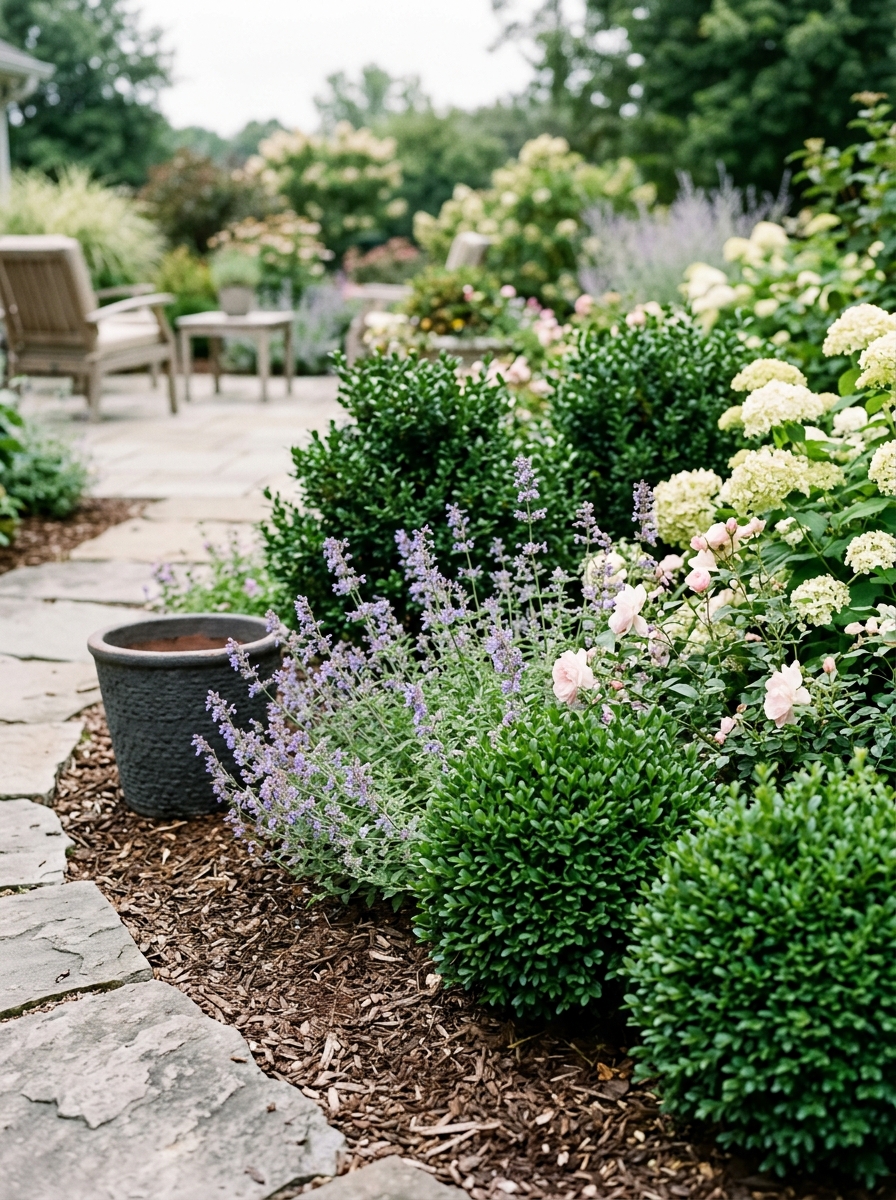
A backyard sanctuary cannot rely on flowers alone, because flowers have the nerve to disappear right when you’re getting attached. The most restful gardens always have some bones underneath the seasonal show. That means evergreen shrubs, tidy shapes, and dependable foliage that hold the space together in winter, early spring, and those weird in-between weeks when everything looks undecided. Boxwood, inkberry, or dwarf hollies give you that steady framework, especially when paired with softer bloomers like hydrangeas, nepeta, or roses. Think of evergreens as the quiet friend who keeps everybody organized while the flowers are off being dramatic. Place evergreen mounds near paths, seating areas, and corners where the eye naturally lands. Then weave in looser plants around them so the whole thing feels relaxed instead of formal. The contrast is what makes it work. Smooth clipped greenery next to airy flower heads, glossy leaves beside fuzzy stems, dark green against pale petals. Even on a cloudy day, that mix feels rich and settled. And when petals drop or stems get cut back, your yard still looks intentional instead of like it forgot its lines halfway through the season.
Pro Tip: Aim for roughly 60 percent evergreen and foliage structure, 40 percent flowering plants in your key view areas so the yard still looks good outside peak bloom.
Add a Simple Water Feature for Sound That Softens Everything
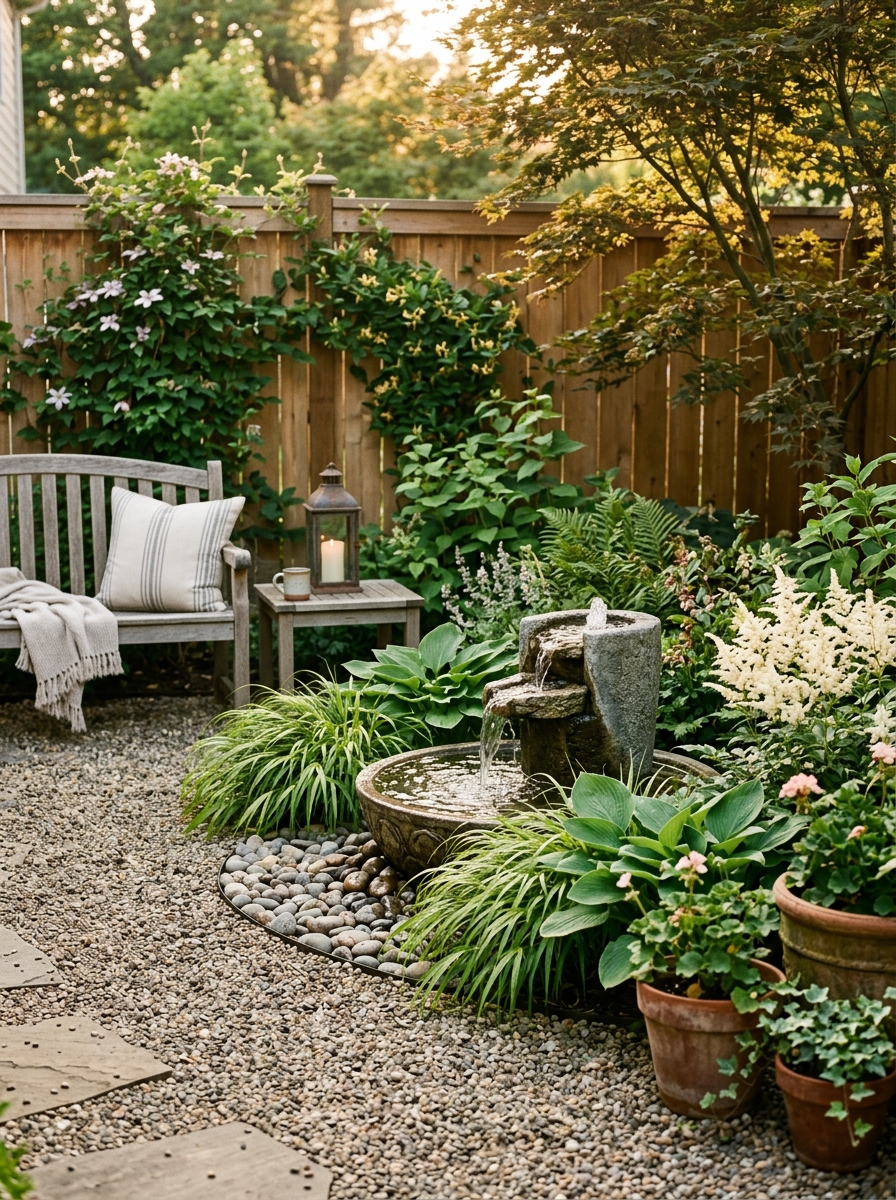
If your yard feels visually nice but somehow still not relaxing, sound may be the missing piece. A small fountain or bubbling water bowl can completely change the mood of a backyard. It masks traffic, softens neighborhood noise, and adds that low, steady trickle that makes you want to stay outside longer. You do not need a giant pond or a dramatic waterfall that requires an engineering degree. A compact self-contained fountain near a seating area usually does the trick. Nestle it into planting so it feels like part of the garden rather than a lonely object plopped in the middle of nowhere. Surround it with hostas, ferns, or low grasses that enjoy a slightly damper microclimate, and use stone or gravel beneath it to make the area feel grounded. I’ll be honest, the first time I added a little bubbling feature to a client’s tiny patio border, the whole spot suddenly felt expensive in the best way. The light catches the moving water, birds get curious, and the air seems cooler on warm afternoons. It’s one of those details that works quietly in the background, but once it’s there, your yard feels calmer every single day.
Pro Tip: Place a small fountain within 6 to 8 feet of your main seating area so you can hear the water clearly without it sounding too faint or too loud.
Frame the View With an Arched Trellis and Climbing Roses
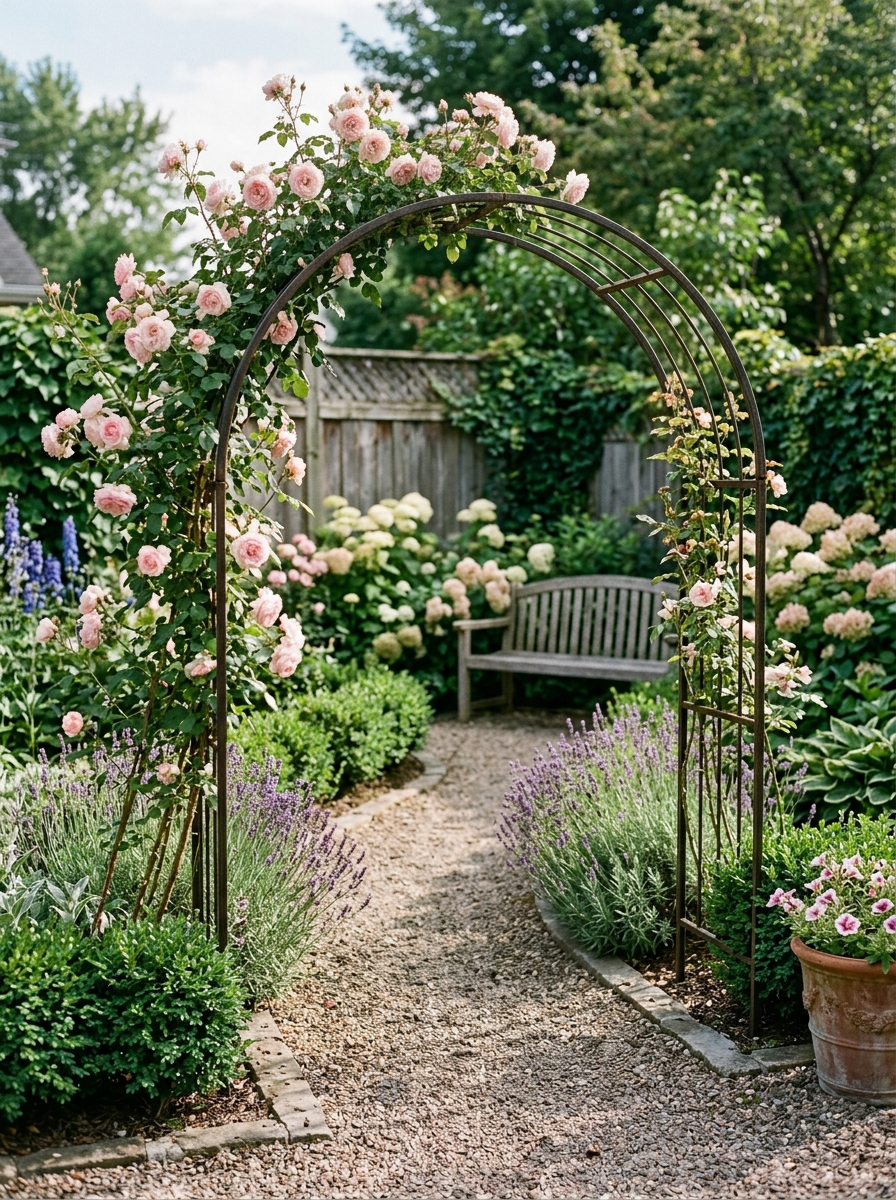
Sometimes a backyard needs one vertical moment to pull everything together. An arched trellis does that beautifully, especially when it marks the entrance to a path or frames a seating area beyond. It gives your eye somewhere to go, and it makes even a modest yard feel more layered and intentional. Add climbing roses or clematis, and suddenly the whole scene gets that soft, romantic look people save to their dream-yard boards. The trick is placement. Put the arch where it leads to something worth seeing, like a bench, bistro set, or focal planter. Then keep the planting around it simple enough that the structure still reads clearly. Roses in blush, cream, or soft peach look gorgeous against weathered wood or black metal, while lavender and boxwood at the base help anchor the whole thing. There’s something charming about walking through an opening wrapped in flowers, catching that faint rose scent in warm air, and hearing bees minding their own business nearby. It feels special without being fussy. Once the vines start filling in, the arch becomes more than a structure. It turns into a threshold, and thresholds make a garden feel like a place you enter, not just a patch of yard you happen to own.
Pro Tip: Tie climbing rose canes horizontally along the arch whenever possible, because horizontal canes produce more flowering side shoots than upright ones.
Create a Gravel Garden Corner That Looks Good in Every Season
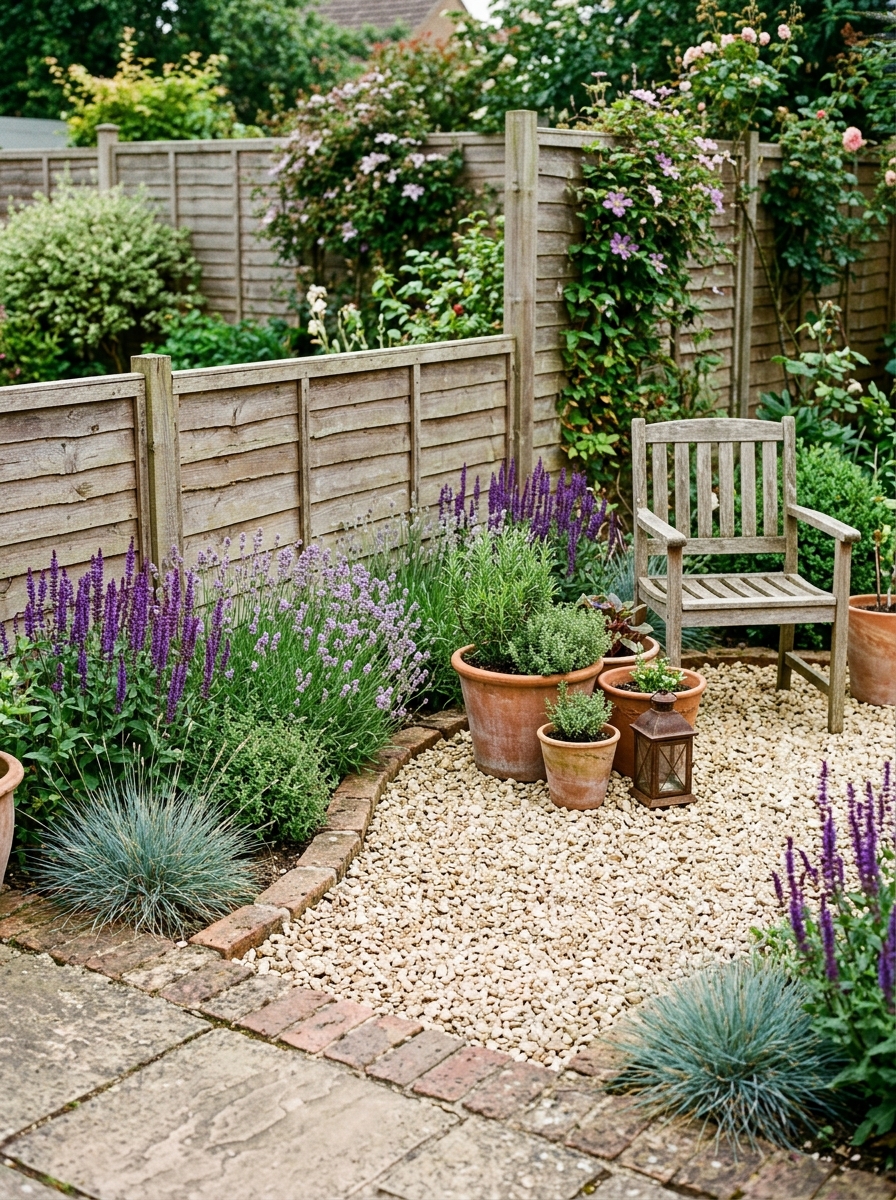
If one part of your backyard is always muddy, awkward, or just plain boring, a gravel garden corner can save the day. Gravel brings instant structure, helps with drainage, and gives the whole area that pleasing crunch underfoot that somehow makes a space feel finished. It also works especially well in sunny spots where Mediterranean-style plants can thrive without you babying them every other afternoon. I’m a big fan of a gravel corner because it gives you a low-fuss area that still looks thoughtful. Use pea gravel or decomposed granite, define the edges with brick or steel, and plant drought-tolerant favorites like lavender, salvia, thyme, and compact ornamental grasses. Tuck in a terracotta pot or two, maybe a simple chair, and suddenly that dead zone becomes one of the prettiest spots in the yard. The silver-green foliage, warm stone tones, and dry herbal scent feel calm in a way that lush borders sometimes do not. And when rain hits gravel, the smell of wet earth and mineral dust is oddly perfect. This kind of corner balances heavier planting elsewhere, giving your yard a little visual breathing room while still feeling warm, lived-in, and very much part of the sanctuary.
Pro Tip: Install landscape fabric only under pathways, not planting pockets, so your gravel stays tidy while roots can still spread naturally in the beds.
Soften Hard Patio Edges With Oversized Pots and Spillover Plants
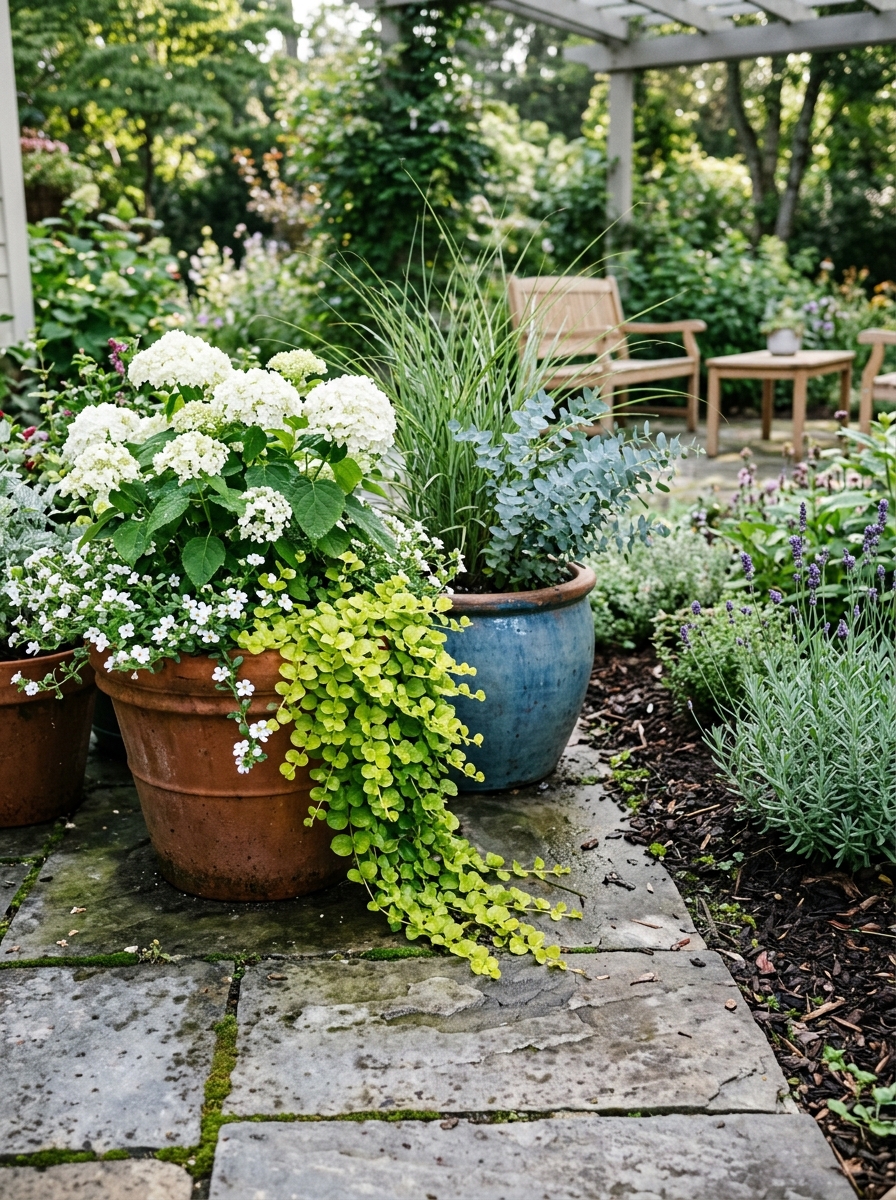
Patios can feel a little abrupt when they meet the lawn or border with a hard line and no transition. That’s where oversized containers earn their keep. A few large pots placed at corners, entry points, or along the outer edge of a patio can soften those sharp boundaries and make the whole area feel more connected to the garden. They also let you add height and color exactly where the space feels flat. Go bigger than you think you need. Small pots tend to look fussy and dry out by lunchtime in summer. Large terracotta or glazed containers have presence, and they hold enough soil for plants to actually thrive. Fill them with a thriller, filler, and spiller if you like that classic formula, or keep it simpler with one gorgeous hydrangea underplanted with trailing bacopa or creeping Jenny. I’ve always loved the look of soft foliage spilling over a pot onto warm stone, especially after watering when everything smells fresh and the leaves still shine. Container groupings also give you flexibility. You can shift them around, swap seasonal color, or use them to hide a weird corner you’d rather not discuss. It’s one of the easiest ways to make a patio feel settled, layered, and much more inviting.
Pro Tip: Use pot feet or small spacers under large containers so water drains freely and doesn’t stain or damage your patio surface over time.
Plant a Moon Garden Near the House for Evening Relaxation
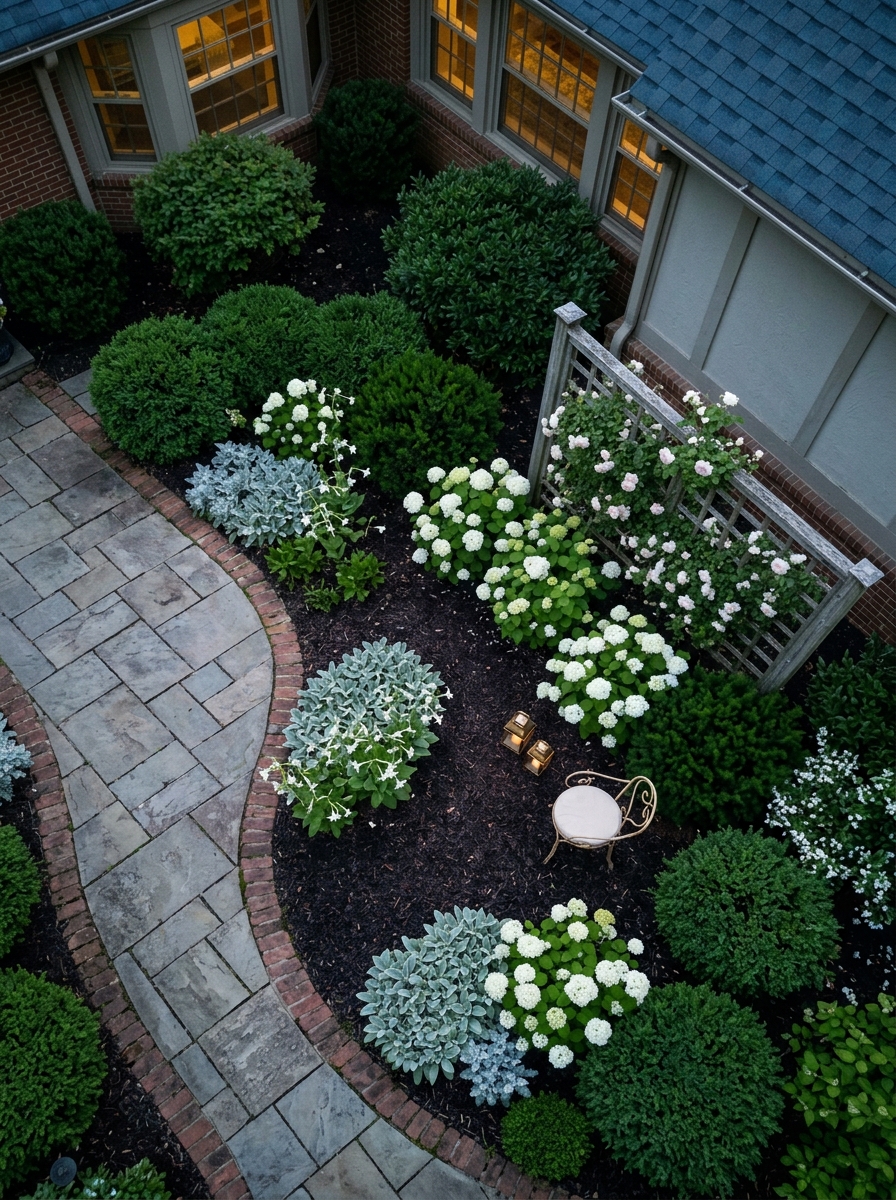
If you actually use your backyard after work, a moon garden is one of the smartest ideas you can borrow. The basic idea is simple: plant pale flowers and silvery foliage where they catch low evening light and stay visible after sunset. Near a patio, deck, or back door, this kind of planting feels soft, calm, and a little magical without trying too hard. Use white hydrangeas, pale roses, dusty miller, lamb’s ear, white nicotiana, or silver-leaved artemisia. Add a few lanterns or low solar lights, but keep the glow gentle so the plants remain the stars. What makes this work is contrast. Silvery leaves against deep green shrubs, creamy blooms floating in the dusk, the faint scent of nicotiana or roses hanging in warm air while the day finally cools off. It’s a lovely way to stretch your yard into the evening instead of only thinking about it in daylight. Place these plants where you can see them from inside too, because a beautiful night view counts just as much. Once this area fills in, even a quick step outside to lock the gate feels nicer, quieter, and somehow more like a small ritual than another household task.
Pro Tip: Cluster white and silver plants in groups of three or five near your main evening sitting area so they read clearly in low light instead of disappearing into the background.
Carve Out a Small Fire Pit Circle for Evenings That Stretch a Little Longer
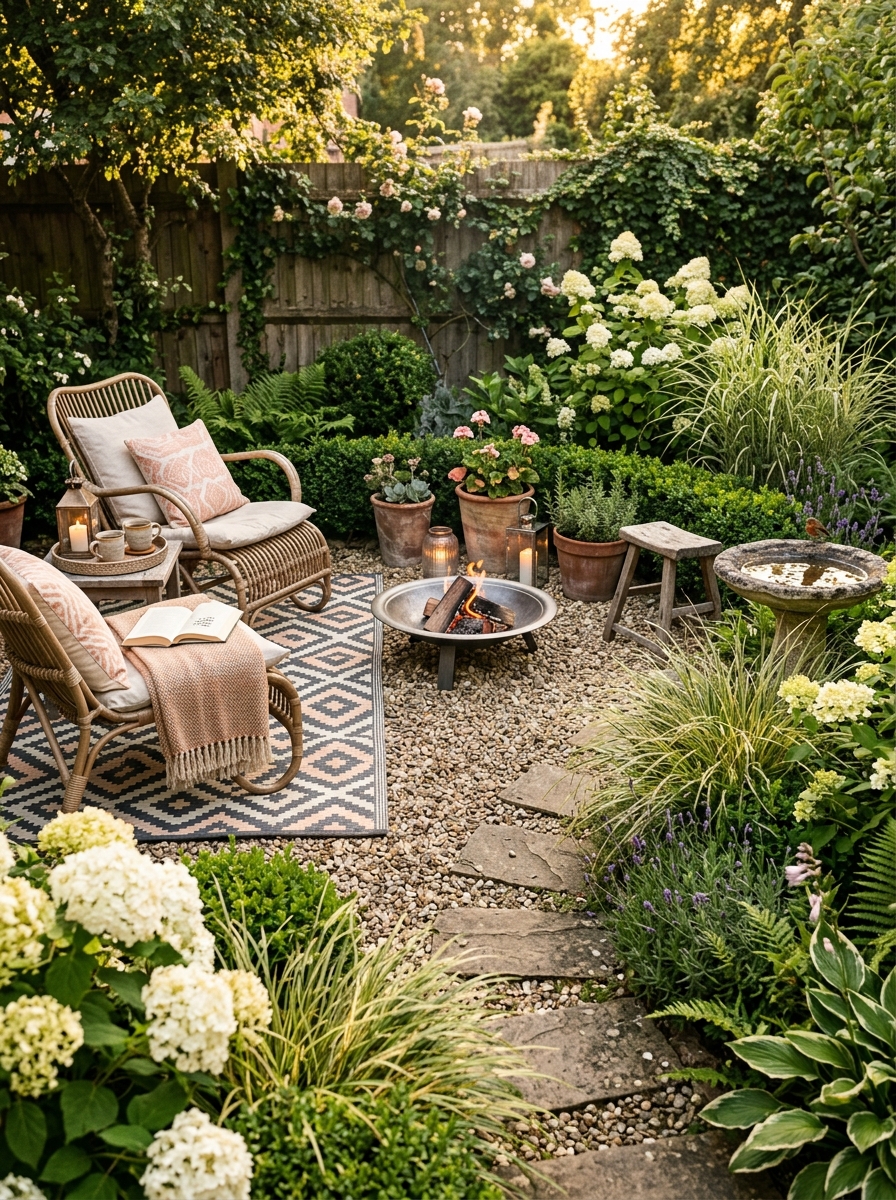
A fire pit changes the backyard in a way that flowers alone just can’t. It gives the garden a heartbeat after sunset, especially on those evenings when the air turns cool and nobody is quite ready to go inside. Even a modest gravel or flagstone circle with a few comfortable chairs can become the spot everyone drifts toward. The glow makes foliage feel deeper, shadows softer, and the whole yard suddenly more intimate. What I love most is that it doesn’t have to be fancy to feel special. A simple steel fire bowl, a ring of sturdy chairs, and nearby planting with ornamental grasses, hydrangeas, or boxwood can make the area feel grounded and sheltered. Add a few lanterns and some cushions you don’t mind actually using, and it starts to feel like an outdoor room with a little soul. It’s especially lovely near the back of the yard, where the flicker draws you outward and gives the garden a destination. If you want sanctuary vibes instead of campsite chaos, keep the palette calm and the layout uncluttered. You’re aiming for restful, not bonfire party at your cousin’s house.
Pro Tip: Set the fire pit on a nonflammable surface at least 10 feet from fences, sheds, and overhanging branches, then edge the area with pea gravel to keep chairs level and mud out of the equation.
Turn One Sunny Strip Into a Fragrant Herb Garden You’ll Brush Past Every Day
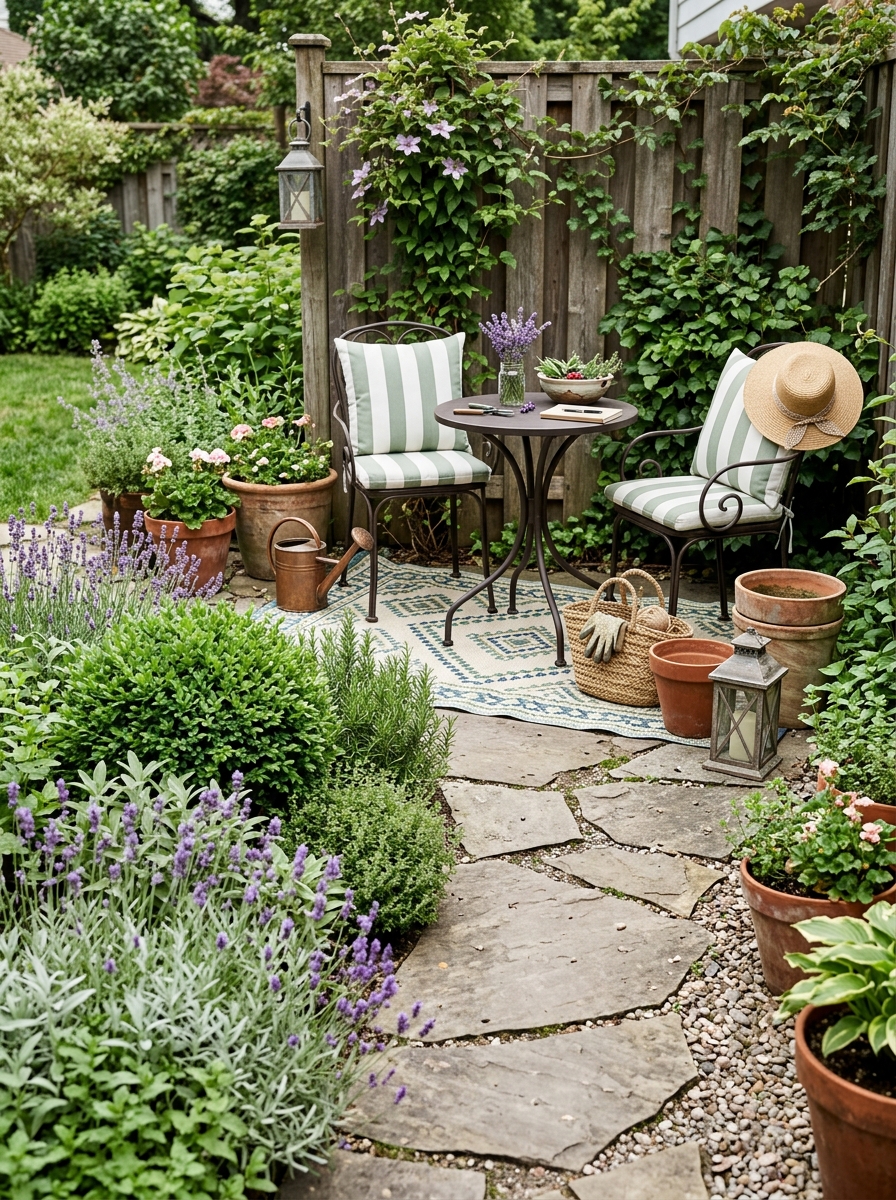
An herb garden is one of the easiest ways to make a backyard feel alive, personal, and genuinely useful. There’s something about brushing past rosemary, thyme, basil, or mint and catching that scent in warm air that makes the whole space feel more immersive. Instead of treating herbs like extras tucked into vegetable beds, give them their own sunny strip near a path, back door, or seating area where you’ll interact with them daily. I’m partial to raised beds or long narrow borders edged with brick, because herbs look charming when they’re a little contained. Their textures do so much work too: upright rosemary, soft mounding oregano, feathery dill, tidy chives. Mix in a few flowering herbs and suddenly pollinators show up as if they got the invitation before everyone else. It becomes a garden moment that smells as good as it looks, which is saying something. The beauty here is the everyday pleasure. You step outside, pinch a few leaves for dinner, and somehow your backyard feels less like a project and more like part of your life. That, to me, is where sanctuary really begins.
Pro Tip: Place the most-used herbs like basil, parsley, and thyme closest to the house, and keep sprawling mint in its own pot unless you enjoy a little gardening drama.
Use Raised Garden Beds as Beautiful Structure Instead of Hiding the Vegetable Patch
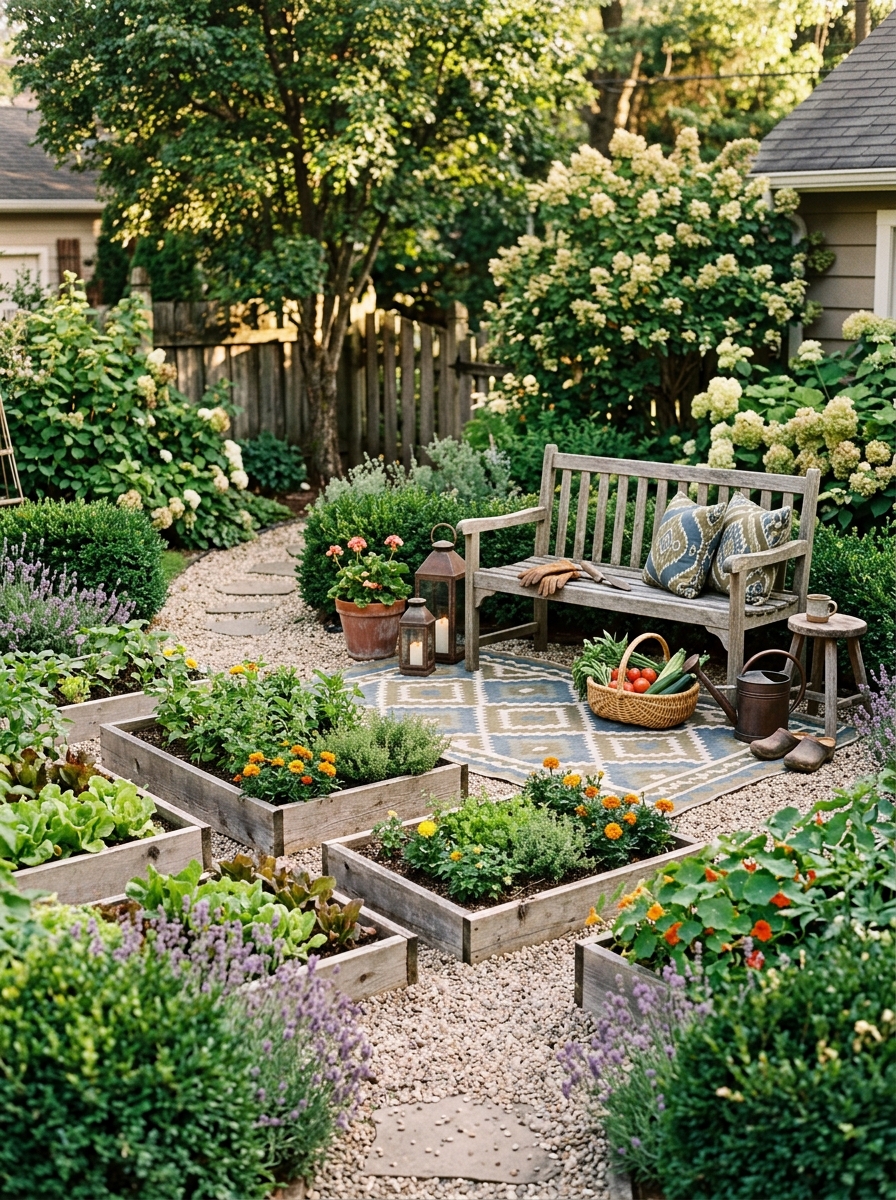
Vegetable gardens don’t need to sit off to the side looking apologetic. Raised beds can be one of the prettiest things in the yard when they’re designed to work with the rest of the space. Clean cedar lines, good spacing, and paths that feel generous enough to stroll through can turn a practical growing area into a calming destination. Honestly, neat raised beds make even kale look like it has its life together. The trick is to treat them as part of the sanctuary, not a separate utility zone. Repeat materials already used elsewhere, like brick edging, gravel, or weathered cedar, so the space feels connected. Then soften the structure with flowers tucked at the corners, a nearby bench, or herbs spilling from terracotta pots. The contrast between orderly beds and lush planting is really satisfying. It feels productive without looking harsh. And there’s a deeper kind of calm in growing food where you can see it every day. Watching lettuce fill out or tomatoes start to color gives the backyard a rhythm that changes week by week. It becomes a place that feeds you in more ways than one, which is exactly my kind of garden.
Pro Tip: Keep raised beds no wider than 4 feet so you can reach the center from either side without stepping into the soil and compacting it.
Hang a Hammock or Swing Chair Where the Garden Feels Quietest
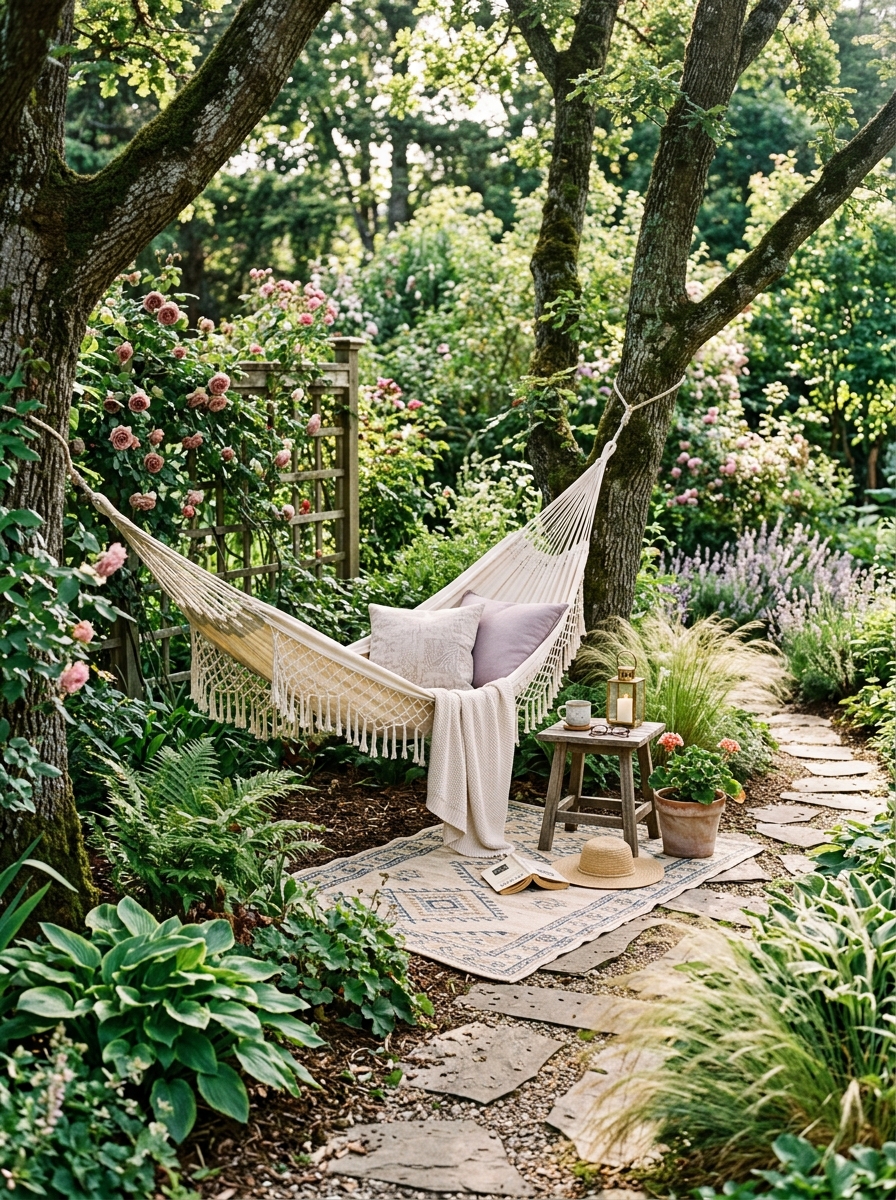
Not every backyard sanctuary needs a formal seating setup. Sometimes the most relaxing thing you can add is a hammock or swing chair in that one spot where the garden already feels a little hushed. It invites a different kind of rest too. You’re not hosting, arranging, or balancing a plate of snacks. You’re just being still for five minutes that accidentally become forty. A hammock between two sturdy trees is wonderful if you have them, but a freestanding frame or a swing chair on a solid support works just as well in smaller yards. The secret is placement. Tuck it where planting wraps around the view, where grasses move a bit in the breeze, or where late afternoon light filters through leaves. Add one small side table, maybe a soft throw, and let the surrounding plants do the rest. You don’t need much. I think every garden benefits from one feature that feels slightly indulgent and completely unnecessary in the best possible way. A hammock says this yard is not only for chores and trimming and hauling mulch. It’s also for naps, reading, listening to birds, and letting your shoulders drop back where they belong.
Pro Tip: Before installing a hammock or swing, check overhead branch strength or anchor ratings carefully, and leave enough clearance around it so feet and fabric don’t scrape nearby plants or hard edges.
Plant for Pollinators So the Backyard Feels Gently Alive All Day
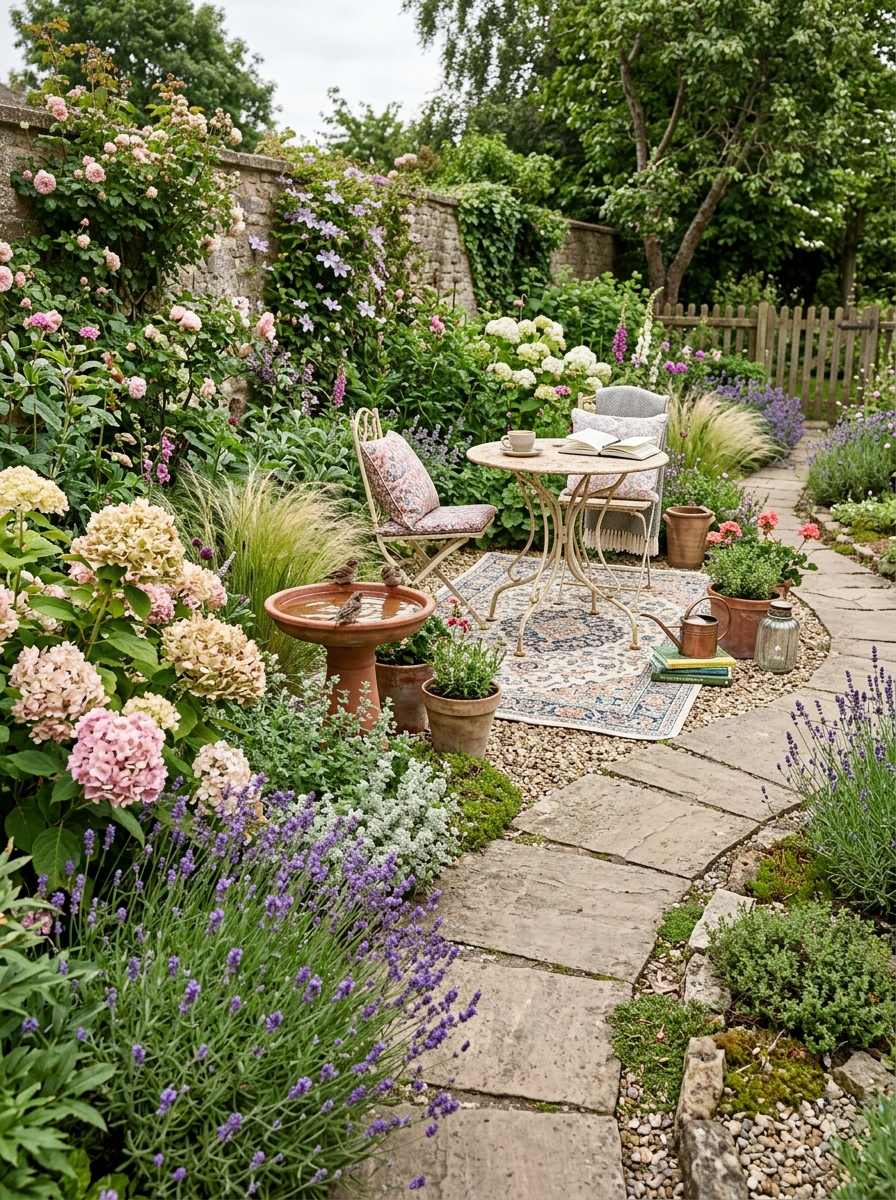
One of the most beautiful ways to transform a yard is to make it hum a little. Not in a loud, chaotic way, but in that soft, alive way that happens when bees move through lavender, butterflies find the right landing spot, and birds start treating your garden like it’s part of their daily route. A pollinator-friendly border brings motion, sound, and a sense of quiet abundance that makes the whole space feel healthier. The key is variety. Choose flowers with different shapes and bloom times so something useful is happening from spring into fall. Think drifts of lavender, airy perennials, flowering herbs, and a few dependable shrubs for structure. Avoid planting one of everything in tiny dots. Bigger groupings read better visually and are easier for pollinators to find. It also makes the garden feel more settled, which matters if you want a sanctuary instead of a plant collection. I always think a garden reaches another level when it starts attracting life on its own. You sit with your coffee, notice bees working the blooms, and suddenly the backyard feels less staged and more like a living place. That kind of beauty has depth to it, and honestly, I never get tired of it.
Pro Tip: Skip double-flowered varieties in your pollinator areas when possible, because many have less accessible nectar and pollen than simpler open blooms.
Add a Bird-Friendly Corner With Shelter, Water, and a Little Breathing Room
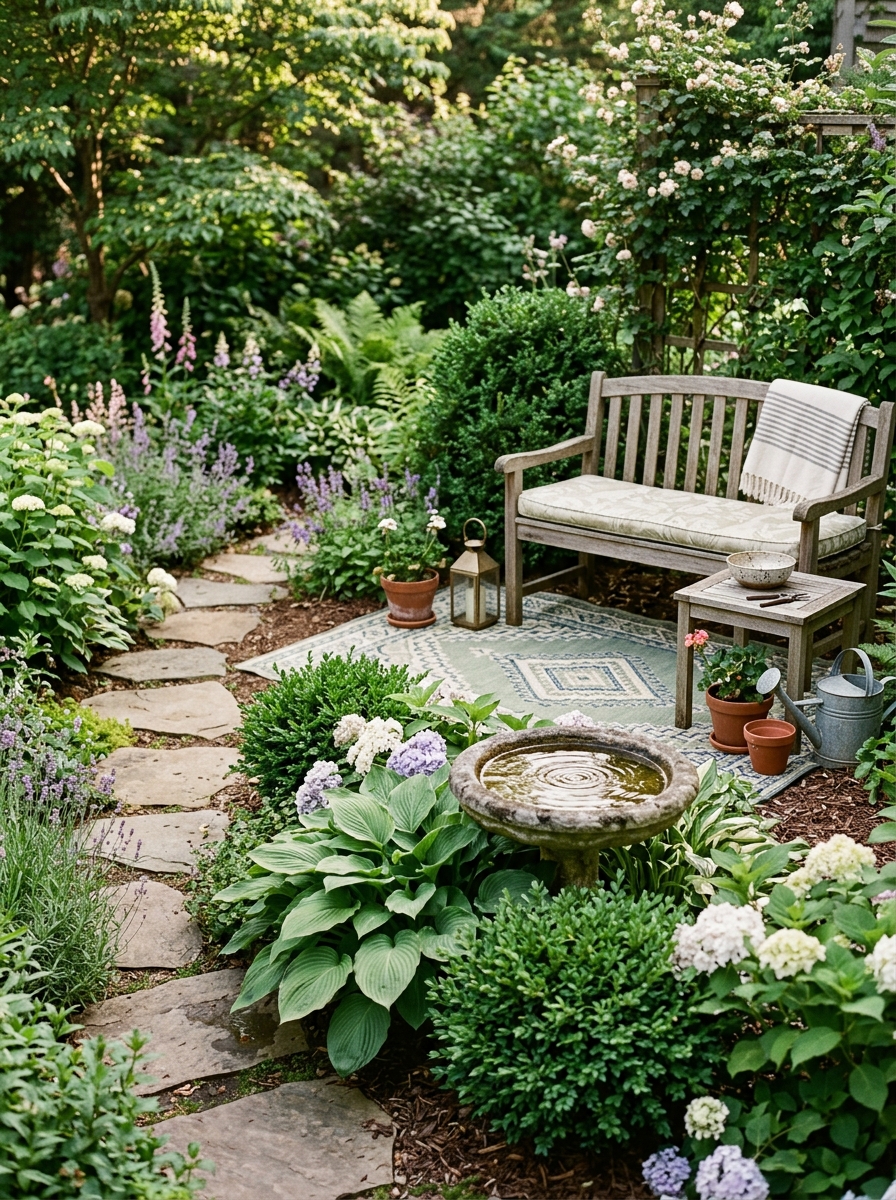
If you want the backyard to feel peaceful in a way that goes beyond looks, make room for birds. A bird-friendly corner can be surprisingly simple: a shallow water source, layered shrubs for cover, and enough open space nearby for birds to feel safe approaching. Once they start visiting regularly, the garden changes character. There’s more movement, more sound, and a lovely sense that the space is being shared. This doesn’t mean turning the yard into a full wildlife preserve unless that’s your thing. It just means creating one thoughtful area with a bird bath, dense evergreens or shrubs, and a few perches where birds can pause before hopping down to drink. Keep it slightly tucked away from the busiest part of the yard, but still visible from a window or seat. That way you get the pleasure of watching without disturbing the routine. I’ve found this kind of corner adds a soft emotional layer to a garden. It feels gentler, less controlled, more connected to the seasons. And on stressful days, seeing a few birds splash around in shallow water is oddly effective therapy. Expensive? No. Charming? Ridiculously so.
Pro Tip: Refresh bird bath water every two to three days, and scrub it weekly with a stiff brush to prevent algae buildup and keep it healthy for visitors.
Define Separate Garden Rooms So the Backyard Feels Larger and More Restful
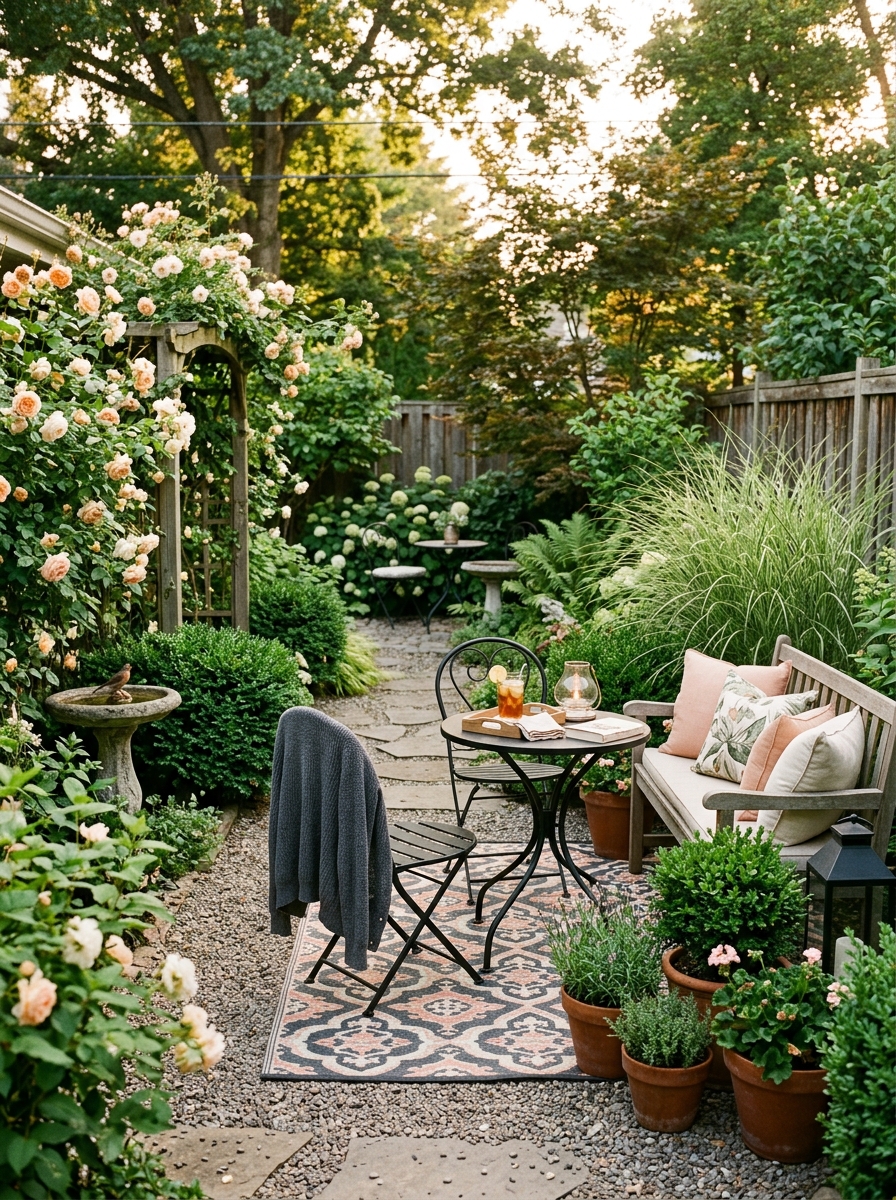
One of the smartest design tricks in a backyard is to stop treating it as one open rectangle. Breaking the space into simple garden rooms makes even an average suburban yard feel more immersive. You might have one area for dining, another for lounging, and another for planting or quiet wandering. The magic is in the transitions. A low hedge, a change in paving, or a gateway moment can make each area feel intentional without chopping the yard into awkward pieces. This approach also changes how you move through the space. Instead of seeing everything at once, you discover it gradually. That sense of unfolding makes a garden feel more peaceful because it gives your eyes places to pause. A small patio can feel cozy rather than cramped, and a planted zone can feel like a destination rather than leftover square footage. I like garden rooms because they make backyards more livable in real life. One person can sip coffee in a quiet corner while someone else waters pots or reads nearby, and it all still feels connected. When the layout supports different moods and uses, the whole yard starts working harder without looking busier. That’s good garden design, and frankly, it’s very satisfying.
Pro Tip: Use one repeating material such as brick edging, cedar, or gravel across all garden rooms so separate areas feel connected rather than random.
Light the Garden Softly So It Still Feels Magical After Sunset
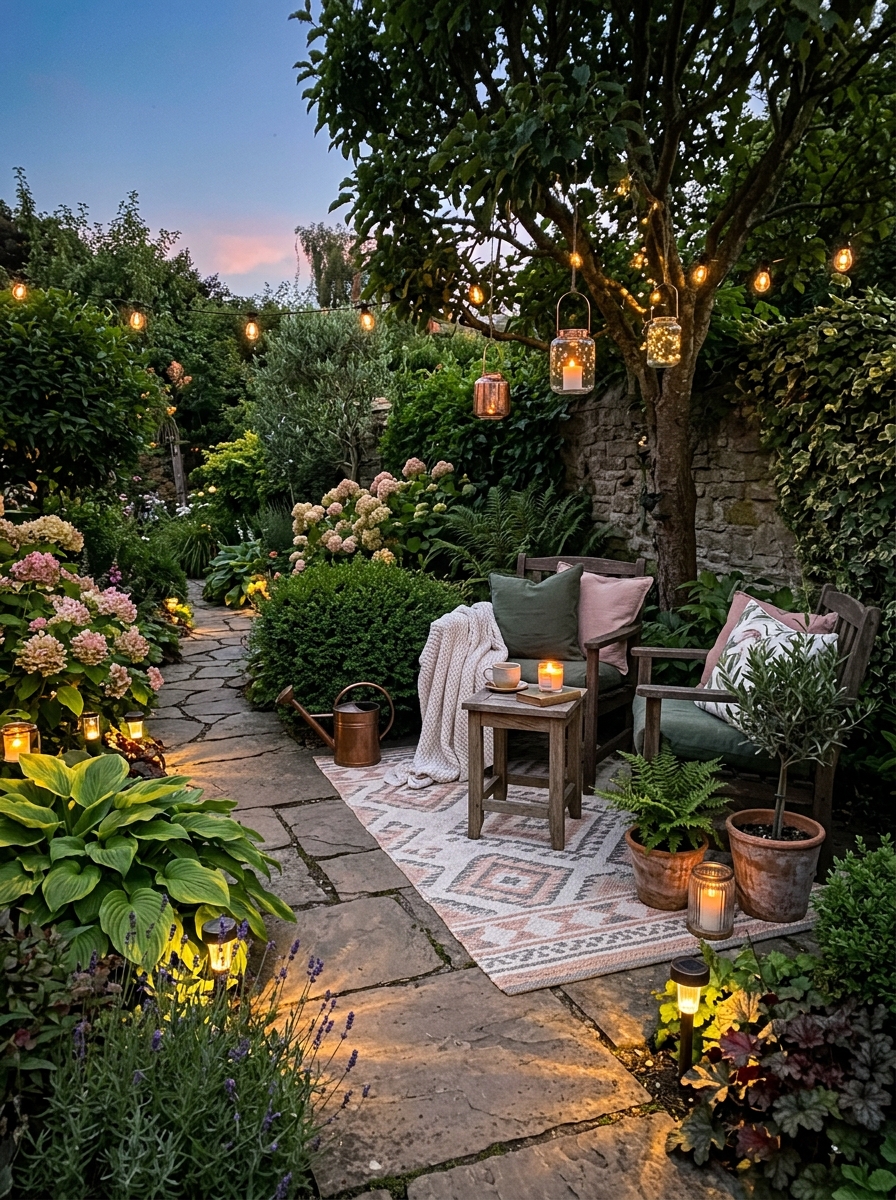
Backyard lighting can either make a space feel dreamy or make it look like a parking lot, and I think we all know which one we’re after. Soft, layered lighting extends the use of the garden while keeping the atmosphere calm. A few low path lights, lanterns near seating, and subtle uplighting on a favorite shrub or small tree can completely change how the yard feels at night. The trick is restraint. You don’t need every border glowing like a stage set. Focus on guiding movement and highlighting a few beautiful moments: the path edge, a seating area, a textured trunk, a pot by the steps. Warm light is almost always the better choice in a garden because it flatters foliage and feels welcoming instead of harsh. Solar options have improved a lot too, which is nice for anyone who doesn’t feel like trenching cable through the yard on a Saturday. I love the way soft lighting makes a backyard feel held together after dark. You can still see enough to move comfortably, but the edges blur just enough to feel peaceful. It turns ordinary evenings into something a little more cinematic, even if you’re only outside taking the dog out and pretending you’re not enjoying yourself.
Pro Tip: Choose warm white bulbs around 2700K and stagger fixtures irregularly along paths so the effect feels natural rather than stiff and runway-like.
Hide the Practical Stuff With Pretty Screening That Still Lets the Garden Breathe
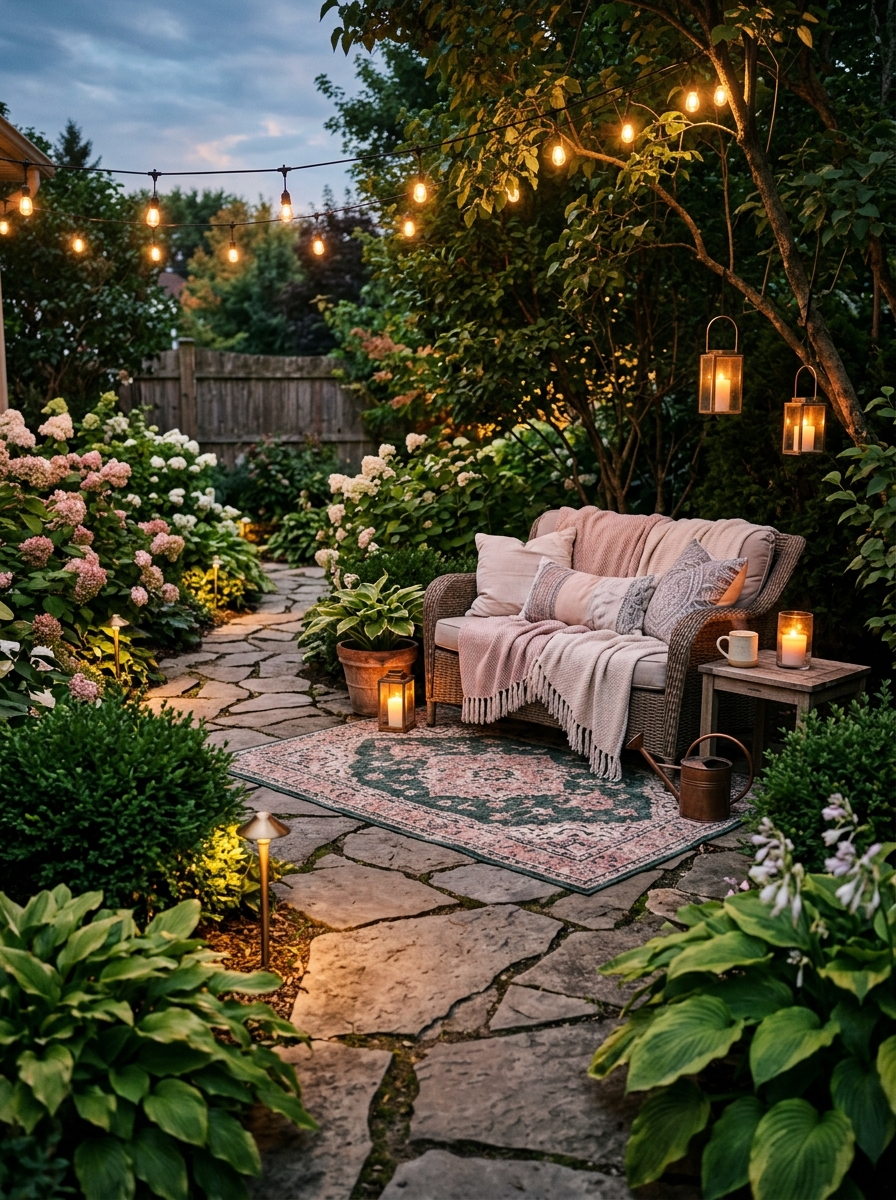
Nothing interrupts a peaceful backyard faster than staring straight at trash bins, the AC unit, or that mysterious pile of tools you meant to organize in March. A sanctuary garden still has to function, so one of the best upgrades is screening the practical stuff in a way that looks intentional. Think slatted cedar panels, a small lattice wall, or a planted divider that softens the view without making the space feel boxed in. This is one of those changes that pays off immediately. The garden feels calmer because your eye stops snagging on visual clutter. And unlike major landscaping projects, screening often takes up very little room. A narrow structure with climbers, a few shrubs, or tall pots can do a lot of work in a compact backyard. It’s especially useful near patios, side yards, and service areas where utility tends to creep into the pretty parts. I’m a big believer that practical solutions should still be attractive. If you have to look at a screen every day, it might as well add beauty too. Done well, it blends into the garden and lets the restful elements take center stage. Which is exactly what the lawn mower, bless it, has never managed to do.
Pro Tip: Leave a few inches of clearance around utility equipment and check manufacturer airflow requirements before installing screens or surrounding plants.
Refresh Tired Boundaries With Paint, Stain, or Limewash for an Instant Backdrop Upgrade
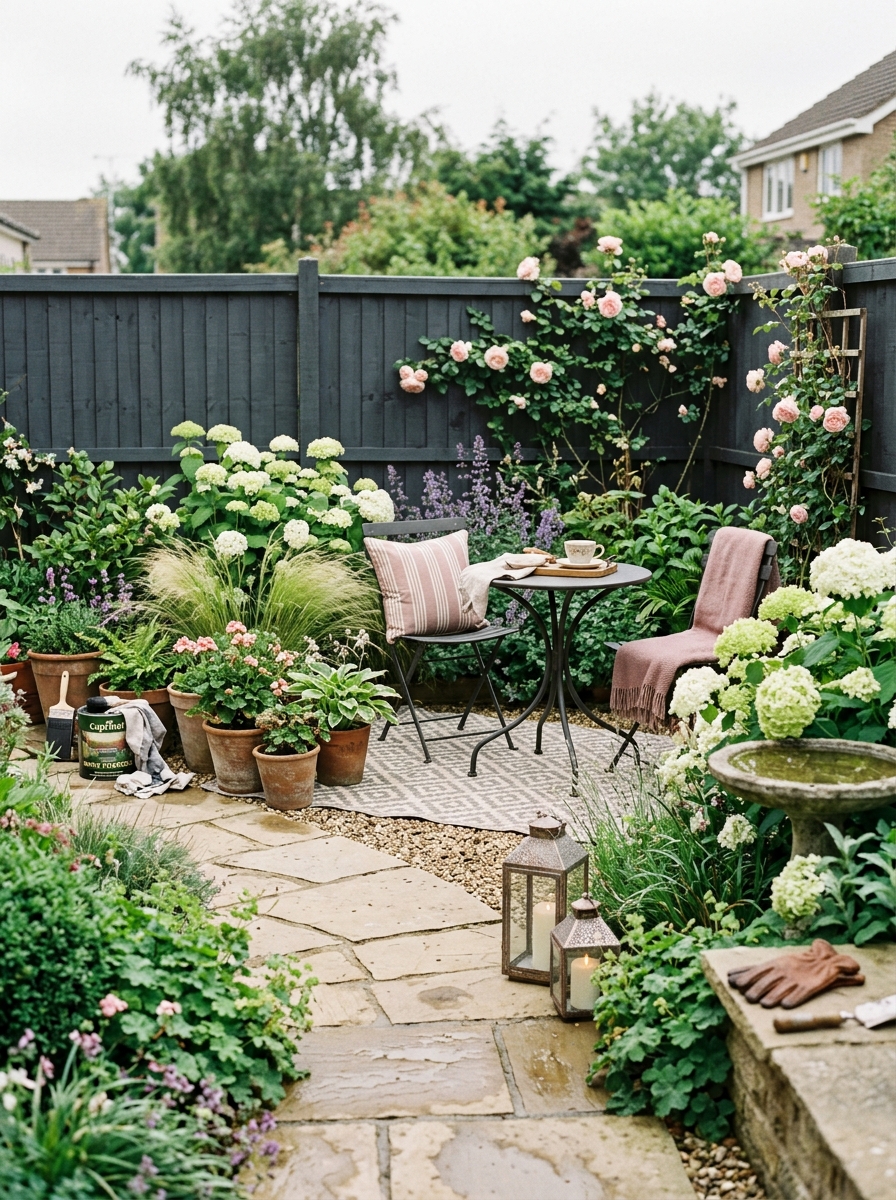
Sometimes the plants are doing their best and the fence is still dragging the whole mood down. If your backyard boundaries look faded, patchy, or just plain gloomy, refreshing them with paint, stain, or limewash can make the entire garden feel more polished almost overnight. It’s not the glamorous part of gardening, but wow, does it make everything in front of it look better. A good backdrop helps foliage stand out and gives the yard a more intentional feel. Deep charcoal can make greens look lush and dramatic. Soft taupe or warm grey feels quieter and lets flowers do the talking. Even a weathered natural stain can unify a mix of old panels and make the garden feel cared for again. Once the background is sorted, the whole space reads as calmer because there’s less visual noise competing with the planting. I often tell people this is one of the highest-impact weekend jobs in the garden. It’s not as fun as buying new plants, I know, but it’s often more transformative. Suddenly the hydrangeas pop, the seating area looks styled instead of stranded, and the backyard starts feeling like a proper retreat rather than a collection of unrelated parts.
Pro Tip: Test your fence color on a small hidden section first and view it in morning, afternoon, and evening light before committing to the whole boundary.
Let One Sculptural Tree Become the Quiet Heart of the Backyard
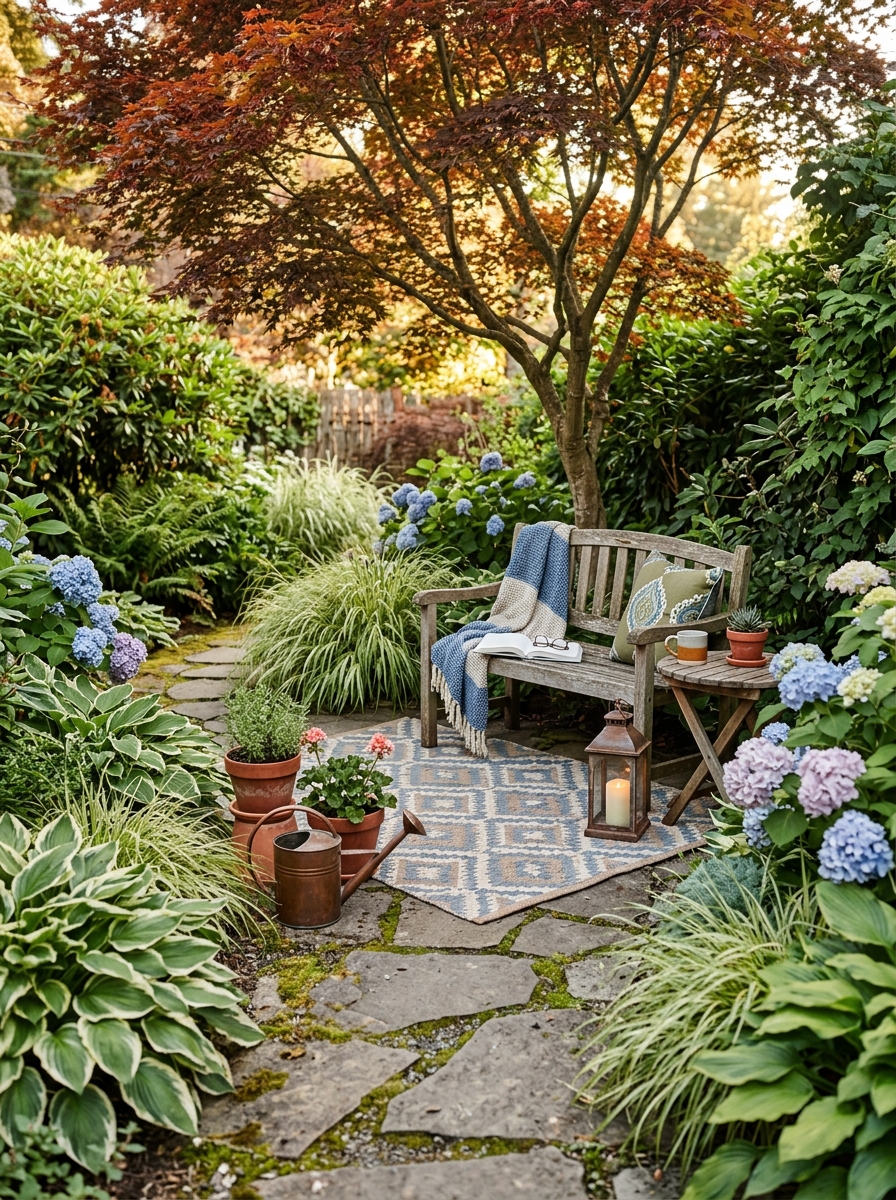
Every backyard sanctuary needs something that gently holds the whole space together, and sometimes that thing is not another chair or flower bed. It is a tree. One well-placed small ornamental tree can give a garden a sense of presence, shade, movement, and calm all at once. Think Japanese maple, serviceberry, dogwood, or even a multi-stem birch if the space allows. There is something deeply grounding about looking out at one beautiful canopy and feeling like the garden has a center of gravity. I love this idea because it works even when the yard is not huge or wildly landscaped yet. A sculptural tree instantly makes things feel intentional. Underneath it, the light shifts through the day, leaves flicker in the breeze, and the whole backyard starts to feel less flat and more layered. You can keep the base simple with mulch, low grasses, hostas, or a ring of soft perennials, and suddenly that awkward middle patch of lawn becomes the prettiest part of the yard. In summer it gives dappled shade, in fall it brings color, and in winter the branching shape still has character. Honestly, a good tree does a lot of heavy lifting without ever looking like it is trying too hard.
Pro Tip: Before planting, set the tree in its pot in the exact spot for a few days and check the view from inside the house, the patio, and the main path so it truly anchors the space instead of blocking it.
Conclusion
The best backyard sanctuary is not the fanciest one. It’s the one that makes you want to step outside more often, stay a little longer, and actually enjoy the space you already have. A comfortable seating spot, a path that gives the yard shape, privacy planting that softens the edges, and a few thoughtful details like water, containers, or evening-friendly flowers can completely change how your backyard feels. You do not need to tackle all 21 ideas at once, and honestly, you shouldn’t. Pick the one that solves your biggest annoyance first. Maybe that’s the bare patio, the awkward fence line, or the lack of a quiet place to sit. Once you fix that one thing, the next choice usually becomes obvious. Gardens have a way of growing in layers, and that’s part of the fun. Trust your eye, pay attention to how the space feels at different times of day, and do not be afraid to move things around until it clicks. A sanctuary is built, not bought. Which of these ideas are you trying first? Let me know in the comments.
Frequently Asked Questions
What are the best home garden ideas for a small backyard sanctuary?
Start with one clear focal point, like a bench or bistro set, then add a narrow path and layered planting around it. In a small yard, fewer better choices always work harder than trying to squeeze in too many features.
How do I make my backyard feel private without building a new fence?
Layering plants is usually the easiest fix. Use taller grasses or shrubs at the back, medium flowering plants in front, and lower foliage near the edge to create a soft privacy screen that feels natural.
What low-maintenance plants work well in beautiful backyard garden designs?
Lavender, boxwood, hydrangeas, hostas, ornamental grasses, and thyme are solid choices depending on your sun conditions. They give you structure, texture, and seasonal interest without acting high-maintenance every week.
How can I create a relaxing backyard garden retreat on a budget?
Focus on the pieces that change the feeling fastest: a simple gravel path, one secondhand bench, mulch, and a few larger plants or pots. Repeating a small plant palette also makes the yard look more polished without spending a fortune.