

You know that moment when you step into your yard with a coffee, look around, and think, I swear this space shrank overnight? Maybe it’s a skinny side yard, a postage-stamp patio, or one of those tiny backyards that somehow has to fit flowers, herbs, seating, and your grand plans. I’ve been there, standing on warm pavers with a hose in one hand and a nursery cart full of “just a few plants” in the other. The good news is you do not need a big yard to make something beautiful and useful. You just need a little strategy. When every corner has a job, even the smallest outdoor space can feel lush, practical, and surprisingly calm. A narrow wall can grow food. An awkward fence can hold color. A compact bench can hide half your supplies. That’s the magic of smart planning in a small home garden. Below, you’ll find ideas that help you layer, stack, soften, and organize your space so it works harder without looking crowded. Here’s what actually works.
Build Up With a Slim Trellis Wall
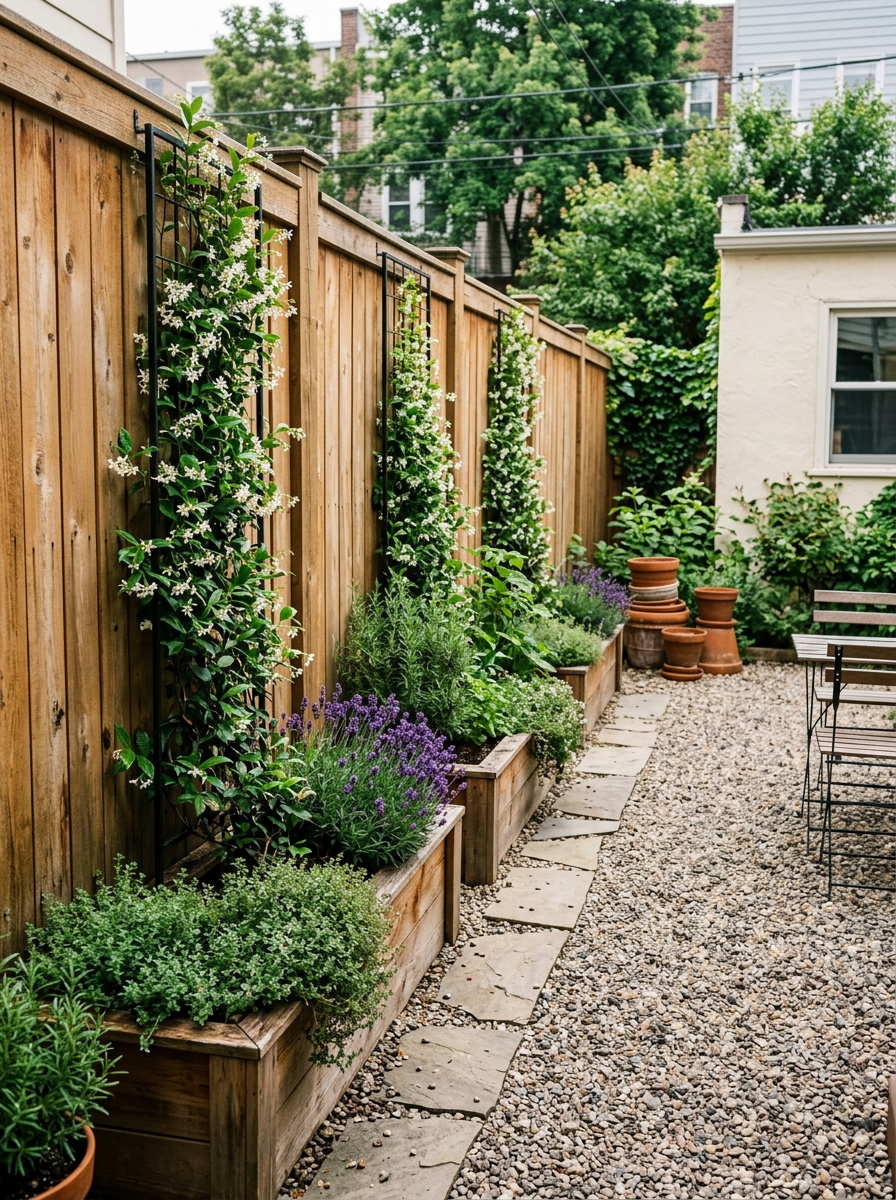
If you’re short on square footage, stop thinking across and start thinking up. One of the easiest ways to make a small home garden feel fuller is to use vertical space with a slim trellis wall. It gives your eye somewhere to travel, which makes the yard feel taller and more layered instead of flat and cramped. Even a plain fence starts to feel intentional once it has climbing jasmine, clematis, or a tidy espaliered fruit tree stretching across it. Try mounting black metal trellises or simple wood lattice behind raised planters or large pots so the base feels anchored. Then keep the planting underneath low and useful: thyme, basil, compact lavender, maybe a trailing ivy to soften the edge. That mix gives you fragrance, color, and structure without eating up the walking path. You’ll also notice the whole area feels less boxy once plants rise off the ground. From there, the rest of the yard gets easier to plan because you’ve created a clear focal point. And once you start using walls properly, you’ll wonder why you ever let that vertical space sit there doing absolutely nothing.
Pro Tip: Set trellises 2 to 4 inches away from the fence or wall so air can move behind the plants and reduce mildew on climbers.
Use Tiered Pots to Stack Color and Herbs
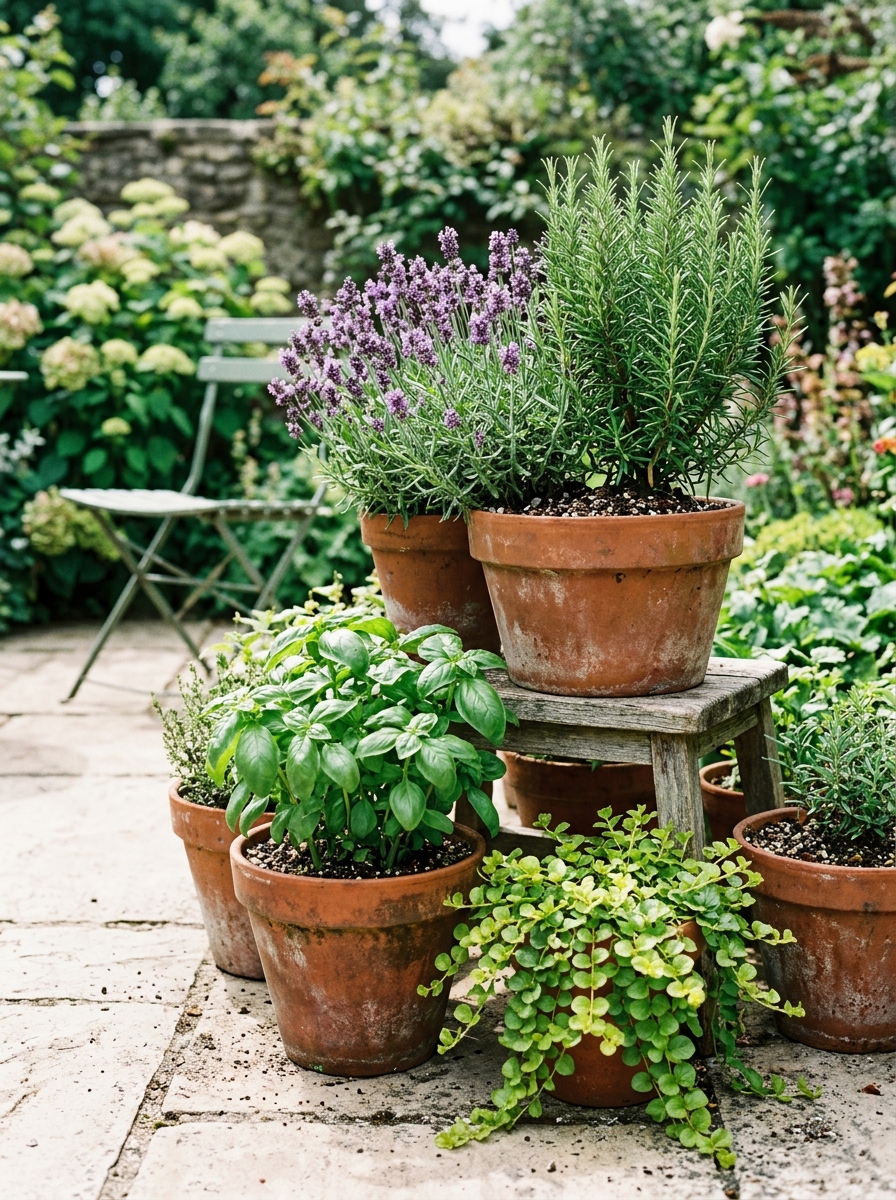
Container gardening gets a bad reputation when people line up pots like little soldiers around the patio and call it a day. A better move is to stack your planting in tiers so you use height, not just floor space. Tiered pots make a tiny corner feel lush fast, and they let you tuck more plants into the same footprint without turning the place into a tripping hazard. I’m a big fan of mixing useful plants with pretty ones here. Put rosemary or basil in the top tier where the drainage is sharpest, then use trailing plants like creeping Jenny or ivy lower down to soften the edges. Add a compact geranium or salvia in the middle, and suddenly you’ve got color, scent, and dinner ingredients in one neat little tower. Terracotta gives it warmth, while glazed pots can brighten a shady spot. This idea works especially well near a door or patio chair where you can brush past the leaves and catch that herbal scent in the heat. It also helps the whole yard feel styled instead of scattered, which is half the battle in a small space.
Pro Tip: Use pot feet or small spacers under the bottom container so water drains freely and doesn’t stain patios or rot wood decking.
Add a Narrow Raised Bed Along the Fence
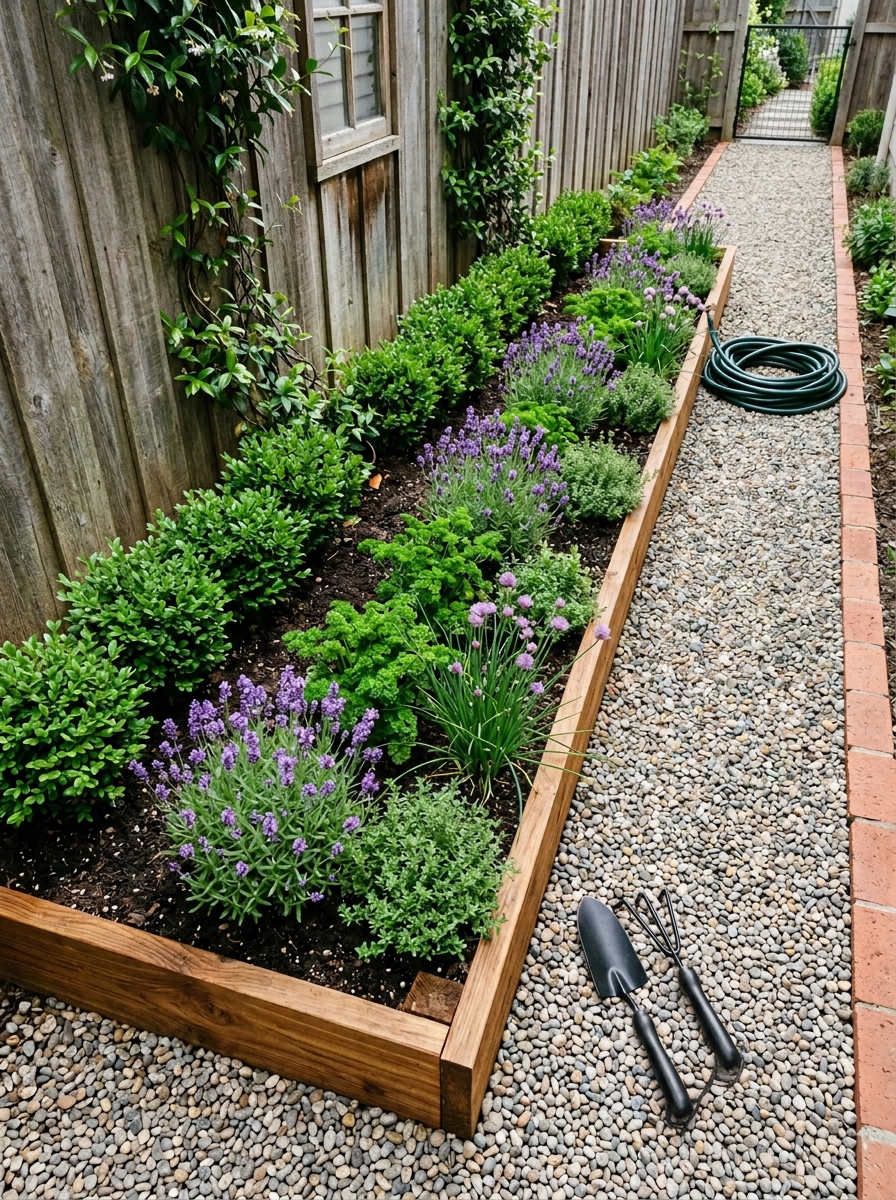
A narrow raised bed is one of those quiet workhorses that makes a tiny yard feel more finished right away. Instead of scattering pots everywhere, you get one clean strip of planting that frames the space and gives roots a better home. It’s especially useful along a fence where grass struggles, weeds move in, and the whole edge tends to look forgotten by midsummer. Keep the bed slim, around 12 to 18 inches wide, and choose plants that behave. Compact evergreen shrubs, dwarf grasses, lavender, and low perennials create structure without swallowing the walkway. If you want more function, tuck in chives, parsley, or a line of strawberries at the front edge. The cedar or painted timber adds definition, and that little bit of elevation makes the planting stand out beautifully against a plain wall. What I like most is how this layout frees up the middle of your yard. You keep open space for a chair, a little table, or simply room to breathe. And when the border is tidy, the whole garden feels bigger, even if you haven’t gained a single extra inch.
Pro Tip: Before filling a narrow raised bed, loosen the soil underneath with a garden fork so roots can grow deeper and the bed won’t dry out as fast.
Lay a Tight Paver Path to Create Flow
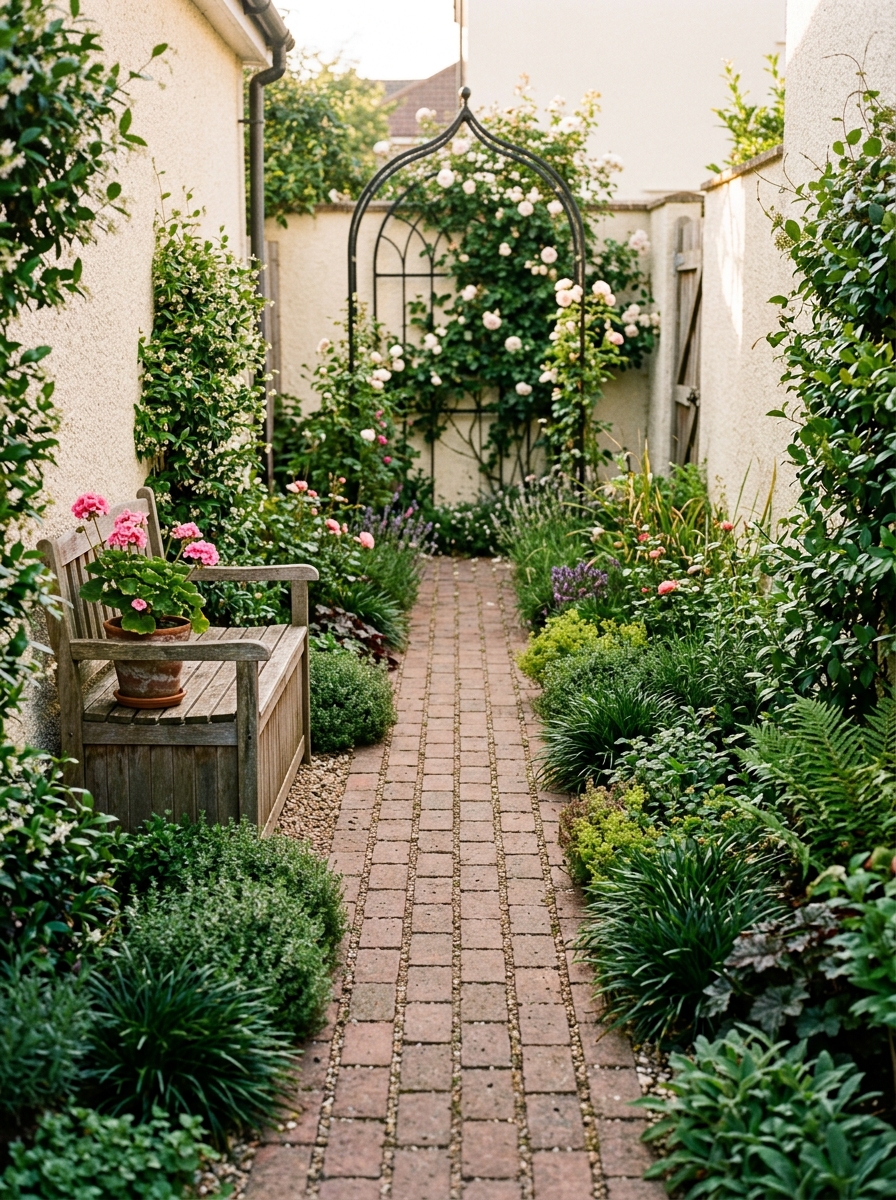
Small spaces can feel awkward when there’s no clear route through them. That’s where a tight paver path earns its keep. Even a short run of brick or stone tells your eye where to go, and that simple sense of movement makes the garden feel intentional instead of cluttered. You don’t need a grand winding walkway either. In a compact yard, a narrow path with clean edges does the job beautifully. Use pavers that fit the scale of the space. Oversized slabs can look heavy, while tiny stepping stones may feel fussy. I like slim brick, rectangular concrete pavers, or natural stone with gravel joints because they add rhythm without overwhelming the planting. Flank the path with low herbs, dwarf grasses, or compact flowering perennials so the edges soften over time. The crunch underfoot, the scent from brushed leaves, the little shift from one zone to another — it all makes the yard feel more immersive. Once your path is in place, arranging everything else becomes easier. Seating, containers, storage, even a tiny focal planter suddenly have a relationship to each other, and the whole garden starts making much more sense.
Pro Tip: Set pavers on a compacted base of 2 to 3 inches of crushed stone plus 1 inch of leveling sand to keep a narrow path from shifting.
Tuck Seating Into a Plant-Filled Corner
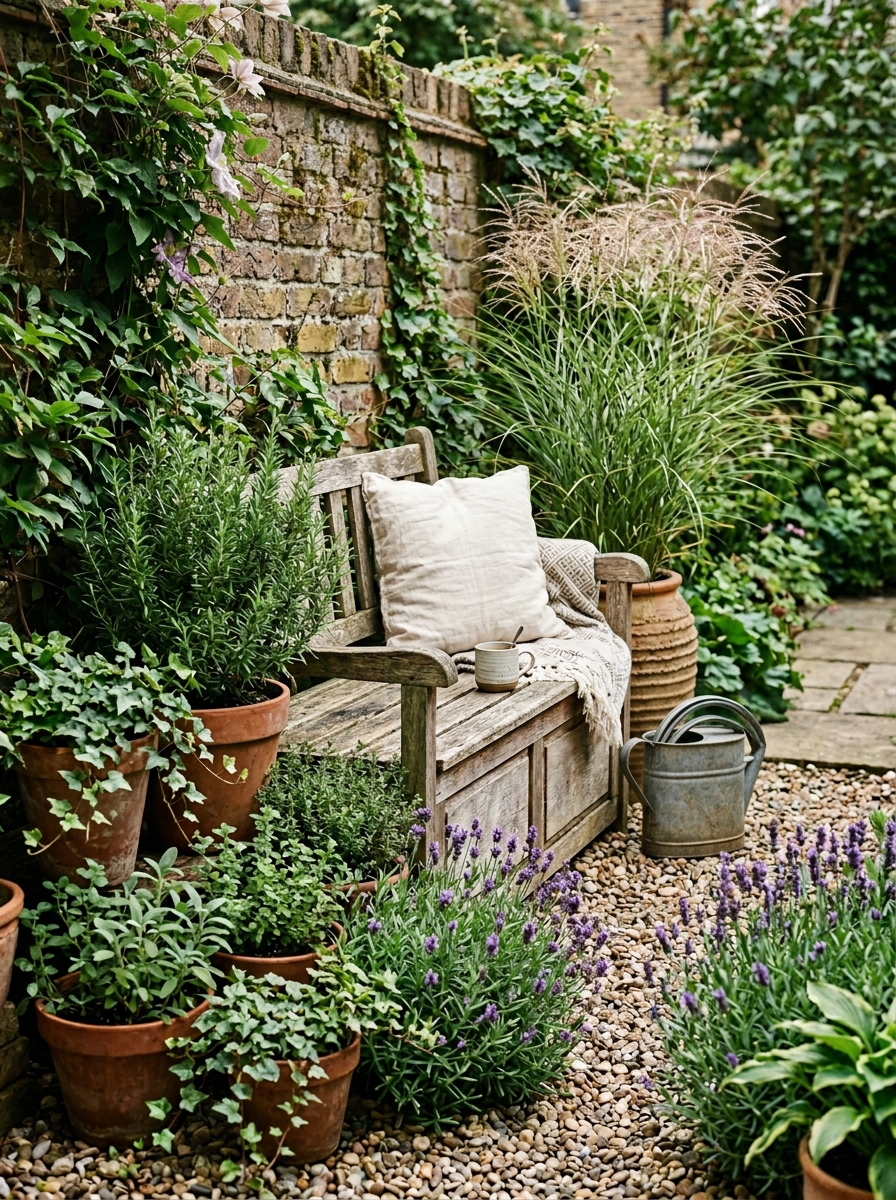
I’ll be honest, if a garden has nowhere to sit, I start acting like it’s unfinished. Even the tiniest yard deserves one small place where you can land for ten quiet minutes and admire your own excellent decisions. A tucked-away chair or compact bench instantly makes the space feel like a room, not just a collection of plants. The trick is to keep the seating scaled down and let planting wrap around it. A folding bistro set, a slim bench with storage, or two petite chairs can fit into a corner without dominating it. Use taller pots or a narrow border behind the seat to create a backdrop, then soften the front with low herbs or a trailing plant. That layering makes the corner feel cozy and intentional, almost like a secret little pocket. Add a cushion if you want, but choose outdoor fabric that can survive real weather and your occasional neglect. This kind of setup also helps you use awkward corners that otherwise collect empty pots and random bits of bamboo canes. Once there’s a seat there, the whole area suddenly behaves better. Funny how that works.
Pro Tip: Leave at least 24 inches of clear access in front of compact seating so the corner stays usable and doesn’t feel pinched.
Grow Edibles in a Patio Rail or Wall Planter
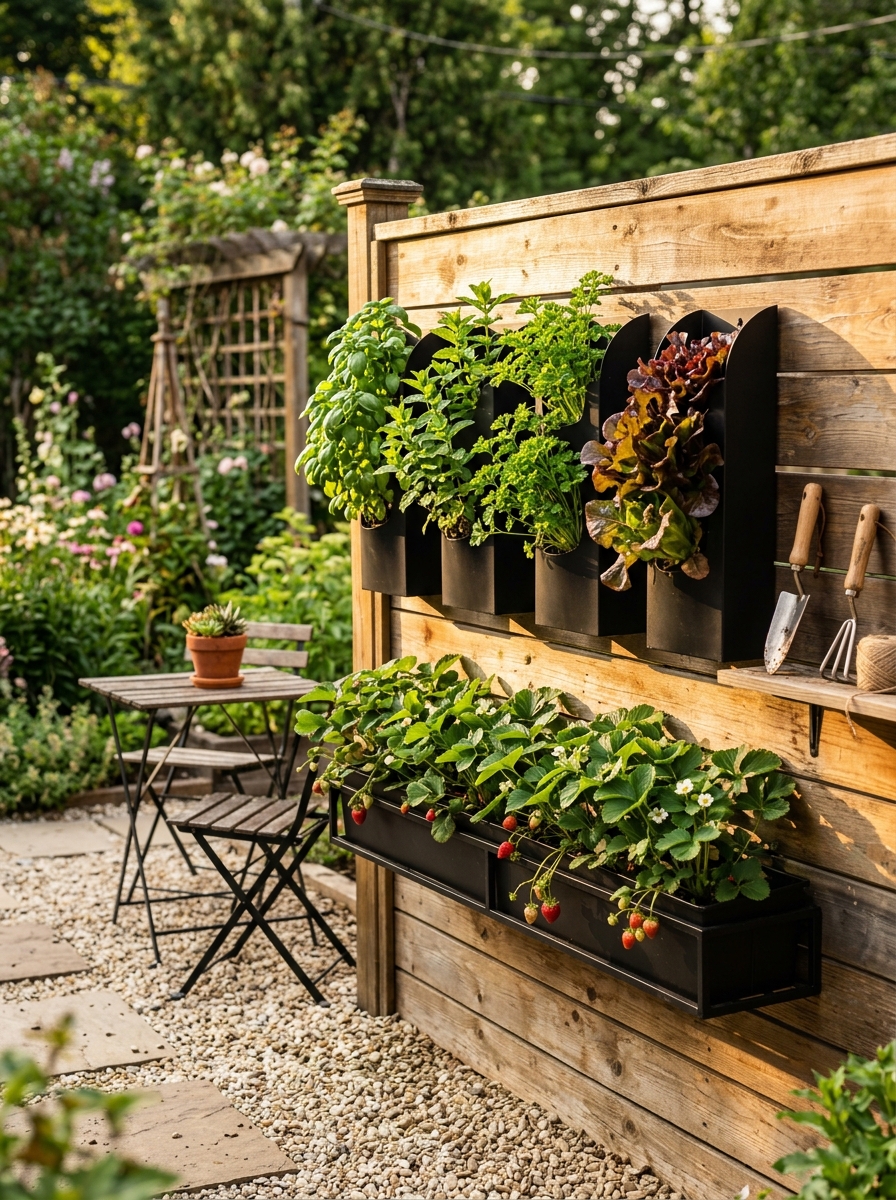
If your ground space is already spoken for, wall and rail planters are a smart way to sneak in fresh herbs and salad greens without sacrificing room to move. They’re especially handy on patios and townhouse yards where every pot on the floor starts to feel like one more obstacle between you and your coffee. Getting plants up off the ground keeps things lighter, tidier, and much easier to water. Choose shallow-rooted edibles that won’t sulk in tighter quarters. Basil, thyme, mint, parsley, lettuce, and even compact strawberries do surprisingly well when they get enough sun and regular feeding. A row of wall-mounted planters can turn a blank fence into something useful and pretty, while a rail planter near the back door makes harvesting ridiculously convenient. You’ll snip herbs while dinner cooks and feel very organized, even if the rest of your life says otherwise. Best of all, this setup makes the garden work harder without looking crowded. You keep your floor area open for seating, storage, or a path, and you still get that lush, productive feeling that makes a small yard feel generous.
Pro Tip: Install drip irrigation tubing with a pressure reducer in wall planters because elevated containers dry out much faster than ground beds, especially in summer.
Frame the Yard With Repeating Evergreen Shapes
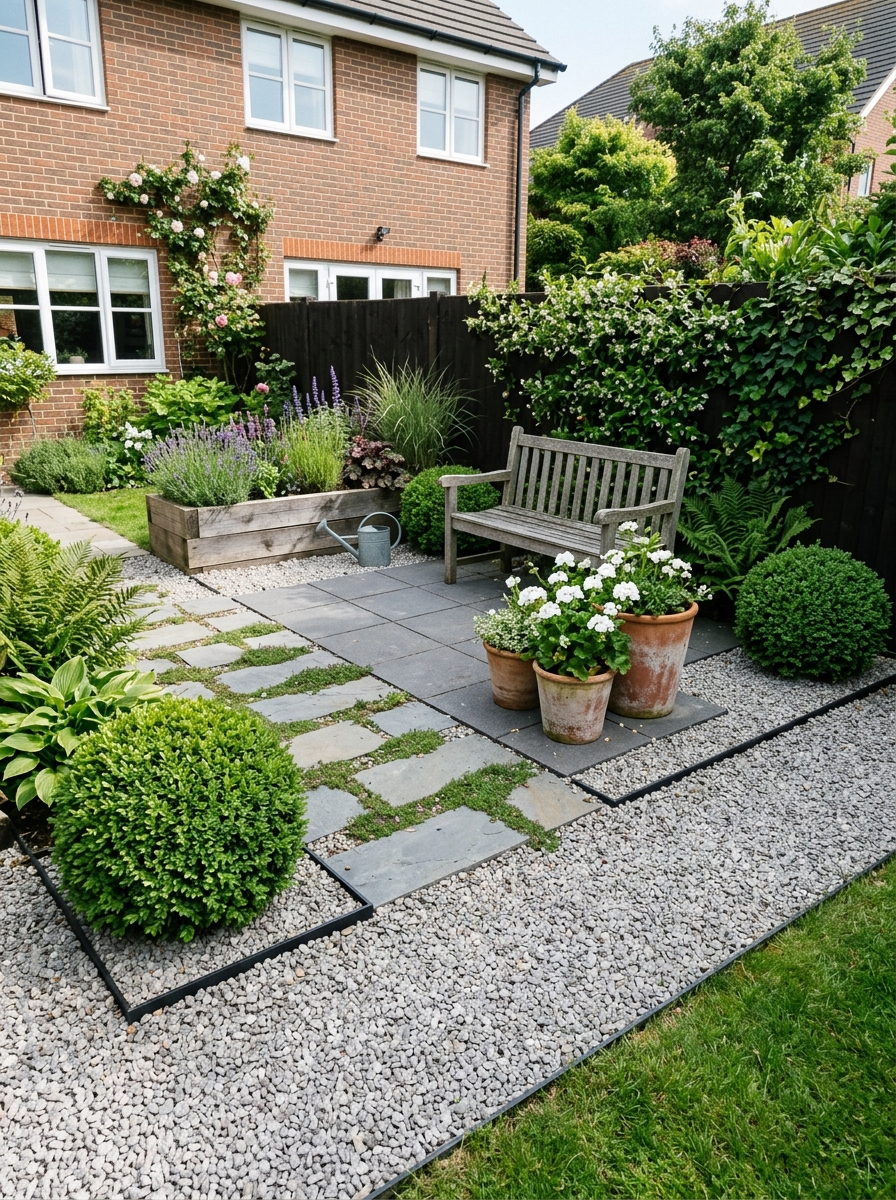
When a little garden feels busy, repeating shapes can calm it down fast. A few compact evergreens placed with intention create rhythm, structure, and year-round backbone without taking over the space. Think of them as the visual punctuation marks of the yard. They keep things from looking like a yard sale of unrelated pots and impulse buys. We’ve all been there. Use the same plant in two or three spots rather than choosing something different for every container or bed. Dwarf boxwood, small hebe, or other compact evergreen shrubs work beautifully because they hold their form and make the rest of the planting look more polished. Repeat them near an entry, beside a bench, or at the corners of a narrow border. Then weave in seasonal flowers and herbs around them. The evergreen shapes keep everything grounded, while the softer planting adds movement and color. This approach is especially helpful if you love a Pinterest look but your real garden tends to drift into chaos by July. Repetition brings order without feeling stiff. And once the bones are in place, even a tiny yard starts to feel like it has real design behind it.
Pro Tip: Choose evergreens that mature under 3 feet wide and space them based on mature size, not the cute little nursery pot they came in.
Use a Corner Obelisk for Vertical Veg or Flowers
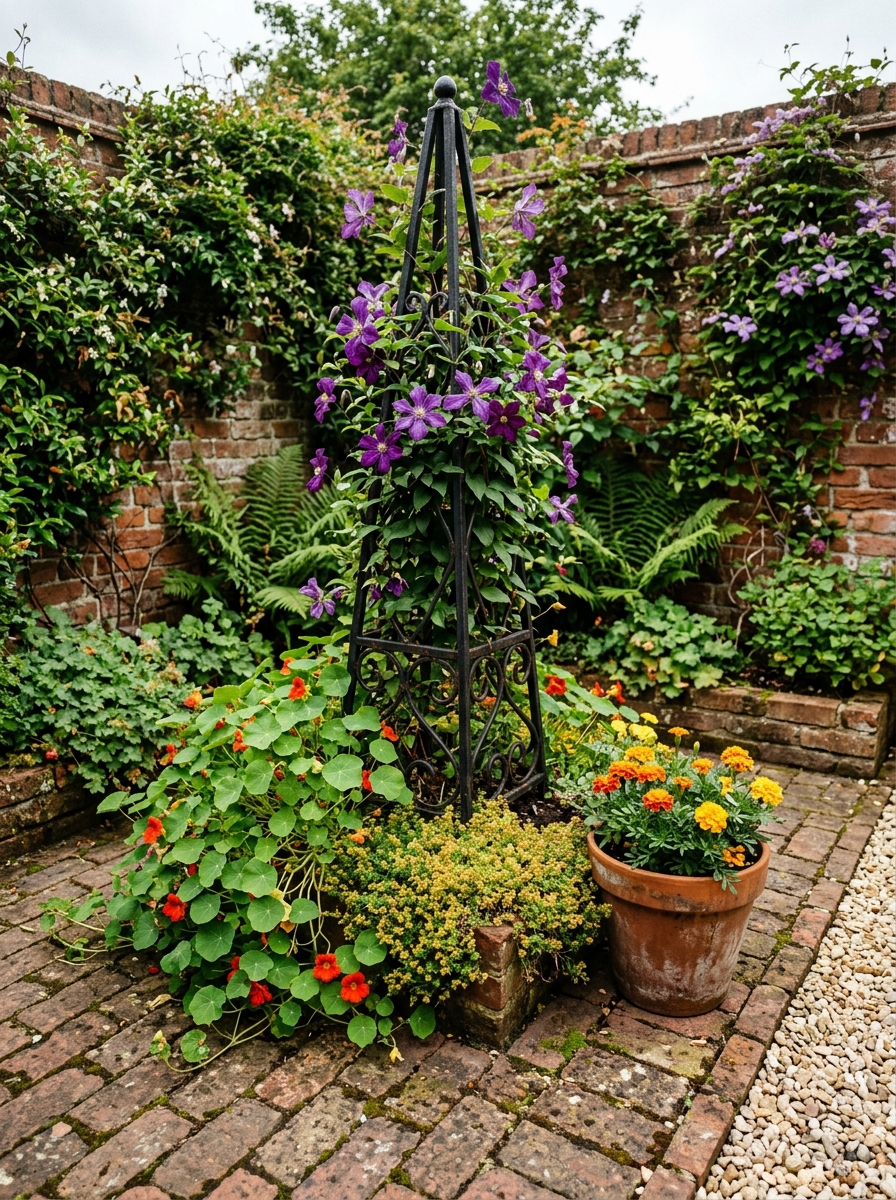
Corners are often wasted in small yards because they’re awkward to mow around, too tight for furniture, and somehow always become the place where extra pots go to sulk. A corner obelisk fixes that nicely. It turns dead space into a vertical focal point and gives climbing plants a place to shine without needing a full bed or wide trellis setup. Set an obelisk in a generous pot or a small planting pocket, then train sweet peas, compact beans, nasturtiums, or a restrained clematis up the frame. The structure adds height, while the planting keeps the footprint small. Underplant with low herbs or a ring of seasonal flowers so the base feels finished. You get color and productivity in one tidy column, and the whole corner starts pulling its weight instead of just existing. There’s also something charming about a freestanding support in a little yard. It gives the space personality, like a piece of garden furniture that happens to be alive. And because it rises upward, it draws attention away from the yard’s actual dimensions, which is a very welcome bit of visual trickery.
Pro Tip: Anchor a potted obelisk with a heavy gravel layer at the bottom of the container so wind doesn’t tip it once vines fill out.
Soften Hard Edges With Trailing Plants
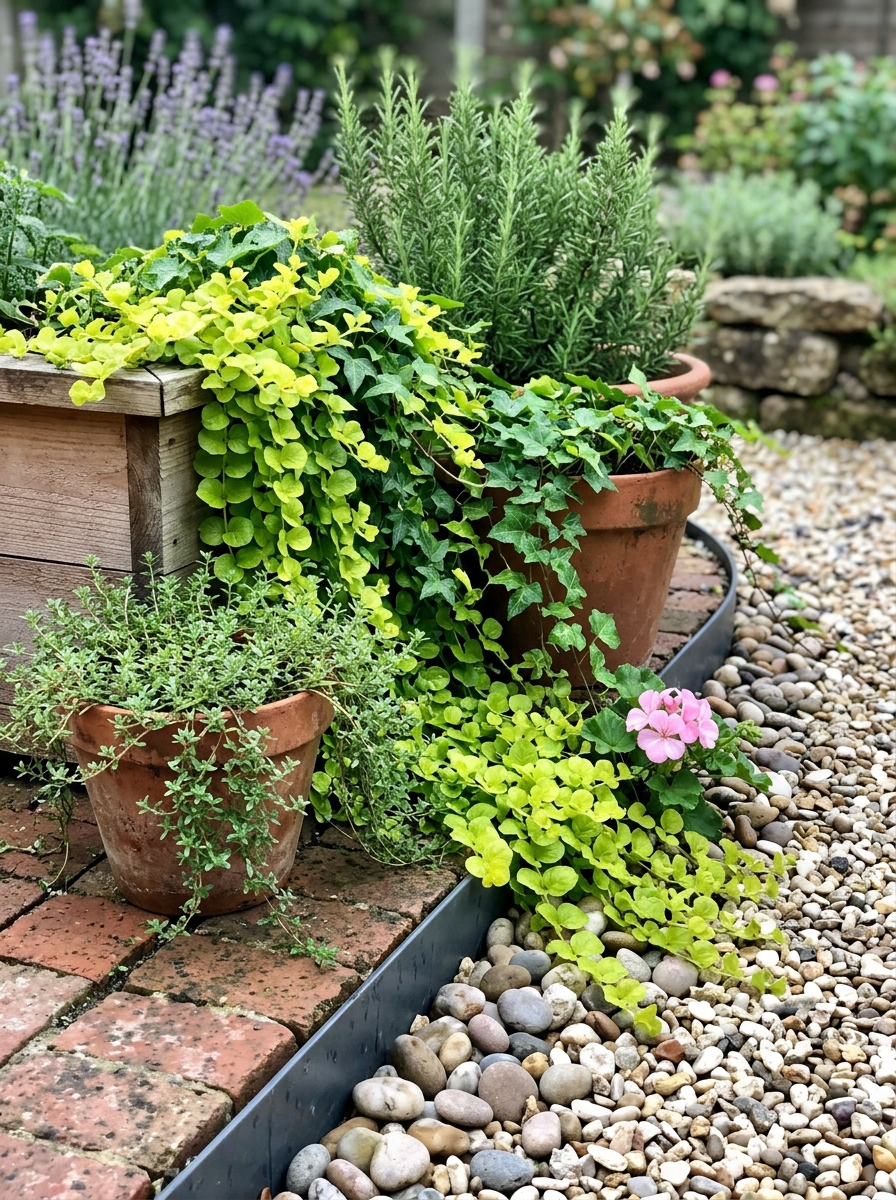
Small yards usually have a lot of hard lines packed into a tight footprint — fence panels, patio edges, retaining walls, raised beds, steps. Useful, yes. Cozy, not always. Trailing plants are the easiest way to blur those edges so the whole space feels softer and more lived-in. Once greenery starts to spill over a rim or creep along a wall, the garden relaxes a little. Use trailers where gravity can do the styling for you. Let ivy, creeping Jenny, dichondra, or trailing thyme spill from containers, window boxes, and raised beds. Tuck them at the front edge of a planter with upright herbs or flowers behind, and you get instant layering without taking up more room. This works especially well around patios where too many straight lines can feel a bit severe. The movement of those stems catches the light and breaks up all that structure beautifully. I’ve always loved this trick because it makes a new garden look settled faster. You get that gentle, abundant look people save on Pinterest, but it’s actually practical too. Soft edges make tiny spaces feel less rigid, and that goes a long way when every detail is close enough to notice.
Pro Tip: Trim trailing plants lightly every two weeks in peak season so they stay lush and controlled instead of blocking paths or smothering neighboring plants.
Choose a Bench That Hides Tools and Cushions
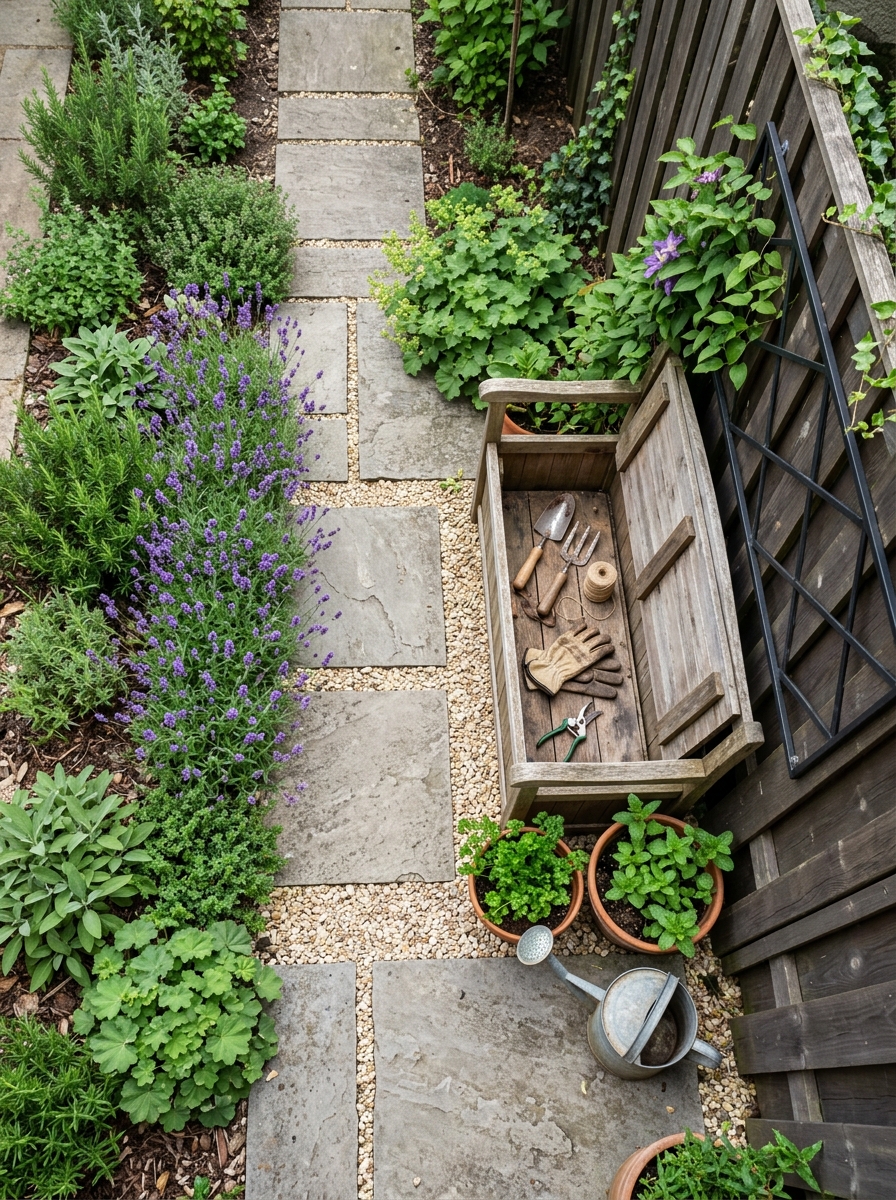
Storage is not the glamorous part of gardening, but in a tiny yard it matters almost as much as the plants. When hand tools, spare pots, and seat cushions are always visible, the whole space starts feeling crowded no matter how pretty the planting is. A compact storage bench solves two problems at once: it gives you a place to sit and a place to hide the everyday clutter. Look for a bench that’s narrow enough for the space but deep enough to swallow the essentials. Tuck in gloves, pruners, twine, a watering can, spare labels, and those mystery plant ties you somehow own in bulk. Place it against a fence or at the end of a path, then frame it with containers or a slim border so it feels integrated instead of dumped there. Wood benches bring warmth, while darker finishes can look sleek in a more modern layout. This idea may not be flashy, but it changes how your garden feels on a daily basis. When everything has a home, the planting gets to be the star. And honestly, not tripping over a half-empty compost bag is a kind of luxury I deeply appreciate.
Pro Tip: Line the inside of a storage bench with a breathable plastic tray or boot mat to catch damp soil and protect the bench from moisture damage.
Turn a Sunny Doorstep Into a Mini Potager
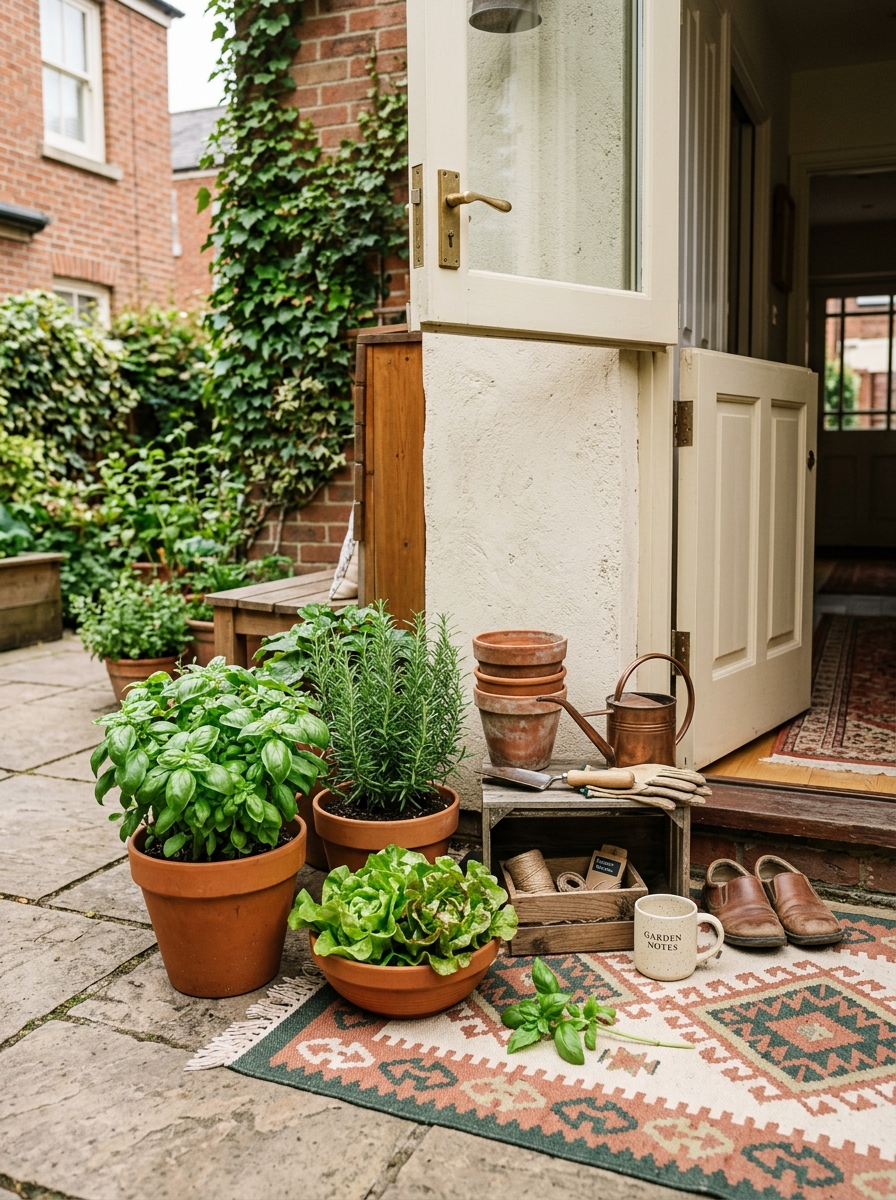
If you have a doorstep, back step, or that little patch beside the kitchen door that currently holds one lonely pot and a spiderweb, you have room for a mini potager. I love this idea for small homes because it puts the prettiest useful plants right where you’ll brush past them every day. A tight cluster of pots filled with lettuce, basil, thyme, parsley, and a few edible flowers can feel abundant without taking over the whole yard. It’s practical, yes, but it also gives the entrance a soft, welcoming look that says someone here definitely clips herbs while dinner is cooking. The trick is to make it feel intentional instead of crowded. Use pots in two or three sizes, keep the color palette simple, and repeat a few plant shapes so your eye reads it as a collection rather than a yard sale. Tuck the tallest pots at the back, let lower herbs spill toward the front, and leave just enough stepping space so you’re not performing a balancing act with grocery bags. On warm evenings, that little doorstep garden smells incredible too—rosemary in the sun is one of life’s underrated luxuries, in my opinion.
Pro Tip: Group containers on plant caddies or low saucers with hidden wheels so you can slide the whole arrangement aside for sweeping and seasonal rearranging.
Carve Out a Gravel Grid for Moveable Containers
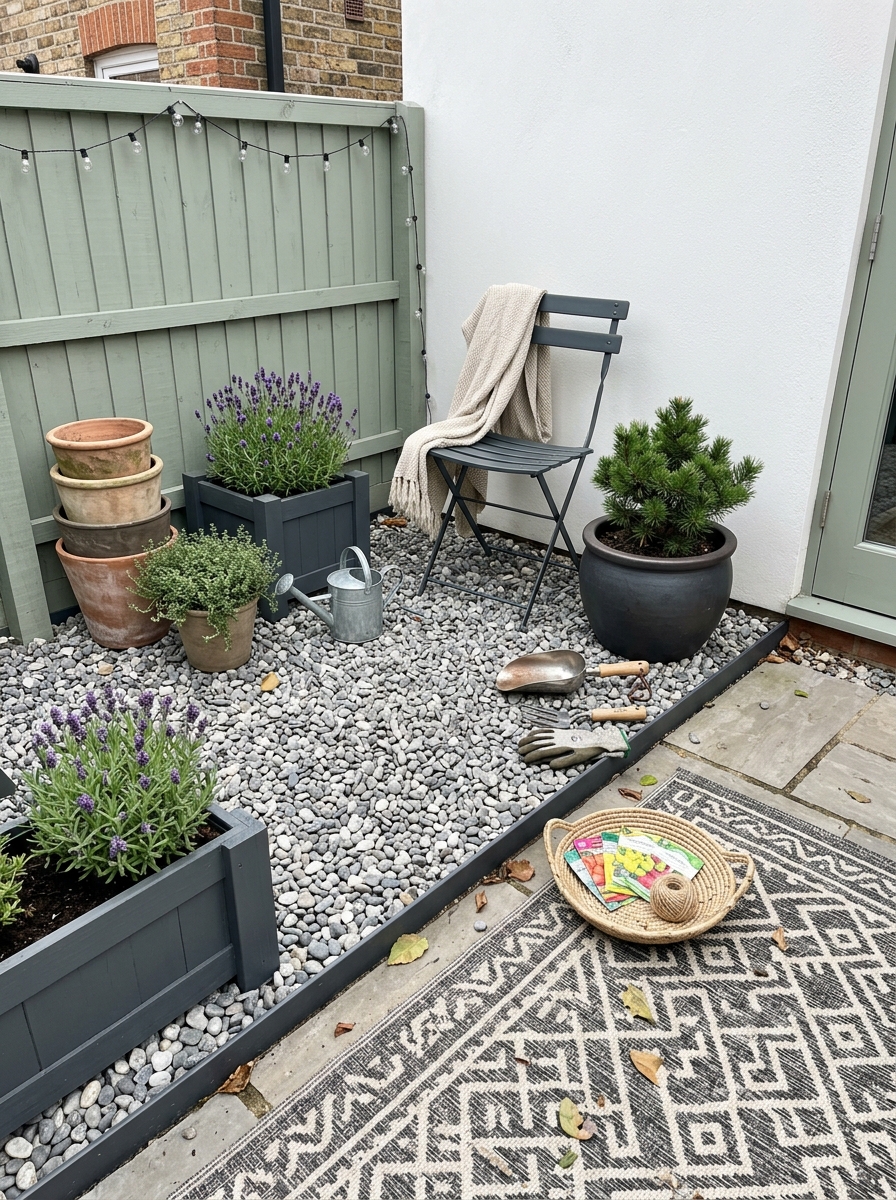
One of the smartest things you can do in a tiny garden is stop treating every pot like a random decision. A simple gravel grid gives containers a home, and suddenly the whole space feels calmer and bigger. Think of it like a flexible floor plan for plants. A rectangle of fine gravel with a few subtle divisions—made with slim pavers, brick strips, or even cedar battens—lets you shift pots around by season without losing structure. It’s especially handy if you like to swap tulips for tomatoes, or herbs for autumn color, depending on your mood and your level of ambition that month. What I like most about this setup is that it creates order without feeling stiff. The gravel reflects light, keeps the area looking neat, and gives every pot a little breathing room. You can feature one dramatic container in the center, then orbit smaller ones around it like a very stylish plant family. And because the grid is moveable in spirit, you’re not locked into one layout forever. Small gardens need that kind of freedom. Sometimes a space works best when it can change with the seasons—and with how much energy you actually have on a Saturday.
Pro Tip: Use compacted fine gravel over landscape fabric and set thin paver strips flush with the surface so pots sit level and the sections stay visually crisp.
Borrow Space With a Mirror on a Sheltered Wall
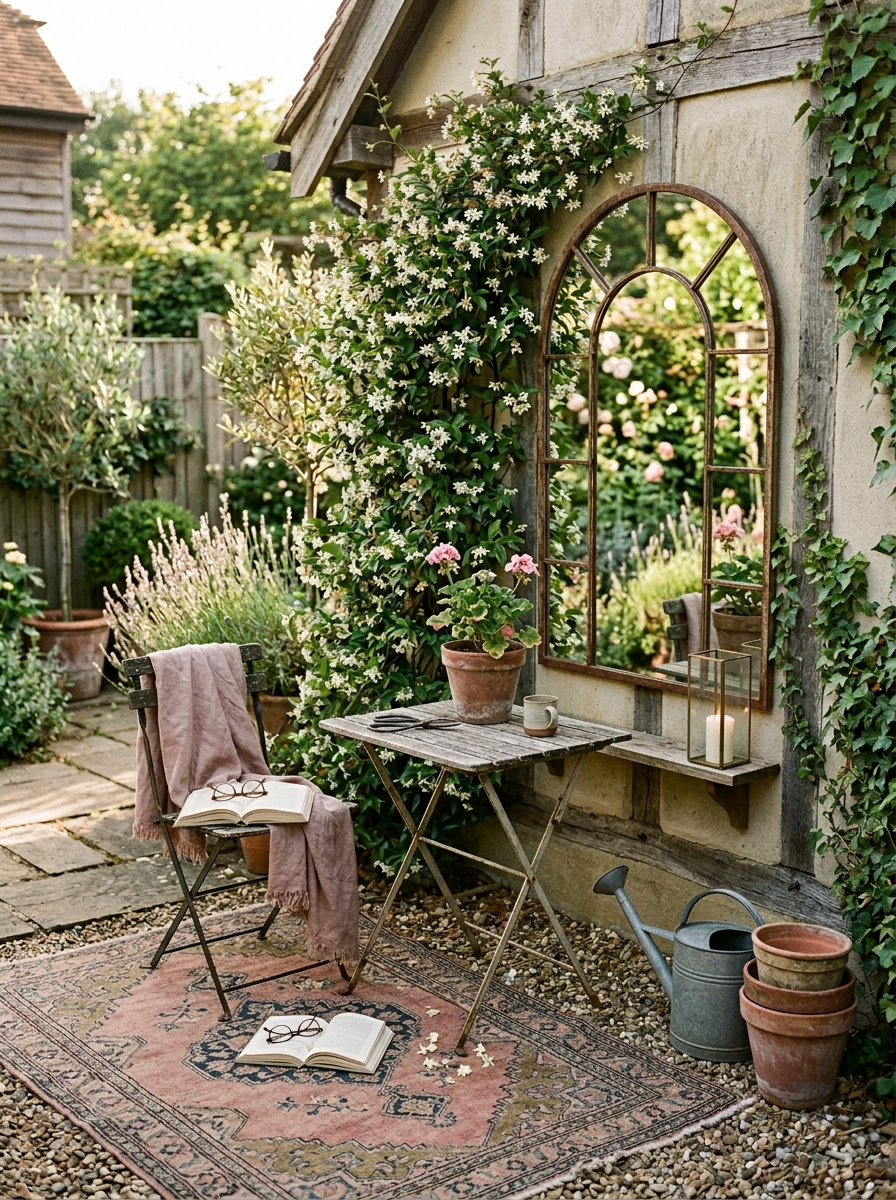
A garden mirror is one of those ideas that can go wonderfully right or very, very wrong. But in a small courtyard or side yard, when you place it well, it can make the whole garden breathe. A mirror fixed to a sheltered wall reflects light, repeats greenery, and tricks the eye into believing there’s another pocket of planting just beyond view. That little visual stretch matters in tight spaces. It’s especially lovely opposite a grouping of pots or a narrow bed, where the reflection doubles the texture of leaves and flowers and makes the garden feel layered instead of boxed in. The key is subtlety. I always prefer a mirror that looks like it belongs outdoors—something with a simple metal frame, old-window shape, or soft arch rather than anything too shiny and theatrical. Nestle it where it catches plants, not your recycling bins or the neighbor’s ladder. You want a glimpse of green, a flash of sky, maybe a climbing stem wandering across the edge. Done right, it adds charm and depth without taking up an inch of floor space, which is honestly the dream in a small garden. Just don’t aim it straight at blazing sun unless you enjoy weird glare and squinting.
Pro Tip: Position the mirror to reflect foliage and open sky, then angle it slightly downward to avoid harsh glare and to keep it feeling natural.
Slip in a Fold-Down Potting Ledge for Daily Garden Tasks
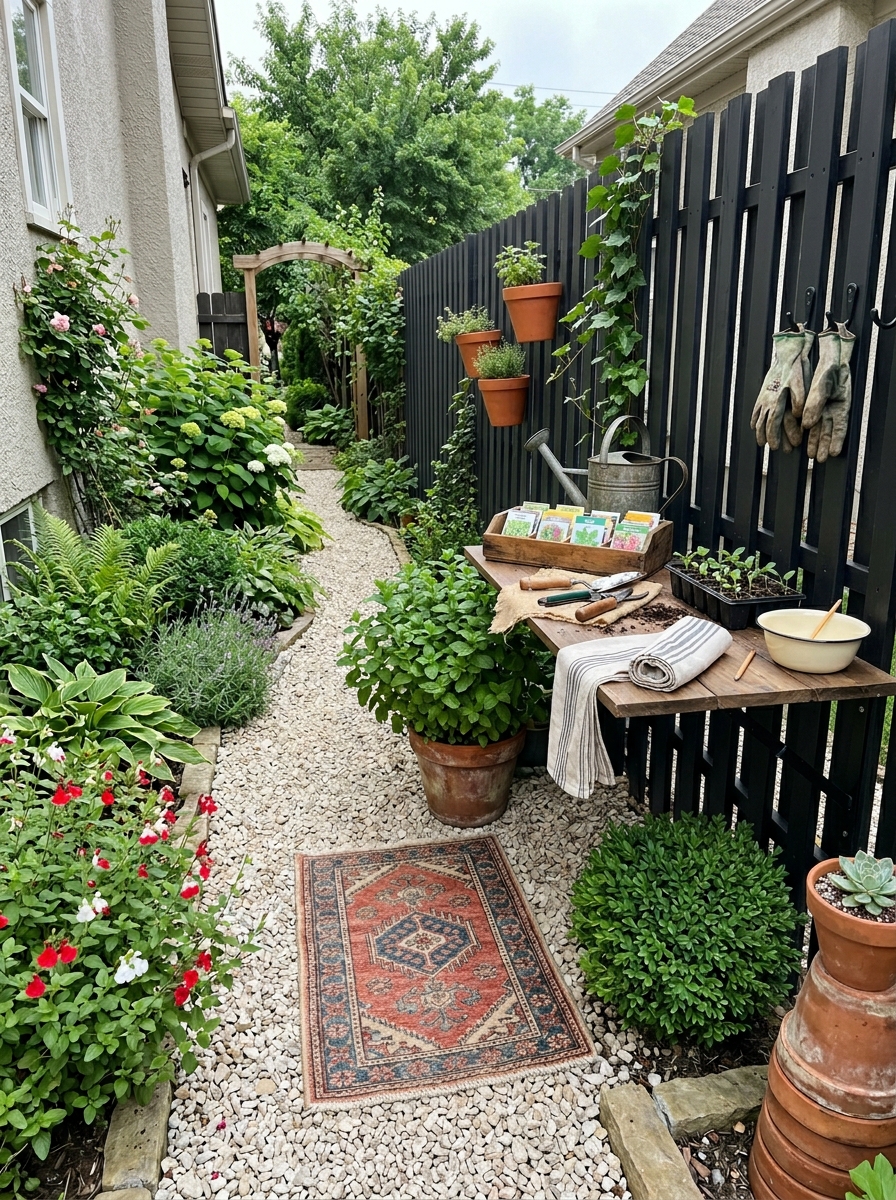
In a small garden, every surface has to earn its keep, and a fold-down potting ledge is a quiet little hero. Mounted to a fence or exterior wall, it gives you a place to repot seedlings, set down a watering can, sort seed packets, or rest a tray of herbs without sacrificing permanent floor space. Then when you’re done, it folds flat and disappears. I’m a huge fan of anything that makes gardening easier without making the yard feel cluttered. Because let’s be honest: if the only workspace is your outdoor chair, eventually there will be compost in the cushions. This idea works especially well in narrow side yards or tiny patios where there’s no room for a full potting bench. Keep the ledge just deep enough for a tray and a few tools, and add a couple of hooks underneath for gloves or snips. Suddenly, the awkward strip of wall becomes useful. It also helps contain garden mess in one spot, which matters in small spaces where one spilled bag of potting mix can somehow appear everywhere at once. Paint it to match the fence for a clean look, or let weathered wood blend into the garden naturally. Either way, it’s practical and surprisingly satisfying to use.
Pro Tip: Install the fold-down ledge at about waist height and add two heavy-duty locking brackets so it feels sturdy enough for repotting, not wobbly and annoying.
Plant a Low Scent Border Beside the Main Walkway
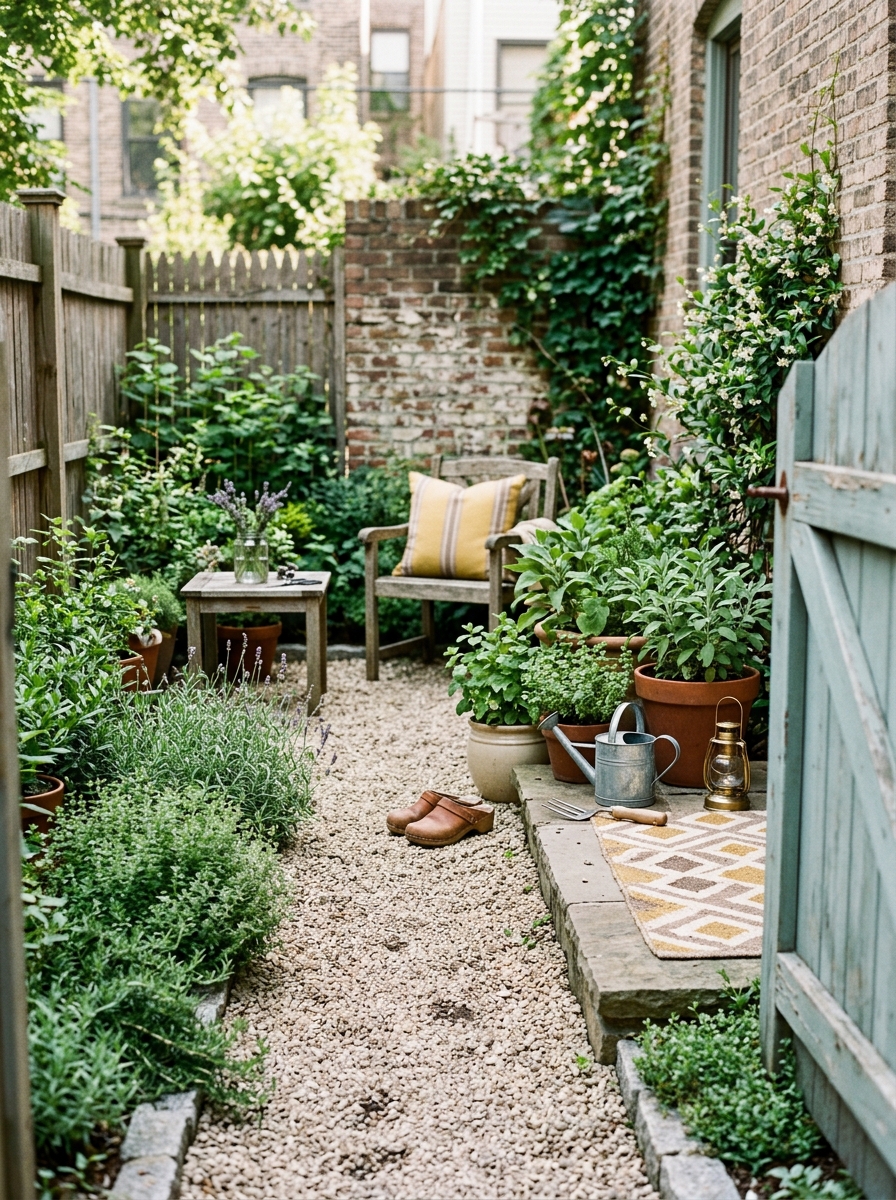
Small gardens don’t need giant flower beds to feel lush. Sometimes a skinny border, planted with scent in mind, does more than a wide one ever could. If you edge your main walkway with low herbs and compact bloomers—think thyme, lavender, dwarf dianthus, creeping rosemary, maybe a little chamomile—you create a garden that works on a close-up level. And that’s exactly how small spaces are experienced: up close, brushing past, noticing details. Every trip outside becomes a little sensory moment instead of just a route to the bins or the gate. I especially love this idea because it gives a narrow path a purpose beyond getting from A to B. The border softens the hard line of paving, releases fragrance when warmed by the sun, and makes the whole garden feel more immersive. Keep the plants low enough that they don’t flop across the walkway and turn it into an obstacle course. Repetition helps here too—fewer varieties, planted in small drifts, will feel calmer and more generous than a bit of everything. In the evening, the scent hangs in the air, and the path feels almost romantic. Not in a dramatic movie way. More in a lovely, everyday, “I’m glad I planted that” kind of way.
Pro Tip: Choose two or three compact fragrant plants and repeat them in alternating groups along the path for a fuller look that still stays tidy.
Use a Color-Limited Planting Scheme to Calm a Busy Tiny Yard
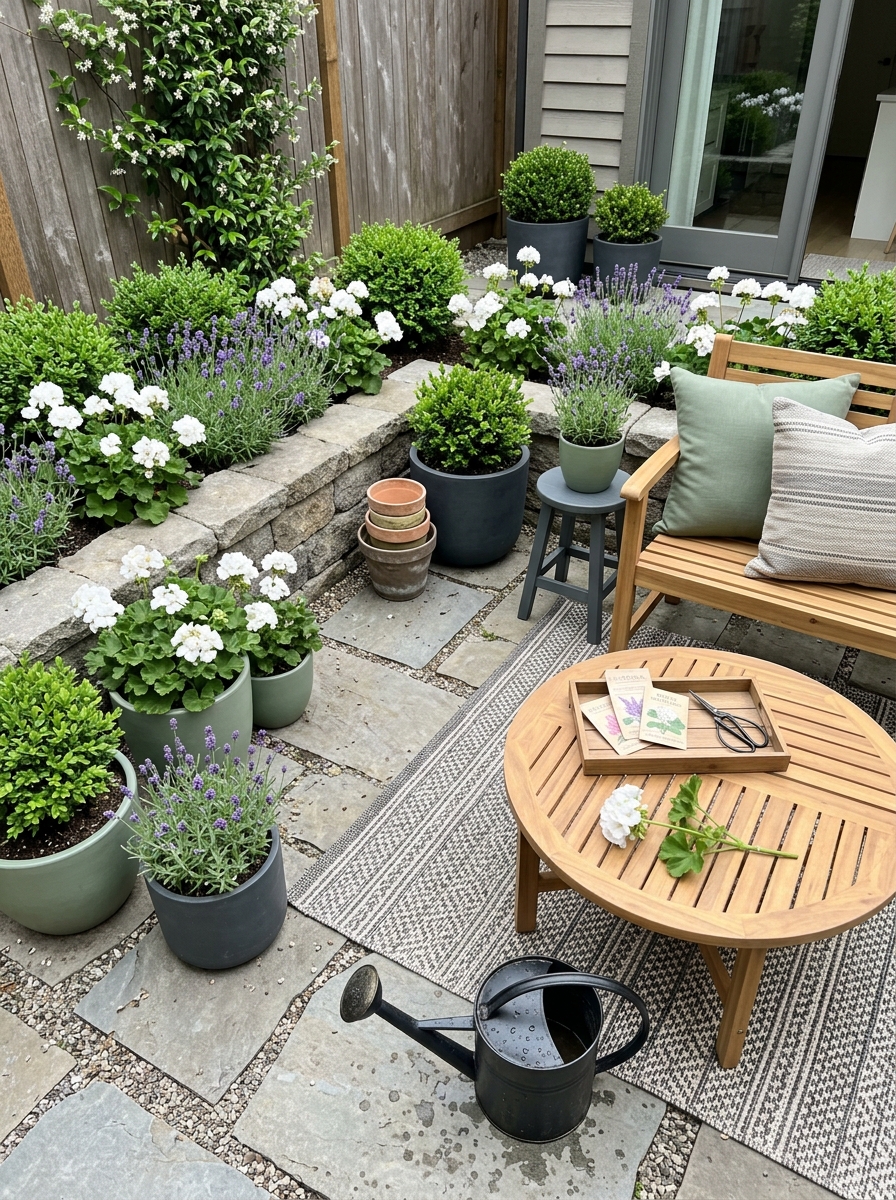
When a garden is small, too many colors can make it feel visually chopped up, even when the plants themselves are beautiful. One of the easiest ways to make every inch count is to limit the planting palette. Pick two or three flower tones, repeat them throughout the space, and let foliage do some of the heavy lifting. Suddenly the garden feels more cohesive, more spacious, and frankly a lot more expensive-looking than it probably was. I say that with affection, because some of my favorite gardens were built one sensible nursery trip at a time. This doesn’t mean boring. It means edited. Purple and white with silvery green foliage can feel cool and restful. Terracotta pots with deep green leaves and soft yellow flowers feel warm and grounded. In a tiny yard, repeating those tones from one corner to another helps connect separate zones so the whole space reads as one thoughtful design. It’s especially effective when you already have mixed materials like brick, gravel, fencing, and containers competing for attention. A restrained color scheme lets your layout shine. And if you’re the sort of person who impulsively buys every cheerful bloom in sight, this approach is also a gentle form of self-control. Not foolproof, but helpful.
Pro Tip: Before buying plants, take a quick photo of your yard and choose flower colors that already suit the hardscape so the whole space feels pulled together.
Anchor the Garden With One Small Water Bowl for Reflection and Wildlife
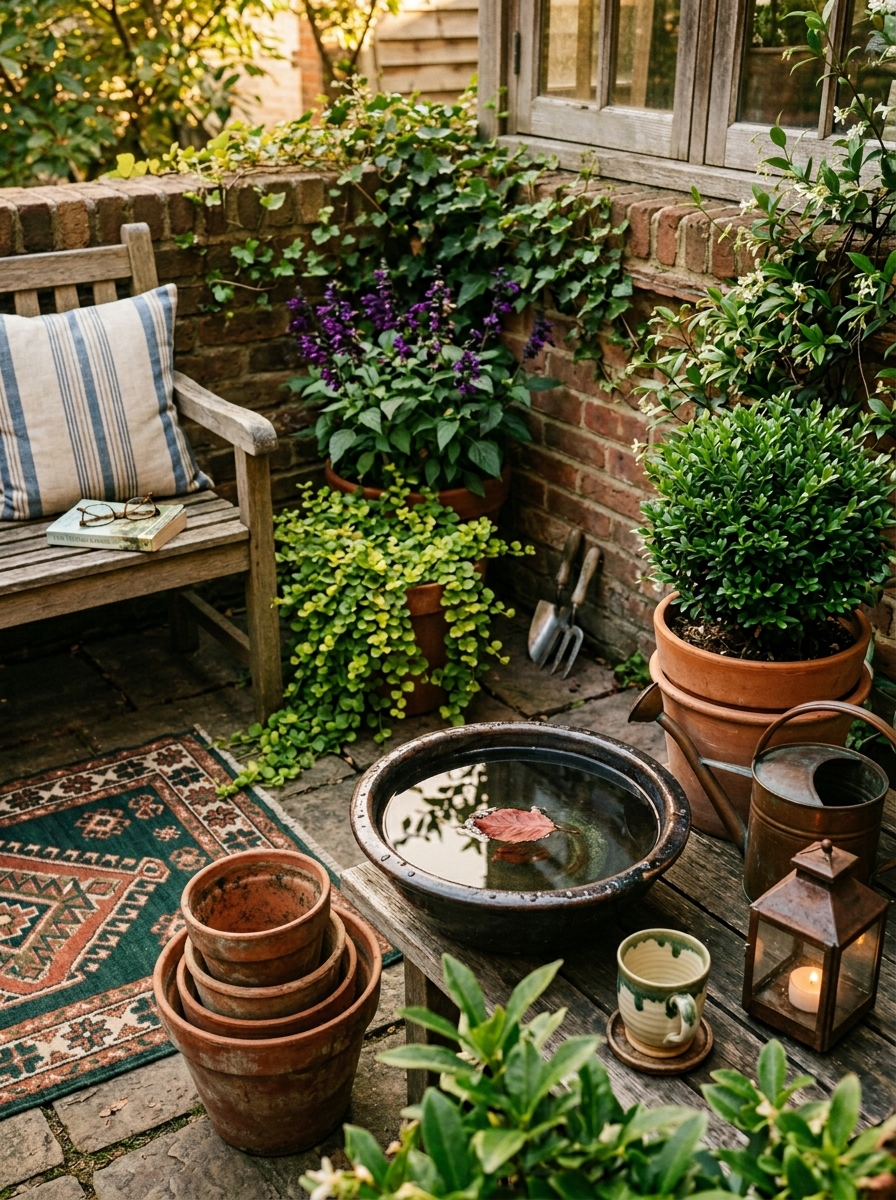
Not every space-saving idea has to be about storage or squeezing in more plants. Sometimes what a tiny garden really needs is a pause. A shallow water bowl or compact basin can do that beautifully. It brings a reflective surface into the garden, catches light, and adds movement when a breeze or visiting bird ripples the surface. In a small courtyard or patio, that little glint of water can make the whole space feel softer and more alive. And unlike a full pond situation—which, let’s be honest, can become a hobby all by itself—a simple bowl is manageable. I like placing one where it can be seen from indoors as well as from a chair outside. It acts like a visual anchor among pots and paving, and it gives the eye somewhere restful to land. Surround it with low planting or a few containers, but don’t crowd it too much. The point is to let it breathe. Birds will usually find it faster than you’d expect, which is half the fun. On hot days, it cools the mood of the space in a subtle way. It’s a small gesture, but in a tiny garden, small gestures matter. They’re often what turn a practical layout into a place you actually want to linger.
Pro Tip: Set a shallow stone or ceramic bowl on a stable base and add one flat pebble inside so bees and small birds have a safe landing spot.
Quick Guide
Which small-yard style fits you best? If your space is mostly patio or pavers, go container-heavy with tiered pots, wall planters, and one storage bench. It’s flexible and beginner-friendly. If you have a narrow side yard, focus on a slim raised bed, a tight path, and one vertical feature like a trellis or obelisk. That keeps it functional without feeling cramped. If you want a pretty-and-productive setup, mix herbs, salad greens, compact shrubs, and a few flowering perennials. Think rosemary with lavender, lettuce with nasturtiums. If you love a cleaner Pinterest look, repeat evergreen shapes, keep your palette tight, and use fewer bigger containers instead of lots of tiny ones. If you’re short on time, choose evergreens, herbs, gravel, and drip irrigation. Less fuss, still lovely.
Conclusion
A small yard does not need to do less. It just needs to do things smarter. When you use vertical space, layer containers, define paths, repeat a few strong plant shapes, and sneak in storage where you can, the whole garden starts feeling bigger than it really is. That’s the sweet spot. You want a space that looks good, works hard, and still feels like somewhere you can actually relax with dirty hands and a cup of coffee. The best part is you do not need to tackle all 17 ideas at once. Start with one problem area. Maybe it’s that blank fence begging for a trellis, the patio corner that needs seating, or the clutter that would disappear into a storage bench. One thoughtful change often unlocks the next one, and before long the whole yard feels more settled, more useful, and a lot more you. Trust your eye, pay attention to scale, and leave a little breathing room between your great ideas. Small spaces really shine when they’re intentional, not stuffed. Which of these ideas are you trying first? Let me know in the comments.
Frequently Asked Questions
What are the best small home garden ideas for a tiny backyard with very little space?
Start with vertical features, narrow raised beds, and multipurpose pieces like a storage bench or tiered planters. In a tiny backyard, the biggest wins usually come from getting plants off the ground and giving each corner a clear job.
How do I make a small patio garden look bigger without removing plants?
Use a defined path, repeat a few plant shapes, and group containers instead of scattering them. A tighter color palette and some trailing plants to soften edges also help the space feel calmer and more open.
What can I grow in a small home garden if I want both flowers and food?
Go for compact herbs, salad greens, strawberries, lavender, salvia, and geraniums. Mixing edible plants with ornamentals gives you a garden that looks pretty but still earns its keep.
How do you organize a narrow side yard garden so it feels useful?
Keep one clear walking route, add a slim raised bed along the fence, and use vertical elements like trellises or wall planters. Narrow spaces work best when the center stays open and the planting hugs the edges.