

You know that moment when you pull into the driveway, glance at the front porch, and think… this could be so much cuter? I’ve been there. The door is fine, the mat is fine, the porch is fine, but it doesn’t have that full, leafy, pulled-together summer look that makes the whole house feel happy before you even step inside. And honestly, front porch planters do so much of the heavy lifting. They soften hard steps, frame the doorway, and make even a basic builder-grade entrance feel charming and personal. The trick is getting that lush look without making your porch feel crowded, fussy, or like you copied a garden center display and hoped for the best. So we’re talking real-life styling here. Layered pots, easy plant pairings, height tricks, color combos, and a few smart details that make everything feel intentional. Some ideas are classic. Some are a little more playful. All of them are meant to work for actual homes and actual summers. Here’s what actually works.
Frame the Door With Matching Tall Urns
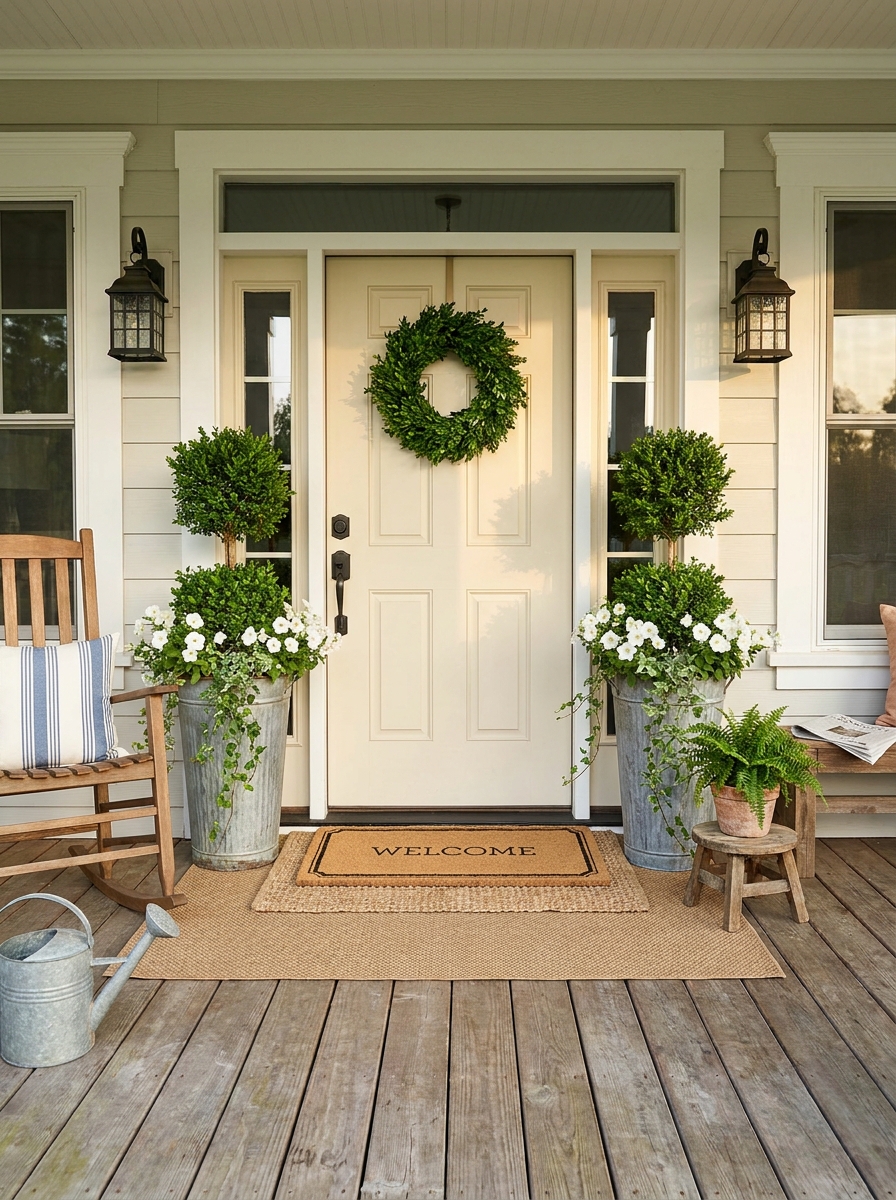
If you want your porch to look instantly more polished, start with two matching tall planters on either side of the front door. It’s the oldest trick in the book, and for good reason. That symmetry gives the whole entrance a calm, finished feeling even before you add anything else. I love using classic urns or tapered pots with a little height because they make the doorway feel grander without needing a huge porch. For summer, fill them with one strong upright plant, one fluffy filler, and one trailing vine. Think topiary boxwood or a small olive tree in the center, white petunias or calibrachoa around the base, then ivy or sweet potato vine spilling over the rim. So pretty. And easy to read from the street, which matters more than people think. If your porch is narrow, keep the palette tight and the shapes simple so things don’t get visually messy. This setup works especially well on farmhouse porches and traditional entries because it feels structured but still soft. It’s welcoming in that effortless way we all want, even if you planted it while wearing flip-flops and holding iced coffee.
Pro Tip: Use pots that are at least one-third the height of your door sidelights so the arrangement feels substantial instead of skimpy.
Layer Small, Medium, and Large Pots on Porch Steps

Porch steps are basically built-in styling shelves, and once you start treating them that way, everything gets easier. Instead of lining up identical pots like little soldiers, mix sizes. One large planter at the base, a medium one near the middle, and a smaller accent pot tucked closer to the door gives you that relaxed, collected look that feels much more lush. The magic is in the stagger. You want the eye to move upward naturally, almost like the plants are guiding guests to the front door. I love terracotta for this because it adds warmth and looks better the more imperfect it gets. Fill the biggest pot with a full fern or geranium, then use smaller pots for spillers and color. Coral calibrachoa, soft yellow blooms, and a little ivy can make even plain concrete steps feel cheerful. But don’t overcrowd the walking path. Leave breathing room so it feels inviting, not like a tiny obstacle course. If your steps are shallow, cluster pots to one side and let the other side stay clean. That little bit of imbalance can actually feel more natural and charming than strict symmetry.
Pro Tip: Keep at least 18 inches of clear walking space on your steps so the porch still feels safe and easy to use.
Use One Color Story for a Cleaner, Fuller Look

When a porch planter setup feels expensive, this is usually why. Not because the pots cost a fortune, but because the colors feel edited. Pick one main flower color, then repeat it in different containers around the porch. White blooms are always a classic, but blush pink, soft purple, or red can be gorgeous too if the house color supports it. This trick makes mixed planters feel intentional instead of random. And it lets the greenery do more of the visual work, which is exactly what gives a summer entrance that lush, abundant feeling. I especially love white flowers with lots of green because they glow against darker doors and black hardware. It’s crisp, pretty, and never too busy. If you want a little contrast, add it through foliage texture rather than extra flower colors. Ferns, ivy, boxwood, and a spiky grass can create plenty of interest without turning the whole porch into a paint swatch. So yes, you can absolutely love every bloom at the nursery. But your porch doesn’t need all of them. It needs a point of view. That’s the part that makes it feel styled.
Pro Tip: Choose one bloom color to repeat at least three times across the porch so the whole entry reads as one cohesive moment.
Mix Terracotta and Galvanized Metal for Collected Charm

This is one of my favorite porch combinations because it feels layered without trying too hard. Terracotta brings warmth. Galvanized metal brings that cool, farmhouse edge. Put them together and suddenly your entry looks like it came together over time, not in one rushed shopping trip on a Saturday afternoon. Try using galvanized buckets or tall ribbed metal planters for your larger anchor pieces, then tuck in terracotta pots around the base. The contrast in texture does a lot of the styling for you. Add soft, slightly old-fashioned plants like geraniums, lavender, or trailing ivy and the whole thing starts to feel relaxed and charming. I also love this mix if your house exterior has brick, stone, or weathered wood because the materials echo each other beautifully. Keep the flowers a little loose and abundant, not too tightly packed, so the arrangement feels garden-inspired rather than formal. And don’t worry if the terracotta gets a little chalky or the metal starts to patina. That’s actually the good part. Summer porches should look lived in, a tiny bit sun-worn, and very loved.
Pro Tip: Repeat each material at least twice so the mix looks intentional instead of like you ran out of matching pots halfway through.
Add a Bench Between Planter Clusters for Balance

Sometimes a porch full of plants still feels off, and usually it’s because everything is floating. A small bench or narrow porch seat can fix that fast. It gives the eye a place to land, breaks up all the leafy movement, and makes the whole setup feel like an actual little outdoor room instead of just a row of pots. Place a bench on one side of the door and cluster planters around it, then echo that weight on the opposite side with a taller grouping. That asymmetry can be really beautiful when it feels balanced. I love a simple wood bench with one striped pillow and a pot tucked partly underneath. It looks casual in the best way. You can also set a smaller planter on the bench if you need more height, but don’t over-style it. Leave a little empty space so the porch can breathe. And if your entrance is tiny, choose a narrow bench with open legs so it doesn’t visually block the area. This setup feels especially sweet on cottage porches because it adds personality fast. Plus, it gives you a spot to drop grocery bags, sip lemonade, or pretend you’ll sit outside every evening this summer.
Pro Tip: Choose a bench no wider than half the porch wall section beside the door so your planter clusters still have room to shine.
Tuck Trailing Plants High and Low for Extra Fullness

If your porch planters always feel a little flat, this is the fix. You need movement. Trailing plants spilling from the top step, the base of a tall urn, or a hanging basket nearby make everything feel softer and more abundant. That drape is what gives a summer entrance its lushness. Without it, even beautiful flowers can look a bit stiff. Try layering one or two trailing varieties at different heights instead of putting all the spillers in just one pot. Ivy, creeping Jenny, sweet potato vine, or wave petunias work beautifully. Let one planter trail toward the porch floor and another skim over the edge of a step. It creates a fuller shape and makes the whole arrangement feel connected. I especially love this on narrow porches because it adds volume without taking up much extra floor space. Just keep the trailing growth away from the main walking path so guests aren’t brushing through leaves every time they come to the door. A little spill looks romantic. A face full of vine while carrying packages? Less charming. The goal is generous, not overgrown.
Pro Tip: Place trailing plants on the outer edges of your planter groups so the spill softens the porch lines without blocking the entry path.
Try a Cottage Mix of Ferns, Petunias, and Ivy
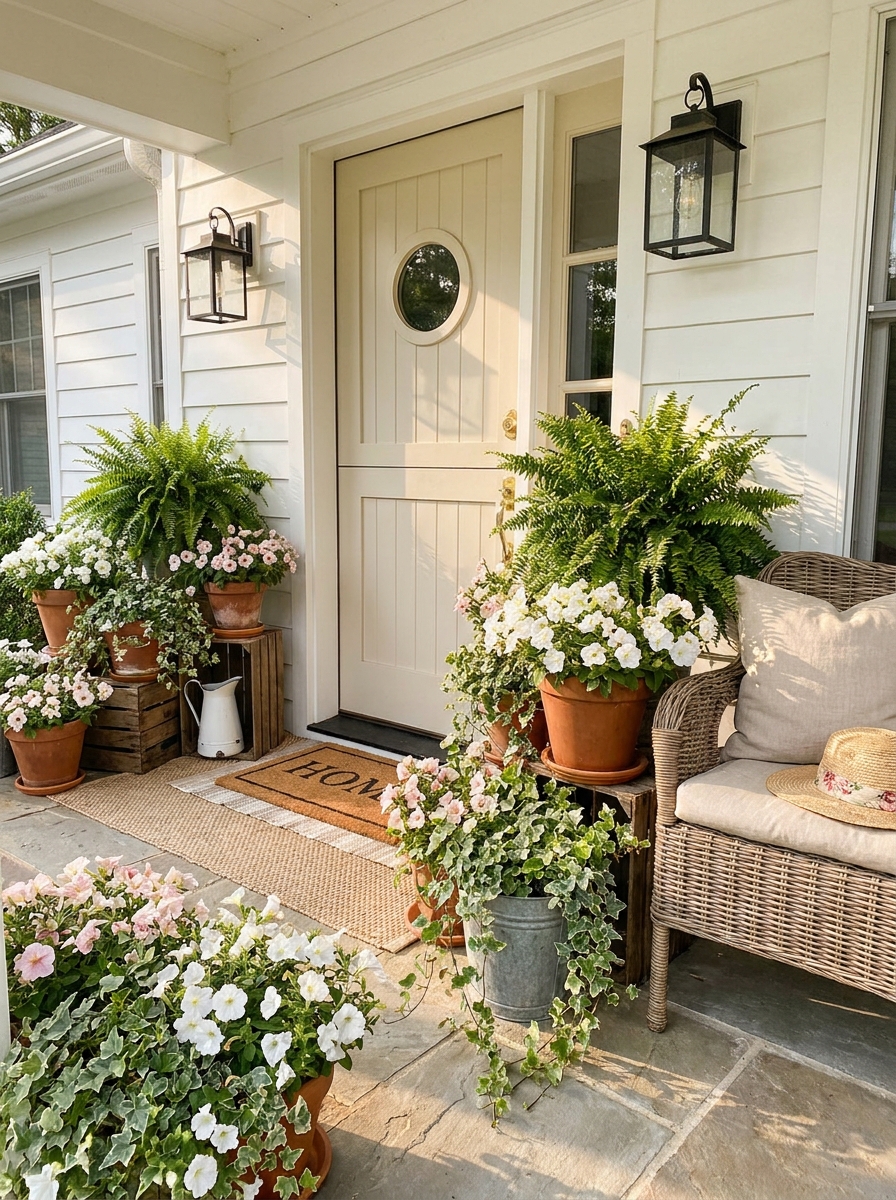
Some plant combos just never fail, and this one is right at the top for me. Ferns bring softness and volume. Petunias add cheerful color. Ivy trails and ties everything together. When you combine all three, you get that dreamy cottage-garden porch look without needing a master gardener’s confidence. The key is letting each plant do its own job. Use ferns in larger pots where you want fullness, tuck petunias into mid-level planters for visible color, and use ivy near the edges so it can loosen everything up. White and soft pink petunias are lovely if you want a romantic look, while purple gives the porch a little extra punch. This combo works beautifully with old terracotta, painted wood, wicker, and even galvanized metal, which makes it easy to adapt to whatever you already own. And because the leaf shapes are so different, the arrangement looks rich even if the color palette stays simple. That’s the sweet spot, honestly. Lush but not chaotic. Pretty but not precious. It’s the kind of porch that makes people slow down a little when they walk up the path, and I think that’s exactly the energy summer needs.
Pro Tip: Use ferns in the shadiest spots and keep petunias where they’ll catch at least six hours of sun for the healthiest mix.
Lift Smaller Pots on Crates and Plant Stands

Not every planter needs to be giant. Sometimes the reason a porch looks flat is that everything sits at the same level. A wooden crate, a little metal plant stand, or even an upside-down sturdy pot can give smaller containers the height they need to actually be seen. And once you vary the levels, the whole arrangement feels more layered and intentional. This is especially helpful on porches with one big blank wall or wide space beside the door. Start with a large floor planter, then add a medium pot on a crate and a smaller accent planter on a stand. Suddenly there’s shape. Suddenly there’s drama. I like using this trick when I want to add a sweet little flowering plant or herb pot without it getting visually swallowed by bigger greenery. Just make sure whatever you’re using as a riser can handle weather and feels stable under the planter. Wobbly is not the vibe. And don’t hide the risers completely. A worn wood crate or simple black stand can add just enough texture to make the grouping feel collected. It’s one of those tiny styling moves that quietly makes everything look more expensive.
Pro Tip: Use risers with different heights of 6 to 12 inches so each planter reads clearly instead of blending into one bulky cluster.
Style a Narrow Stoop With One Strong Side Cluster

Tiny stoop? Don’t fight it. A narrow front entry doesn’t need matching planters on both sides to feel welcoming. In fact, one strong planter cluster can look better because it keeps the space open and gives the eye one clear focal point. This is such a good solution for townhouses, skinny porches, and those awkward little entries where every inch matters. Build the grouping with one tall planter at the back, one medium pot in front, and one small accent tucked beside the mat. Then let the front door and hardware do the rest. I like keeping the plant palette tight here so the arrangement feels fresh rather than busy. A fern, a flowering annual, and one trailing vine is often plenty. If there’s room, add a lantern or small stool to make it feel styled, but resist the urge to cram in extras. Negative space is your friend on a tiny stoop. It makes the plants look more special. And honestly, a narrow porch can have so much charm when it’s edited well. It feels approachable. Sweet. Like the house is saying hello without shouting about it.
Pro Tip: Place the tallest planter toward the hinge side of the door so it doesn’t interfere with the way the entry opens and functions.
Anchor a Wide Porch With Twin Corners of Greenery
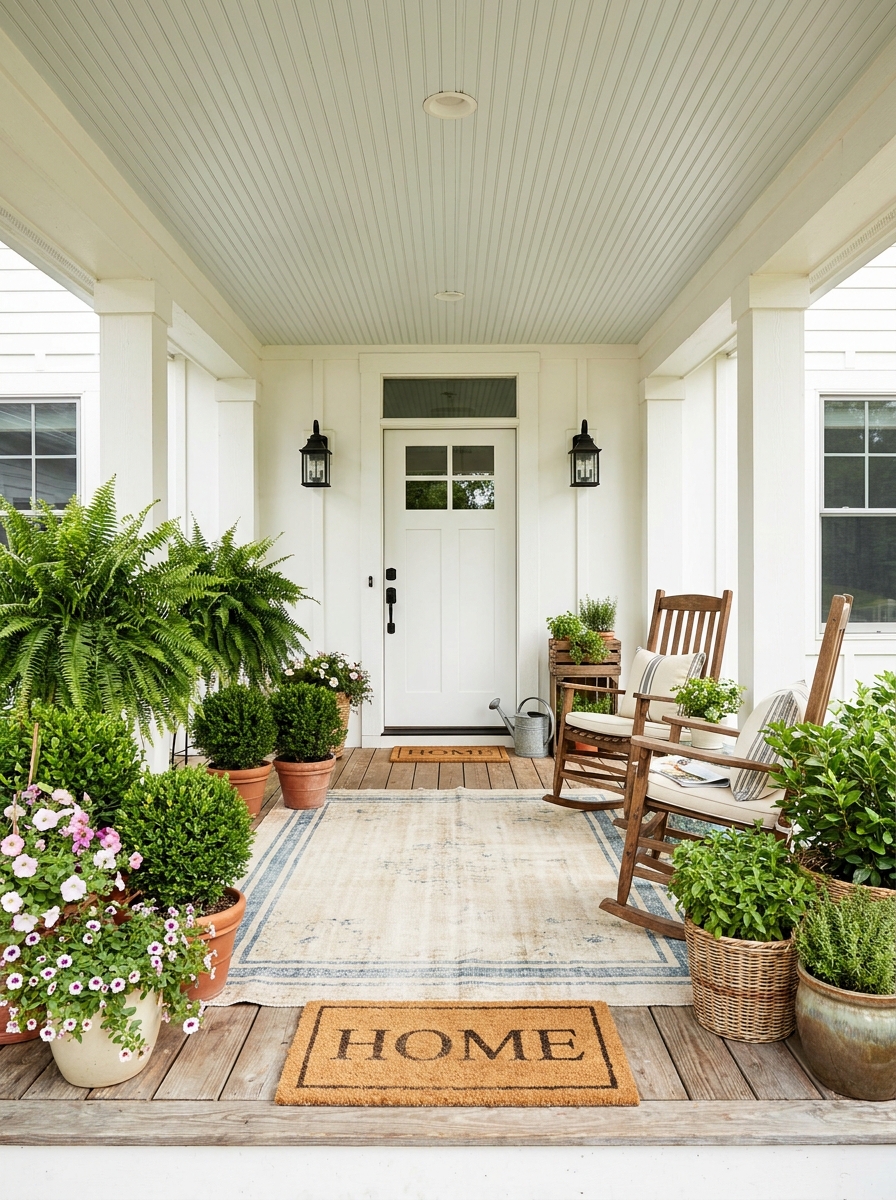
Wide porches can be gorgeous, but they can also make your front door feel weirdly small if all the plants are crowded right beside it. The fix is to think bigger. Instead of only flanking the doorway, create two fuller planter moments near the outer corners of the porch and let the door sit gracefully between them. It stretches the visual weight across the space and makes everything feel more settled. You can still keep a smaller pair by the door if you want, but those outer clusters are what make the porch feel intentionally styled. I love using taller ferns, small olive trees, or boxwood topiaries there, then softening the base with lower flowering pots. Add a rocking chair or bench nearby and the whole porch starts to feel like a true summer hangout spot. This works especially well on long farmhouse porches that need a little rhythm and structure. And don’t be afraid of repetition. Matching corner groupings can be really beautiful on a wide porch because they make the architecture feel stronger. It’s one of those ideas that seems simple, but once you do it, the whole entrance suddenly looks finished in a way that feels obvious.
Pro Tip: On a wide porch, place outer planter clusters about 12 to 18 inches in from the porch corners so they frame the space without looking shoved aside.
Repeat a Signature Plant for That Pretty Designer Rhythm
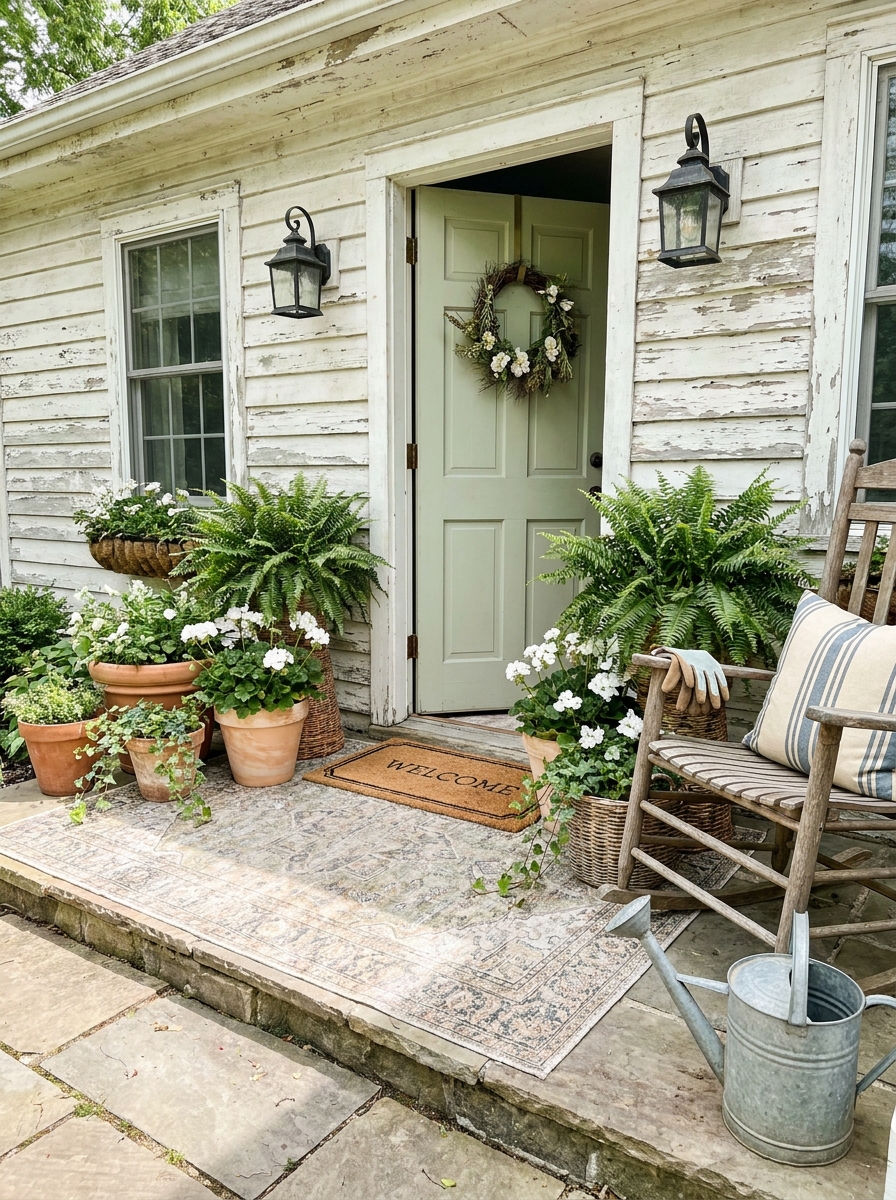
If you want your porch to feel lush without looking messy, pick one plant and repeat it a few times through the whole setup. It sounds simple, but wow, it works. That little bit of repetition makes everything feel connected, even if your pots are all different shapes and finishes. I love doing this with ferns, white geraniums, or a soft trailing ivy that shows up in more than one spot. The trick is not making every planter identical. That can feel a little flat. Instead, let one plant be the common thread, then mix in a few supporting players around it. Maybe your main plant shows up in a pair of planters by the door, then again in a basket near the steps. Your eye keeps catching that familiar shape or color, and the whole porch feels calm, full, and pulled together. This is especially good if you love a collected look but still want some order. It gives the entrance that styled-on-purpose feel without being too stiff. Honestly, it is one of my favorite ways to make a porch look expensive with very little effort.
Pro Tip: Choose one repeat plant in odd numbers, like three or five placements, so the porch feels balanced but not too matchy.
Bring In Fragrance With Porch Planters That Smell Like Summer

A porch should not just look good. It should feel good the second you walk up. That is why I love adding fragrant plants into the planter mix. The second the sun warms them up, you get that soft herbal or floral scent in the air, and suddenly the whole entrance feels extra welcoming. Lavender, jasmine, scented geraniums, and even basil can do so much heavy lifting here. What I like most is how scent adds a layer you cannot really see in photos, but you absolutely notice in real life. A plain entry can feel special just because the air smells fresh and alive. It is such a sweet surprise for guests, and honestly, for you too when you come home with groceries and catch that little hit of lavender by the door. You do not need every planter to be fragrant. Just tuck one or two scented choices near the doorway where people naturally brush past. Mix them with leafy fillers and one flowering plant, and you get a porch that feels lush, soft, and a little bit dreamy. It is one of those details that makes your home feel lovingly cared for.
Pro Tip: Place fragrant plants closest to the door or seating area so heat and movement release their scent right where people notice it most.
Use a Pretty Vertical Piece to Give Planters More Presence

Sometimes a planter grouping looks healthy and full, but it still needs a little height or shape to really wake up the porch. That is where a vertical element comes in. I am talking about a simple trellis, an obelisk, or even a twig support that adds structure without making things feel fussy. It gives the eye something to travel up, which makes the whole entrance feel more styled. This works especially well if your planters are low and leafy. All that fullness is gorgeous, but adding one taller accent keeps the arrangement from feeling like it is sitting too close to the ground. You can let mandevilla, black-eyed Susan vine, or even a light climbing jasmine wind up the support. It adds movement, shape, and that lovely garden feel right at the front door. I think this idea is so good for porches that need a little drama but not more clutter. One vertical piece can change the whole mood. Suddenly the planters feel intentional, layered, and just a little more polished. It is like putting earrings on a great outfit. Small detail, big payoff.
Pro Tip: Use only one or two vertical supports near the door so the porch feels elegant and airy instead of crowded.
Soften Hard Porch Edges With Billowy Grasses and Loose Greenery

If your porch has a lot of straight lines, brick edges, railings, square posts, or sharp steps, planters can help soften all of that in the nicest way. Instead of only using rounded flowers, bring in airy grasses and looser greenery that move in the breeze. That soft motion makes the whole entrance feel relaxed and alive, especially in summer when everything should feel easy. I love the way feathery grasses play against more solid porch materials. They break up all that structure without hiding it. Add something mounded and leafy underneath, then let one spiller tumble over the edge. You get this beautiful mix of upright, fluffy, and trailing shapes, which makes the planter arrangement feel much more natural. It is lush, but not heavy. This is a great approach if your porch feels a little formal or boxy. The movement lightens everything up. Even on a tiny stoop, one planter with soft grass can change the mood completely. It catches the light, sways with the wind, and makes the entry feel fresh in a way that stiff flowers alone just cannot do.
Pro Tip: Choose one grass with a fine texture, then pair it with broader leaves nearby so the contrast feels intentional and full.
Refresh the Porch Mid-Summer With One Quick Plant Swap

Here is something I always tell friends: your porch does not have to stay exactly the same all season. Summer is long, and planters can start looking tired by the hottest stretch. The easiest fix is doing one quick refresh with a small plant swap. Pull out the one thing that looks leggy or faded, then tuck in something fresh and punchy. It gives the whole entrance a second wind. This is such a good trick if you want that full summer look all the way through August without redoing everything. Maybe early petunias start slowing down, so you add bright calibrachoa. Maybe a spring herb bolts, so you replace it with a glossy fern or a bold coleus. Suddenly the porch looks revived, but your main structure stays the same. I love this because it feels practical and pretty at the same time. You are not chasing perfection. You are just keeping things alive and lovely as the season changes. A front porch should feel like it is being enjoyed, not managed to death. One simple swap keeps it cheerful, lush, and very real-home in the best way.
Pro Tip: Keep one empty nursery pot tucked in the garage so you can quickly drop in a fresh replacement plant without disturbing the rest of the arrangement.
Quick Guide
Quick Guide: DIY vs. Buy for a lush summer porch DIY: Mixing your own planter groupings from nursery plants usually gives you the fullest look for less. Expect roughly $80 to $180 for a small stoop, depending on pot size and plant variety. Buy Ready-Made: Pre-planted containers save time and look instant, but they cost more. A pair of large ready-made porch pots can run $120 to $300 or more. Best mix? Buy your two biggest anchor plants, then DIY the filler pots yourself. That’s usually where the sweet spot is. If you’re styling all 15 ideas over time, invest first in quality pots and risers. Plants can change with the season, but good containers earn their keep.
The Porch Glow-Up That Feels Like Summer
A lush front porch isn’t really about having the biggest house or the fanciest planters. It’s about creating that little moment of welcome when you come home and the entrance feels alive, cared for, and full of personality. That’s why these 15 styling ideas work so well. They help you build a porch that feels layered and abundant, but still easy, relaxed, and very real-life. Maybe you start with matching urns by the door. Maybe you stack a few terracotta pots on the steps and call it a win. Maybe you finally use that old crate in the garage as a plant stand and wonder why you didn’t do it sooner. It all counts. The prettiest summer porches usually come together one smart little choice at a time. So don’t wait until everything is perfect. Pick one corner, one planter combo, one color story, and start there. Then keep layering until your front entrance feels like a cheerful hello every single day. And if you’re anything like me, you’ll probably end up wanting to refresh the back porch too.
Frequently Asked Questions
How do I style front porch planters for summer without making the entry feel crowded?
Start with one anchor planter on each side of the door or one strong cluster if your porch is small. Then add only a few supporting pots in different heights so the arrangement feels layered, not packed. Leaving clear walking space is what keeps the whole entrance looking pretty and usable.
What are the best plants for lush summer front porch planters in full sun?
For sunny porches, petunias, geraniums, calibrachoa, sweet potato vine, and small olive trees are all great picks. They hold up well in heat and give you that full, colorful look fast. Just be ready to water more often during really hot stretches.
How can I make a small front stoop look lush with planters?
Use one side cluster instead of trying to squeeze pots everywhere. A tall planter, one medium flowering pot, and one trailing accent can be enough to make a tiny stoop feel charming and full. Keep the palette simple so the space still feels open.
What planter colors look best on a farmhouse front porch in summer?
Terracotta, aged zinc, creamy white, and soft black all work beautifully on farmhouse porches. They pair well with green foliage and classic summer flowers without feeling too trendy. If your door color is bold, quieter pot colors will help everything feel balanced.