

You know that feeling when you pull into your driveway, glance at the front yard, and think, this could look so much better? Not terrible. Not embarrassing. Just a little flat, a little forgotten, and definitely not giving the charming first impression you want. Meanwhile, one house down somehow has the neat walkway, layered flowers, and porch pots that look straight out of a saved Pinterest board. The good news is you do not need a massive budget, a landscape crew, or a full weekend of backbreaking work to make your yard feel inviting and pulled together. A few smart changes in the right spots can make the whole front of your home look fresher, warmer, and more intentional. Think crisp bed lines, plants that actually suit the space, and details that catch your eye from the street without feeling fussy. These ideas are practical, pretty, and very doable for a real suburban yard. Here’s what actually works.
Frame the Walkway With Layered Border Plantings
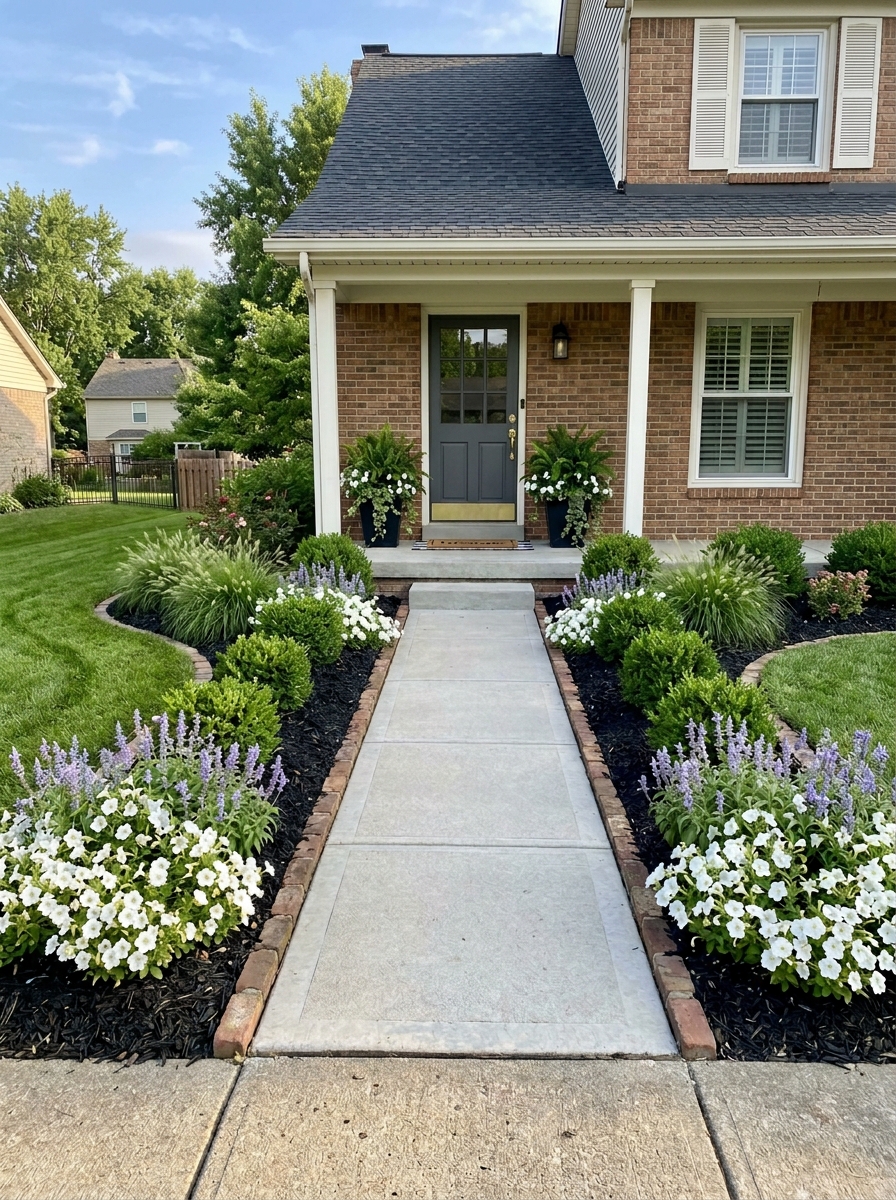
One of the easiest ways to make a front yard look finished is to give the walkway a proper plant border. A bare path can feel a little stark, even if the lawn is tidy. When you soften those edges with layered greenery and flowers, the whole entry starts to feel welcoming before anyone even reaches the door. You want that gentle pull toward the house, like the garden is quietly saying, yes, come on in. Start with a simple formula: low edging plants near the path, mid-height bloomers behind them, and a few evergreen anchors to keep things grounded year-round. Boxwoods, dwarf grasses, salvia, and hostas work beautifully in this setup. Keep the shapes loose but controlled so it feels polished, not chaotic. Repeating the same plants on both sides helps the yard look intentional, especially from the street. Then add mulch to unify everything and make the colors pop. Dark mulch against green foliage and pale flowers always looks clean to me, and after a rain it smells rich and earthy in the best way. Once your walkway has that layered look, the rest of the yard starts making more sense too.
Pro Tip: Space plants based on their mature width, not the size of the nursery pot, so your walkway borders fill in neatly without crowding the path next season.
Use Foundation Shrubs to Give the House a Settled Look
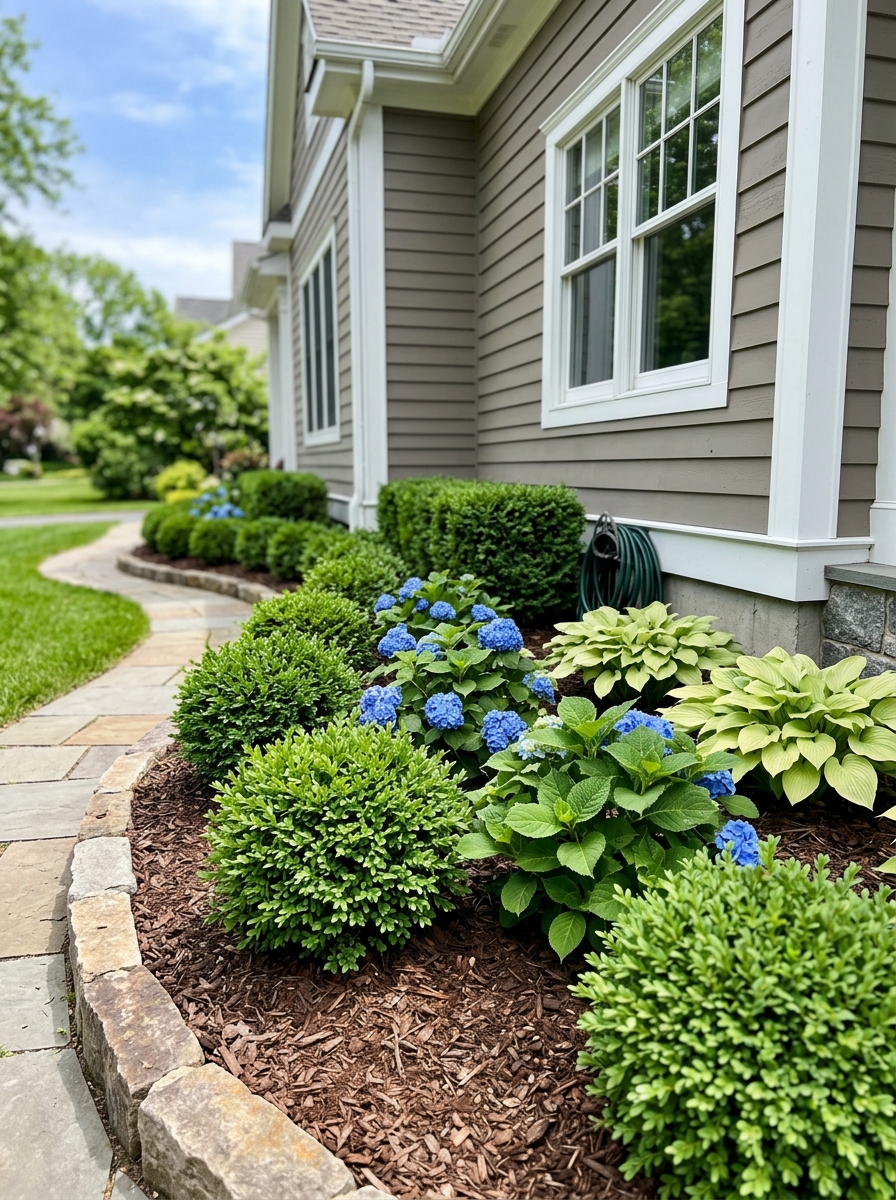
I have a soft spot for foundation plantings because they make a house look like it belongs in the yard instead of just plopped there. If the base of your home feels bare or awkward, shrubs can visually connect the structure to the landscape and make everything feel calmer. It is one of those subtle upgrades that changes the whole mood without screaming for attention. Choose a mix of evergreen shrubs for structure and flowering plants for seasonal interest. Boxwoods, dwarf hydrangeas, and compact spirea are reliable choices for many homes. Keep taller plants near corners or blank wall sections, then step down in height as you move toward windows and entry areas. That layered effect looks balanced and keeps the facade from feeling heavy. A good foundation bed should soften hard lines, not block them completely. You still want to see windows, trim, and architectural details. Leave breathing room between the plants and the house so air can move and maintenance stays simple. When those shrubs fill out, especially with the smell of warm mulch and sun on the leaves, your front yard home garden ideas start looking less like plans and more like a place you are proud to come home to.
Pro Tip: Keep shrubs at least 18 to 24 inches away from the house wall at planting time to allow airflow and future growth without constant pruning.
Add Symmetrical Porch Containers for Instant Order
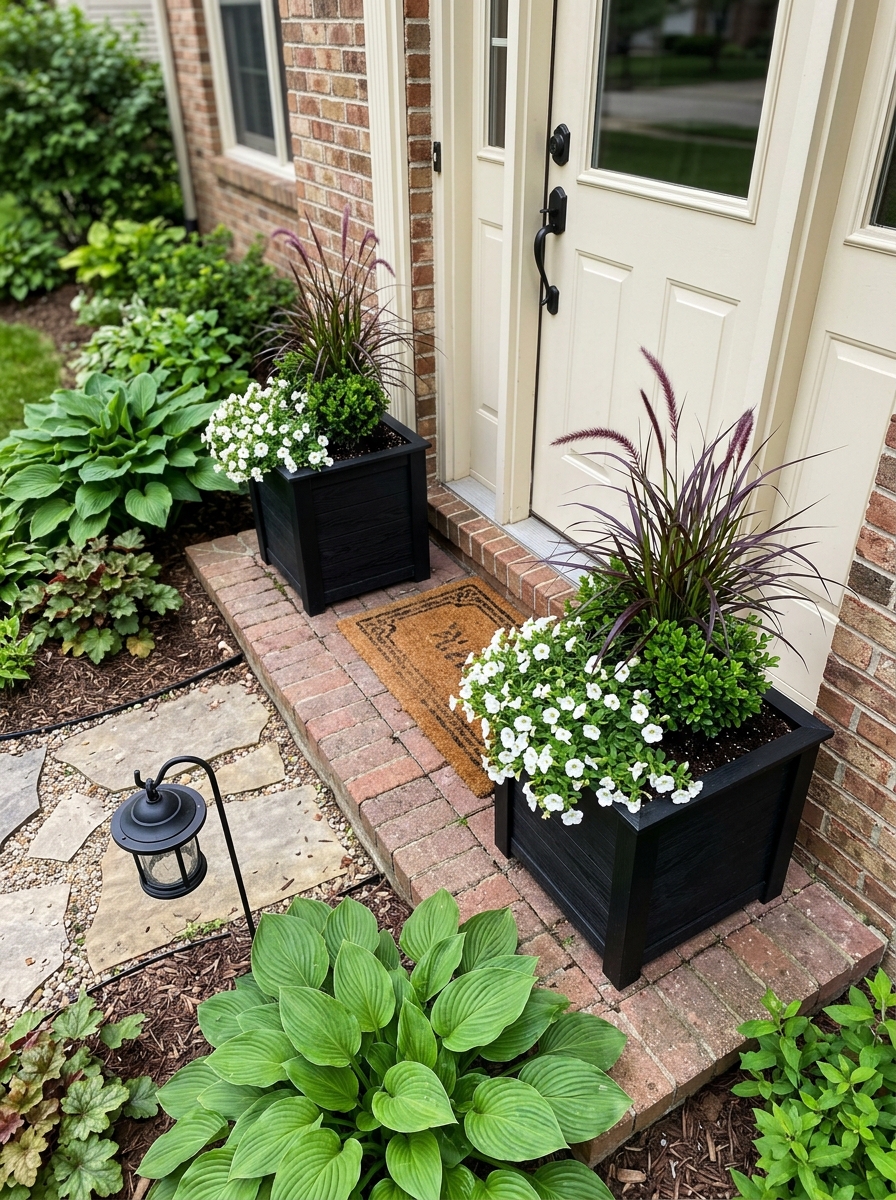
If you want a fast curb appeal win, porch containers are hard to beat. Matching planters on either side of the door create that satisfying sense of order that makes a home look cared for, even if the rest of the yard is still a work in progress. They are especially helpful when your entry feels small, plain, or a little disconnected from the garden beds. Pick containers that suit the style of your house first, then choose plants that can hold their own from the street. Tall grasses, dwarf evergreens, calibrachoa, ivy, and seasonal flowers all work well. I usually think in layers here too: something upright, something mounded, and something trailing just enough to soften the edge. It sounds fancy, but really it is just making sure the pot does not look flat. Since containers sit close to eye level, details matter. Clean pots, fresh soil, and healthy foliage make a bigger difference than stuffing in ten plant varieties. Water often, feed regularly, and deadhead when blooms start looking tired. Once those pots are flanking your front door with color and shape, the whole entrance feels more welcoming, especially when the breeze catches the leaves and the porch smells faintly of damp potting mix after watering.
Pro Tip: Use pot feet or small risers under porch containers so drainage holes stay clear and the bottoms do not stain your entry surface.
Create Crisp Bed Edges That Make Everything Look Cleaner
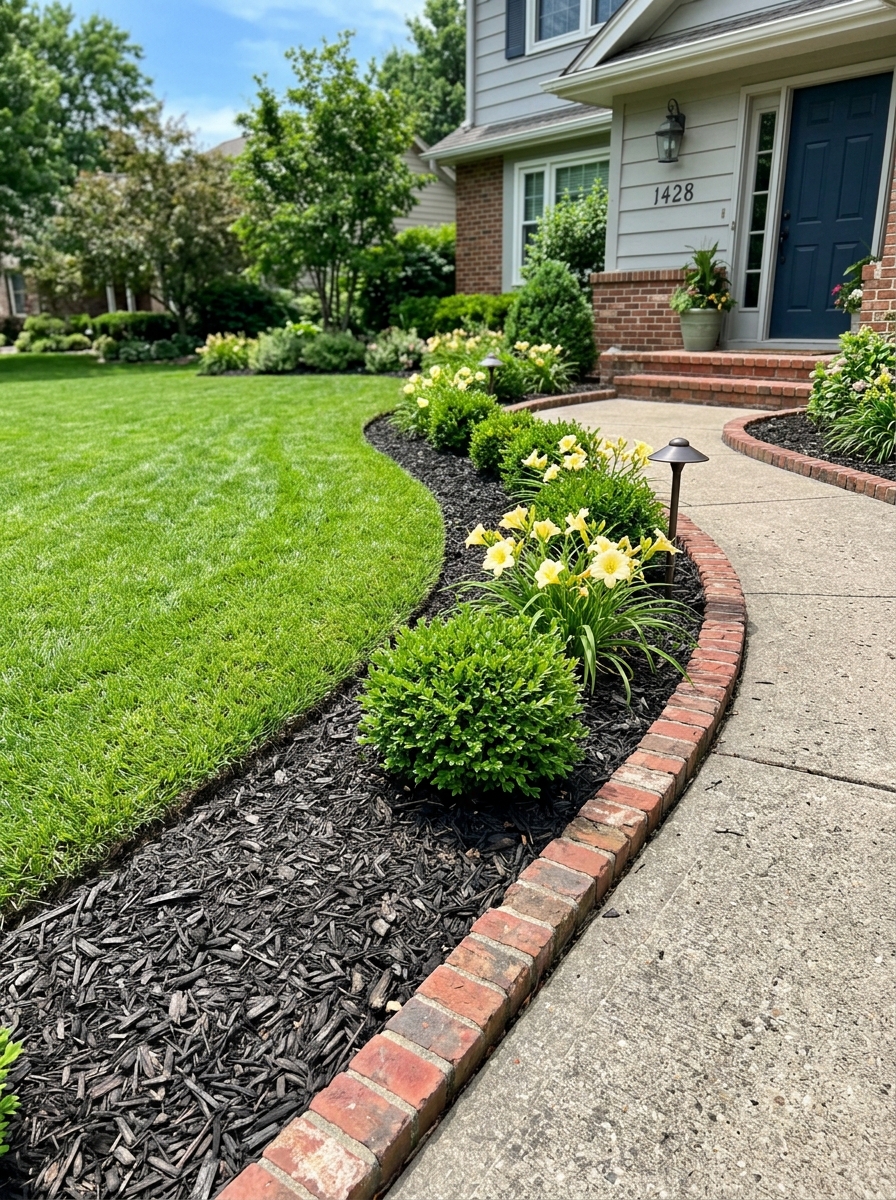
This is not the flashiest idea on the list, but honestly, clean edging does a shocking amount of heavy lifting. You can have beautiful plants, nice mulch, and healthy grass, but if the bed lines are fuzzy, the whole yard looks a little tired. A crisp edge gives structure. It tells the eye where the lawn ends, where the garden begins, and that somebody around here has their act together. There are a few ways to do it. A simple spade-cut edge works if you do not mind touching it up through the season. Brick, steel, or stone edging gives a more permanent look and helps keep mulch from drifting into the lawn after a storm. Whatever you choose, keep the curves gentle and intentional. Weird wobbles happen fast, and once you see them, you cannot unsee them. The best part is how much this detail highlights everything else. Flowers look brighter. Shrubs look more sculpted. Even plain green grass looks fresher against a sharp border. That little crunch of gravel or the neat line of brick along a bed edge has a satisfying, finished look that makes your front yard feel designed instead of accidental.
Pro Tip: Mark new bed lines with a garden hose first, then step back to view them from the street before cutting so the curves look smooth from the main viewing angle.
Mix Evergreens and Flowers for Four-Season Interest
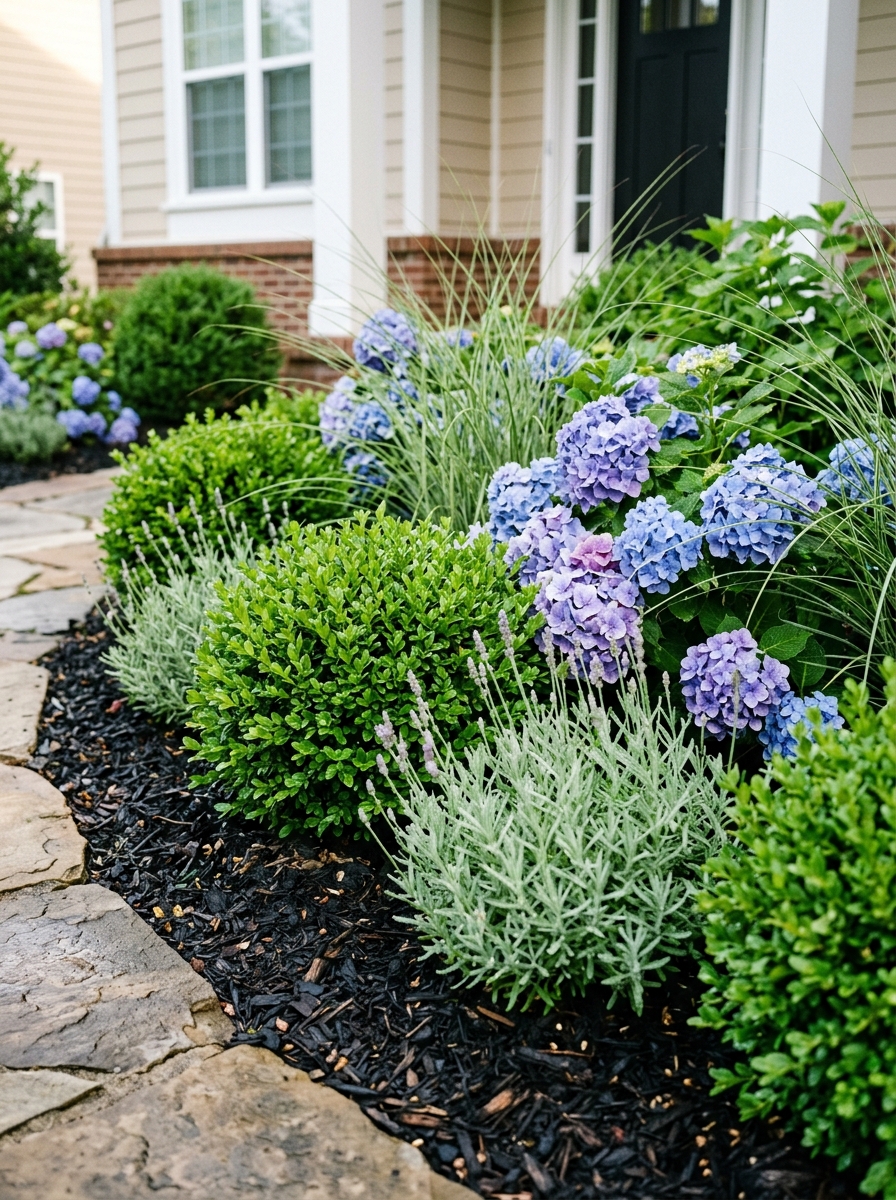
I learned this one the hard way after planting a front bed that looked amazing for about six weeks and then pretty much shrugged for the rest of the year. If you want lasting curb appeal, you need a mix of plants that show up in different seasons. Evergreens give you bones. Flowers bring personality. Together, they keep the yard from looking bare in winter or boring in summer. Use evergreen shrubs or grasses as your steady backdrop, then layer in bloomers that take turns through the growing season. Hydrangeas, lavender, salvia, coneflowers, and annual fillers can all work depending on your light. The trick is not cramming in every color you love. Pick a limited palette and repeat it. That repetition makes the bed feel calm and intentional, not like a clearance rack at the garden center. Texture matters just as much as bloom time. Glossy leaves, feathery grass blades, and chunky flower heads keep things interesting even when nothing is peaking. On cool mornings, dew collecting on evergreen foliage and the soft sway of grasses can make the whole bed feel alive. When your planting has structure and seasonal rhythm, the front of the house always has something to say.
Pro Tip: Aim for about 60 percent evergreen structure and 40 percent seasonal flowers in front beds if you want them to look full year-round without constant replanting.
Highlight the Entry With Low Path Lighting
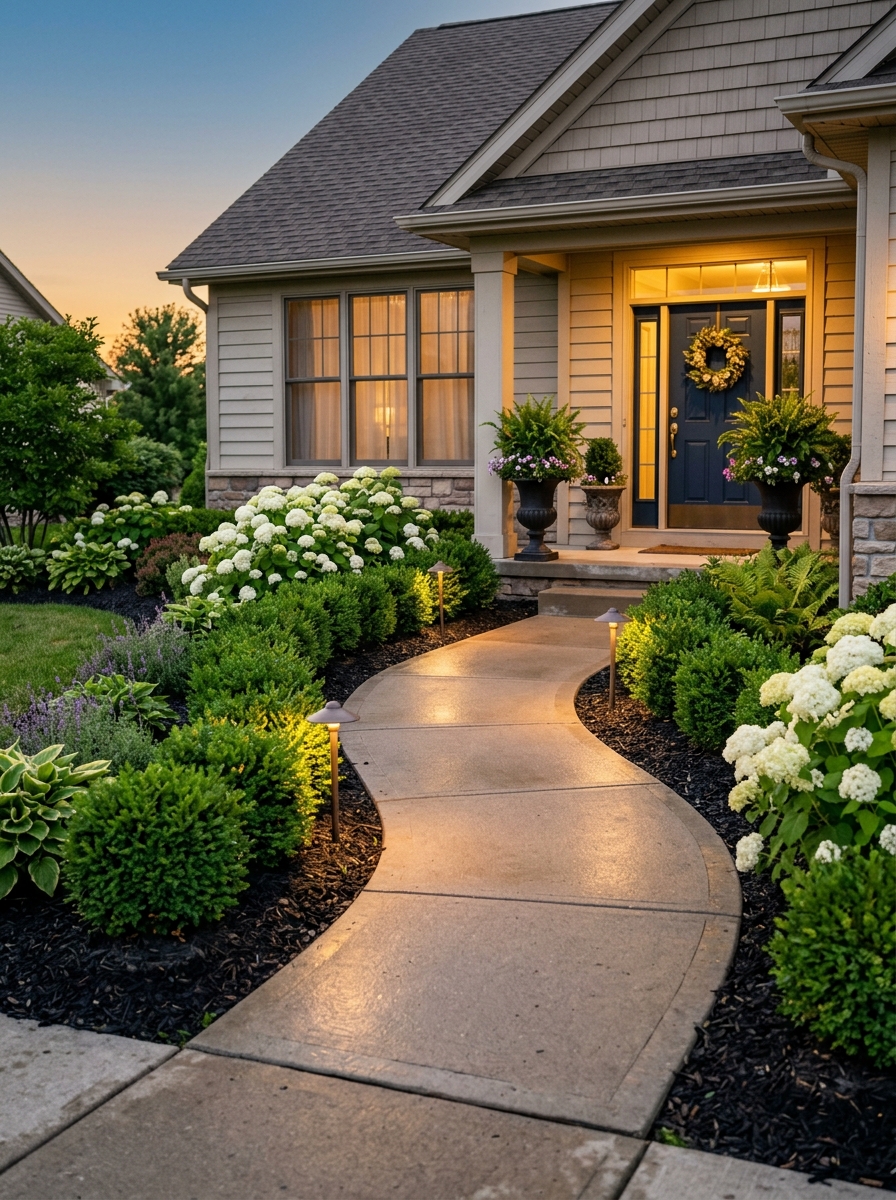
Once the plants and edging are in place, lighting is what makes the whole front yard feel finished after sunset. And no, I do not mean turning your house into an airport runway. A few well-placed low lights along the walkway or near key shrubs can make the entry safer, prettier, and much more inviting. That soft glow across leaves and stone at dusk is one of those details people notice without always realizing why. Focus on guiding the eye to the front door. Place fixtures where they light the path, skim across plant textures, or quietly spotlight a handsome shrub or planter. Warm white light tends to feel friendlier than harsh cool tones. Keep the fixtures low and discreet so the garden stays the star during the day. There is also a practical side here, which I appreciate more every year. Good path lighting helps you avoid that awkward half-stumble when carrying groceries up the steps in the dark. It also adds depth to the landscape, especially when shadows fall behind grasses or hydrangeas. When evening settles in and the yard still looks soft, warm, and cared for, your curb appeal keeps working long after the sun clocks out.
Pro Tip: Stagger path lights rather than placing them directly opposite each other, which creates a softer wash of light and avoids a runway look.
Give the Mailbox Area a Mini Garden Moment
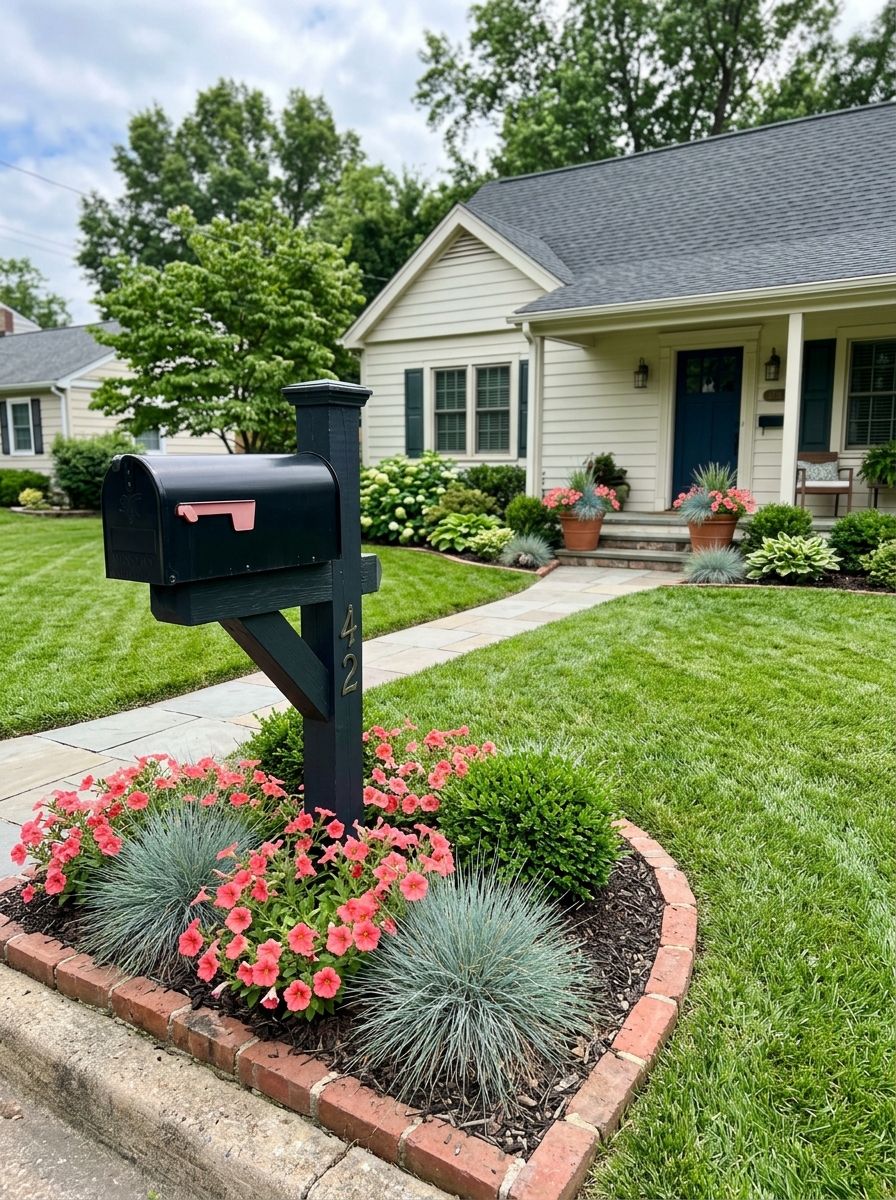
The mailbox is one of those spots people ignore until it starts looking sad, crooked, or surrounded by scruffy grass. But when you plant around it thoughtfully, it becomes a tiny focal point that makes the whole street-facing side of your yard feel more polished. It does not need to be elaborate. Just neat, balanced, and easy to maintain. Start by defining the area with a small bed shape that fits the scale of the post. Add one dependable anchor plant, a few lower fillers, and maybe a trailing annual if you want a bit of softness. Keep sightlines clear for drivers and mail delivery, and avoid anything that flops onto the curb. Dwarf grasses, salvia, compact petunias, and low evergreen mounds are all good candidates. I love this area because it is such a small project with a big visual payoff. Fresh mulch, a straight post, and a ring of healthy plants can make your yard look cared for from half a block away. And if you coordinate the planting colors with your porch containers or front beds, the whole property starts feeling tied together in that satisfying, yes-I-meant-to-do-that kind of way.
Pro Tip: Use a soaker ring or a short drip line around mailbox plantings so this hot, exposed spot gets steady water without you dragging a hose across the lawn.
Use Repetition to Make a Small Front Yard Feel Designed
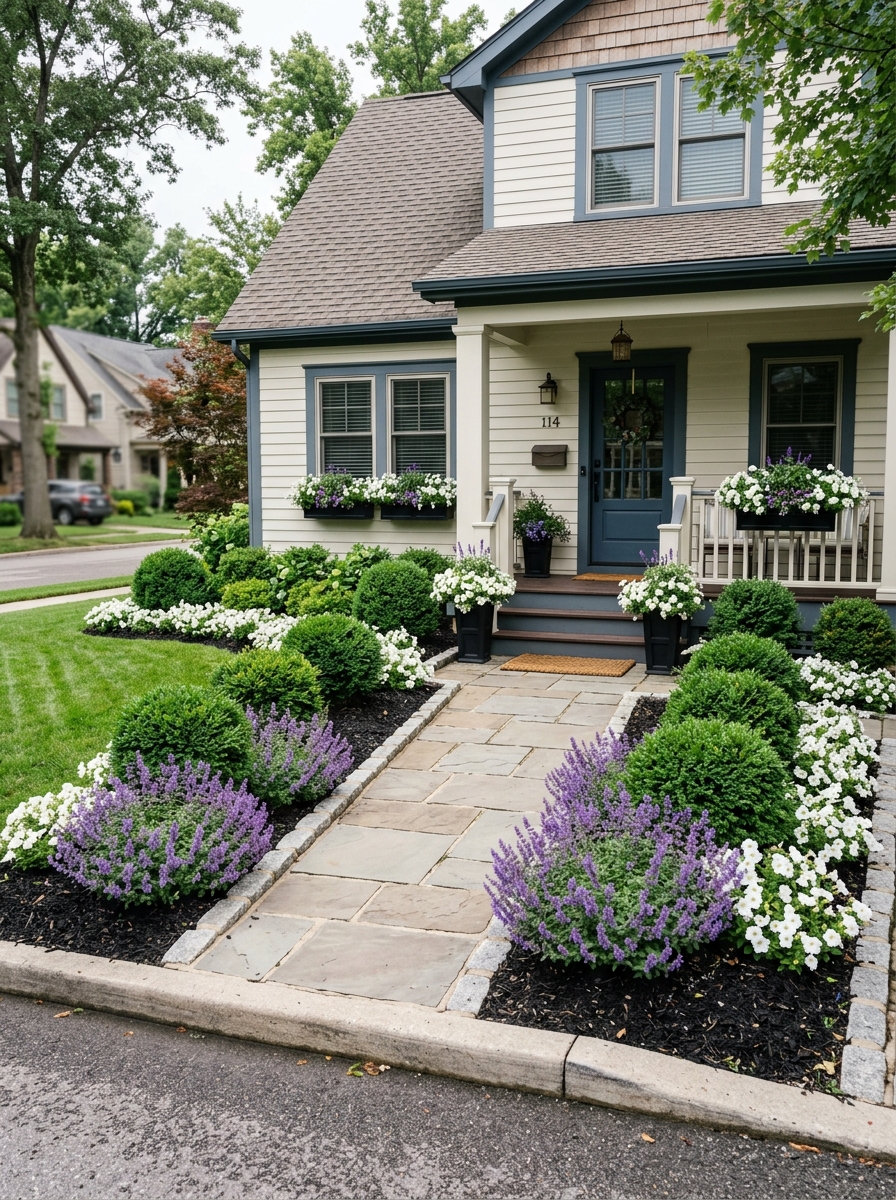
A small yard can look incredibly charming, but it can also get cluttered fast. When every bed has different plants, different edging, and a different mood, the eye does not know where to rest. Repetition is what pulls everything together. Repeating a few plant varieties, colors, or materials across the front yard creates rhythm, and rhythm makes even a modest space feel thoughtfully designed. Pick two or three key plants and use them in more than one area. Maybe the same boxwoods appear in the foundation bed and near the porch, while lavender or white annuals repeat along the path and by the mailbox. You can do the same with materials: one mulch color, one edging style, one pot finish. That consistency is calming and instantly more polished. This does not mean your yard has to feel stiff or boring. Repetition just gives you a backbone so the fun details make sense. A repeating drift of blooms catches your eye from the curb, and matching textures create that pleasing visual hum that makes a yard feel complete. If your front space is small, this is one of the smartest ways to make it feel bigger, cleaner, and more intentional without adding more stuff.
Pro Tip: Choose one evergreen shape, one flowering color family, and one hardscape material to repeat across the front yard for a simple designer-approved formula.
Add a Small Focal Feature Without Crowding the Space
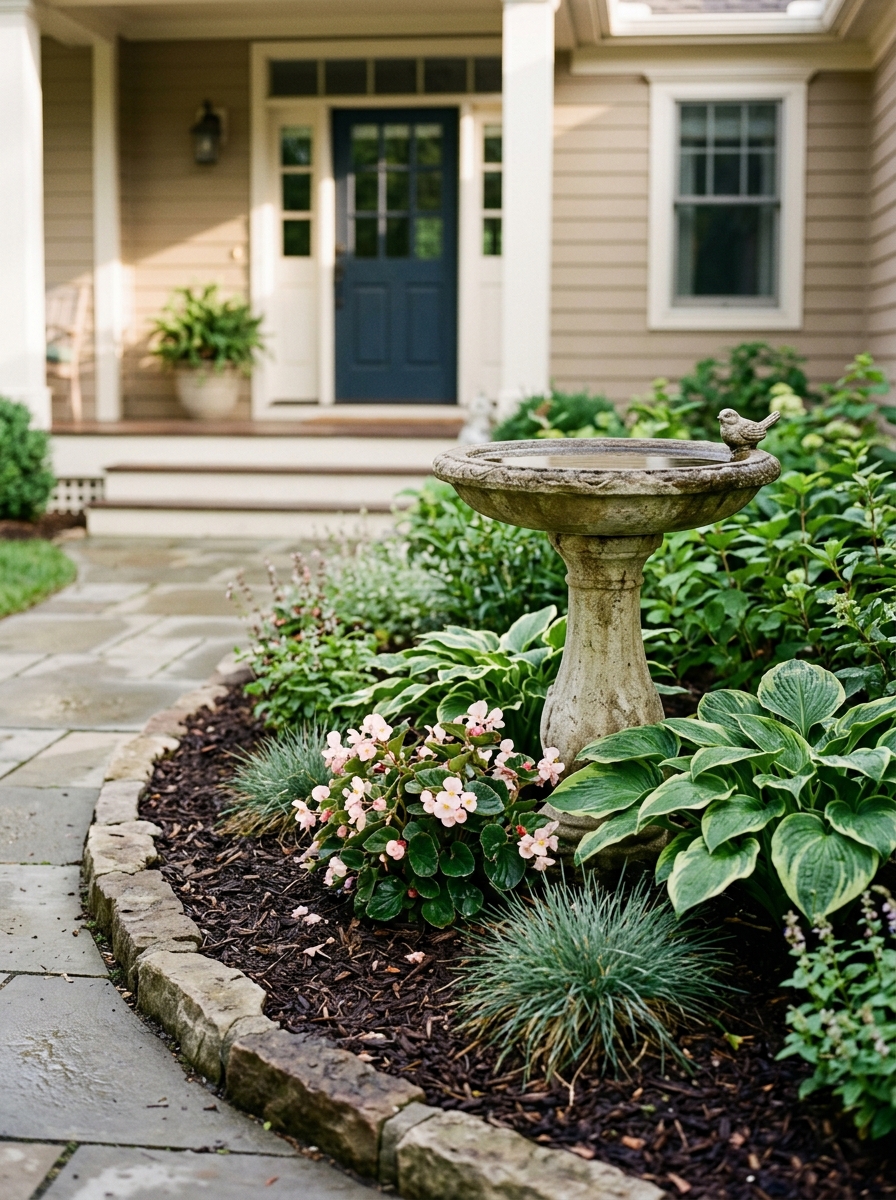
Sometimes a front yard needs one thing for the eye to land on. Not ten things. One. A birdbath, an urn planter, a simple bench near the porch, or a handsome house number post can give the space personality without making it feel busy. The key is choosing something that supports the planting instead of competing with it. Place your focal feature where it naturally fits the layout. Near the front path, tucked into a bed intersection, or close to the porch is usually best. Surround it with lower plants so it stays visible, and keep the scale in check. A giant fountain in a small suburban yard can feel a little… optimistic. A modest stone birdbath with soft planting around it, though, feels timeless. What makes these features work is contrast. Smooth stone against feathery grasses. A dark urn rising above pale flowers. A metal number post surrounded by low green mounds. Those material shifts add depth and help the yard feel layered. When the feature catches morning light or sits quietly among blooming plants, it gives the whole front garden a sense of purpose instead of just decoration for decoration’s sake.
Pro Tip: Limit yourself to one focal feature per front yard zone so the eye has a clear place to rest and the space does not feel crowded.
Swap Part of the Lawn for a Mulched Planting Island
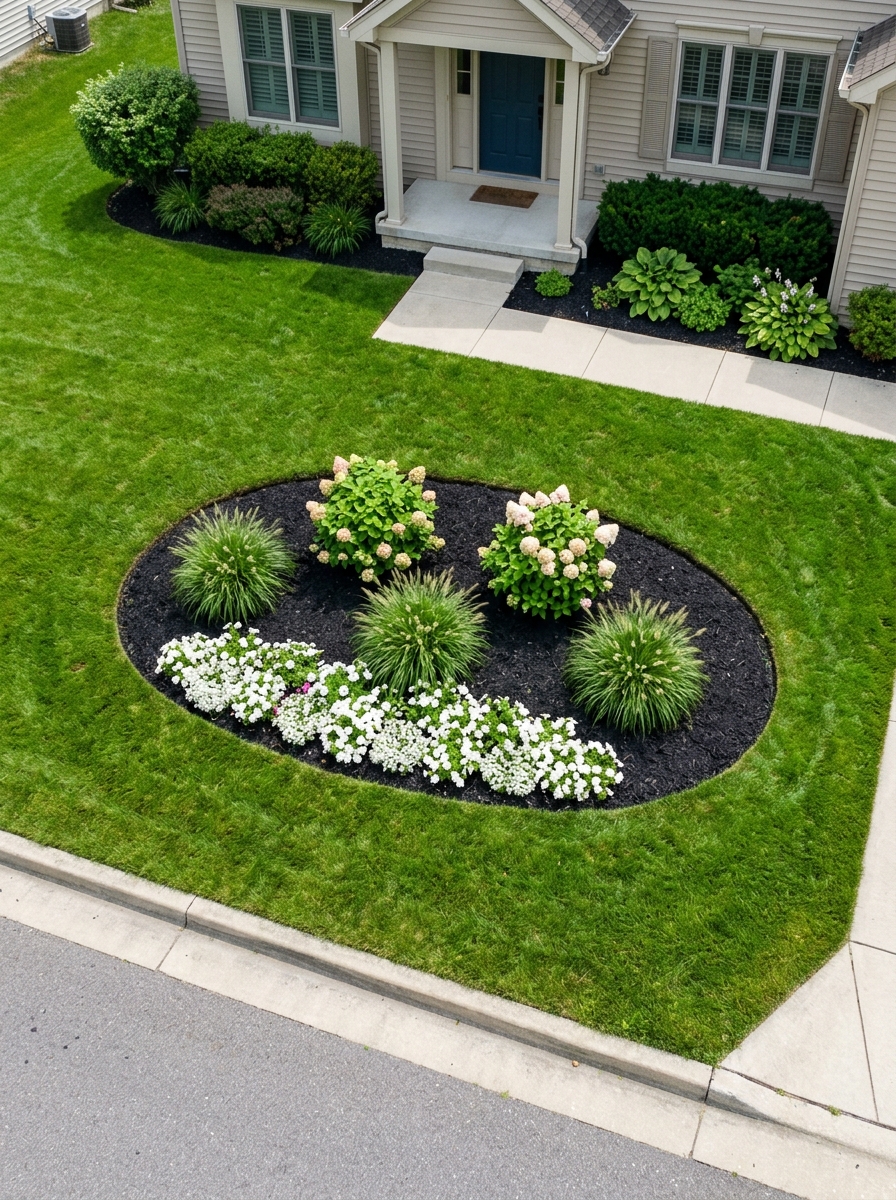
If your front lawn feels like a big empty green sheet, a planting island can break it up beautifully. This works especially well in wider yards where the grass stretches out without much visual interest. A well-placed island bed adds shape, color, and depth, and it can actually reduce mowing hassle in awkward spots. That is my kind of upgrade. Keep the shape simple and visible from the street. A soft oval or broad curve usually looks best. Fill it with a few sturdy shrubs, ornamental grasses, and seasonal color rather than lots of tiny plants that disappear from a distance. You want enough height and mass for the bed to read clearly, but not so much that it blocks views of the house or walkway. Mulch is what makes this feature feel intentional instead of random. It defines the bed, helps retain moisture, and creates contrast against the lawn. I also like how mulch smells on a warm afternoon, especially after you have just spread it and the whole yard suddenly looks sharper. Once that island bed is in place, the front yard has more movement and personality, and the lawn no longer has to do all the visual work by itself.
Pro Tip: Make planting islands large enough to mow around easily; a bed that is at least 6 to 8 feet across usually looks more intentional and is simpler to maintain.
Bring in a Small Ornamental Tree to Add Height and Grace
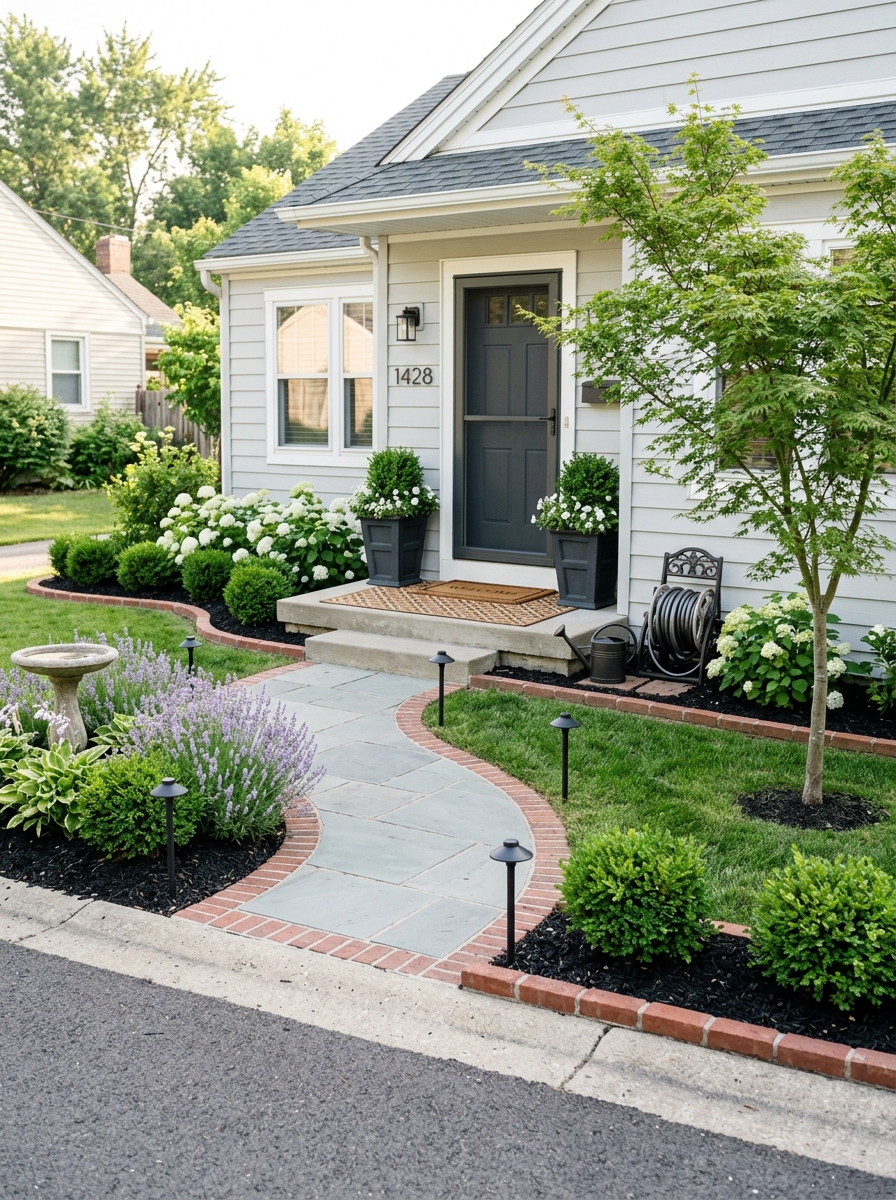
One of the easiest ways to make a front yard feel more finished is to add a modest ornamental tree where the eye naturally wants a little lift. Most front gardens have plenty happening at ground level, but without something taller and softer overhead, the whole space can feel a bit flat. A well-placed tree adds shape, movement, and that lovely layered look that makes even a basic suburban yard feel thoughtfully designed. Think Japanese maple, serviceberry, or a compact dogwood if the spot and climate allow. What I love most is how a small tree changes the mood without making the yard feel crowded. In spring, it brings blossom and fresh leaf color. In summer, it casts that light, dappled shade that makes shrubs and perennials look even better. In fall, you get a little drama right out front, and honestly, who does not want a front yard with a touch of drama? Even in winter, the branching structure gives the landscape some bones. Tuck one near a lawn corner, offset from the walkway, or where the house facade needs softening. It is such a simple move, but it gives the whole front garden a more elegant, established presence from the street.
Pro Tip: Before planting, stand in the street and mark the tree location with a tall stake, then check that it will not block windows, porch views, or the line of sight to the front door.
Refresh the Front Porch Seating Area So the Garden Feels Connected
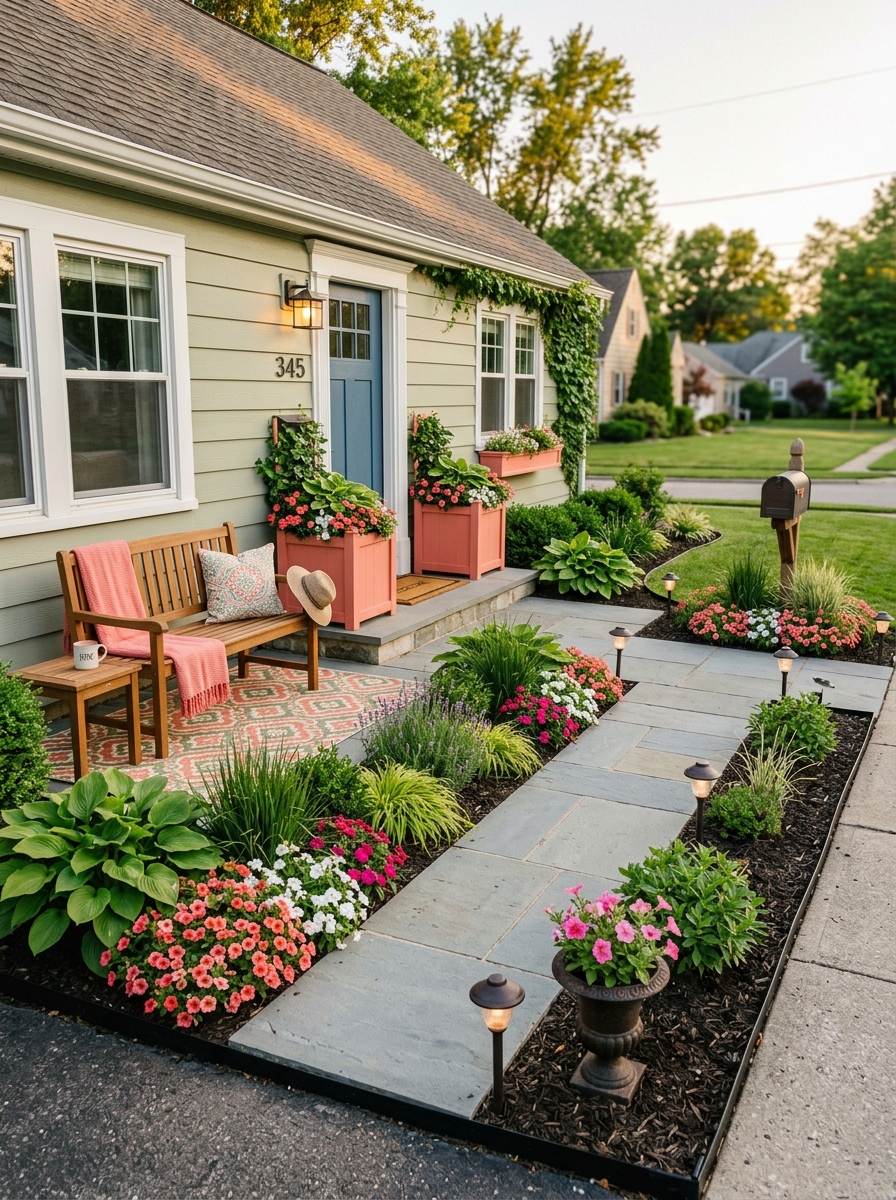
Sometimes the thing that boosts curb appeal is not another plant at all. It is making the front porch feel like it belongs to the garden instead of floating apart from it. Even a tiny seating setup can do that beautifully. A simple bench, a pair of compact chairs, or one sturdy rocker adds warmth and makes the whole front yard feel more welcoming from the street. It tells people this is a home, not just a house with decent shrubs. The trick is to keep it intentional and in scale. Choose seating that suits the porch size, then tie it into the landscape with coordinating planter colors, cushions, or nearby flowers. If your beds have soft whites and blues, echo that on the porch. If the yard leans classic with brick and evergreens, wood or black metal seating usually looks right at home. Add one small table for balance, and stop there before it starts looking crowded. I always think front porches should feel easy, like you could sit down with coffee for ten minutes before the day gets going. That relaxed, lived-in feeling works wonders for curb appeal because it makes the entire entry garden feel cared for, comfortable, and genuinely inviting.
Pro Tip: Keep at least 36 inches of clear walking space from the steps to the front door so seating feels welcoming instead of becoming an obstacle course for guests and grocery bags.
Quick Guide
Quick Guide: Which front-yard style fits you? Small yard + beginner: Stick with repetition, porch containers, and crisp edging. Fewer plant types, bigger payoff. Sunny yard + low maintenance: Use boxwoods, dwarf grasses, salvia, and mulch-heavy beds with simple path lighting. Shady entry + classic look: Try hostas, hydrangeas, evergreen shrubs, and a birdbath or urn for a calm focal point. Busy schedule + want polish fast: Start with walkway borders, foundation shrubs, and matching porch planters. Wide lawn + blank look: Add one planting island and a dressed-up mailbox bed so the yard has more shape from the street.
Conclusion
A good-looking front yard usually comes down to a few smart choices repeated well. You do not need to cram every trend into one space or spend a fortune chasing a perfect makeover. Start with the bones: clean edges, strong foundation planting, and a walkway that feels welcoming. Then build in personality with containers, seasonal color, a small focal feature, and lighting that keeps the yard looking lovely after dark. The nicest front gardens are not always the biggest or the fanciest. They are the ones that feel intentional. Balanced shrubs, healthy flowers, fresh mulch, and a clear path to the door can make your whole home feel warmer and more inviting. Even a mailbox bed or two matching porch pots can change the way your yard reads from the street. If your space feels overwhelming, pick one section and work outward. Tidy the border. Add two shrubs. Refresh the pots. Small steps really do add up, and your curb appeal gets stronger with every thoughtful change. Which of these ideas are you trying first? Let me know in the comments.
Frequently Asked Questions
What are the best low-maintenance front yard home garden ideas for curb appeal?
Start with evergreen shrubs, fresh mulch, crisp edging, and a small group of repeat plants rather than lots of fussy varieties. Add porch containers only if you can keep up with watering. A simple, well-kept layout nearly always looks better than a complicated one that is hard to maintain.
How do I make a small front yard look more expensive with plants?
Use repetition, limit your color palette, and choose a few strong plant shapes instead of many random ones. Matching containers, clean bed lines, and one mulch color help a lot too. Small spaces look more upscale when they feel edited and intentional.
What should I plant along a front walkway for year-round curb appeal?
A mix of compact evergreens, dwarf grasses, and seasonal bloomers usually works best. Boxwoods or low shrubs give structure, while salvia, petunias, lavender, or hostas add softness depending on sun exposure. Just make sure mature plants will not spill too far over the path.
How can I landscape the front of my house on a budget?
Focus on the spots people notice first: the walkway, the porch, and the foundation bed near the entry. Refresh mulch, edge the beds, add a few shrubs, and use affordable annuals in containers for quick color. Doing one zone well often looks better than spreading a small budget across the whole yard.