

You know that moment when you sit down in your living room, look around, and think, why does this space still feel off? Maybe the sofa is fine, but the layout is awkward. Maybe the walls feel flat, the lighting is sad, or the whole room just looks like it came together one random purchase at a time. I’ve been there, and honestly, it’s usually not one giant problem. It’s a bunch of little missed opportunities. The good news? A living room remodel doesn’t have to mean gutting everything or spending like you’re designing a luxury model home. Sometimes it’s about changing the focal point. Sometimes it’s better storage, better lighting, or finally choosing the rug size your room actually needs. And sometimes one smart update makes everything else click into place. These 17 living room remodel ideas are all about making your space feel prettier, calmer, and way more pulled together, while still working for real life, pets, kids, movie nights, and laundry baskets that occasionally wander in. Here’s what actually works.
Build the Room Around a Strong Focal Wall

If your living room feels scattered, start with the wall your eye lands on first. That one choice can change everything. A focal wall gives the room direction, which is huge when you’re remodeling because it helps every other decision feel easier. Think painted millwork, a limewashed finish, large-scale art, or a fireplace surround update that finally makes the room feel intentional instead of random. I love this move because it doesn’t just add style. It creates calm. When the room has one clear visual anchor, your sofa, chairs, lighting, and decor stop competing with each other. Even a simple wall treatment in a warm greige or soft sage can make the whole space feel more custom. And if you’re nervous about doing too much, this is a sweet spot. It looks elevated without feeling fussy. The trick is scale. Tiny art on a huge wall won’t do it. Neither will a busy gallery wall if the room already has a lot going on. Go bigger, cleaner, and more deliberate than you think. A remodeled living room should feel edited, not crowded. That’s when it starts to look expensive in the best way.
Pro Tip: Tape out the size of your art, trim design, or wall treatment before committing so you can see if it actually fits the room’s scale.
Swap in a Larger Rug That Actually Fits the Seating Area

This one sounds small, but wow, it changes the whole room fast. An undersized rug makes even a pretty living room feel awkward and unfinished. It’s one of the most common things I notice in homes that don’t feel quite right. The furniture floats, the layout feels choppy, and somehow the room looks smaller instead of bigger. A remodel is the perfect time to fix that. Your rug should connect the main pieces, not just sit under the coffee table like an afterthought. At minimum, the front legs of the sofa and chairs should sit on it. Better yet, let the rug anchor the entire conversation area. Suddenly the room feels grounded, softer, and way more cohesive. And don’t think bigger means boring. A large rug can still have pattern, texture, and personality. I love a faded medallion for transitional spaces or a subtle abstract for something cleaner and more current. Just keep the palette tied to the room so it supports the remodel instead of shouting over it. Weirdly enough, the right rug makes every other choice look smarter. That’s a pretty good return for one item.
Pro Tip: Use painter’s tape to outline an 8×10 or 9×12 rug on the floor before buying so you can test the scale with your actual furniture.
Rethink the Layout Before You Buy Anything New

Sometimes the room doesn’t need more stuff. It needs a better plan. I can’t tell you how many living rooms start feeling better the second the furniture gets pulled away from the walls and arranged for actual conversation. And yes, that can feel weird at first if you’ve always lined everything up around the perimeter like a waiting room. A remodel is your chance to ask a few honest questions. Where do people naturally sit? Is the TV the main event, or do you want the fireplace to matter too? Can you walk through the room without zigzagging around sharp corners and side tables? Good layout makes a room feel easy. You don’t always notice it right away, but your body does. Try floating the sofa, adding a pair of chairs across from it, or using a console behind the sofa to create structure in an open space. Even a small apartment living room can feel polished if the furniture placement makes sense. And when the layout works, you stop fighting the room. That alone can make the remodel feel like a whole new chapter instead of just a cosmetic update.
Pro Tip: Sketch your room on paper and mark pathways first, aiming for at least 30 inches of walking space where people naturally move.
Add Built-Ins That Hide the Mess and Show Off the Pretty Stuff

Built-ins are one of those remodel upgrades that feel both practical and a little dreamy. They make a living room look custom right away, but they also solve real-life problems. Toys, remotes, cords, random chargers, board games, candles, all the little clutter magnets suddenly have somewhere to go. And that matters because a room can be beautifully designed and still feel chaotic if there’s nowhere to hide everyday life. The best built-ins mix closed storage with open shelving. You want some doors, trust me. Not everything needs to be on display. Then use the open sections for a few stacked books, art, ceramics, and maybe one plant that makes you feel like you have your life together. Keep it edited. This is not the place for every souvenir you’ve ever owned. I also love how built-ins frame a fireplace or TV wall and make the whole room feel more architectural. Even simple painted cabinetry can pull a remodel together in a way freestanding furniture can’t. It gives the room rhythm and weight. And if your living room has always felt a little flat, this kind of structure can be the thing that finally gives it presence.
Pro Tip: Plan one-third open shelving and two-thirds closed storage so the room stays styled without turning into visual clutter.
Layer Lighting So the Room Feels Good Day and Night

A lot of living rooms rely on one lonely ceiling fixture, and honestly, it’s doing its best. But that’s rarely enough. If you want the room to feel warm, flattering, and finished, you need layers. Good lighting is one of the biggest differences between a room that looks okay and one that makes you exhale the second you walk in. Start with your overhead light, sure, but don’t stop there. Add table lamps for glow, a floor lamp for height, maybe sconces if you’re remodeling walls anyway. The goal is to create little pools of light around the room so it feels soft and dimensional instead of flat and harsh. And if your living room doubles as a TV zone, reading spot, and catch-all family hangout, layered lighting lets it shift with your day. This is also where style sneaks in. Lighting has so much personality. A sculptural floor lamp can modernize a traditional room. A pair of tailored sconces can make a basic wall feel custom. And dimmers? Absolute magic. They’re not glamorous, but they make every bulb work harder. Once you get the lighting right, colors look richer, textures stand out, and the whole remodel feels more intentional.
Pro Tip: Put every hardwired light on a dimmer during the remodel so you can change the mood without swapping bulbs or lamps later.
Upgrade the Fireplace Surround for Instant Character
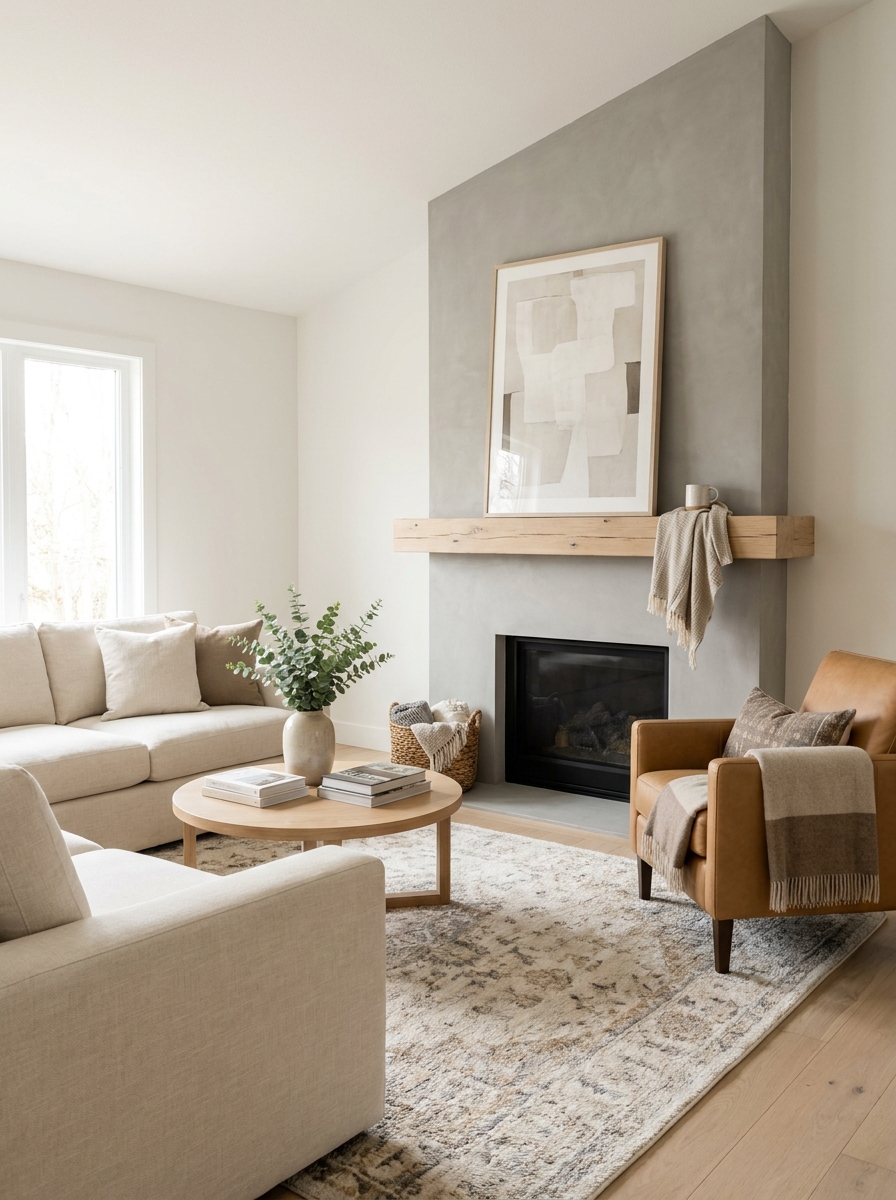
If your living room has a fireplace, that thing should be working harder. So often it’s stuck with dated tile, a skinny builder-grade mantel, or a finish that drags the whole room backward. A fireplace remodel can completely shift the mood of the space, even if you leave the layout mostly alone. It’s one of the highest-impact changes you can make. You don’t have to go overly dramatic either. A simple plaster surround, painted brick, slab stone, or updated wood mantel can feel fresh without looking trendy in a way you’ll regret later. I especially love fireplace updates that bring in texture. Smooth plaster feels soft and modern. Veined stone adds quiet polish. A chunky oak mantel warms up a room that feels a little too crisp. And because the fireplace naturally draws attention, this is a great place to simplify. Let the materials shine. One large piece of art, a mirror, or just clean lines can be enough. Don’t overload the mantel just because Pinterest told you to. Sometimes the prettiest thing in the room is a fireplace that finally looks like it belongs there. That’s such a satisfying remodel win.
Pro Tip: Choose one timeless material for the surround and one simple accent above the mantel so the fireplace feels elevated, not overdecorated.
Use Paint to Warm Up a Room That Feels Cold

Paint is still one of the smartest remodel tools around. Not flashy, not expensive compared to major construction, but wildly effective. If your living room feels cold, echoey, or just a little blah, the wrong white might be the problem. Some shades lean icy and make everything feel stark, especially in rooms that don’t get gorgeous sunlight all day. A warmer paint color can soften the room instantly. Think creamy white, greige, mushroom, or a muted green-gray if you want a little more depth. These shades bounce light in a gentler way and make upholstery, wood tones, and metal finishes look richer. It’s subtle. But you’ll feel it. The room starts to look less builder-basic and more layered, even before the new decor goes in. And yes, paint matters on trim too. Matching trim to the wall color can make a room feel calmer and more current. A slightly contrasting trim can add definition if the architecture needs help. Test your samples morning, noon, and evening. Paint has moods, I swear. The right one makes your living room feel like a hug. The wrong one makes your beige sofa look weirdly pink. Nobody wants that.
Pro Tip: Sample paint on at least two walls and check it at three times of day before choosing a final color for the whole room.
Choose Window Treatments That Make the Ceiling Feel Taller

Window treatments are sneaky. Done right, they make your living room feel taller, softer, and more finished. Done wrong, they cut the room in half and make everything look a little cramped. If you’re remodeling, this is the moment to stop hanging curtains right on top of the window frame and start using them to shape the whole room. Mount your curtain rod higher and wider than the window. It sounds simple because it is, but the effect is big. The eye travels up, the windows look grander, and the walls feel taller. I love full-length drapes in linen or a linen blend because they add movement without looking heavy. Even in a modern room, they bring in that softness every hard surface needs. And if privacy matters, layer in woven shades or simple roller shades underneath. That’s the sweet spot, pretty and practical. Skip anything too skimpy or too short. Curtains that hover awkwardly above the floor truly ruin the vibe faster than they should. Let them just kiss the floor or barely puddle if that’s your style. It’s one of those details that makes a remodeled living room feel finished instead of halfway there.
Pro Tip: Hang curtain rods 6 to 10 inches above the window frame and extend them beyond the window so the glass looks larger and taller.
Mix Old and New Pieces So the Room Feels Collected

One of my favorite remodel tricks has nothing to do with demolition. It’s the mix. A living room feels richer when everything doesn’t look like it arrived in the same delivery truck on the same Tuesday. New furniture gives you comfort and function, but older pieces bring soul. That’s where the room starts to feel personal. Maybe it’s a vintage wood chest used as a coffee table, an antique brass lamp, or a slightly imperfect side table with a story. Those pieces keep a remodeled room from feeling too slick. And when you pair them with cleaner silhouettes, like a tailored sofa or modern swivel chair, the contrast is so good. It feels layered instead of themed. That’s a big difference. I think this matters most in transitional spaces, where warmth and polish need to balance each other. Too many brand-new pieces and the room can feel flat. Too many old ones and it can drift into clutter. But a thoughtful mix? That’s magic. It makes the room look like it evolved over time, even if you remodeled it in one season. Honestly, that’s usually the goal. You want people to walk in and think, this feels so you, not wow, nice furniture package.
Pro Tip: Aim for one or two character pieces per seating zone, then let newer foundational furniture keep the room feeling fresh and functional.
Bring in Architectural Trim for a Custom, Finished Look

Architectural trim is one of those upgrades that makes people think you spent way more than you did. Wall molding, box trim, picture frame molding, even a simple beefier baseboard can give a plain living room real presence. If your space feels builder-basic, this is such a good way to add detail without stuffing the room with more furniture or decor. What I love most is that trim works with so many styles. In a modern transitional room, it adds structure and polish. In a more traditional living room, it reinforces the bones in a way that feels elegant but still approachable. Painted all one color, it can look calm and subtle. With a slight contrast, it reads a little crisper. Either way, the room suddenly has architecture, not just drywall. This is also one of the best ways to make newer homes feel less generic. The walls stop being blank and start participating. And once trim is in place, everything else looks better against it, your art, your lamps, even your sofa. It’s not loud. It’s just quietly beautiful. Sometimes that’s exactly what a remodel needs. Not more things. Better bones.
Pro Tip: Keep trim spacing consistent across the wall and mock it up with painter’s tape first so the proportions feel balanced from across the room.
Replace Bulky Furniture With Pieces That Let the Room Breathe
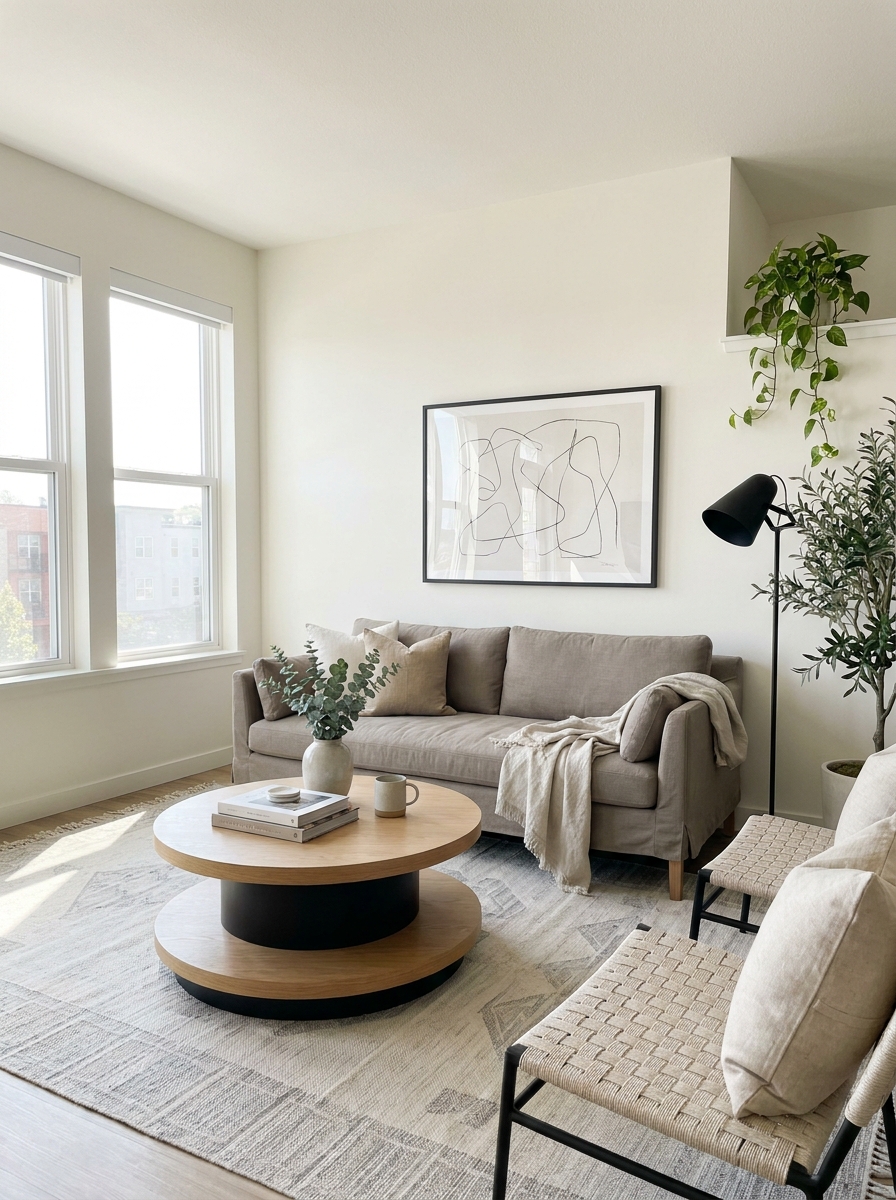
Sometimes a living room feels off for one very simple reason. The furniture is just too heavy. Big rolled arms, chunky legs, deep bases, oversized recliners. They eat up visual space fast. A remodel is the perfect time to edit all that and choose pieces with cleaner lines, raised legs, and better scale. The room instantly feels lighter, calmer, and more pulled together without losing comfort. I always tell people to look at the shape of the furniture before the color. A sofa with a slimmer arm can give you back inches. A glass or wood coffee table with open space underneath makes the floor feel more visible. Even swapping one massive side chair for two smaller swivel chairs can completely change how the room moves. It is one of those updates that makes everything else look more expensive. And this is not about making the room cold or tiny. It is about giving your space breathing room so the pretty details can actually shine. When the furniture fits the room instead of fighting it, the whole living room starts to feel easier to live in. More open. More relaxed. More like a real remodel and less like a crowded storage zone.
Pro Tip: Before buying anything, tape the exact width and depth of each new furniture piece on the floor so you can see how much walking space you will really have.
Create a Conversation Zone Instead of a TV Waiting Room

A lot of living rooms are set up like everybody is waiting for a movie to start. One long sofa. A chair in the corner. Everything pointed in one direction. Fine for screen time, not so great for actual living. If you want the room to feel transformed, build in a real conversation zone. Think chairs angled toward each other, a coffee table within easy reach, and seating that lets people talk without twisting their whole body. This change makes a room feel warmer right away. It tells people to sit down, stay awhile, and actually use the space. I love adding two chairs opposite a sofa or using a curved chair that softens all the straight lines. Even a compact room can do this if you keep the pieces scaled right. Suddenly the room feels balanced, intentional, and much more welcoming. It also helps the living room work harder. You can host friends, chat with family, read, or have coffee without the TV being the boss of everything. That shift is huge. The room starts to feel like a real gathering place instead of just a pass-through with a screen in it. And honestly, that kind of remodel feels good every single day.
Pro Tip: Keep no more than 8 feet between main seats so people can talk comfortably without raising their voices.
Add Texture in Every Finish So the Room Stops Feeling Flat

You can have a beautiful color palette and still end up with a room that feels weirdly dull. Usually that is a texture problem. Remodels can get a little too smooth if everything is new and matching. Flat paint, sleek furniture, shiny metal, plain fabric. It all starts blending together. The fix is layering in contrast you can actually see and feel. Think nubby upholstery, soft linen, warm wood grain, ribbed ceramics, a leather accent, maybe a stone-top table, maybe woven shades or a basket tucked by the sofa. None of it has to scream for attention. It just needs to break up the sameness. This is what gives a living room that finished, expensive, I-want-to-sit-here feeling. Texture catches light in the prettiest way and makes neutrals feel rich instead of boring. It is one of my favorite remodel tricks because it works quietly. People may not be able to name why the room feels better, but they feel it right away. The space has depth. It has warmth. It feels layered and real. Not like it was ordered in one click, but like it came together on purpose over time.
Pro Tip: Use at least one contrasting texture in each major zone: something soft, something woven, something natural, and something smooth.
Use a Statement Ceiling Finish to Pull the Whole Remodel Upward
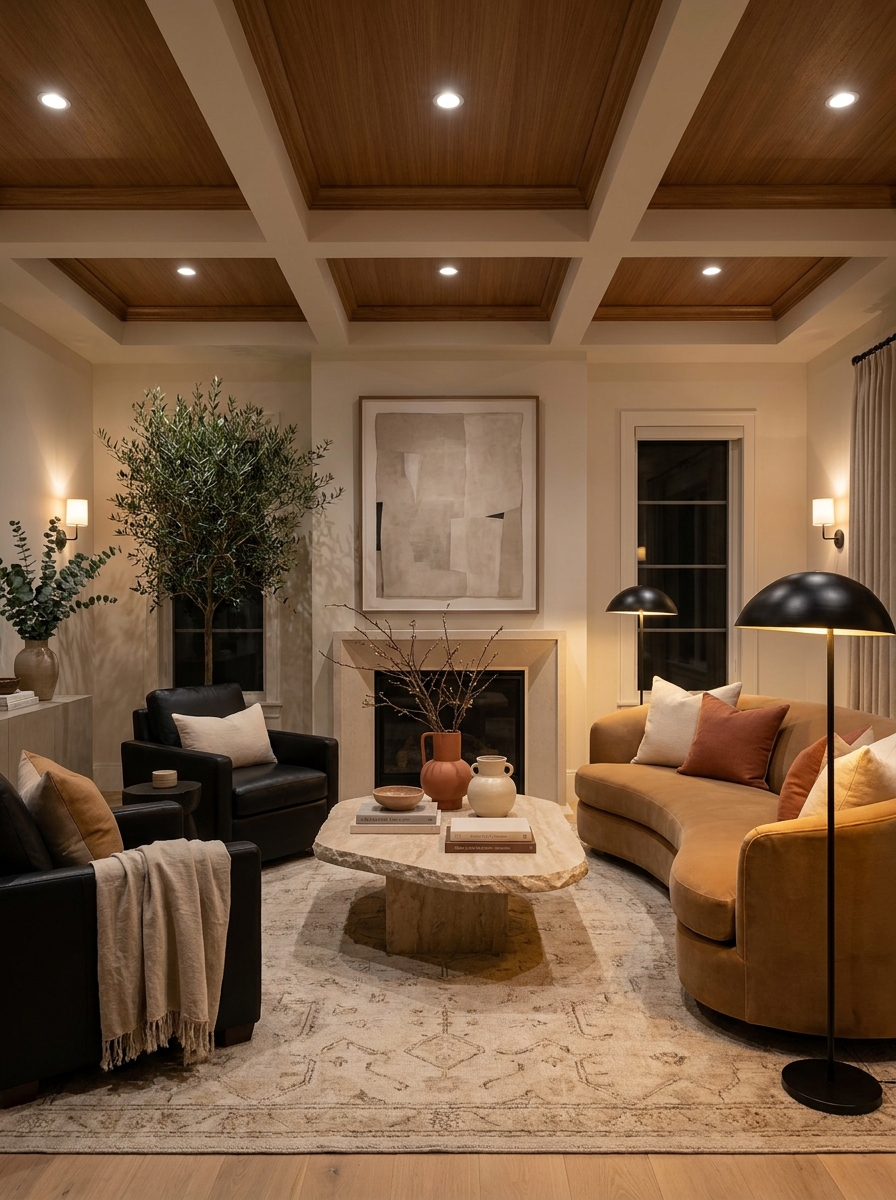
Walls get all the attention, but ceilings can do so much heavy lifting in a living room remodel. If your room feels plain, boxy, or a little unfinished, look up. A ceiling treatment can add drama without taking up one inch of floor space. Wood beams, a tongue-and-groove detail, a subtle ceiling color, even a simple wallpaper or plaster finish can completely change the mood. What I love about this move is how it makes the room feel designed from top to bottom. It is unexpected in the best way. You walk in and the whole space feels more custom, more thoughtful, more elevated. It also helps connect the living room to the rest of the house, especially in open layouts where you want one area to feel special without adding clutter. You do not need anything too fussy, either. In fact, the prettiest ceiling updates are usually the ones with a little restraint. Soft contrast. Clean lines. Just enough detail to make the room feel memorable. It is one of those remodel ideas that people do not always think of first, but once it is there, it makes everything under it look better too.
Pro Tip: Paint the ceiling treatment just one shade darker or warmer than the walls for subtle depth without making the room feel heavy.
Carve Out a Small Multi-Use Corner That Earns Its Keep

The best living room remodels do more than look pretty. They solve real life. One of the smartest ways to do that is by carving out a small multi-use corner. Maybe it becomes a reading nook, a compact desk spot, a game table, or a quiet place for morning coffee. It does not need much room. It just needs intention. This kind of zone is especially great in open-concept homes and smaller spaces where every square foot matters. A petite chair and side table by a window. A slim desk behind the sofa. A small round table tucked into an underused corner. Suddenly the room has more purpose without feeling crowded. I love this because it makes the living room feel custom to your actual routine, not just styled for photos. And there is something really cozy about a room that gives you options. One person can watch a show while someone else reads. Kids can do homework nearby. You can answer emails without taking over the dining table. That flexibility changes how the whole room functions. It feels smarter, more personal, and a lot more useful from morning all the way to evening.
Pro Tip: Anchor a multi-use corner with one small rug, one task light, and one surface so it reads as intentional instead of leftover.
Upgrade the Coffee Table and Side Tables Like They Matter

I think small tables are wildly underrated in a living room remodel. People spend so much energy on the sofa and forget the pieces that actually make the room usable. But the right coffee table and side tables can shift the whole look. They add shape, contrast, storage, and function all at once. And if the old ones are too tiny, too bulky, or too random, the room always feels a little unfinished. This is where you can bring in a new material or silhouette that wakes everything up. A round coffee table can soften a room full of straight lines. A waterfall wood piece adds warmth. Nesting side tables help in tight spaces. A table with a shelf or drawer keeps remotes and coasters from taking over. These are the details that make the room feel polished but still easy to live in. I also love how a table swap can freshen the space without a full furniture overhaul. It is practical, but it still gives you that makeover feeling. Better proportions, better flow, better function. And once your lamps, drinks, books, and everyday clutter have a proper place to land, the whole living room starts looking calmer and more put together.
Pro Tip: Choose a coffee table that is about two-thirds the length of your sofa and sits 16 to 18 inches away for easy reach and good flow.
Finish the Room With Oversized Art That Sets the Mood
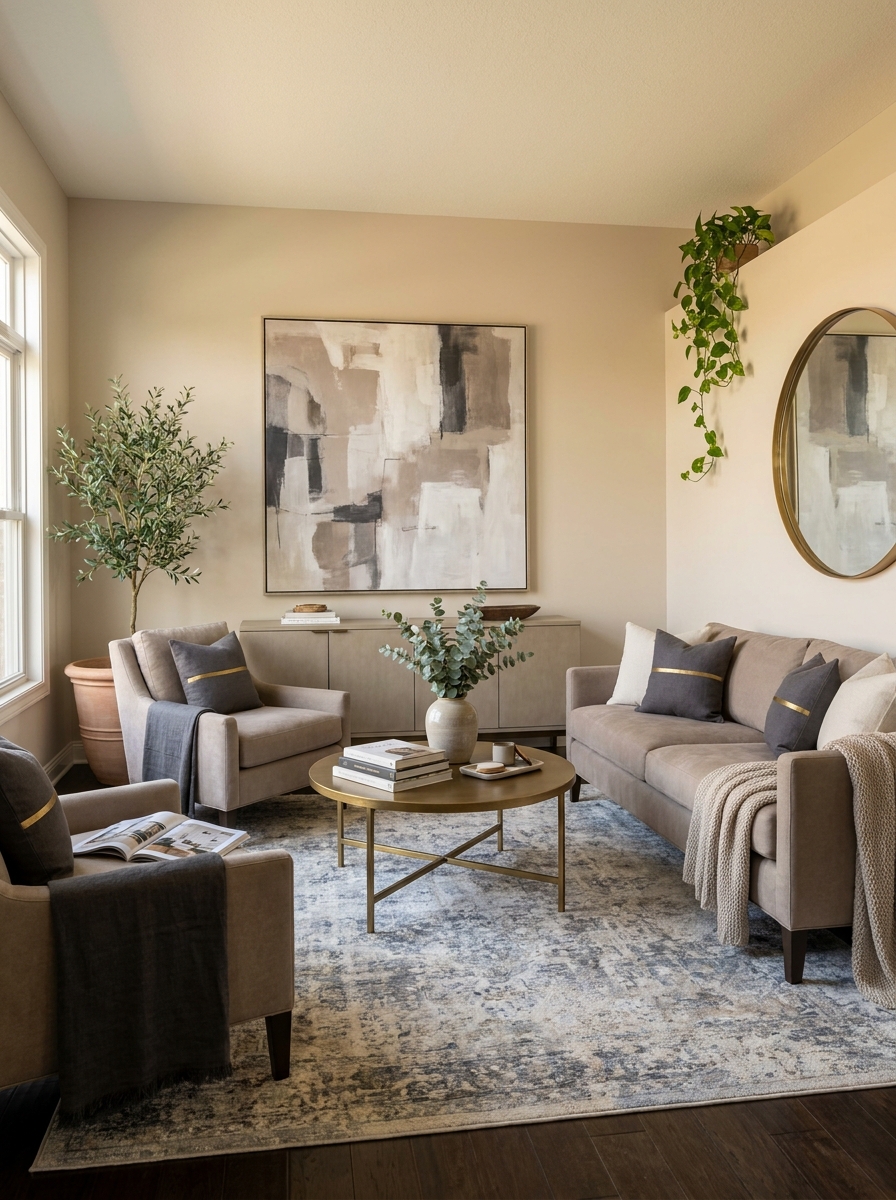
If a remodeled living room still feels a little blank, art is usually the missing piece. And not tiny art, either. I mean oversized, room-shaping art that gives the space emotion. It can be calm and tonal, bold and graphic, earthy and textured, whatever fits your style. The point is to use something with enough scale to hold its own and help the room feel complete. This is one of the easiest ways to change the mood without adding clutter. A large piece behind the sofa or over a console instantly makes the room feel more intentional. It can pull together your colors, echo the architecture, and give the eye somewhere to land. I especially love art in a remodel because new finishes can sometimes feel a little too crisp at first. Art softens that and brings in personality fast. And please do not be afraid of going big. Small pieces can get lost and make a wall feel busier than it needs to. One strong piece often does more than a whole gallery. It adds confidence. It adds character. It makes the room feel finished in that satisfying, yes-this-is-it kind of way.
Pro Tip: Hang oversized art so the center sits around 57 to 60 inches from the floor, then adjust slightly based on your ceiling height and furniture below.
Quick Guide
Quick Guide: DIY vs. Buy for a living room remodel DIY if you’re painting walls, swapping curtain rods, styling shelves, or changing hardware on built-ins. Those updates are budget-friendly and very doable over a weekend. Buy or hire out if you’re moving electrical, building custom cabinetry, updating a fireplace surround, or adding architectural trim across a large room. Those jobs affect the bones of the space, and mistakes get expensive fast. Worth splurging on: a properly sized rug, quality sofa, and layered lighting. Worth saving on: side tables, pillows, decor accents, and even art if you’re open to vintage finds or printable sources. If your budget is tight, start with layout, paint, and lighting. Those three give the biggest visual payoff without requiring a full gut remodel.
The Living Room Glow-Up Starts With One Smart Change
The best living room remodels don’t just make a space look prettier. They make home feel better. Softer. Easier. More like a place you actually want to land at the end of the day. And that’s really the goal, isn’t it? Not a showroom. Not a room that looks untouched and slightly intimidating. A beautiful space that still welcomes snacks, blankets, guests, and all the little bits of real life. What I love about these 17 ideas is that they work at different levels. Maybe you’re ready for built-ins and a fireplace overhaul. Maybe you’re starting with paint, curtains, and a rug that finally fits. Both count. Both can change the feeling of the room in a big way. So don’t wait until you can do everything at once. Start with the update that fixes the thing that bugs you most. Then build from there. That’s how rooms come together with personality and staying power. And honestly, it’s usually more fun that way. Save your favorite ideas, trust your eye, and give your living room permission to become your new favorite place in the house.
Frequently Asked Questions
What are the best living room remodel ideas for a budget-friendly transformation?
Start with the changes that give the biggest visual shift for the least money: paint, layout, lighting, and a larger rug. New curtains hung higher can also make the room feel freshly remodeled without major construction. If you can add one bigger upgrade, a focal wall or fireplace refresh goes a long way.
How do I remodel a small living room to make it look bigger and more stylish?
Use furniture that fits the scale of the room, then anchor it with a rug that’s large enough to connect the seating area. Hang curtains high, keep pathways clear, and choose a warm light paint color that reflects natural light nicely. A better layout often does more than buying more furniture.
Which living room remodel updates add the most value and visual impact?
Built-ins, fireplace upgrades, architectural trim, and layered lighting usually make the strongest impact because they change how finished the room feels. They also help the space look more custom and intentional. If you’re thinking long-term, these are smart places to invest.
How can I make my living room remodel feel cozy but still modern?
Mix clean-lined furniture with warm textures like linen, wood, wool, and soft lighting. Keep the palette calm, then add depth through layered rugs, vintage accents, and a few pieces with character. Modern doesn’t have to mean cold, and cozy doesn’t have to feel cluttered.