

You know that moment when you’re trying to put on mascara, dodge a towel hook, and somehow keep the toilet paper from rolling under the vanity? Tiny bathrooms really know how to test a girl. And yet, they can be so cute. That’s the part I love. A small bathroom doesn’t need a full luxury-spa footprint to feel polished, calm, and seriously functional. The magic is usually in the choices you don’t notice at first. A vanity that floats instead of clunks down to the floor. A shower panel that disappears visually. Storage tucked into the wall where dead space used to be. Little shifts, big payoff. That’s the sweet spot. In this guide, I’m sharing 17 remodel ideas that help small bathrooms work harder while still looking fresh and intentional. Think real-home solutions, not showroom nonsense. Pretty, yes. But also practical enough for everyday life, toothpaste splatters and all. Let’s get into it.
Float the Vanity to Open Up the Floor

A floating vanity is one of those changes that instantly makes a tiny bathroom exhale. The room feels lighter because you can see more floor, and that visual breathing room matters more than people think. Even a few inches of visible tile can make the whole layout feel less boxed in. I especially love this in narrow apartment bathrooms where every bulky piece seems to crowd the walkway. Go for a slim profile with drawers instead of deep cabinets. Drawers are just easier in tight spaces, and you won’t lose hair ties and face masks in some dark corner. Light oak, painted white, or a soft greige finish all work beautifully here. Pair it with a wall-mounted faucet if you can, because that frees up precious counter space for the things you actually use. And don’t forget the area under the vanity. That little slice of open space can hold a low basket for extra toilet paper or rolled hand towels without looking heavy. It’s a practical move, but it also gives the bathroom that clean, modern look everyone pins and saves. Small room, big upgrade.
Pro Tip: Choose a vanity that’s 18 to 20 inches deep instead of the standard 21 to 24 if your bathroom feels tight around the door swing.
Use a Glass Shower Partition Instead of a Curtain

Shower curtains can do a lot, but in a tiny bathroom they often chop the room in half. A clear glass partition keeps your sightline moving, which makes the whole space feel wider and calmer. It’s such a simple visual trick, and honestly, it works every single time. If your bathroom has one of those awkward tub-shower combos or a tiny walk-in, this can be a game changer. I like a fixed glass panel with minimal hardware for a clean look that doesn’t fight the rest of the room. It feels modern without trying too hard. And because you’re seeing the tile continue all the way through, the bathroom reads as one connected space instead of two cramped zones. That continuity is gold in a remodel. If privacy is a concern, choose fluted or lightly frosted glass on the lower half. You’ll still get that open effect without feeling too exposed. Keep the tile soft and simple, then add warmth through hardware, a wood stool, or a woven basket nearby. It’s sleek, yes, but it doesn’t have to feel cold. The right glass partition makes a small bathroom feel edited, intentional, and way more expensive than it is.
Pro Tip: Use a frameless panel with easy-clean coating so water spots don’t turn your chic upgrade into a daily annoyance.
Build Recessed Shelving Into the Shower Wall

Nothing ruins a pretty small bathroom faster than shampoo bottles lined up like a drugstore shelf. Recessed niches fix that problem without stealing an inch of elbow room. They tuck storage into the wall itself, which is exactly the kind of smart remodel move small spaces need. And when they’re done well, they look custom in the best way. You can keep it simple with one long horizontal niche, or go with two stacked openings if more than one person uses the bathroom. I’m partial to a niche finished in the same tile as the shower wall for a seamless look, but a contrasting tile can be really pretty too. Just keep the lines clean. In a tiny room, visual clutter builds fast. Think about what you actually store there. Soap, shampoo, maybe a razor. That’s it. The goal is to make daily essentials feel organized, not to create another place for random half-used products. Add one small plant or a beautiful bottle if you want a styled touch. Otherwise, let the architecture do the talking. Recessed shelving feels quiet and polished, and that’s often what makes a small bathroom look bigger than it is.
Pro Tip: Plan niche height around your tallest bottle before tile goes in, because redoing it later is a very expensive lesson.
Swap a Swing Door for a Pocket Door

Let’s talk about the most annoying thing in a small bathroom: the door. If it bangs into the vanity, blocks the towel bar, or forces you into a weird sidestep every morning, it’s stealing usable space. A pocket door gives that space right back. It disappears into the wall, which sounds minor until you realize how many layout options that opens up. Suddenly, you can place a slightly larger vanity. Or add hooks where the door used to swing. Or just move through the room without that awkward shuffle. It’s one of those behind-the-scenes remodel decisions that doesn’t scream for attention, but you feel the difference every single day. And honestly, that’s the best kind of upgrade. If a true pocket door isn’t possible, a slim barn-style slider can help too, though it changes the look more. For a modern bathroom, I like a flush pocket door painted the same color as the walls so it quietly disappears. Add sleek hardware and keep trim simple. The room will instantly feel less interrupted. Sometimes making every inch count isn’t about adding something new. It’s about removing the thing that keeps getting in your way.
Pro Tip: Before committing to a pocket door, have your contractor check the wall for plumbing, electrical lines, and studs that could complicate installation.
Choose a Slim Sink That Still Has Presence

Tiny bathrooms don’t need giant vanities pretending they live in a suburban primary suite. A slim sink can be much smarter, especially in a powder room or extra-tight ensuite. The trick is finding one that doesn’t feel flimsy or sad. You want compact, not cramped. There’s a difference. Look for a narrower basin with enough deck space for soap and maybe one small tray. Wall-hung sinks are great, but a petite vanity with hidden storage often wins in real life. I love rounded corners in tight bathrooms because they soften the path through the room. You’re less likely to hip-check the sink first thing in the morning, which feels like a meaningful design feature if you ask me. To keep a slim sink feeling substantial, pair it with a mirror that has scale. A taller mirror draws the eye up and balances the smaller fixture below. Then add one beautiful finish, like brushed brass or matte black, so the whole setup feels intentional. This is where small bathroom remodels really shine. You stop trying to squeeze in full-size everything and start choosing pieces that actually fit the way the room wants to work.
Pro Tip: Aim for at least 16 inches of clear walkway in front of the sink so the bathroom still feels comfortable to move through.
Go Vertical With Full-Height Storage

When floor space is tight, the walls need to earn their keep. Full-height storage is one of the smartest ways to make a small bathroom feel pulled together without stuffing every surface with clutter. Instead of fighting for room beside the vanity, build upward. Think tall recessed cabinets, a narrow linen tower, or shelving that reaches close to the ceiling. This works especially well in bathrooms that always seem to collect backups of everything. Extra toilet paper, hair tools, cleaning supplies, first-aid bits. All the not-pretty stuff still needs a home. A vertical storage unit keeps it contained and out of sight, which instantly makes the room feel calmer. And yes, calmer usually reads as bigger. To keep a tall unit from feeling heavy, match it to the wall color or choose a light wood tone with simple fronts. No fussy details. No chunky trim. Let it blend in and do the work quietly. Then style just one open shelf with a small plant, a candle, or folded towels. That little bit of softness helps. The goal isn’t to cram in more stuff. It’s to give the room structure, so the things you need don’t take over the whole bathroom.
Pro Tip: Use the highest shelf for backstock and rarely used items, and keep daily essentials between waist and eye level for easy reach.
Add a Mirrored Medicine Cabinet That Hides the Mess

A plain mirror is nice. A mirror that secretly stores your serums, floss picks, and backup toothpaste? Much better. In a small bathroom, a mirrored medicine cabinet does two jobs without asking for more room, and that’s exactly the kind of multitasking I want from every inch. The newer versions are so much sleeker than the clunky old ones we all remember. Recessed styles sit nearly flush to the wall, so they don’t jut out and crowd the sink area. From the front, they just read as a clean modern mirror. Open them up, though, and suddenly all those tiny daily items have a home. No more cluttered countertop. No more random lip balm rolling into the sink. If you can, choose one with interior outlets or adjustable shelves. Those details make real life easier, especially in a bathroom shared by two people. Keep the cabinet organized with small bins so it doesn’t become a black hole. Been there. And if the mirror is tall enough, it’ll also bounce light around the room and make the whole bathroom feel more open. Hidden storage is kind of the superhero of small-space design, and this is one of my favorite examples.
Pro Tip: Measure the depth inside your wall before buying a recessed cabinet so it fits without interfering with plumbing or wiring.
Keep Tile Continuous to Stretch the Room Visually
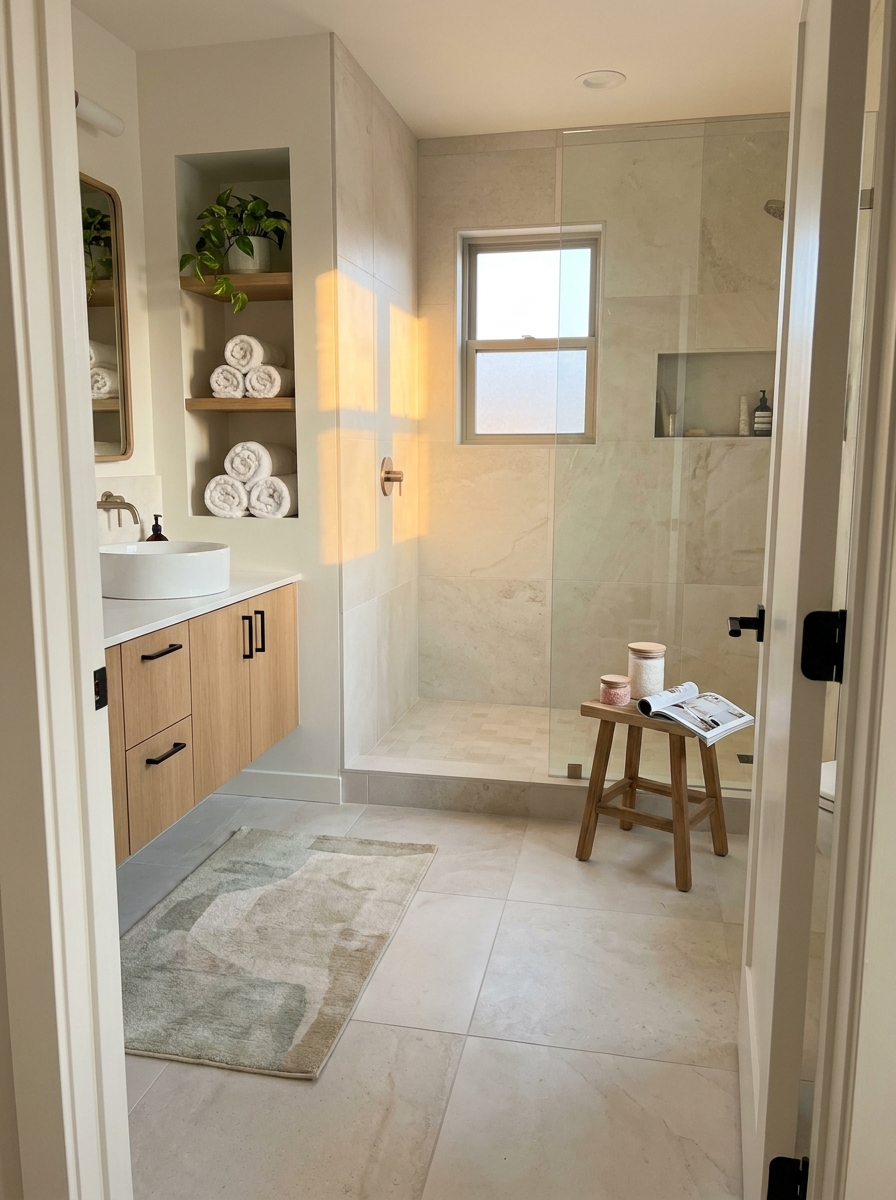
One of the easiest ways to make a tiny bathroom feel chopped up is using too many finishes. Different floor tile, accent tile, shower tile, border tile. It gets busy fast. Keeping tile continuous, especially from the main floor into the shower, creates one smooth visual plane. And wow, does that make the room feel bigger. Large-format tile works especially well here because fewer grout lines mean less visual interruption. But even smaller tile can look beautiful if the color stays consistent and the pattern is simple. I love soft stone tones, pale gray, or warm ivory for this. They bounce light, hide everyday dust better than stark white, and keep the room feeling fresh instead of fussy. If you want interest, bring it in through texture rather than contrast. Maybe a matte tile on the floor and a slightly glossy version on the wall. Or a subtle vertical stack in the shower. The point is to let the eye travel without stopping every two seconds. That uninterrupted flow is what makes compact bathrooms feel more expansive. It’s quiet design, and honestly, quiet design often looks the most expensive. Less visual noise. More calm. That’s the mood.
Pro Tip: Use the same grout color as your tile whenever possible to keep the surface looking seamless and visually larger.
Use Wall-Mounted Faucets to Free Up Counter Space

This one is small but mighty. Wall-mounted faucets free up the top of the vanity, which makes a compact sink area feel less crowded right away. You get more usable counter space, yes, but you also get cleaner lines. That matters in a bathroom where every object is on display and there’s nowhere for visual clutter to hide. I especially love wall-mounted faucets paired with a shallow vanity or a petite sink. The combo feels streamlined and a little elevated without being flashy. It’s also easier to wipe down the counter when there isn’t faucet hardware sitting in the middle of it collecting toothpaste and water spots. Tiny win. Daily joy. There are a couple things to plan for, though. Placement matters, and so does the depth of your sink. You want the water to land in the right spot, not splash all over your shirt at 7:15 a.m. So definitely work with your contractor on measurements. Once installed, though, the effect is lovely. The vanity looks edited. The room feels more custom. And in a small bathroom, those subtle details add up fast. Sometimes the prettiest remodel choices are the ones that also make mornings easier.
Pro Tip: Center the water stream over the drain and test spout reach carefully so you avoid annoying splashback on a shallow sink.
Tuck Storage Into the Space Over the Toilet

The wall above the toilet is often wasted, which is kind of wild when you’re desperate for storage everywhere else. This spot can hold so much without making the room feel crowded, as long as you keep the design slim and tidy. Think recessed shelving, a shallow cabinet, or even one clean floating shelf if you’re working with a small budget. I’m usually team closed storage here, especially in busy family bathrooms. It hides the practical stuff and keeps the room from looking visually noisy. But if you do open shelves, keep them sparse. Folded towels, a pretty canister, maybe one plant. That’s enough. The second this area becomes a dumping ground for random products, the whole bathroom starts to feel cluttered. Scale matters too. Don’t hang some giant cabinet that looms over the toilet like it’s plotting against you. Choose something shallow, simple, and aligned with the width of the toilet or tank below. When it’s done well, this storage feels built in, not tacked on. And that’s the dream in a small remodel, right? Every inch working hard, but nothing looking forced. Smart can still be pretty. Actually, it usually is.
Pro Tip: Keep shelves at least 24 inches above the toilet tank so the area feels open and you don’t bump into storage every time you stand up.
Trade a Bulky Tub for a Walk-In Shower Footprint

If your small bathroom still has one of those big builder-grade tubs that barely gets used, this is the remodel move that can change everything. Pulling it out and replacing it with a walk-in shower instantly gives the room a lighter, more open feel. You get better flow, cleaner lines, and way less visual bulk. Even when the footprint stays close to the same, the room feels less boxed in. That’s the magic. I love this idea most in narrow apartment bathrooms and tiny ensuites where every inch has to work hard. A low curb or curbless entry makes the whole space feel smoother and less chopped up. Pair it with large-format tile and a simple drain, and suddenly the bathroom feels modern instead of cramped. It also makes daily life easier. Cleaning is simpler. Getting in and out is easier. And the whole room starts to feel calm instead of crowded. If you never take baths, keeping a tub just because you think you should is honestly wasting prime real estate. In a small bathroom, function wins every single time, and this swap gives you a lot of it.
Pro Tip: Choose a clear fixed shower panel with a minimum of metal trim so the new shower footprint reads as open space, not a closed box.
Bring in a Large-Scale Mirror to Double the Sense of Space

A small bathroom can feel tight fast, especially if the walls are broken up with tiny mirrors and lots of visual stops. One oversized mirror changes that in a second. It bounces light around the room, stretches sightlines, and makes the whole space feel more open than it really is. It’s one of those simple remodel choices that gives you a big payoff without needing more square footage. I especially love a mirror that runs wider than the vanity or nearly reaches the ceiling. It feels sleek, custom, and just a little fancy. In a compact guest bath or powder room, it can make the room feel twice as bright. If your bathroom doesn’t get much natural light, this matters even more. The reflection helps every finish work harder, from tile to brass to warm wood. And visually, the room stops feeling like a tiny box. It starts feeling layered and airy. Frameless styles look clean and modern, while a thin metal frame can add just enough definition without making things heavy. In a small bathroom, that balance is everything. You want light, polish, and openness all at once, and a bigger mirror quietly does all three.
Pro Tip: Mount the mirror as high and wide as possible, leaving only a slim border above the backsplash, so your eye reads more reflection and less wall.
Use Light Tonal Color Layers Instead of High-Contrast Finishes

In a tiny bathroom, color can either help the room breathe or make it feel choppy. That’s why I love using soft tonal layers instead of sharp contrast. Think warm white with pale stone, soft sage with ivory, or greige with sand. When the colors sit close together, the room feels smoother and more open. Your eye moves across the space without getting stopped by harsh jumps. This doesn’t mean the bathroom has to feel bland. Not at all. It actually feels more elevated because the details start to matter more. A lightly veined tile, a white oak vanity, a brushed metal finish, a creamy paint color. It all builds a quiet kind of depth. In a compact bathroom, that softness is gold. Dark grout lines, heavy black-and-white contrast, or too many competing finishes can make the room feel busier than it is. But tonal layers blur the edges in the best way. They make walls recede, corners soften, and the whole space feel calmer. It’s one of my favorite tricks because it doesn’t rely on adding anything extra. You’re just choosing finishes more thoughtfully, and the room instantly feels bigger, brighter, and way more pulled together.
Pro Tip: Keep your main surfaces within two or three shades of each other, then add contrast only through small accents like hardware or lighting.
Choose a Curbless Floor Plan for a Smoother, Bigger Feel

A curb might seem tiny, but in a small bathroom it creates a visual stop that can make the whole room feel more segmented. A curbless shower changes that. The flooring flows straight through, the lines look cleaner, and suddenly the room feels longer and calmer. It’s subtle, but wow, does it work. This is one of those remodel details that makes a bathroom feel custom in a very grown-up way. I especially love it in modern homes where the goal is simple, polished, and easy to live with. Without that raised edge, the shower feels like part of the room instead of a separate little box. It also helps with accessibility, which is always a smart bonus. Pair it with one continuous floor tile and a barely-there drain, and the effect is so sleek. The whole bathroom reads as one open plane. In a compact layout, that visual quiet is huge. Less interruption means more spaciousness. It’s also easier to clean and just feels better underfoot. If you’re already remodeling from the studs or reworking plumbing, this is absolutely worth asking about. It may not be the flashiest feature, but it changes how the room feels every single day.
Pro Tip: Use a linear drain placed along the shower wall so the floor can slope in one direction and the tile layout stays cleaner and more seamless.
Carve Out a Shower Niche Bench Combo That Works Hard

When a small shower has to do more with less, built-in details really shine. One of my favorite upgrades is a niche and bench combo planned into the shower wall. Not a huge chunky bench that eats up elbow room, but a slim perch paired with a tidy recessed niche. It gives you a place for products, a spot to prop a foot, and just enough comfort without crowding the shower footprint. This works especially well in compact guest baths or ensuites where every feature needs a purpose. A little bench makes shaving, rinsing, or setting things down easier, and it adds that custom-spa feeling people love. The trick is scale. Keep it sleek and integrated so it feels intentional, not bulky. When the bench and niche are finished in the same material as the shower walls, they almost disappear visually. That’s exactly what you want in a small room. Function without fuss. I’ve seen tiny showers feel so much more expensive just from this one thoughtful detail. It’s practical, yes, but it also adds structure and polish. Those built-in moments are often what make a remodel feel finished, like someone really thought through how the room would be used day after day.
Pro Tip: Place the niche at chest height on the plumbing wall if possible, so bottles stay easy to reach without cluttering the entry side of the shower.
Add Layered Lighting So the Room Feels Bigger at Every Hour

Lighting is one of the most overlooked parts of a small bathroom remodel, and honestly, it can make or break the whole space. One harsh ceiling light tends to flatten everything and throw weird shadows right where you don’t want them. But layered lighting changes the mood completely. A good vanity light, soft overhead glow, and maybe a little shower lighting can make the room feel brighter, cleaner, and way more open. What I love most is how it helps the bathroom work all day long. Morning routines feel crisp and energizing. Evenings feel softer and calmer. And visually, better lighting helps every inch read more clearly, which makes the room feel larger. Mirrors sparkle more. Tile looks richer. Corners don’t disappear into shadow. In a tiny powder room or apartment bath, that matters so much. You don’t need anything fussy, just a thoughtful mix. Maybe a slim LED mirror, a small recessed ceiling light, and a warm dimmable fixture overhead. The effect is modern but still comfortable. It’s one of those upgrades people don’t always notice right away, but they feel it. The room just seems more polished, more spacious, and a whole lot nicer to use.
Pro Tip: Put vanity and overhead lights on separate dimmers so you can brighten the room for tasks and soften it later without changing fixtures.
Hide Everyday Supplies in Drawer Organizers Made to Fit

Small bathrooms fall apart fast when the drawers are a mess. One tube of toothpaste turns into ten random things rolling around, and suddenly the counter is covered too. That’s why custom-fit drawer organizers are such a smart remodel detail. They make the storage you already have work better, which is exactly the point in a tiny space. No wasted inches. No digging around. No clutter creeping out where everyone can see it. I always say the prettiest small bathroom is usually the one with the best hidden systems. Deep dividers for hair tools, tiny trays for makeup, narrow slots for toothbrushes and razors. It sounds simple, but it changes your whole routine. You open a drawer, grab what you need, and close it again. Done. In a compact bathroom, that easy rhythm keeps the room feeling calm. It also helps you avoid adding extra baskets, bins, or countertop organizers that can make the room feel crowded. If you’re remodeling, this is the moment to think about what actually lives in the vanity. Not the fantasy version. The real one. Design the inside around your habits, and the outside instantly looks cleaner, more spacious, and so much more finished.
Pro Tip: Measure your most-used items before ordering inserts so each drawer section fits real products like your hair dryer, skincare bottles, and electric toothbrush.
Quick Guide
Quick Guide: DIY vs. Buy in a small bathroom remodel DIY: paint, hardware swaps, shelving above the toilet, mirror replacement, styling baskets and trays. Buy/Pro install: floating vanity, glass shower partition, recessed medicine cabinet, wall-mounted faucet, pocket door, built-in niches. Budget-friendly wins: new mirror, fresh lighting, slim storage, continuous tile color, decluttered counters. Mid-range upgrades: vanity swap, over-toilet cabinet, better faucet placement, custom shelves. Splurge where it counts: layout changes, pocket door install, shower glass, recessed storage, tile work. If the room is awkward, spend on layout first. If it’s functional but tired, spend on storage and finishes.
A Tiny Bathroom Can Still Feel So Good
The best small bathroom remodels aren’t about cramming in more stuff. They’re about making the room feel easier to live in. Easier to clean. Easier to move through. Easier to love when you’re half awake and reaching for your toothbrush. That’s really the goal. When each choice earns its spot, a tiny bathroom starts to feel surprisingly luxe. A floating vanity gives the floor room to breathe. A glass partition lets light travel. Built-ins hide the chaos. And those little details, like a wall-mounted faucet or a tall mirror, quietly make the whole space feel more open and pulled together. You absolutely do not need a giant footprint to create a bathroom that feels beautiful and smart. You just need better decisions per square inch. Start with the one thing that annoys you most, then build from there. That’s usually how the best remodels happen anyway. And if you’re planning your own update, save the ideas that made your shoulders drop a little. Those are probably the ones your home has been asking for.
Frequently Asked Questions
What are the best small bathroom remodel ideas to make a bathroom look bigger?
The biggest wins usually come from visual openness and smarter storage. Floating vanities, glass shower panels, continuous tile, large mirrors, and recessed shelving all help a small bathroom feel less crowded. Keep finishes simple and clutter low, and the room will instantly read as bigger.
How do I add storage in a small bathroom without making it feel cramped?
Go vertical and go built-in whenever possible. Recessed medicine cabinets, shower niches, full-height slim storage, and over-the-toilet cabinets give you function without eating up floor space. Closed storage also helps the room feel calmer because everyday mess stays out of sight.
Is a floating vanity worth it in a small bathroom remodel?
Yes, especially if your bathroom feels heavy or visually crowded. A floating vanity exposes more floor, which makes the room feel lighter and more open. It also gives you space for a basket or scale underneath without adding another bulky piece.
What colors work best for a modern small bathroom remodel?
Light, soft colors usually work best because they reflect more light and keep the room feeling open. Think warm white, pale sage, greige, soft gray, ivory, and light wood tones. You can still add contrast through black or brass hardware without making the room feel closed in.