

There’s something about a dark kitchen that just hits different. Maybe it’s the way shadows play across matte black cabinets at dusk, or how brass hardware catches the light like little sparks of warmth. Dark kitchens aren’t gloomy — they’re intimate, dramatic, and honestly? Kind of sexy. I’ve been obsessed with moody kitchen designs ever since I visited a friend’s newly remodeled space last year. Her charcoal cabinets and dim pendant lighting made me want to cook a five-course meal and never leave. It felt like stepping into a secret culinary hideaway. But here’s the thing: going dark in your kitchen takes some planning. You can’t just slap black paint on everything and call it a day. You need the right balance of texture, light, and those little touches that keep it from feeling like a cave. I’ve pulled together 16 ideas that actually work in real homes — not just magazine spreads. Let’s get into it.
Matte Black Cabinetry with Warm Brass Hardware
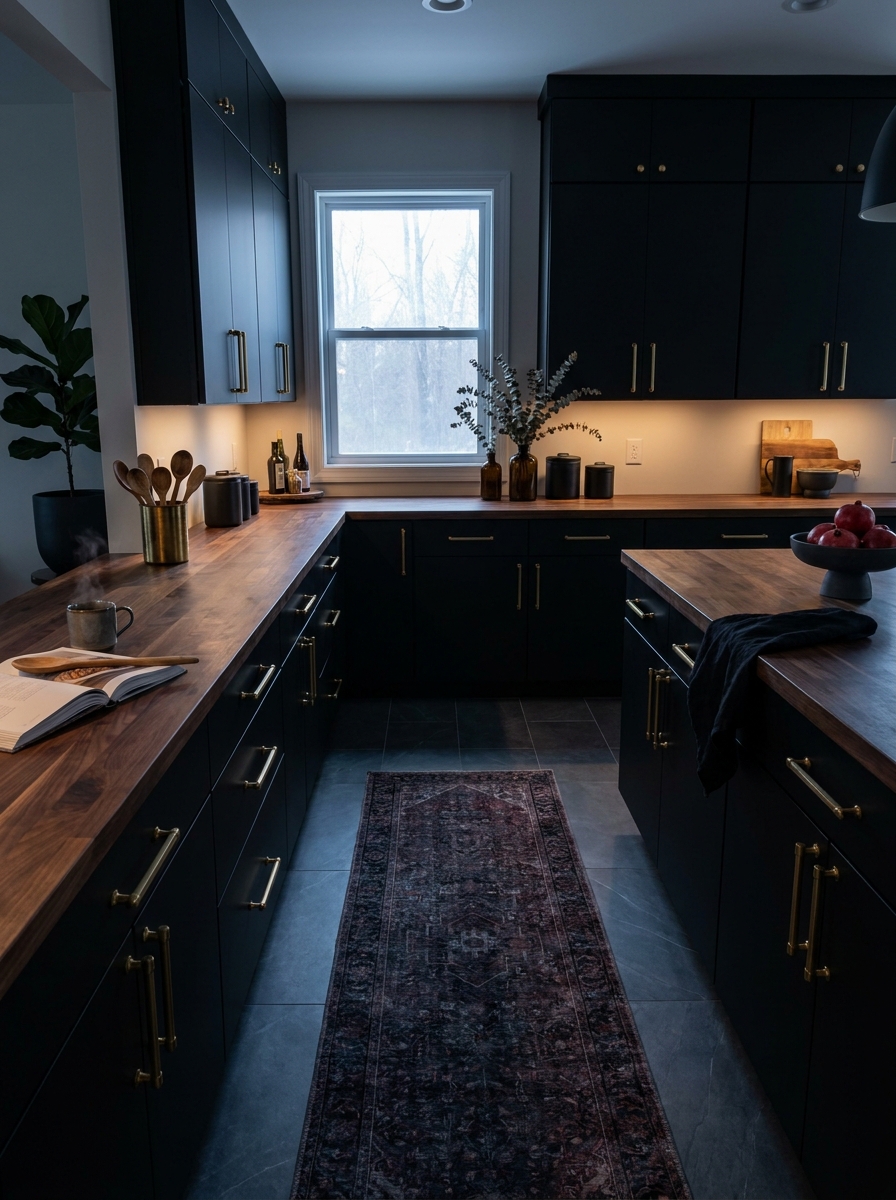
Matte black cabinets are the foundation of any moody kitchen, but the magic happens when you add warm brass hardware. The contrast is everything. Those golden pulls and knobs become jewelry against the dark backdrop, catching light in the most beautiful way. I love how matte finishes don’t show fingerprints like glossy black does. You get all the drama without the constant wiping. And brass? It ages gracefully, developing a patina that adds character over time. If you’re worried about commitment, start with upper cabinets in black and keep lowers in a deep charcoal or navy. The key is choosing hardware with substantial presence. Delicate little knobs get lost against dark cabinetry. Go for chunky pulls, oversized knobs, or even leather-wrapped handles for extra texture. Your cabinets should feel like they’re wearing statement earrings, not studs.
Pro Tip: Mix brass finishes — brushed brass on cabinets, aged brass on faucets — for a collected-over-time look that feels less matchy-matchy and more authentic.
Deep Charcoal Walls with Open Shelving
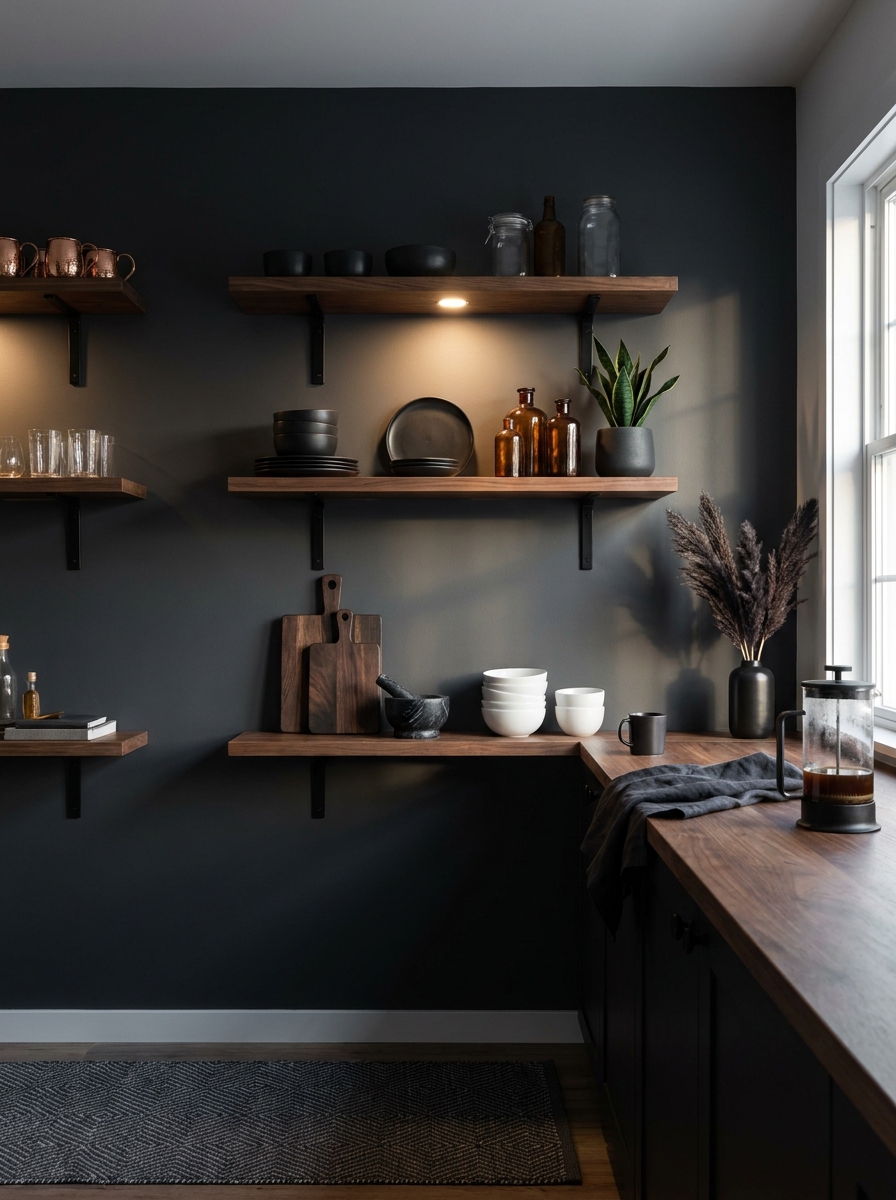
If full black cabinets feel too intense, charcoal walls with open shelving give you that moody vibe without closing everything in. The open shelves break up the darkness and let you display your prettiest dishes and glassware like tiny art installations. Charcoal is more forgiving than true black. It reads dark and dramatic but still has some softness to it, especially in natural light. And open shelving? It forces you to be intentional about what you display. No hiding mismatched plastic containers here. I recommend keeping at least some closed lower cabinets for storage you don’t want on display. Then use floating shelves or metal brackets for your upper storage. Style them with a mix of functional items and decorative pieces — stacked plates, vintage glassware, small potted herbs, maybe a dark pottery collection. The key is making it look effortless, like you just put things where they naturally belong.
Pro Tip: Paint the back wall behind open shelves in an even deeper shade than the surrounding walls to create subtle depth and make displayed items pop.
Statement Range Hood in Blackened Steel
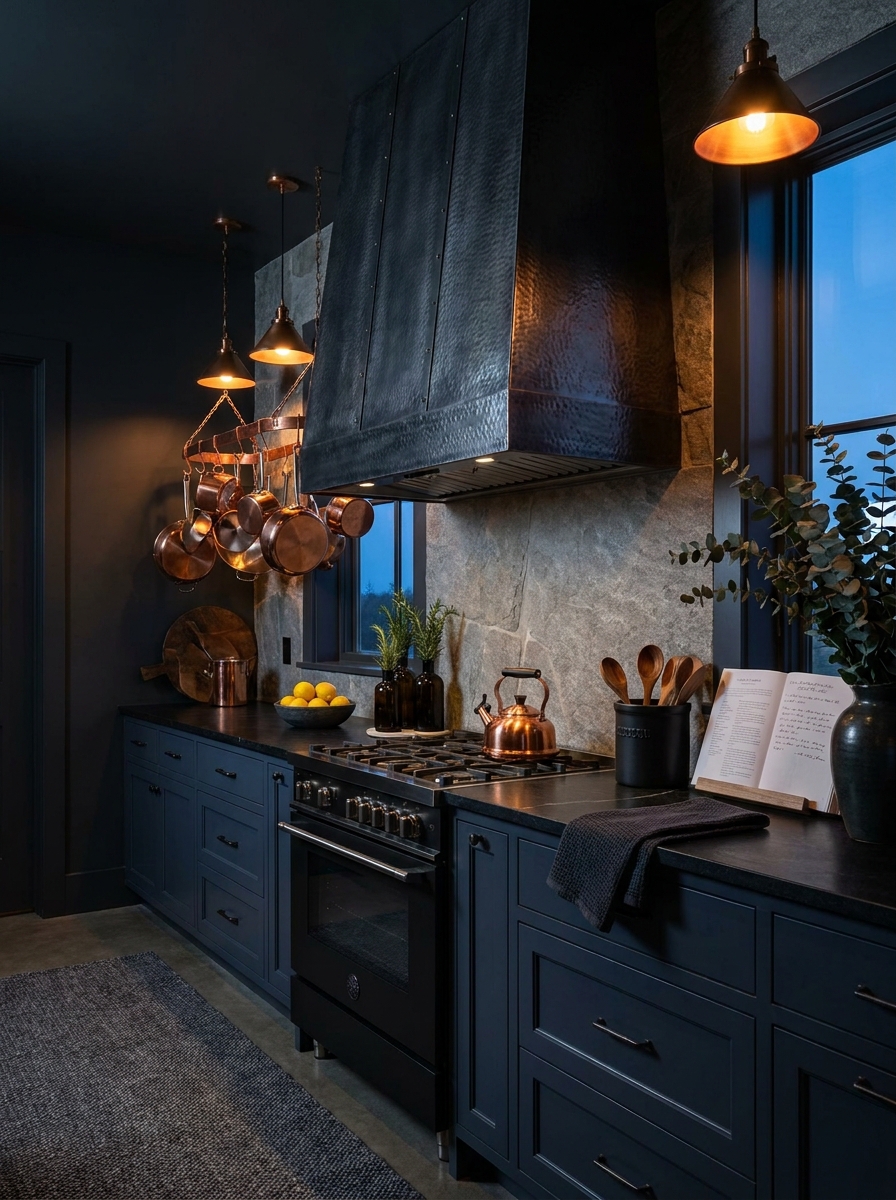
Your range hood doesn’t have to hide. In a moody kitchen, it can be the dramatic centerpiece that makes people stop and stare. Blackened steel or matte black metal hoods have this industrial-meets-refined quality that’s absolutely stunning. I’m talking about substantial hoods — the kind that feel architectural rather than appliance-like. Whether you go for a sleek modern box design or something with more traditional curves, the dark metal finish makes it feel custom and intentional. It’s like the kitchen equivalent of a statement chandelier. The beauty of a dark hood is how it grounds the space. Even if you have lighter countertops or some contrasting elements, that bold hood anchors everything in the moody aesthetic. And functionally? Dark finishes are way more forgiving than stainless steel when it comes to showing grease splatters and fingerprints. Win-win.
Pro Tip: Extend your hood all the way to the ceiling instead of stopping short — it creates a dramatic vertical line that makes your ceilings feel taller and adds architectural presence.
Dark Wood Beams Against Charcoal Ceilings
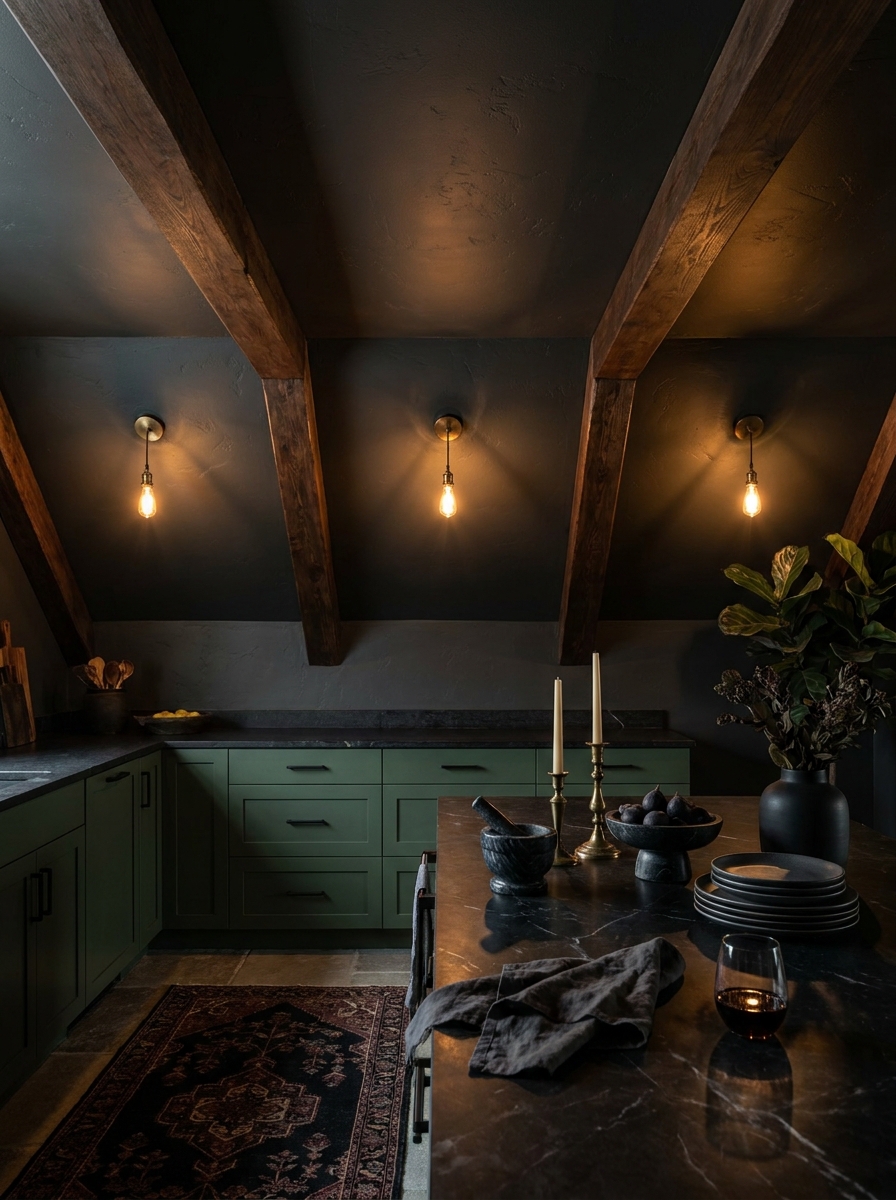
Most people forget about the ceiling, but in a moody kitchen, it’s prime real estate for drama. Dark wood beams against a charcoal or black ceiling create this cozy, almost tavern-like feeling that’s incredibly inviting. The beams add texture and warmth that prevent an all-dark space from feeling flat. They draw your eye upward and make the room feel more finished and intentional. You don’t need actual structural beams either — faux beams look completely convincing and are way easier to install. I especially love this look in kitchens with higher ceilings. The dark ceiling brings the space down to a more intimate scale, while the beams add visual interest that keeps it from feeling too heavy. If you’re worried about it being too dark, keep your walls a shade or two lighter than the ceiling, or add plenty of warm lighting to balance things out.
Pro Tip: Install dimmable recessed lights between the beams so you can adjust the mood — brighter for cooking, dimmer for evening entertaining when you want maximum atmosphere.
Navy Blue Lower Cabinets with Black Marble Countertops
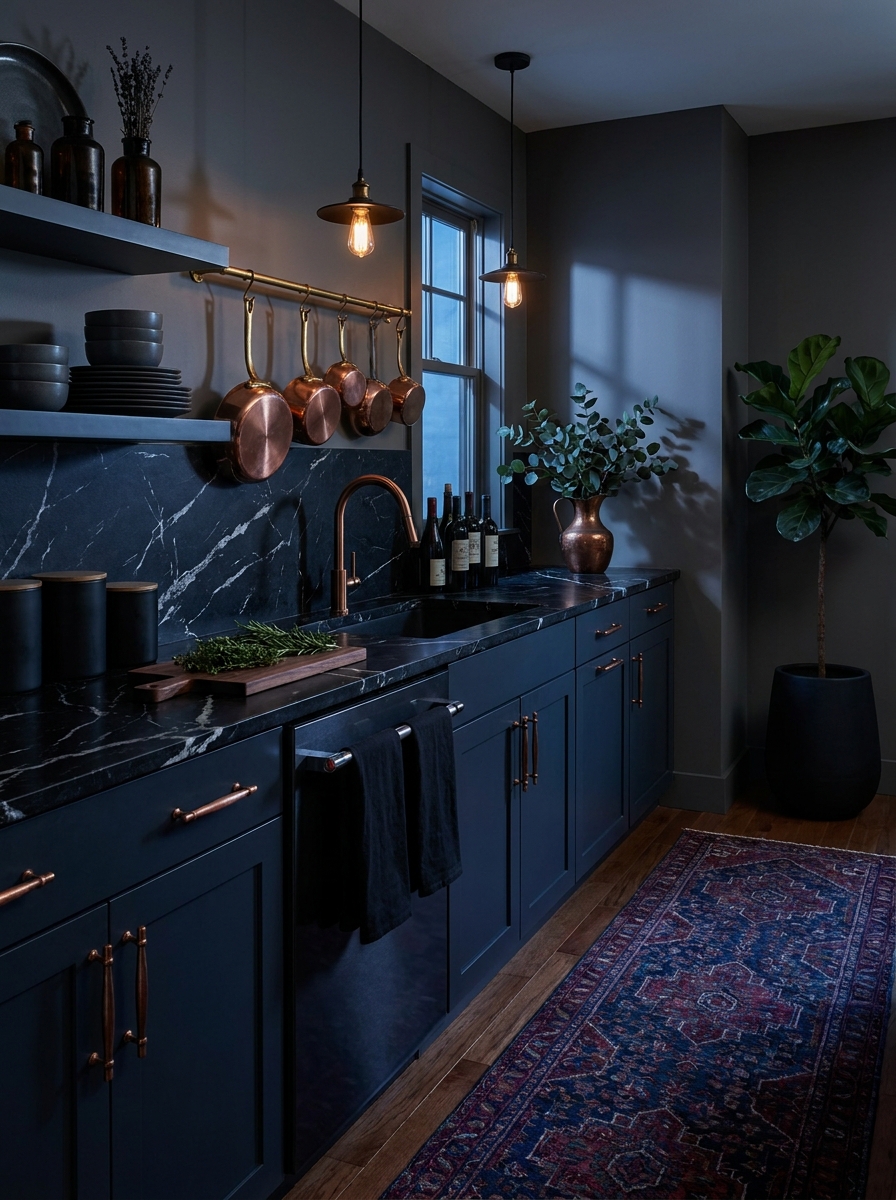
I’m obsessed with this trend. Navy blue cabinets give you all the drama of black but with this unexpected richness that feels a little more layered. When you pair them with black marble countertops, the veining creates this gorgeous natural artwork that catches light in the moodiest way. What I love about navy is how it shifts throughout the day. Morning light makes it feel deep and contemplative. Evening light turns it almost mysterious. It’s like your kitchen has different personalities depending on the time. Add aged copper hardware and you’ve got warmth that keeps the space from feeling cold. The trick is balancing the darkness. I always suggest keeping upper cabinets lighter or going with open shelving. You want that navy to feel intentional and grounding, not overwhelming. When you get it right, it’s like wrapping your kitchen in the coziest, most sophisticated hug.
Pro Tip: Paint a sample board in your chosen navy and live with it in your kitchen for a week. Watch how it changes in morning light versus evening. Navy can read purple or gray depending on your lighting, so test before committing to all those cabinets.
Floor-to-Ceiling Dark Tile Backsplash
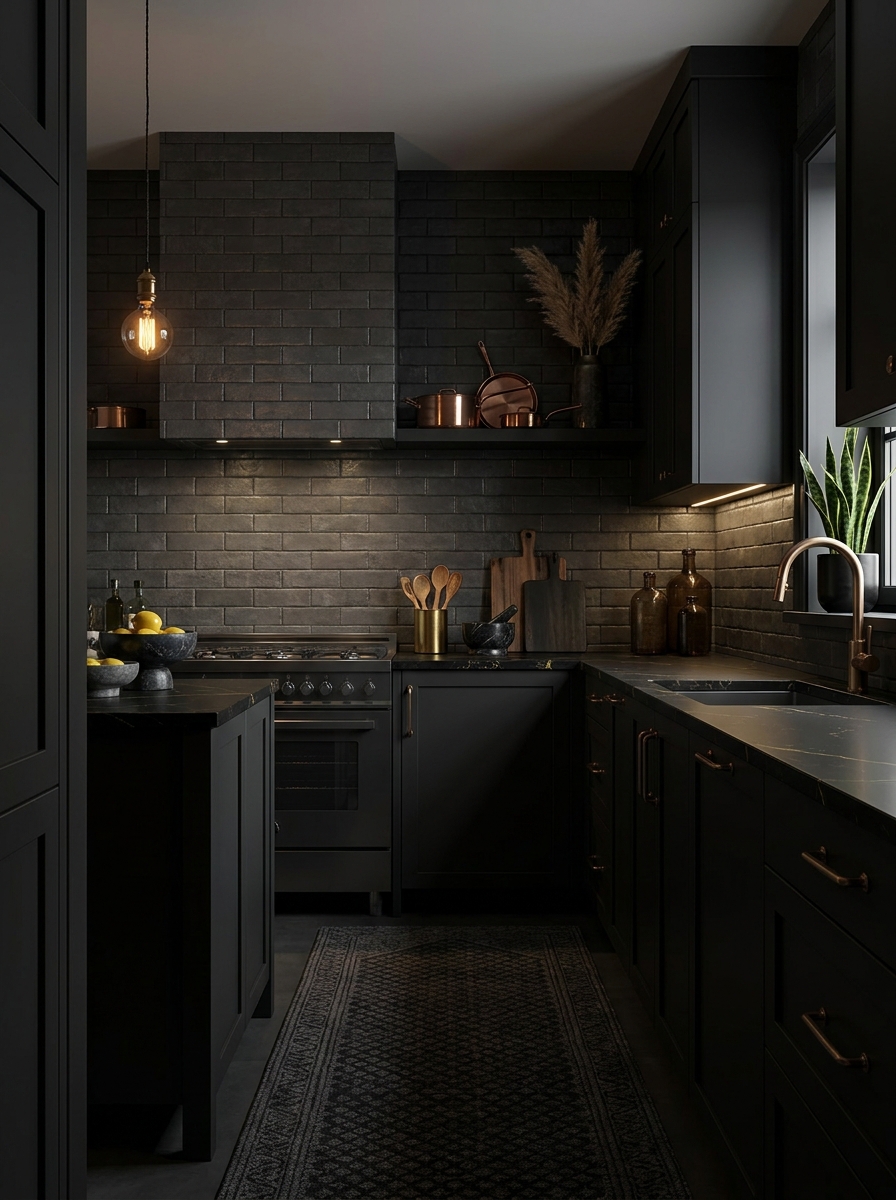
Forget the standard backsplash height. When you take dark tile all the way to the ceiling, you create this dramatic vertical moment that makes your kitchen feel taller and way more intentional. I’m talking charcoal subway tile, black zellige, or even deep forest green ceramic that catches light like silk. The beauty is in the repetition. All those tiles create texture and depth without adding color chaos. Your eye travels up and suddenly your kitchen feels like a real designed space, not just a place where you stuck tile between the counter and cabinets. It’s architectural. It’s bold. It’s honestly stunning. I’ve seen this work magic in galley kitchens especially. The vertical lines draw your eye up instead of focusing on a narrow footprint. Pair it with brass or gold fixtures and you’ve got this luxe contrast that photographs like a dream. It’s one of those moves that looks expensive but doesn’t have to be.
Pro Tip: Choose a tile with subtle variation or texture rather than flat matte. When you’re covering that much wall in dark tile, you want dimension to keep it interesting. Handmade zellige or textured subway tile catches light beautifully and prevents the wall from looking flat.
Leather Bar Stools Against a Charcoal Island
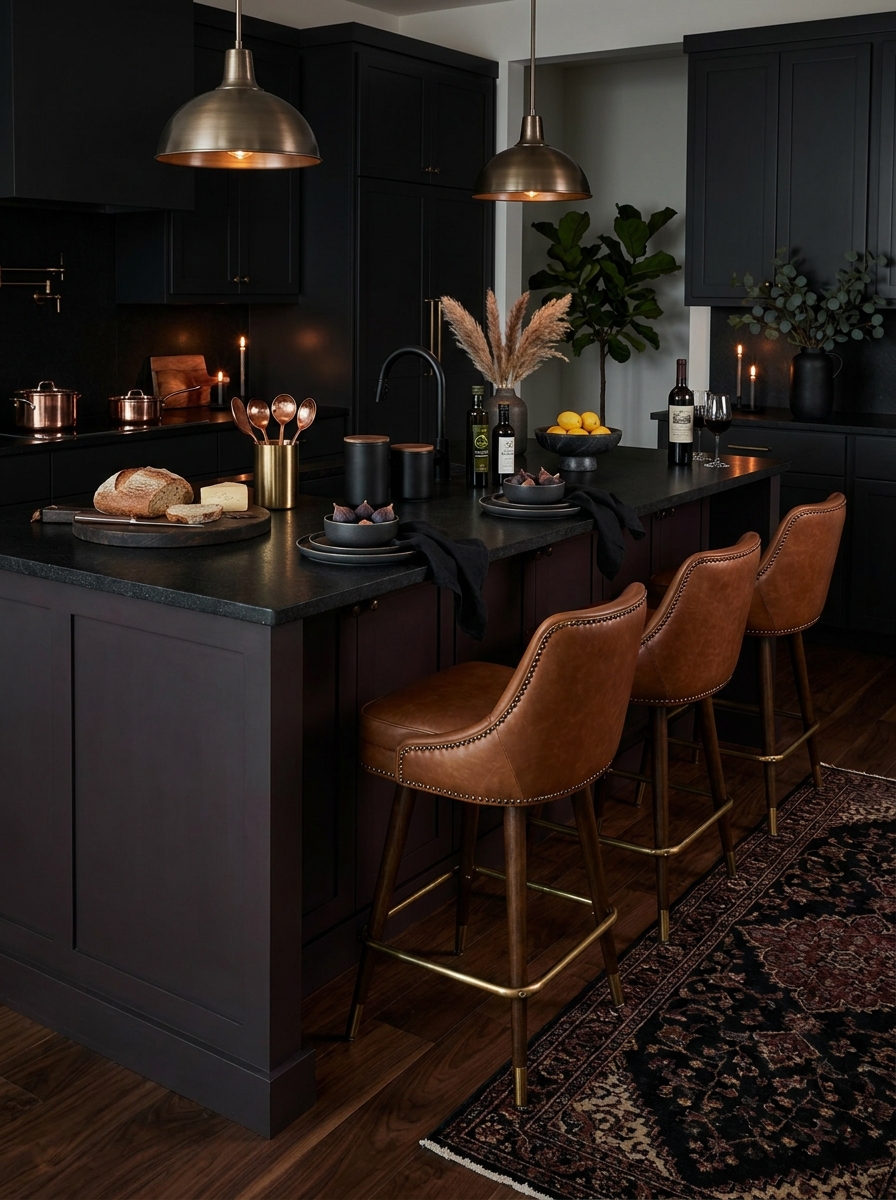
This is where your dark kitchen gets cozy. Deep brown or black leather bar stools bring in this tactile warmth that makes people actually want to sit and hang out in your kitchen. Against a charcoal or black island, they create contrast without breaking your moody vibe. Leather ages beautifully too. It gets softer, richer, more lived-in over time. In a dark kitchen, that patina feels intentional, like your space has stories to tell. I love cognac leather for warmth or black leather for full drama. Both work, just depends on how much contrast you want. The key is keeping them simple. No crazy modern shapes. Classic backless stools or low-back designs let your island be the star. Add a few brass nailhead details if you want a vintage touch. These stools are your invitation to actually live in this gorgeous dark space you’re creating, not just admire it from afar.
Pro Tip: Measure your overhang carefully before buying stools. You need at least 10 inches of counter overhang for comfortable seating, and 15 inches is even better. Nothing ruins the vibe faster than stools that don’t fit properly under your beautiful dark island.
Blackened Steel Windows Between Kitchen and Dining
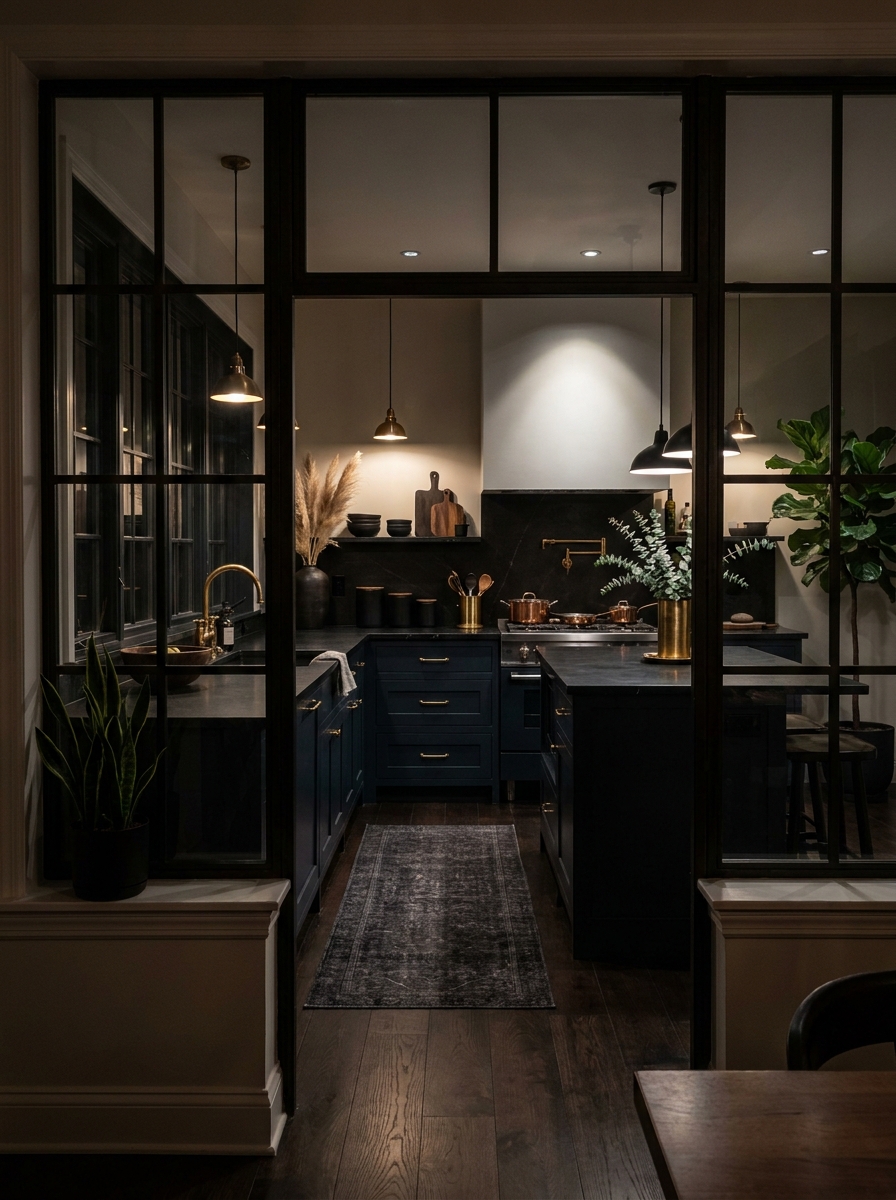
Internal steel windows are having such a moment, and in a dark kitchen? Pure magic. These black-framed glass partitions let you separate spaces while keeping sightlines open. It’s industrial, it’s elegant, and it adds this architectural detail that makes your kitchen feel custom and expensive. I love how they frame views. From the dining room, you’re looking into your moody kitchen like it’s a piece of art. From inside the kitchen, you get natural light without losing that intimate, enclosed feeling. The black steel ties into your dark cabinetry and creates visual rhythm throughout the space. They’re perfect for open concepts where you want a little definition without building walls. The glass keeps things bright, the black frames keep things moody. You can even do a steel-framed pass-through or a half-wall with windows above. It’s that perfect blend of open and cozy that makes both spaces feel intentional.
Pro Tip: If custom steel windows are out of budget, look for black aluminum-framed windows or even DIY kits. You can also paint existing window frames with high-heat matte black paint for a similar effect at a fraction of the cost. The look is what matters.
Smoked Glass Upper Cabinets with Internal LED Lighting
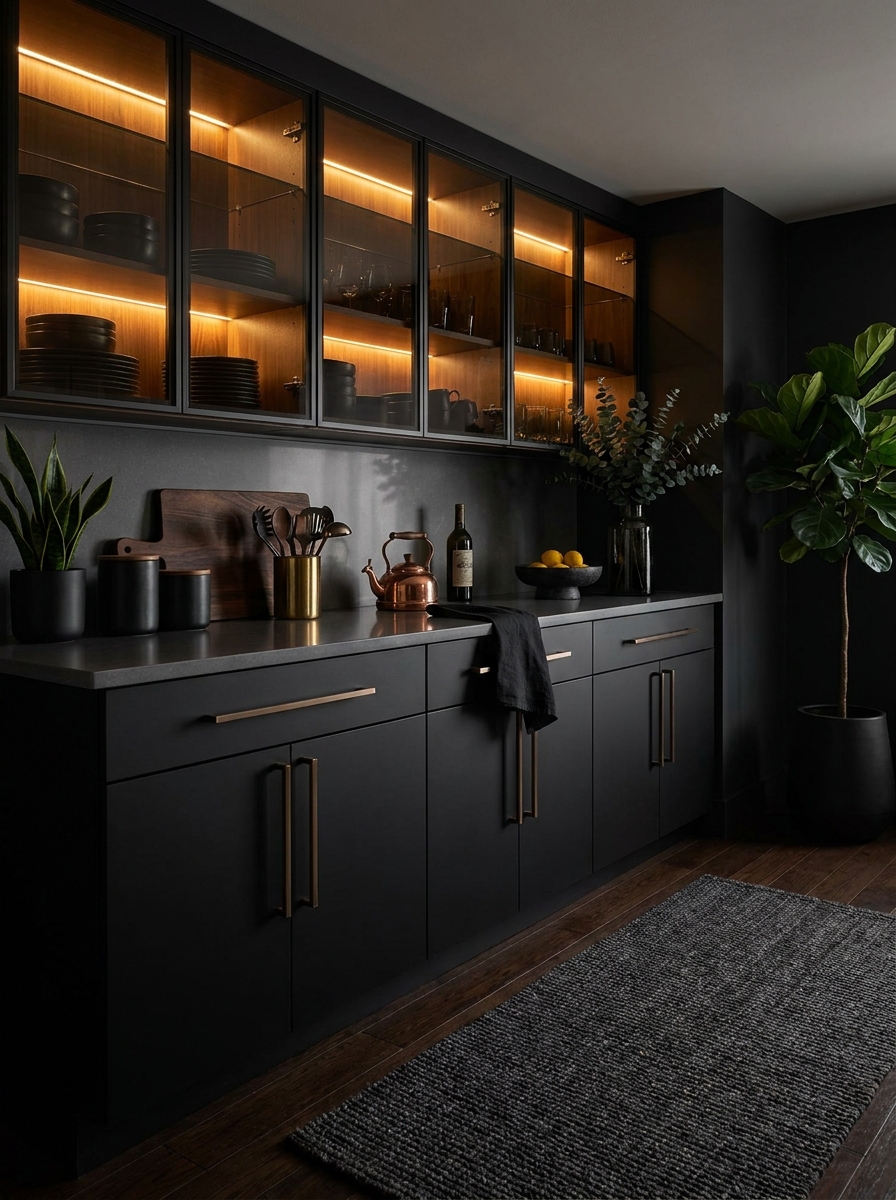
There’s something utterly mesmerizing about smoked glass cabinets glowing softly in a dark kitchen. The translucent panels create this gorgeous layered effect — you can see hints of what’s inside without everything being on full display. It’s mysterious and practical at the same time. I love how the internal LED strips cast this warm amber glow that bounces off your dishware and glassware. It transforms your everyday plates and bowls into a curated display that feels almost gallery-like. The smoked glass itself has this beautiful gray-brown tint that reads almost charcoal in dim light but catches golden reflections when the LEDs are on. Pair these with matte black lower cabinets and you’ve got instant drama. The contrast between the glowing uppers and the solid dark lowers creates visual interest without being too busy. Plus, it’s a sneaky way to add more light to a dark kitchen without installing another overhead fixture. The glow is subtle, moody, and just enough to make your kitchen feel alive even when the main lights are off.
Pro Tip: Install dimmable LED strips inside your smoked glass cabinets so you can adjust the glow intensity. On full brightness, it’s functional task lighting for grabbing dishes. Dimmed down low, it becomes pure ambiance for dinner parties.
Charcoal Concrete Countertops with Waterfall Edges
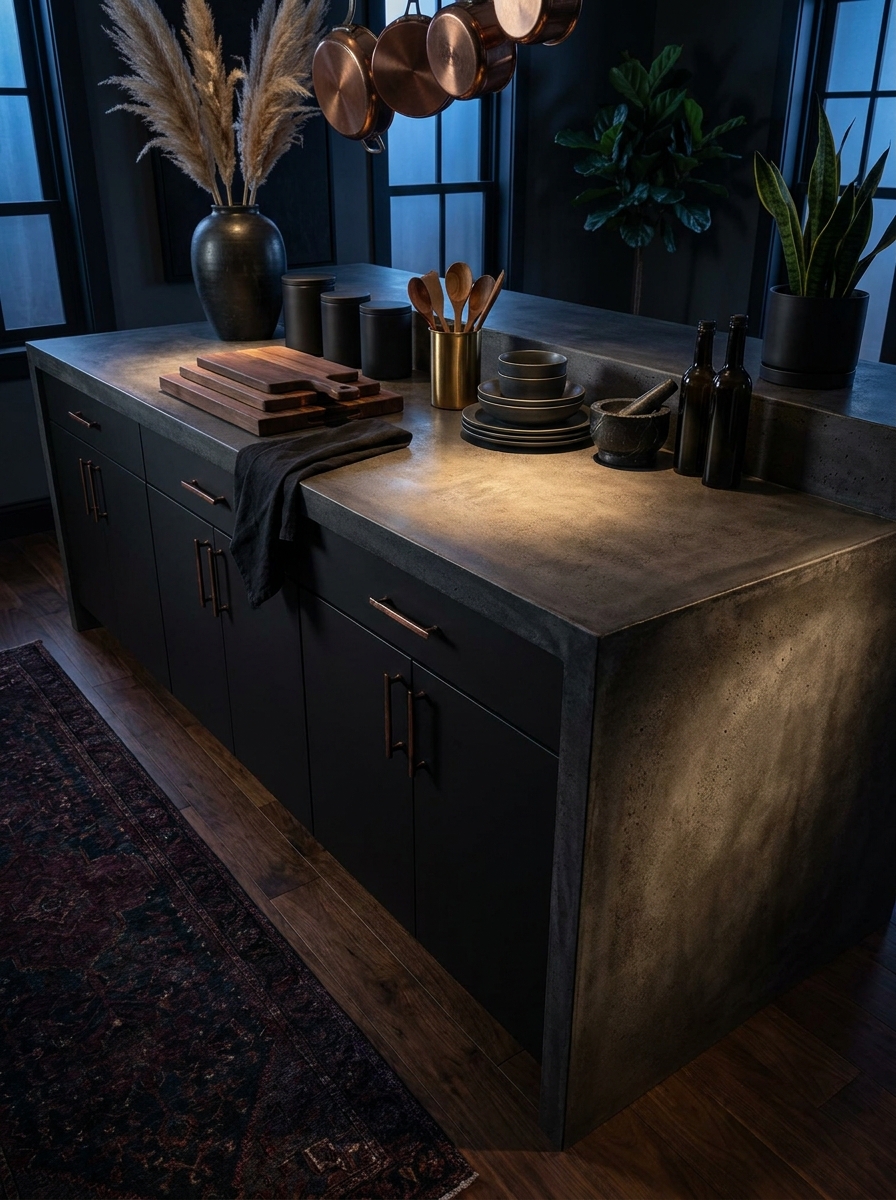
Concrete countertops in charcoal gray are having a serious moment, and honestly? I’m obsessed. They bring this raw, industrial edge that feels both modern and timeless. The waterfall edge takes it to another level — that continuous flow down the sides of your island creates this sculptural statement that’s impossible to ignore. What I love most is the texture. Concrete has this subtle variation and depth that polished stone just can’t match. You’ll see tiny aggregates, slight color shifts, maybe a few organic imperfections that make it feel authentic and handcrafted. It’s moody without being precious. The waterfall edge in particular makes your island feel like a solid piece of architecture rather than just furniture. It grounds the space and creates this beautiful visual weight that balances out all the dark cabinetry. Pair it with matte black cabinets and warm brass accents, and you’ve got a kitchen that feels like it belongs in a design magazine. The charcoal tone picks up shadows beautifully too, which adds to that brooding, sophisticated vibe we’re going for.
Pro Tip: Seal your concrete countertops with a high-quality penetrating sealer specifically designed for kitchen use. Concrete is porous, so proper sealing prevents stains from wine, coffee, and oils while maintaining that gorgeous matte finish.
Forest Green Cabinets with Antique Brass Cup Pulls
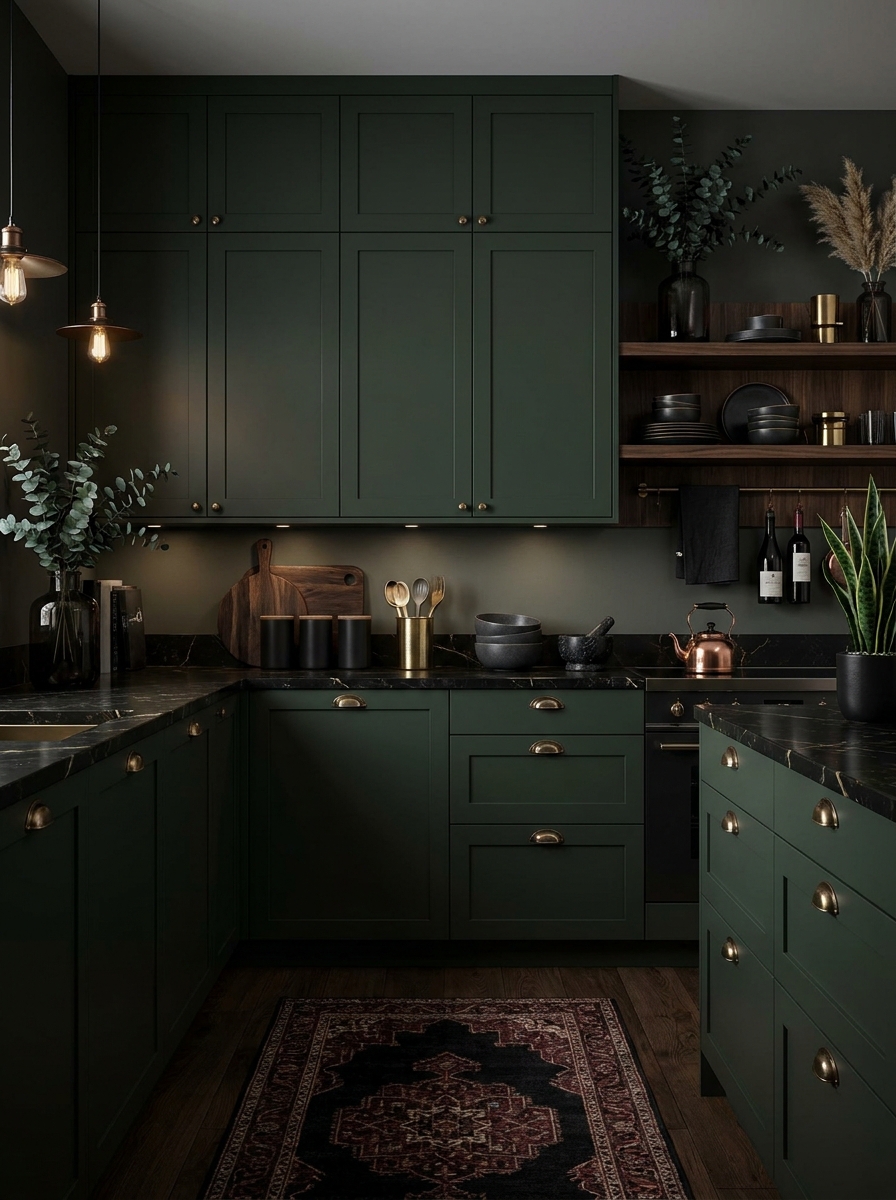
If all-black feels too stark for you, forest green cabinetry is your moody alternative. This deep, saturated green reads almost black in low light but reveals its richness when natural light hits it. It’s dramatic without being as intense as pure black, and it brings this unexpected organic warmth to the space. Antique brass cup pulls are the perfect partner here. The aged, slightly tarnished finish of antique brass has so much more character than shiny gold. It picks up the green undertones in the cabinets and adds this vintage, collected-over-time feel. I’m talking about those cup pulls with a bit of patina — the kind that look like they’ve been there for decades. This combo works especially well if you have dark marble countertops with subtle green or gold veining. The whole palette feels cohesive and intentional, like a jewel box. It’s moody and lush without feeling heavy. Add in some dark wood open shelving or a black range hood, and you’ve created a kitchen that feels both timeless and totally on-trend.
Pro Tip: Choose a forest green with gray undertones rather than yellow undertones. The grayer versions photograph beautifully and feel more sophisticated, while yellow-based greens can read too bright and lose that moody depth you’re after.
Blackened Brick Accent Wall Behind the Stove
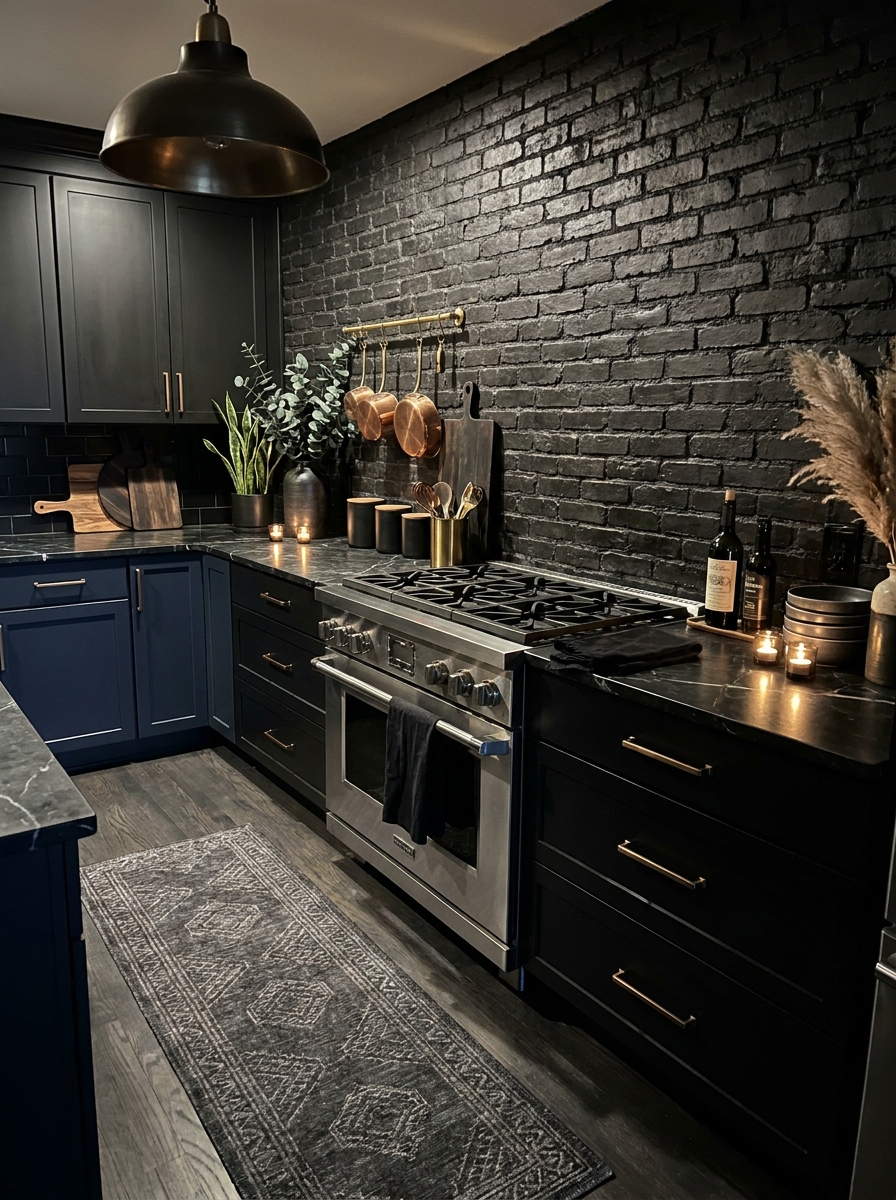
A blackened brick accent wall behind your range is pure drama. I’m talking about exposed brick that’s been painted in a deep charcoal or true black — it keeps all that gorgeous texture and dimension but cranks up the moody factor to eleven. Every mortar line and imperfection becomes a shadow, creating this incredible depth. This works especially well in kitchens with modern cabinetry because it adds that perfect hit of texture and history. The rough, tactile surface of the brick plays beautifully against smooth matte black cabinets or sleek countertops. It’s an instant focal point that draws your eye straight to the cooking zone, which is exactly where you want it. I love pairing this with a statement range in stainless steel or even a black enamel finish. The industrial vibe of the blackened brick makes your range look like a piece of culinary equipment rather than just an appliance. Add some copper pots hanging nearby or a brass pot filler, and you’ve created this chef-worthy moment that’s both functional and absolutely stunning to look at.
Pro Tip: Use a matte black masonry paint rather than glossy. Matte finish preserves the authentic brick texture and absorbs light beautifully, creating those moody shadows. Glossy paint flattens the texture and creates distracting reflections that kill the vibe.
Dark Soapstone Countertops with Undermount Copper Sink
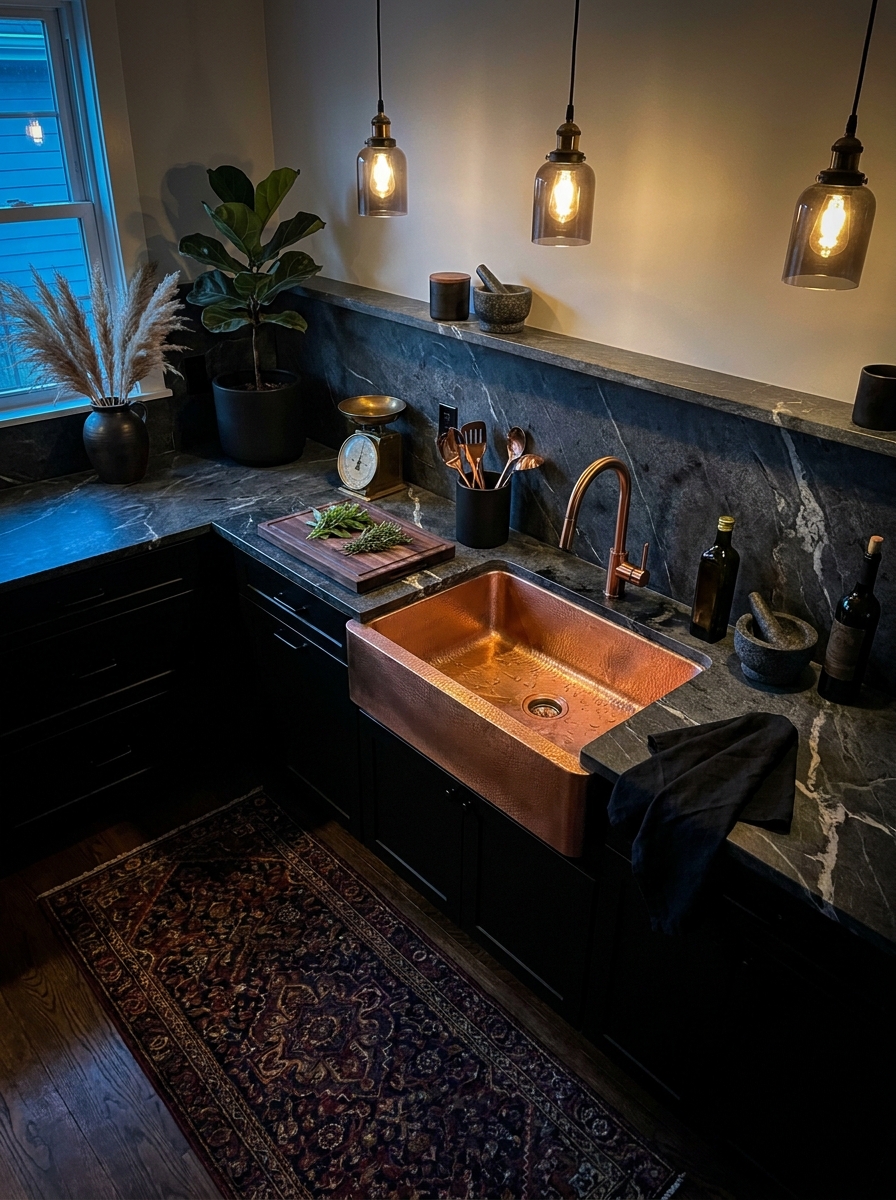
Soapstone is having a serious moment, and when you go dark with it? Pure magic. Unlike granite or marble, soapstone gets richer and more dramatic over time. It darkens naturally with mineral oil, developing this gorgeous patina that makes your kitchen feel like it has a story. Pair it with an undermount copper sink and you’ve got this beautiful contrast that feels both rustic and refined. The copper catches the light in the most gorgeous way, and it actually gets better with age too. Those little scratches and color changes? They’re not flaws. They’re character. I love how soapstone feels cool to the touch, which makes it perfect for rolling out pastry. But honestly, I just love running my hand across it. It’s smooth and soft, almost silky. And because it’s non-porous, you can put a hot pan directly on it without freaking out. That’s the kind of practical luxury I’m here for.
Pro Tip: Apply mineral oil to your soapstone every few weeks at first to speed up the darkening process and get that deep charcoal color faster. Once it’s darkened to your liking, you can oil it less frequently.
Charcoal Plaster Walls with Floating Dark Walnut Shelves
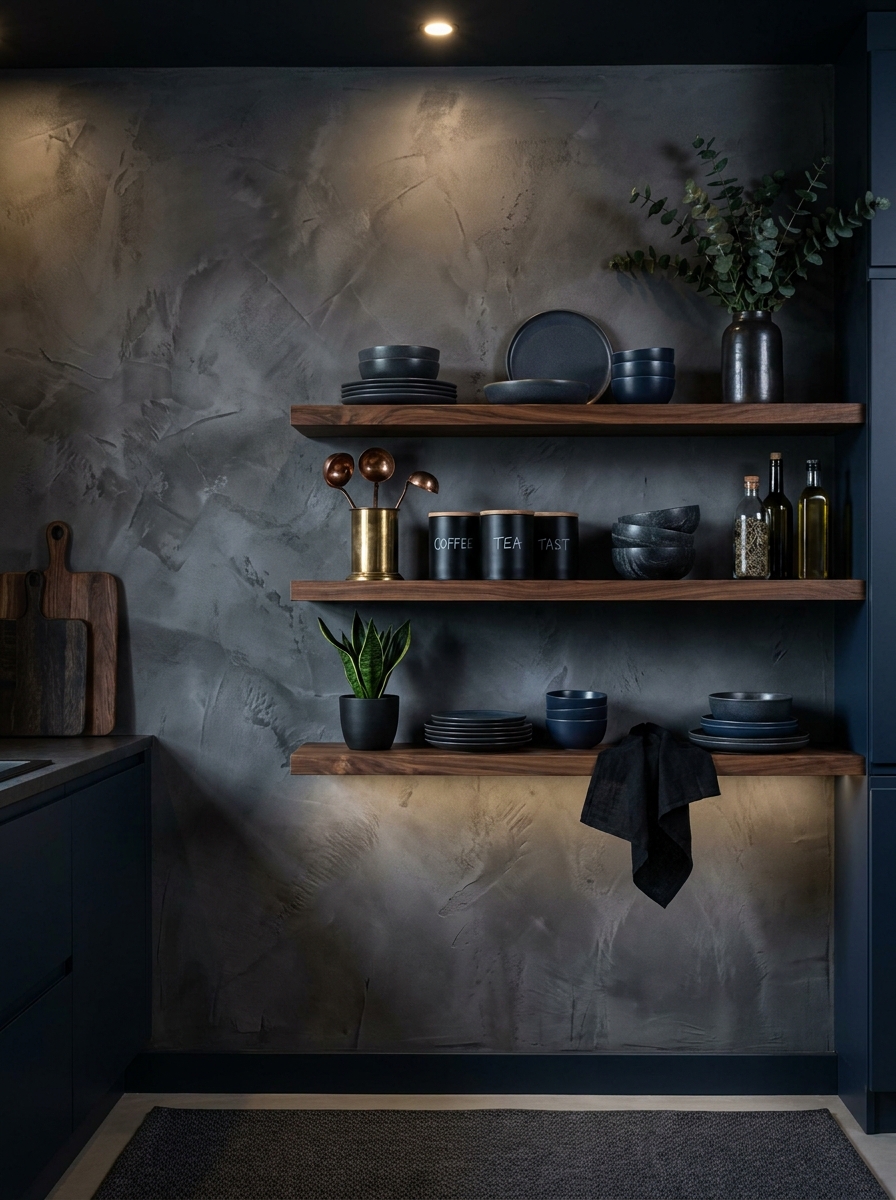
Forget paint for a second. Charcoal plaster walls bring this incredible depth and texture that flat paint just can’t touch. The surface catches light differently throughout the day, shifting from soft gray to deep charcoal depending on how the sun moves. It’s like your walls are alive. Floating dark walnut shelves against that textured backdrop? Chef’s kiss. The wood grain pops against the matte plaster, and because the shelves float, everything feels lighter despite the dark palette. It’s this beautiful trick where dark doesn’t mean heavy. I’m obsessed with how this combo forces you to be intentional about what you display. Every dish, every plant, every object becomes part of the design. It’s like curating a gallery wall, except it’s functional. And when you’ve got that textured plaster catching shadows behind your morning coffee cups? That’s the kind of everyday beauty that makes you fall in love with your kitchen all over again.
Pro Tip: Install LED strip lighting on top of your floating shelves pointing upward to create a soft glow that highlights the texture of your plaster walls and adds ambient lighting without cluttering your dark space with visible fixtures.
Midnight Blue Island with Integrated Wine Cooler and Butcher Block Top
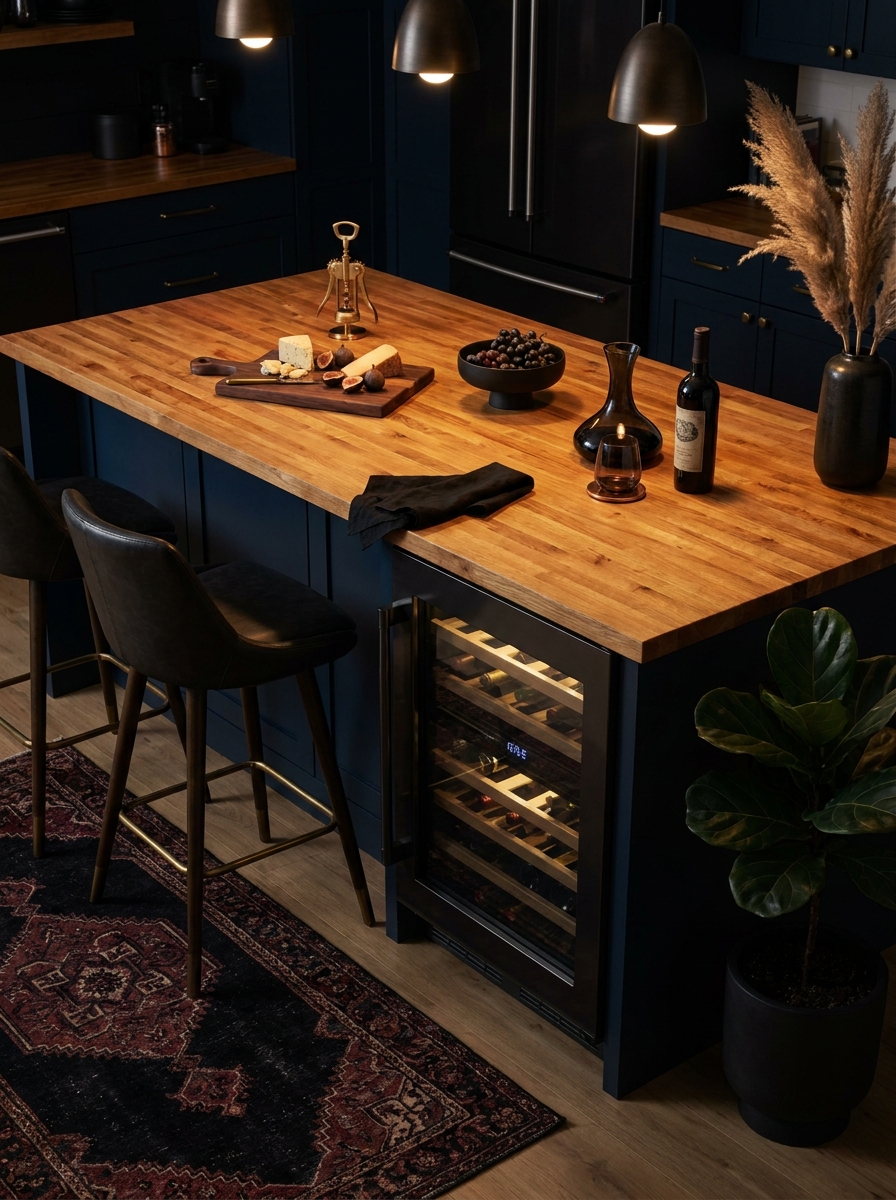
A midnight blue island is like the little black dress of kitchen design. It’s sophisticated, unexpected, and absolutely stunning when you get it right. But here’s where it gets even better: top it with a thick butcher block counter and suddenly you’ve got this gorgeous warm-meets-cool thing happening. The integrated wine cooler? That’s not just practical, it’s a statement. Those glass doors with interior lighting turn your wine collection into art. And on a dark island, that soft glow at night is absolutely magical. It’s functional mood lighting. What I love most is how the natural wood butcher block softens the whole look. Midnight blue can feel serious, but that warm wood brings in this approachable, lived-in quality. It’s the kind of island where you want to pull up a stool with a glass of wine and just hang out. And because butcher block is a working surface, you can chop directly on it. It’s beauty that works hard.
Pro Tip: Choose a wine cooler with a dark or smoked glass door instead of clear glass to maintain the moody aesthetic. The contents will still be visible but won’t break up your dark color story with bright bottle labels.
Black Zellige Tile Backsplash with Dark Grout
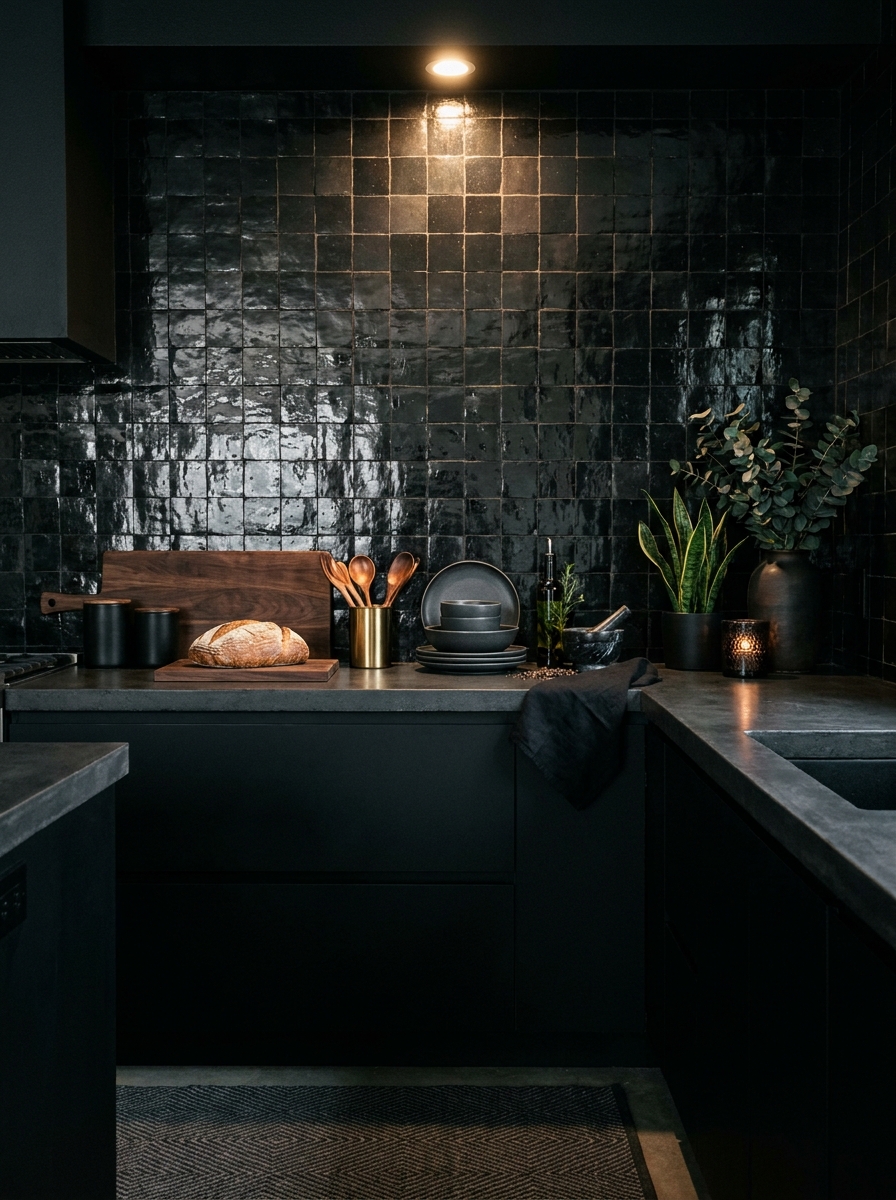
Zellige tiles are handmade Moroccan tiles with this incredible irregular, glossy finish that catches light like nothing else. When you go black with them and use dark grout, you get this effect that’s both ancient and totally modern. Every tile is slightly different, so your backsplash has this living, breathing quality. The glossy surface reflects light in unexpected ways throughout the day. Morning sun hits it differently than afternoon light or evening pendant glow. It’s like having a backsplash that changes personality depending on the mood. And that subtle variation in the glaze? It keeps your eye moving, discovering new details every time you look. I’m completely obsessed with how forgiving these tiles are. Because they’re already irregular and handmade, they don’t show water spots or fingerprints the way perfectly smooth tile does. They’re meant to look lived-in. It’s the kind of material that gets more beautiful the more you use your kitchen, which is exactly how it should be.
Pro Tip: Order 15-20% extra tiles because the color variation between batches can be significant with handmade zellige. Having extras from the same batch means you can replace any damaged tiles down the road without a noticeable difference.
Your Kitchen, But Make It Moody
Here’s what I love most about dark kitchens — they feel like a secret. Like you’re stepping into a space that’s just for you, intimate and a little mysterious. They’re not trying to be bright and cheerful for everyone else. They’re moody and sophisticated and unapologetically dramatic. You don’t have to commit to all 16 ideas at once. Start with one element that speaks to you. Maybe it’s painting your cabinets matte black, or adding that blackened steel hood you’ve been dreaming about. Layer in brass hardware, play with lighting, add texture through wood and metal. The beauty of a dark kitchen is that it gets better with time. Those brass pulls develop patina. The dark surfaces show character. It becomes more yours with every meal you cook, every evening you spend lingering over wine with friends. So go ahead. Embrace the darkness. Your kitchen is ready for its moody transformation.
Frequently Asked Questions
Will a dark kitchen make my space feel smaller and more closed in?
Not if you balance it right. Dark kitchens actually feel incredibly cozy rather than cramped when you include plenty of warm lighting, reflective surfaces like brass or copper, and some lighter elements for contrast. The key is layering your lighting — under-cabinet lights, pendants, and natural light all work together to prevent that cave feeling. Think intimate, not claustrophobic.
How do I keep dark kitchen cabinets from showing dust and fingerprints?
Matte finishes are your best friend here. Unlike glossy black that shows every smudge, matte black cabinets are incredibly forgiving. A quick wipe with a microfiber cloth keeps them looking fresh. I also recommend choosing quality cabinet paint or finishes that are specifically designed for kitchens — they’re more durable and easier to clean than regular paint.
What’s the best way to add warmth to a dark moody kitchen?
Layer in warm metals like brass, copper, or aged bronze. Add natural wood elements — cutting boards, floating shelves, butcher block countertops. Use warm-toned lighting rather than cool white bulbs. And don’t forget texture — linen towels, woven baskets, and even a Persian runner can add softness that keeps dark kitchens from feeling cold or sterile.
Can I do a dark kitchen remodel on a budget?
Absolutely. Painting existing cabinets is the most budget-friendly transformation — you can get dramatic results for under $500 if you DIY. Swap out hardware for brass or copper pulls, add affordable pendant lights from places like IKEA or West Elm, and paint your walls a moody charcoal. You don’t need a full gut renovation to achieve the look.
What countertop colors work best with dark kitchen cabinets?
Dark cabinets are surprisingly versatile. Lighter countertops like white marble, light quartz, or butcher block create beautiful contrast. But you can also go full moody with black granite, dark soapstone, or charcoal concrete for a dramatic monochromatic look. The key is adding warmth through hardware, lighting, and accessories so it doesn’t feel too heavy.