

You know that moment when your kitchen feels a little tired, but you still want it to look calm, polished, and easy to live in? That’s usually when white starts calling my name again. Not the cold, stark kind. I mean the soft, layered, beautiful kind that makes groceries on the counter somehow look charming and your morning coffee feel a bit more special. A white kitchen has this magic trick. It can look classic, modern, farmhouse, or quietly fancy depending on what you pair with it. And that’s why people keep coming back to it. But getting it right matters. Too flat, and it feels sterile. Too busy, and you lose that clean, timeless look everyone loves on Pinterest. So if you’ve been saving photos of bright cabinets, marble counters, warm wood stools, and those dreamy kitchens with just enough personality, you’re in the right place. We’re talking real ideas you can actually use in a real home, with real mess and real life. Here’s what actually works.
Layer Soft Whites Instead of One Flat Shade

A beautiful white kitchen almost never uses just one white. That’s the secret. The cabinets might lean crisp, the walls a touch creamier, and the backsplash somewhere in between. It sounds tiny, but it changes everything. Suddenly the room feels warm, settled, and much more expensive than a one-note white box. I love this approach because it keeps the kitchen bright without making it feel clinical. Think ivory paint on the walls, clean white shaker cabinets, and a marble backsplash with soft gray veining. Then bring in a little warmth with light oak stools or a cutting board left out on the counter. Those small shifts in tone help the room breathe. And if you’re nervous about picking whites, test them in morning and afternoon light. White paint can get weird fast. One shade looks dreamy at 10 a.m. and icy by dinner. So don’t rush it. A layered white kitchen feels timeless because it has depth, and depth is what keeps a bright space from feeling bland or builder-basic.
Pro Tip: Sample at least three white paint colors on large poster boards and move them around your kitchen for two full days before choosing.
Choose Shaker Cabinets for a Look That Never Dates

If you want a white kitchen that still feels good ten years from now, shaker cabinets are such a smart move. They’re simple, but not boring. Clean lines, just enough detail, and they work with almost every style shift you might make later. Want to lean farmhouse now and more modern later? Shaker can handle it. There’s also something really calming about them. Flat-front cabinets can feel a little severe in some homes, while ornate doors can age fast. Shaker lands right in the middle. It gives your kitchen structure without stealing the whole show. That means your hardware, lighting, stools, and styling can do the personality work. For white kitchens especially, that subtle frame on each door creates gentle shadow and depth. It helps all those white surfaces feel intentional instead of washed out. Pair them with brushed nickel for a classic look, or go with unlacquered brass if you want a little warmth and glow. Either way, the cabinets become the quiet backbone of the room. And honestly, that’s what timeless design usually is. Quiet confidence, not begging for attention.
Pro Tip: Pick a shaker door with a narrow rail for a cleaner, more updated look that still feels classic.
Warm Up White Cabinets with Natural Wood Touches

White kitchens need contrast. Not harsh contrast, just enough to keep the room from feeling chilly. And natural wood is my favorite way to do it. A light oak island stool, a walnut cutting board, even a simple floating shelf can soften all that white in two seconds flat. This is the trick that makes a white kitchen feel like a home instead of a showroom. Wood brings in that easy, lived-in warmth you can’t fake with decor alone. It also helps if your kitchen gets cooler light during the day. White cabinets under gray skies can feel a little stern, but add wood and suddenly the whole room relaxes. You don’t need a giant rustic island or heavy beams either. Small pieces work beautifully. Try wood bar stools with woven seats, a slim oak shelf for everyday mugs, or a cluster of cutting boards leaned casually against the backsplash. It’s subtle, but it changes the mood. The kitchen still looks bright and clean, just softer around the edges. And that little bit of softness is often what makes a space feel timeless enough to keep loving year after year.
Pro Tip: Repeat the same wood tone in at least three spots, like stools, boards, and shelving, so the warmth feels intentional.
Add a Marble or Quartz Surface for Quiet Elegance

If white cabinets are the foundation, the counters are where the kitchen gets its polish. And yes, this is where marble or marble-look quartz really shines. There’s something about that soft veining against white cabinetry that feels forever stylish. It’s not loud. It just whispers, I have my life together, even when the dishwasher is running for the second time today. Real marble is gorgeous, but if you cook a lot or have kids who somehow spill berry juice on everything, quartz may be the better call. You still get that graceful, timeless look without all the stress. I’ve seen some quartz slabs lately that are so pretty and natural-looking, you’d have to get your face right up in there to tell. The key is choosing veining that feels subtle and organic. Too busy, and it can take over the room. In a white kitchen, you want movement, not chaos. Pair it with simple cabinet fronts and understated hardware so the counters can do their thing. It’s one of those upgrades that instantly makes the whole space feel cleaner, brighter, and a little more refined without trying too hard.
Pro Tip: Choose a countertop sample with soft gray or taupe veining instead of stark black for a more timeless, forgiving look.
Use White Subway Tile, but Give It a Fresh Twist

White subway tile is classic for a reason. It’s affordable, easy to find, and it works with just about everything. But if you want your kitchen to feel current and personal, the twist matters. Maybe it’s a longer tile shape, maybe it’s stacked instead of staggered, or maybe the grout is a soft warm gray instead of bright white. Tiny changes. Big difference. I still love the traditional brick pattern, especially in older homes or farmhouse kitchens. But stacked tile in a white kitchen can feel crisp and a little more modern without losing that timeless mood. And don’t underestimate the finish. Glossy tile bounces light around beautifully, while handmade-look tile brings a softer, slightly imperfect charm that feels less cookie-cutter. This is one of those details people notice without realizing they’re noticing it. The backsplash quietly sets the tone. If your cabinets are simple, the tile can add just enough texture and rhythm. And because it’s white, it keeps the whole room feeling bright and open. So yes, subway tile still works. You just want it to feel considered, not copied straight from a twenty-year-old flip.
Pro Tip: Use warm gray grout in a white kitchen if you want the tile pattern to show softly without looking harsh.
Bring in Warm Metal Hardware for Subtle Glow

Hardware is small, but wow, it changes the whole mood of a white kitchen. Swap basic silver pulls for warm brass, aged brass, or even a soft champagne bronze, and suddenly the room has a pulse. It still feels clean and classic, just less cold. Like the kitchen put on jewelry, but the good kind. This works especially well if your cabinets and backsplash are both white. You need something to break up those surfaces and catch the light a little. Warm metal does that beautifully. It adds contrast without heaviness and helps the room feel layered. Even on cloudy days, brass has this cozy little glow that keeps white from looking flat. The trick is consistency. If you choose warm hardware, repeat that finish in the faucet, pendant details, or maybe a sconce nearby. Not every single thing needs to match exactly, but the metals should feel like they’re in the same family. And keep the shape simple. Slim pulls, classic knobs, nothing too ornate. In a timeless white kitchen, hardware should feel like a polished detail, not the star of the show. Just enough sparkle, and you’re set.
Pro Tip: Use knobs on upper cabinets and pulls on drawers for a layered look that still feels neat and classic.
Keep Open Shelving Light, Useful, and Not Too Busy

Open shelving in a white kitchen can be beautiful. It can also turn into a dusty stress shelf full of mugs you don’t even like. So the sweet spot is keeping it light and useful. One or two shelves, not a whole wall. Everyday pieces, not random clutter. Think bowls, glasses, a small vase, maybe your prettiest olive oil bottle. In a white kitchen, open shelves break up long runs of cabinetry and give the room a softer rhythm. They’re especially nice if you want the space to feel airy and less boxed in. But editing matters. Too much stuff and the clean feeling disappears fast. I like a simple rule here: stack, lean, and leave space. A couple of stacked plates, a cutting board leaned against the wall, then breathing room. And please don’t style them once and expect them to stay photo-ready forever. Real shelves shift. That’s fine. The goal is not perfection. It’s a kitchen that feels easy to use and still lovely to look at. If your shelves hold things you genuinely reach for, they’ll feel natural. And natural always reads more timeless than over-styled.
Pro Tip: Limit each shelf to three functional groupings so it stays airy and easy to keep tidy.
Make a White Island the Calm Center of the Room
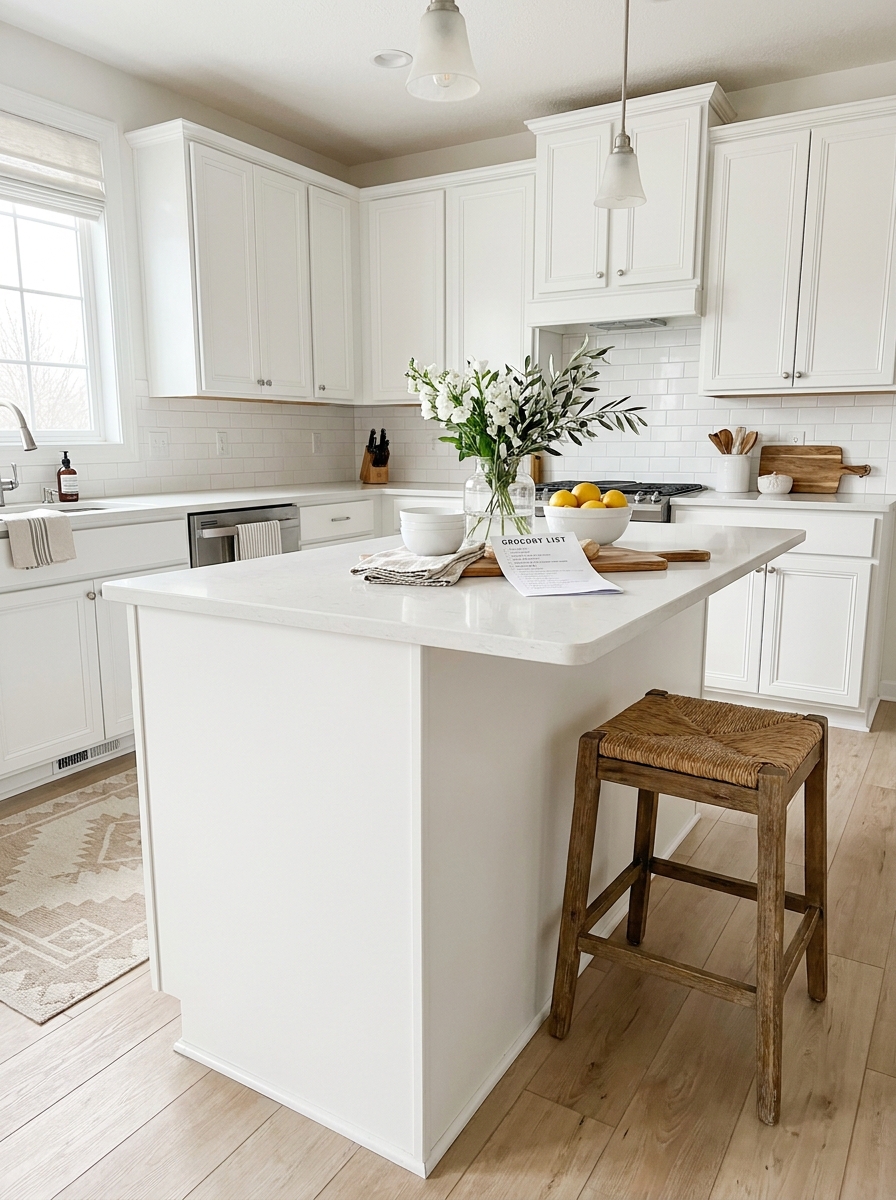
A white kitchen island can do a lot of heavy lifting. It gives the room structure, extra storage, a place to land grocery bags, and that lovely gathered feeling when people naturally hover there. If your kitchen has space for one, making the island simple and bright keeps the whole room feeling open and timeless. I’m especially into islands that don’t try too hard. Clean paneling, a pale stone top, maybe a little overhang for stools. That’s enough. You don’t need dramatic corbels or fussy trim unless that really suits your house. In most white kitchens, the island works best when it feels grounded but quiet. Styling matters here too. Leave some breathing room. A giant pile of decor defeats the point. I like one practical-pretty moment, like a bowl of lemons, a vase of white flowers, or a wooden board with a loaf of bread if people are coming over. Done. The island should still feel available for real life. Homework, baking, coffee chats, mail piles you swear you’ll sort later. That mix of beauty and usefulness is exactly what makes a white kitchen feel enduring.
Pro Tip: Choose stools that tuck fully under the island so the kitchen feels cleaner and more spacious when not in use.
Try Glass-Front Cabinets for a Little Breathing Room

If a wall of white cabinets feels too solid or heavy, glass-front uppers can loosen everything up in the prettiest way. They reflect light, break up the cabinetry, and add that collected, old-meets-fresh charm I never get tired of. Even one or two glass doors near a window can make the whole kitchen feel lighter. This works best when what’s inside is simple. Matching everyday dishes, a few glasses, maybe a stack of linen napkins. Not the random plastic cups from three birthday parties ago. Glass cabinets are basically gentle accountability, and honestly, I don’t hate that. They help you edit what you keep and make the kitchen feel more intentional. In a white kitchen, they also add subtle depth. You get layers of reflection, shape, and shadow without introducing another big color or material. Seeded glass feels a little more farmhouse or vintage, while clear glass leans classic and clean. Either can work beautifully. Just keep the contents calm and useful. The whole point is to create visual breathing room, not another place for clutter to perform. A little transparency goes a long way here.
Pro Tip: Use glass-front cabinets only on upper sections you can keep tidy, and store daily mismatched items in closed cabinets below.
Mix in Black or Charcoal Accents for Crisp Definition

A white kitchen doesn’t have to be all white everything. Sometimes it needs a little line, a little edge, just to keep the room from floating away. That’s where black or charcoal accents come in. A faucet, pendant lights, stool legs, window frames, even a range. Used lightly, they sharpen the whole space. This is such a good move if you love white kitchens but want them to feel grounded. Black gives the eye a place to land. It outlines the softness and makes the white feel even brighter. The trick is restraint. You’re seasoning, not repainting. A few strong accents can do more than a dozen scattered ones. I especially like this look in kitchens that already have warm details, like wood floors or brass hardware. The contrast keeps things interesting without making the room feel trendy in a way you’ll regret later. And charcoal can be a softer option if true black feels too stark in your home. Either way, those darker notes add clarity. White stays the star, but now it has definition. Kind of like eyeliner for your cabinets. Very chic, very useful.
Pro Tip: Repeat black or charcoal accents in three places, like lighting, faucet, and stool frames, to make the contrast feel balanced.
Choose Pendants That Add Shape Without Visual Clutter

Lighting in a white kitchen does more than brighten the counters. It gives the room shape. And when everything else is pale and airy, pendants become one of the easiest ways to add a little personality without making the space feel busy. A pair of simple glass globes, classic metal shades, or even linen-look pendants can pull the whole room together. What matters most is scale. Tiny pendants over a long island can look a bit apologetic, while oversized fixtures can steal all the attention. You want that sweet middle ground where they anchor the island but still let the kitchen breathe. I usually lean toward clean shapes with a timeless silhouette. Nothing too sculptural unless the rest of the room is very quiet. And yes, finish matters here too. If your hardware is brass, let the pendants nod to that. If your kitchen has black accents, a slim black fixture can tie it all together beautifully. In a white kitchen, lighting should feel intentional, not random. It’s one of those details that makes the room look finished. Calm, polished, and just a little bit special when the sun goes down.
Pro Tip: Hang pendants about 30 to 36 inches above the island countertop so they feel balanced and don’t block sightlines.
Soften the Whole Space with Textiles and Everyday Styling

The biggest mistake in a white kitchen? Making it so pristine that nobody wants to touch anything. A timeless kitchen should still feel welcoming. That’s where textiles and a few everyday styling pieces come in. A runner, linen tea towels, a bowl of fruit, maybe a small lamp if you have a corner for one. Those soft layers are what make a white kitchen feel lived in and loved. This doesn’t mean decorating every inch. It means choosing a few things that add warmth and movement. A striped runner can break up a long row of cabinets. Washed linen towels soften glossy surfaces. A wooden tray with butter, bread, and salt makes the counter feel human in the nicest way. Suddenly the kitchen isn’t just bright. It’s inviting. And honestly, this is the part that keeps white from feeling high-maintenance. When the room has a little softness and personality, a crumb on the counter or a dish by the sink doesn’t ruin the mood. It still looks beautiful because it looks real. That’s the goal. Not untouched perfection. Just a clean, timeless kitchen that feels easy to live with every single day.
Pro Tip: Use one washable runner and two or three high-quality linen towels in soft neutrals to add warmth without creating visual clutter.
Quick Guide
Quick Guide: DIY vs. Buy in a White Kitchen DIY: paint walls, swap cabinet hardware, style open shelves, add a washable runner, bring in wood boards and stools if assembly is simple. Worth Buying: quartz or marble counters, quality faucet, pendant lighting, custom or semi-custom shaker fronts, durable backsplash tile install. Save Here: decor, shelf styling pieces, tea towels, bar stools on sale, simple white dishes for glass cabinets. Splurge Here: counters, sink, hardware you touch daily, and lighting over the island. Those are the pieces that make the kitchen feel timeless instead of temporary.
The White Kitchen Glow We Keep Coming Back To
There’s a reason white kitchens never really disappear. They feel calm when life feels loud. They bounce light around on gray mornings. And they give you this fresh, clean backdrop that works whether your style leans farmhouse, classic, modern, or somewhere in that lovely in-between. But the best white kitchens aren’t cold or overly perfect. They have layers. A little warmth from wood, a soft runner underfoot, pretty lighting, maybe a brass pull that catches the light just right. That’s what makes them timeless. Not just the color, but the balance. If you’re thinking about updating your own kitchen, start small if you need to. Paint, hardware, styling, a better backsplash choice. Those little shifts can change the whole feeling of the room. And if you’re planning a full renovation, let this be your reminder that bright and practical can absolutely live together. Make it beautiful, yes. But make it yours too. The most memorable kitchens are the ones that feel loved. If one of these ideas sparked something for you, save your favorites and start building your version from there.
Frequently Asked Questions
How do I make a white kitchen feel warm and not sterile?
The easiest fix is adding warmth through texture and tone. Think light wood stools, linen towels, warm metal hardware, and layered whites instead of one stark shade. Even a simple runner and a cutting board left out can make the room feel softer and more lived in.
What countertops look best in a timeless white kitchen?
Marble and marble-look quartz are the most dependable choices for a classic white kitchen. Look for soft, natural veining in gray or taupe rather than anything too dramatic. That keeps the space elegant and easy to live with over time.
Are white kitchen cabinets hard to keep clean in a real family home?
They’re not as high-maintenance as people think, especially in a satin or durable painted finish. Smudges do show, but they’re also easy to spot and wipe down quickly. A good cabinet paint and simple hardware that’s easy to grip make a big difference.
What backsplash works best with white cabinets for a bright timeless look?
White subway tile is still a favorite because it’s classic and flexible. To make it feel fresher, try a longer tile, stacked layout, or warm gray grout. If you want something a bit softer, handmade-look white tile adds texture without losing that bright clean feel.
How can I add contrast to a white kitchen without ruining the timeless style?
Use contrast in small, steady ways. Black pendants, a charcoal faucet, warm brass hardware, or natural wood accents all work beautifully. The key is repetition and restraint, so the kitchen still feels calm instead of busy.