

You know that moment in summer when the yard looks pretty, but it still feels like something’s missing? Maybe you’ve pinned a dozen dreamy backyards with wild grasses, still water, and stone paths, then looked at your own space and thought, okay, but how would this actually work here? I get it. A natural swimming pool or swim pond has that magic mix of relaxed beauty and real function. It feels softer than a standard pool, more romantic, and honestly more interesting to look at all year. And the best part is that it doesn’t have to read like a fancy eco-resort dropped into suburbia. These spaces can feel grounded, personal, and beautifully livable, whether you have a compact yard, a sloped garden, or room for a full planted pond with a lounging deck. We’re talking organic edges, native planting, smarter materials, and ways to make the whole thing feel intentional instead of messy. Some ideas are big-build dreams. Others are surprisingly doable. Here’s what actually works.
A Two-Zone Swim Pond That Looks Wild but Works Hard
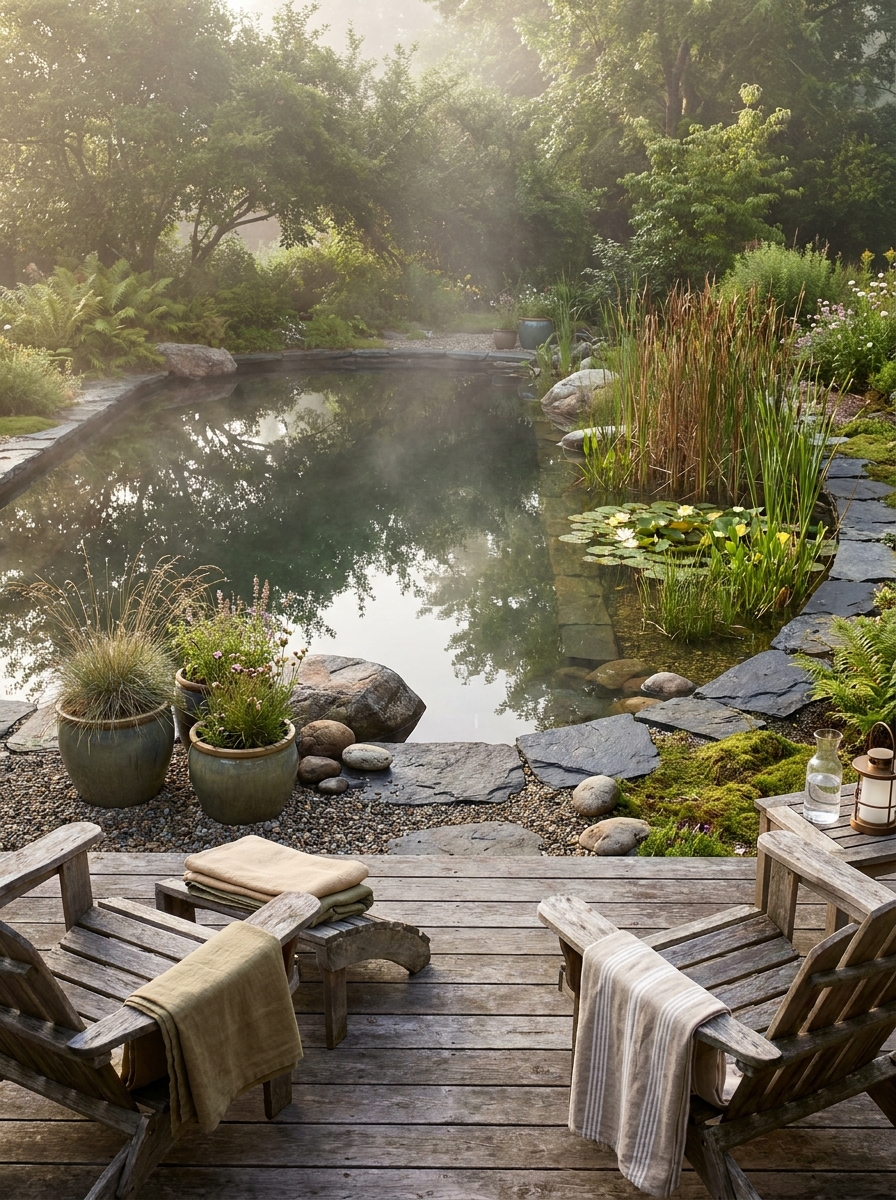
If you want that lush, natural look without giving up a clean place to swim, a two-zone pond is usually the sweet spot. One side is your swimming area. The other is the regeneration zone, filled with aquatic plants and gravel that help filter the water naturally. It sounds technical, but visually it’s gorgeous. You get that soft, layered pond edge with reeds and water lilies, while the swim area stays open and calm. What makes this layout so appealing is the contrast. You have still, reflective water beside planting that moves in the breeze. Stone coping feels grounded. Timber decking warms everything up. And instead of a bright blue pool screaming for attention, the whole backyard starts to feel like one connected garden. This setup also helps the space age well. As the plants settle in, it gets prettier, not tired. That’s rare, right? If you’re planning from scratch, think about where the sun hits, where leaves will fall, and how you’ll move around the pond. A natural swim pond should feel easy to live with, not like a science project in the yard.
Pro Tip: Keep the regeneration zone at roughly 50% of the total water surface for better natural filtration and a more balanced, plant-rich look.
Stone-Edged Plunge Ponds for Smaller Backyards
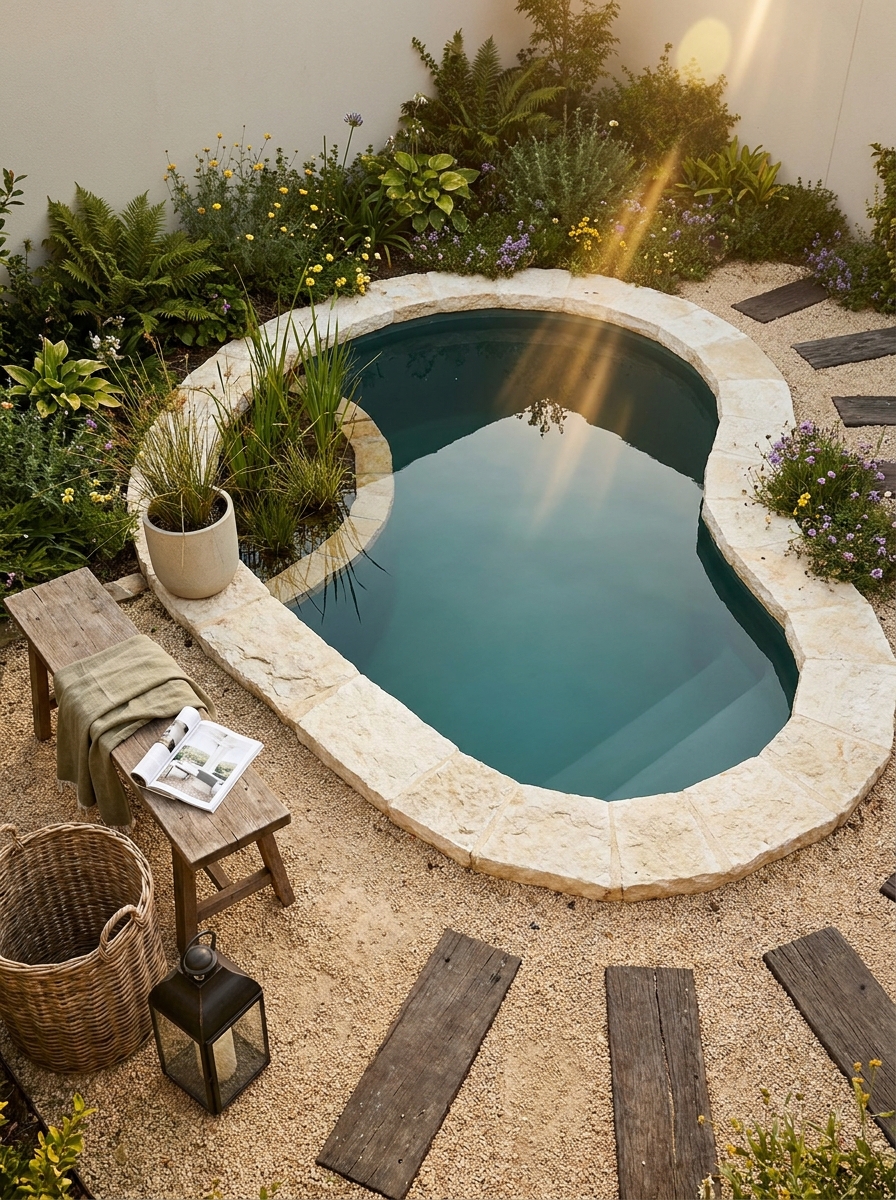
Not every yard needs a giant swimming pond to feel special. A smaller plunge-style natural pool can be just as beautiful, and honestly, it’s often easier to pull off in a real suburban backyard. The trick is giving it a strong shape and simple materials so it feels intentional. Think compact water, chunky stone edging, and planting that spills right up to the sides. I love this option for women who want the calm, earthy vibe of a swim pond without turning the whole yard into a major landscape project. It gives you a cool place to dip, a lovely focal point from the patio, and that soft green-blue water color that feels miles better than harsh chlorine blue. Even when you’re not swimming, it adds so much atmosphere. The key is scale. Don’t crowd a small pond with too many design ideas. Let one or two details carry it, like limestone coping or a little gravel path leading in. Then layer grasses, low native flowers, and maybe a bench nearby. Small spaces can feel deeply luxurious when they’re edited well. And yes, this kind of backyard absolutely deserves its own Pinterest board.
Pro Tip: Choose one dominant edge material, like limestone or fieldstone, so a compact pond feels calm and cohesive instead of visually busy.
A Wood Deck Lounge Beside the Water Makes It Feel Finished
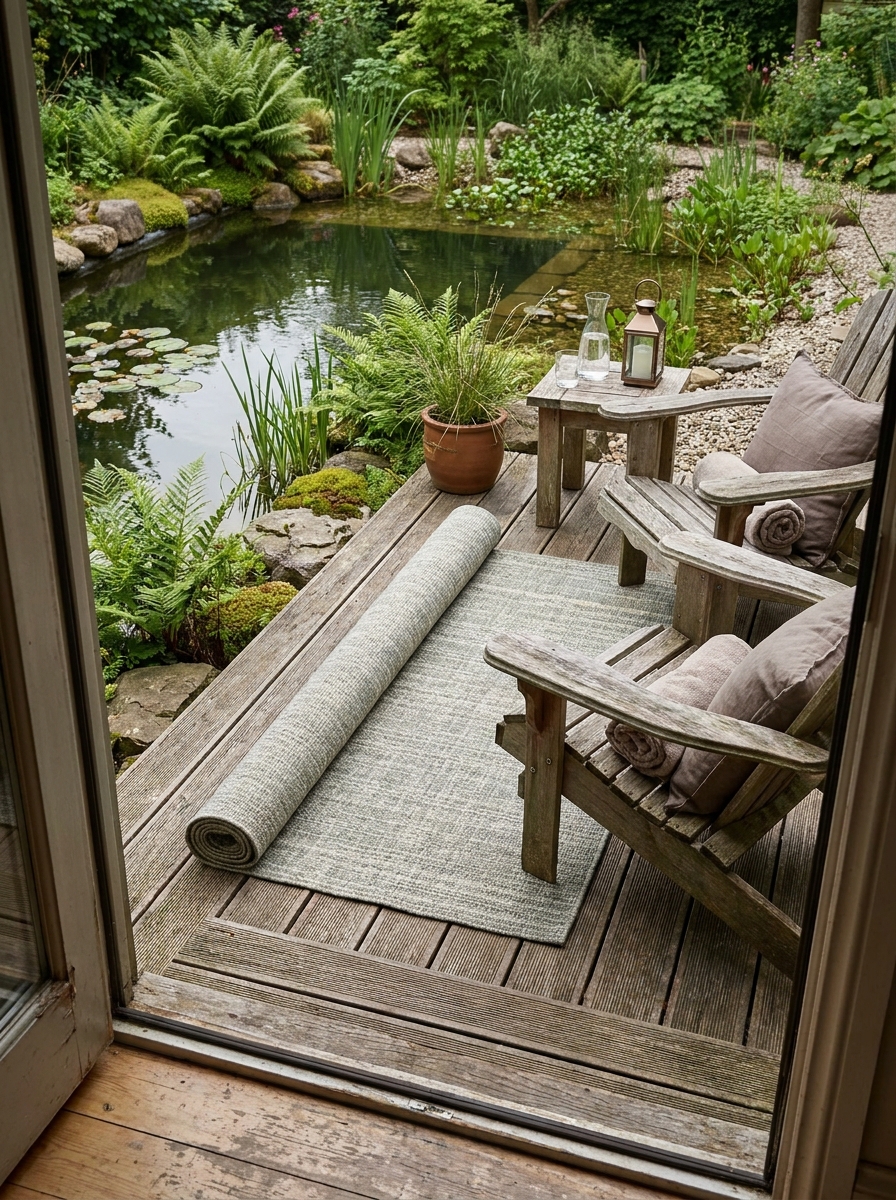
A natural pond can be absolutely stunning on its own, but if you want it to feel like a real outdoor room, add a deck lounge beside it. Even a modest timber platform changes everything. Suddenly there’s a place to sit with coffee, dry off after a swim, or just stare at the water for ten minutes while pretending you’re in the countryside of somewhere expensive. And visually? It creates balance. All that soft planting and loose organic shape gets anchored by something warm and linear. Cedar or thermally treated wood works beautifully because it holds up outdoors and still feels natural. Keep the furniture simple. A pair of loungers, a bench, maybe a little side table. You don’t need a full outdoor living room unless you truly use one. This is also where comfort matters more than styling tricks. Add towels in earthy shades, a low lantern, and a rug that can handle damp feet. Done. The pond still gets to be the star, but the deck gives the whole backyard a reason to linger. That’s the magic. You’re not just building a water feature. You’re building a habit of being outside more often.
Pro Tip: Leave at least 4 feet of clear deck space beside the pond so it feels usable, not just decorative.
Native Planting Around the Pond Keeps It Beautiful and Easier
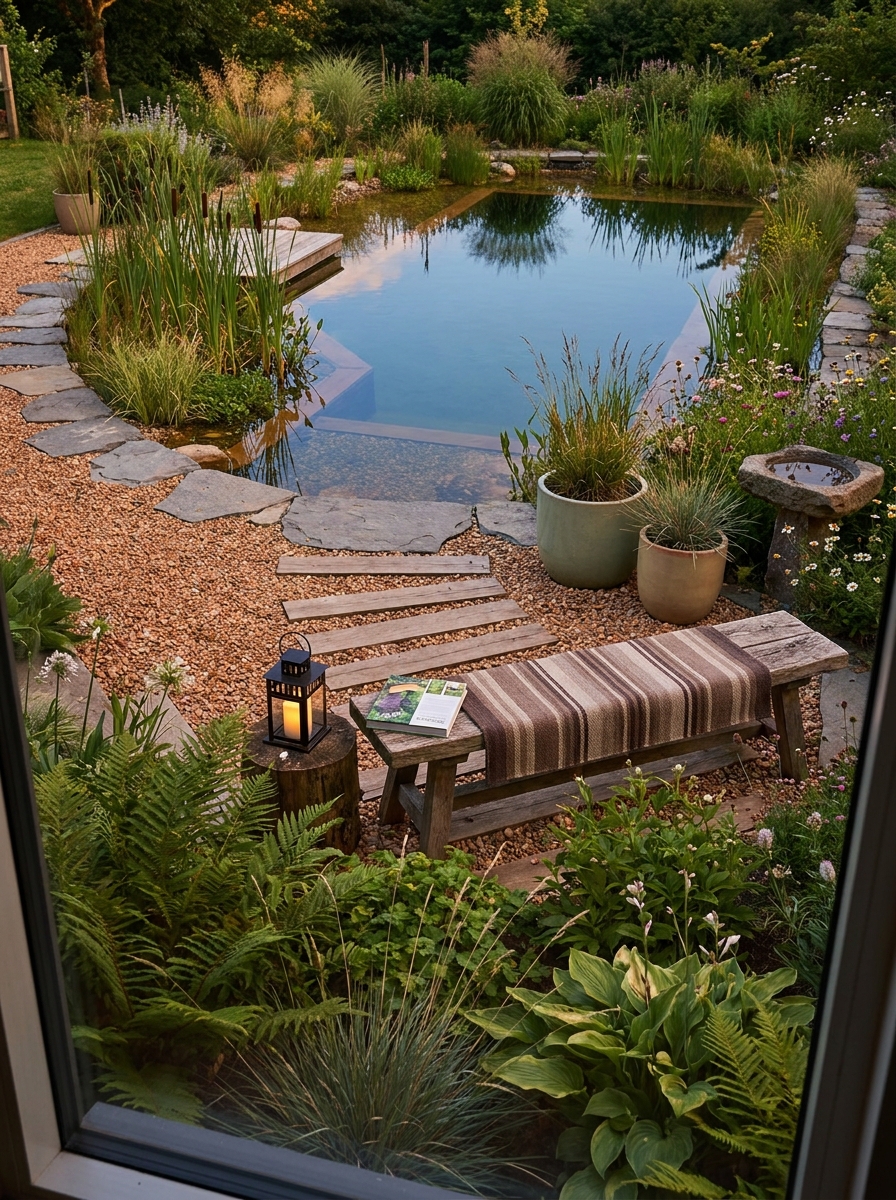
This is where a natural swimming pool really starts to shine. The plants around it do more than make it pretty. They help the whole space feel settled, local, and far less fussy. Native grasses, flowering perennials, and moisture-loving plants usually handle your climate better, need less babying, and support pollinators too. So the pond becomes part of the garden instead of some separate thing dropped into it. I always think the prettiest swim ponds are the ones that don’t try too hard. You want layers, yes, but not chaos. Taller reeds and rushes can frame the edges. Mid-height grasses soften the transition. Lower plants near paths keep the view open. And when things bloom at different times, the pond stays interesting from spring through fall. There’s also a practical side. Native planting can help manage runoff, stabilize soil, and reduce that bare, muddy look around new water features. Which, let’s be honest, no one pins. If you’re choosing between exotic statement plants and the varieties that naturally thrive in your region, I’d go native almost every time. The result feels more grounded, more graceful, and much more like it belongs in your backyard.
Pro Tip: Group plants in drifts of three to five of the same variety so the pond edge looks natural, not spotty or overdesigned.
Use a Gravel Beach Entry for a Softer, More Organic Look
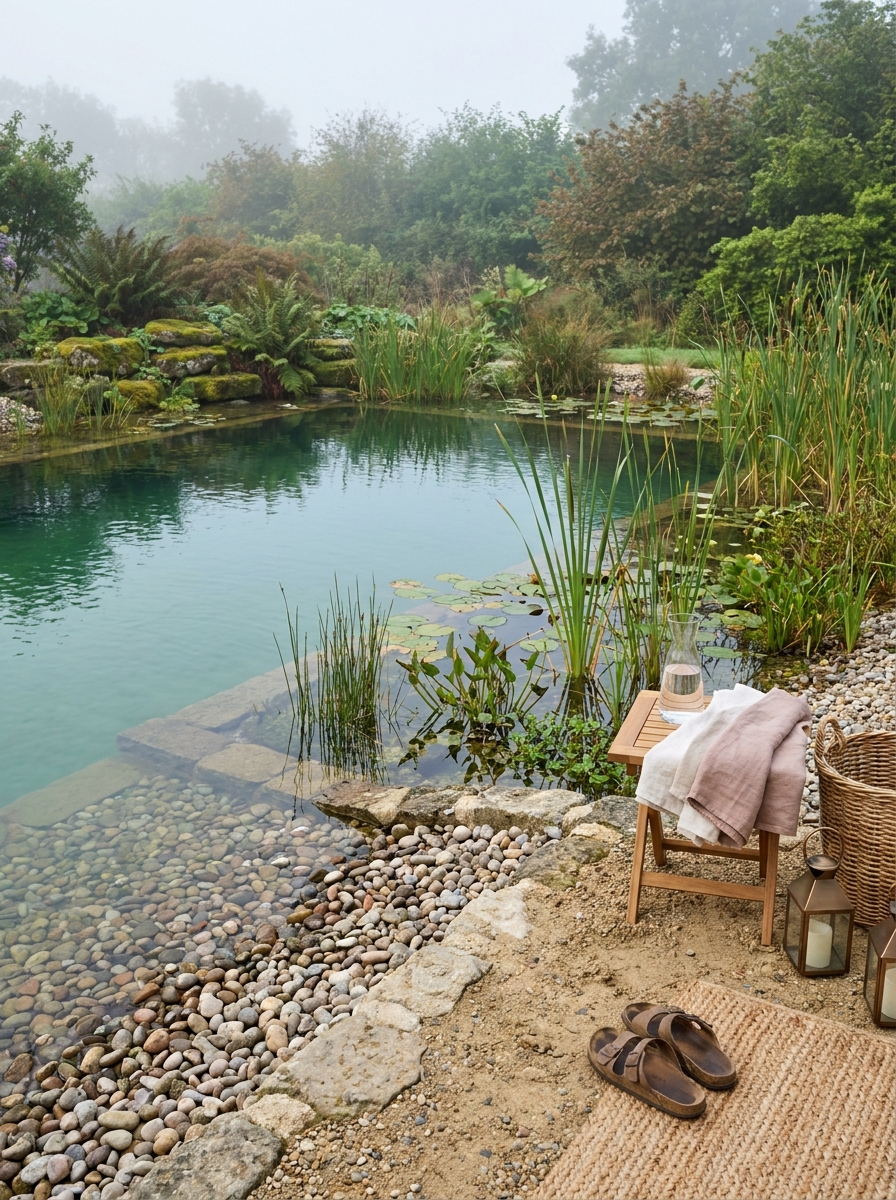
If you’ve ever thought a pool ladder ruins the mood a little, same. A gravel beach entry is such a beautiful alternative. Instead of a hard drop into the water, the pond eases in gradually with pebbles, stone, and shallow planting. It feels more natural underfoot, looks incredible, and gives the whole design that European swim pond feeling people save like crazy. It’s especially lovely in family yards because the edge reads clearly and feels approachable. You can dangle your feet, rinse off garden dirt, or let the kids poke around the shallows without everything looking overly engineered. That softer transition also helps the pond sit into the landscape better. Less pool shell, more garden water feature you can actually swim in. You do need the right materials here. Rounded gravel, stable underlayers, and smart edging matter so it stays neat and doesn’t migrate everywhere after one storm. But once it’s done, it’s one of those features that makes the whole backyard feel considered. Quietly luxurious, not flashy. And honestly, that’s usually the sweet spot. Natural pools are at their best when they whisper a little instead of shouting.
Pro Tip: Use washed rounded gravel in mixed small sizes so the beach entry feels comfortable underfoot and stays more stable over time.
Add a Garden Path and Seating Nook With a View of the Water
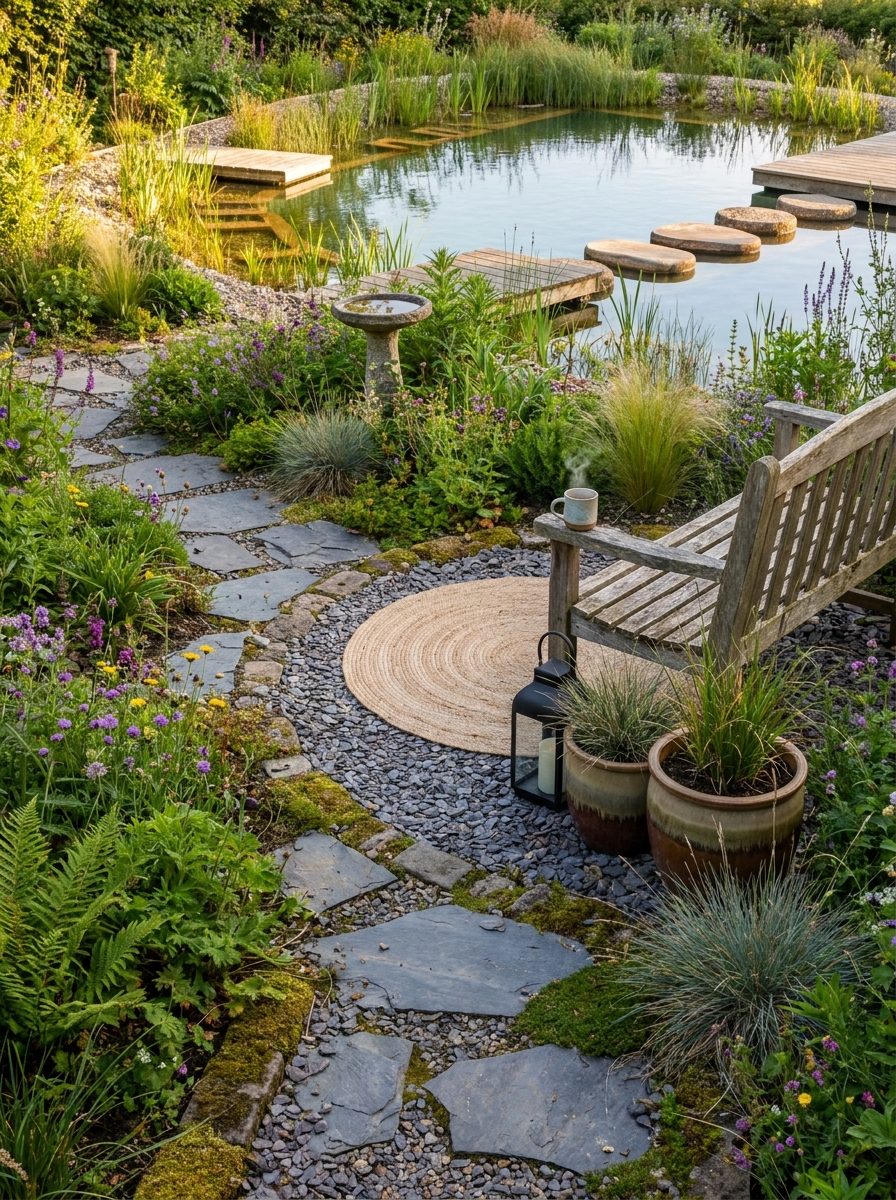
One of my favorite things about a natural swimming pond is that it doesn’t need to be all about swimming. It can be the thing you look at, listen to, and wander toward. A simple path with a little seating nook turns the pond into a destination, not just a utility. And that changes how often you actually enjoy it. The path can be gravel, stepping stone, or timber boardwalk depending on your yard. What matters most is that it feels gentle and obvious. You shouldn’t have to tromp through wet grass to get to the good view. Then at the end, add a bench or two chairs tucked into planting. Nothing too formal. You want it to feel like a secret spot you naturally drift toward with tea, a towel, or five stolen quiet minutes. This kind of setup is especially smart in a wildlife-friendly garden. You can sit and watch dragonflies skim the surface or birds stop by the edge. It’s dreamy, yes, but also very real-life usable. Sometimes the biggest design win is simply creating a reason to pause. A pond with a place to sit beside it feels less like a project and more like part of your everyday routine.
Pro Tip: Aim the seating nook toward the widest pond view, not just the nearest edge, so the water reads as the star from the chair.
Choose Dark Pond Liners and Natural Stone for Richer Water Color
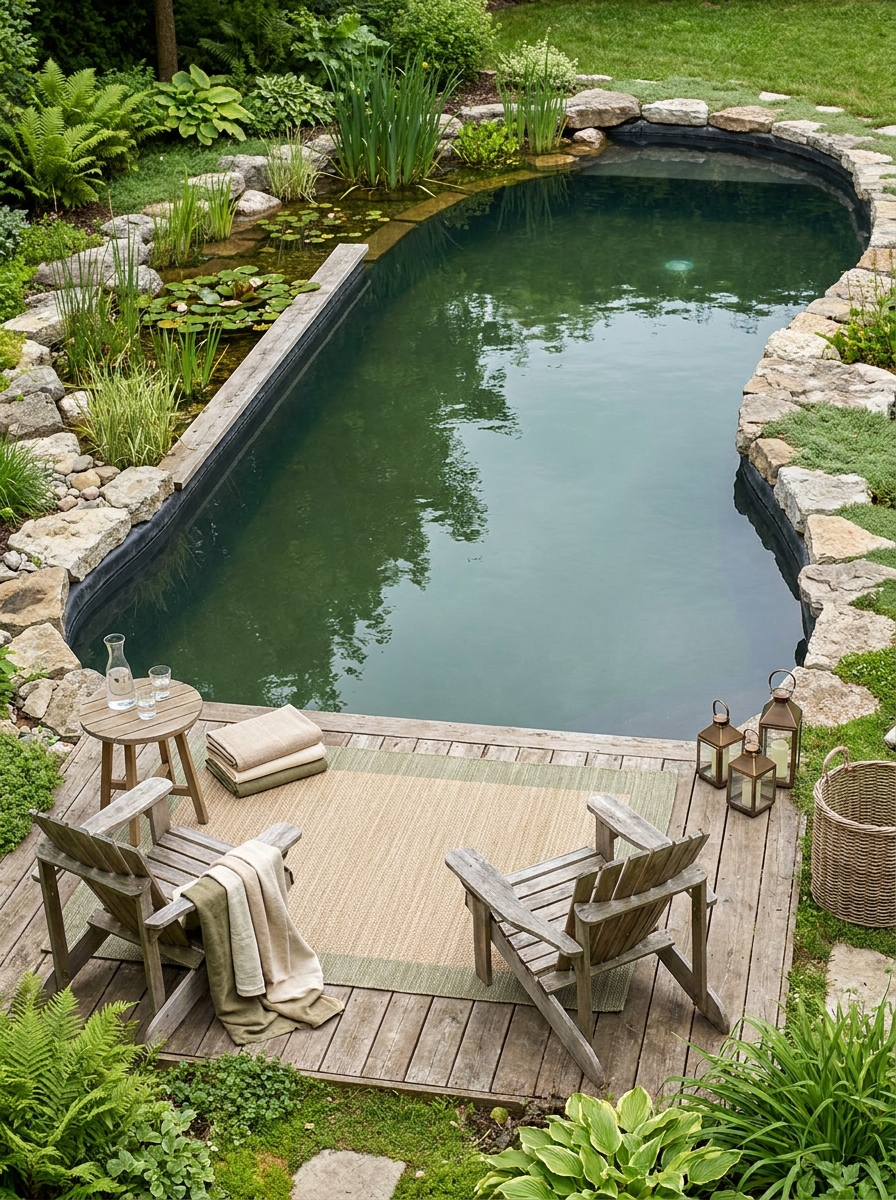
This little design choice makes a huge difference. If you want your natural pool to look deep, calm, and reflective instead of bright and plasticky, go darker with the liner or interior finish. Pair that with natural stone around the edge, and the water takes on that beautiful green-blue tone that feels more like a mountain pond than a suburban pool. It’s one of those details people don’t always think about at first. But color matters so much outdoors. Pale materials can make the water look flat. Bright blue finishes can fight with the whole organic idea. A deeper base lets the sky, plants, and stone reflect beautifully, which gives you that layered, moody look Pinterest loves. The trick is balance. Dark water needs softness around it so it doesn’t feel heavy. That’s where pale gravel, airy grasses, or warm timber help. And if your yard is shady, this approach can be especially gorgeous because the pond will mirror surrounding foliage in a really dramatic way. It feels expensive without being flashy. Honestly, sometimes the prettiest natural pool idea is just choosing quieter materials and letting the water do the talking.
Pro Tip: Test liner and stone samples beside a bucket of water outdoors before committing, because sunlight changes everything.
Make It Feel Luxurious With Simple Eco-Luxe Materials
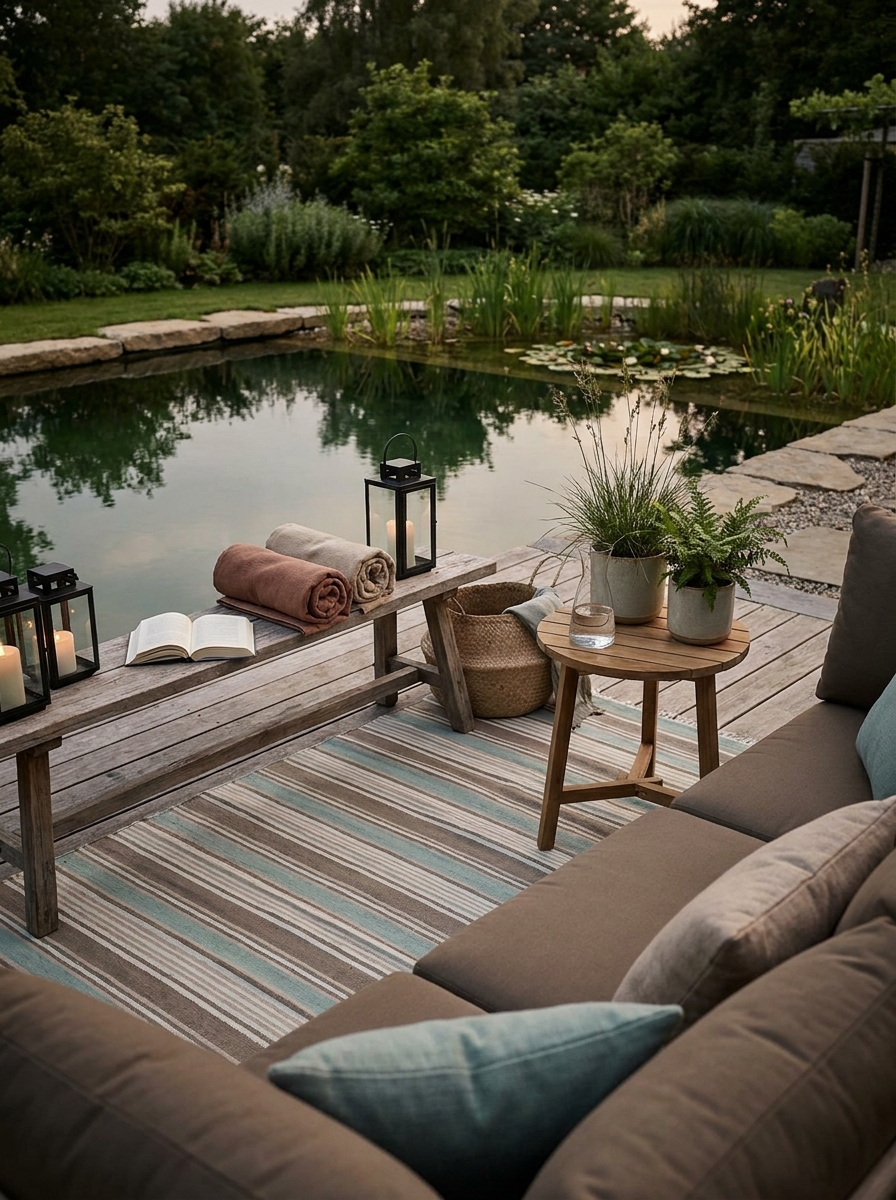
Luxury in a natural backyard doesn’t come from flashy extras. It comes from restraint. A few beautiful materials used well can make a chemical-free swim pond feel incredibly elevated. Think limestone, oak, weathered cedar, blackened metal, and soft neutral textiles. Nothing too glossy. Nothing trying too hard. Just calm, tactile pieces that look even better next to water and planting. This is where you want to edit a little. Skip the oversized plastic loungers and bright pool toys scattered everywhere if you’re after that serene look. Instead, bring in one handsome bench, a clean-lined chair, maybe a carafe on a small table, and towels in oat, clay, or mossy tones. The pond itself already gives you movement and color. And yes, practical choices can still be pretty. Outdoor fabrics have come a long way. Performance rugs can look woven and soft. Lanterns can be solar and still chic. You’re not sacrificing function. You’re just choosing pieces that speak the same language as the landscape. That’s what makes the space feel polished in a believable way. Like someone with very good taste lives here and also actually uses the yard every weekend.
Pro Tip: Limit yourself to three main hardscape materials so the space feels luxe and intentional instead of pieced together.
Wildlife-Friendly Edges Can Be Pretty, Not Messy
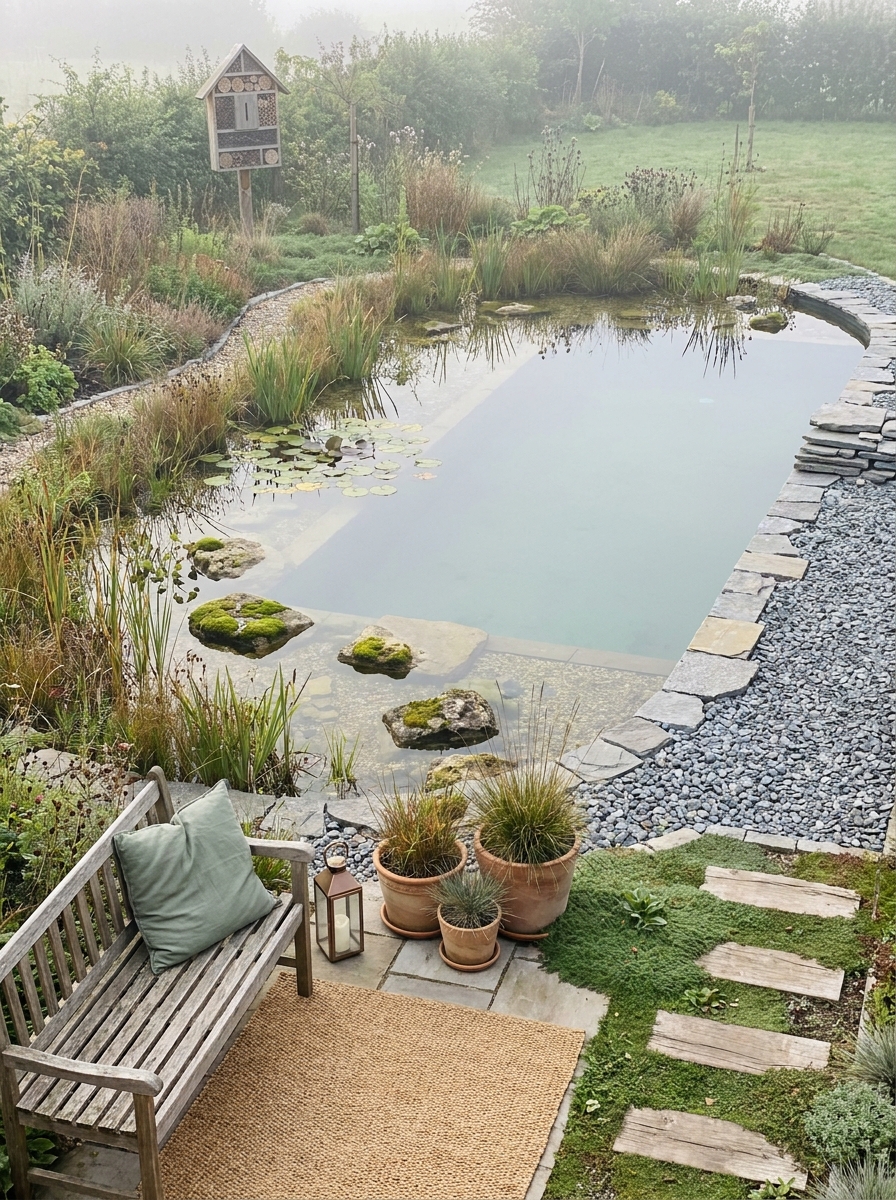
A lot of people worry that making a pond friendly for frogs, birds, and pollinators will make the yard look overgrown. But that really comes down to design, not the idea itself. Wildlife-friendly edges can be incredibly pretty when they’re shaped with intention. The secret is contrast. Let one side be a little looser and planted, then keep another side cleaner with stone, deck, or a mown path. That mix helps the whole pond feel alive without losing structure. Shallow shelves, marginal plants, and nearby birdbaths invite wildlife in. Meanwhile, defined edges and repeated materials keep it from looking like you gave up halfway through. It’s a softer version of tidy. And honestly, it’s much more charming. This approach also gives you a backyard that changes through the seasons. Dragonflies in summer. Birds splashing at the edge. Seed heads catching light in fall. There’s movement and personality built right in. If you love outdoor spaces that feel romantic but still pulled together, this is such a good direction. Let nature have a little room, then frame it well. That’s usually all it takes to turn “wild” into “beautifully intentional.”
Pro Tip: Keep one main viewing edge crisp with stone or deck boards so the wilder planting zones feel designed, not accidental.
A Four-Season Swim Pond Still Earns Its Space in Winter
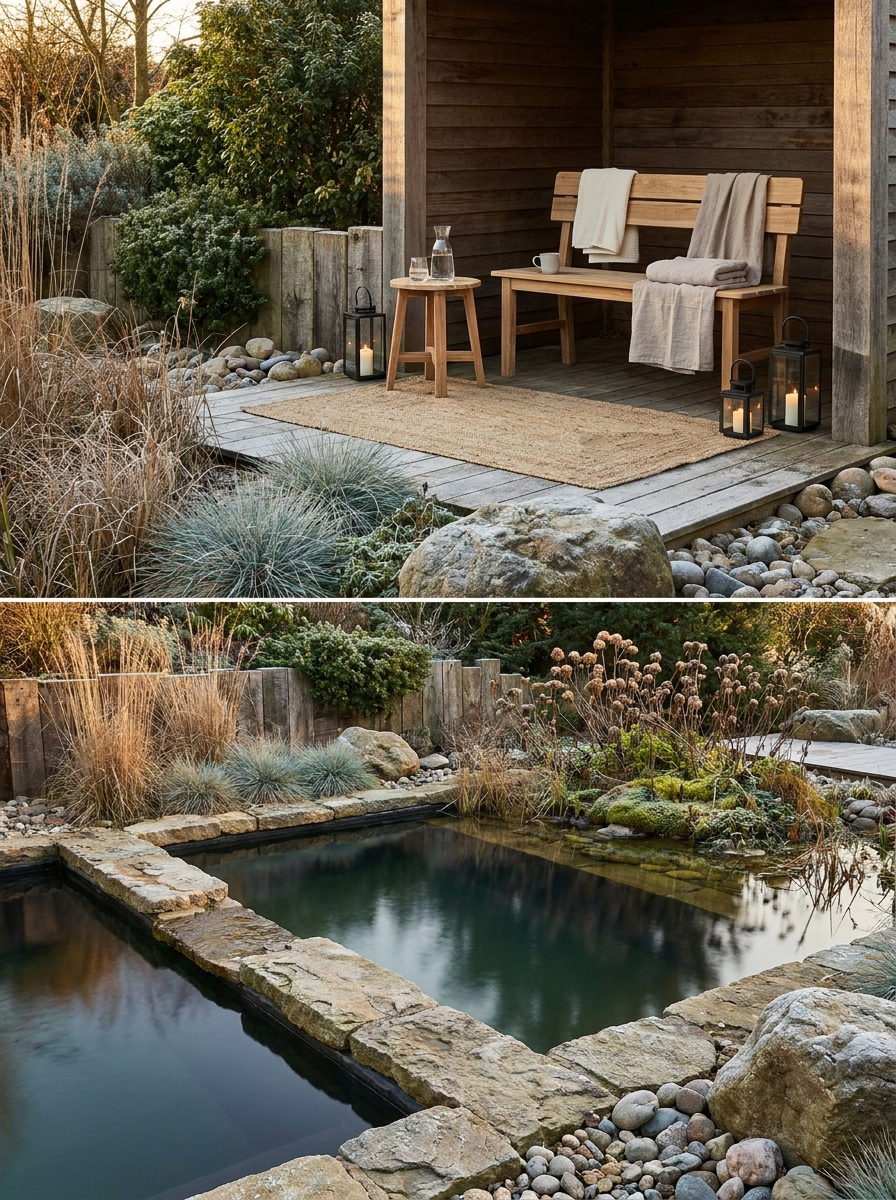
One of the smartest things about a natural swimming pond is that it doesn’t stop being lovely when summer ends. In fact, this might be the biggest reason I prefer them visually over standard pools. A chlorine pool can look a little sad in winter, covered and forgotten. But a swim pond still reads like part of the landscape. The stone, the grasses, the water, even the seed heads all keep doing their thing. That means your design choices should support year-round beauty. Evergreens, strong stone edging, timber that silvers nicely, and plants with winter structure all matter. You want the pond to hold its shape when flowers are gone. And if the water catches gray sky or frost? It’s honestly so pretty. Quiet, but striking. This is also where lighting earns its keep. A few subtle lanterns or low path lights can make the area glow on dark afternoons without turning it into a theme park. Keep it simple. Keep it warm. The goal is a backyard that still feels intentional in January, not just in July. And that’s the real flex, isn’t it? A space that doesn’t vanish for half the year but keeps giving back in a softer, slower way.
Pro Tip: Include at least two evergreen or structural plant varieties near the pond so the edges don’t disappear in winter.
A Small Waterfall or Rill Keeps the Pond Moving and More Alive
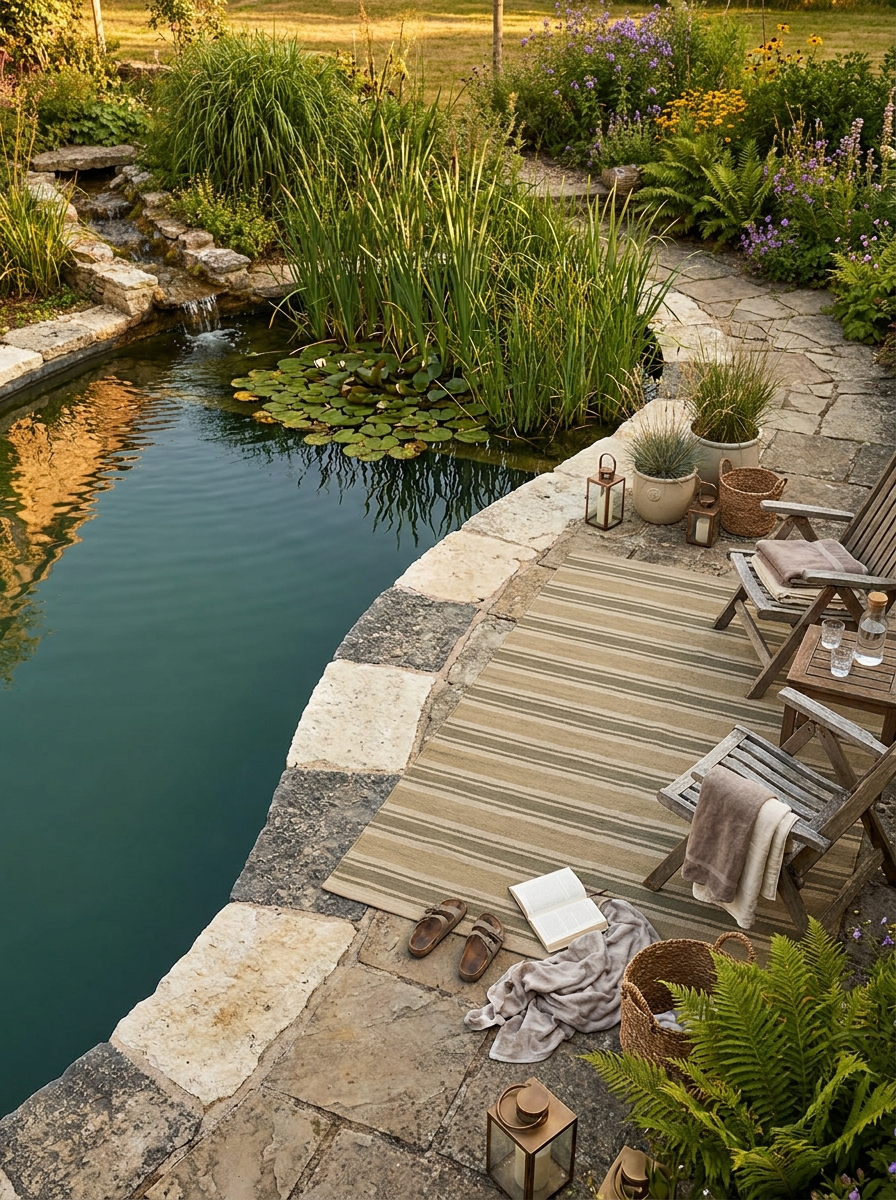
One of my favorite ways to make a natural swimming pond feel extra magical is adding gentle moving water. Not a loud, splashy feature that takes over the yard. I mean a soft little waterfall, spillway, or narrow rill that sends water back into the pond with the prettiest sound. It makes the whole space feel cooler, fresher, and more peaceful right away. You hear it before you even sit down, and somehow the backyard feels finished. There is a practical side too, which I love. Water movement helps keep the surface from feeling still and stagnant, and it can support circulation in a way that feels natural instead of technical. Visually, it also gives the pond more life. Sunlight catches the ripples. Stone looks darker and richer. The planted edges feel even more lush because everything around moving water seems greener. If your pond already has beautiful organic lines, a simple run of stone or a tucked-away spill edge can make it feel like it has always been there. It is one of those details that looks effortless, but changes the whole mood in the best way.
Pro Tip: Keep the waterfall drop low, around 6 to 12 inches, so you get gentle sound and circulation without losing too much heat or creating constant splashing.
Quick Guide
Quick Guide: DIY vs. Buy for a natural swimming pool DIY-friendly: gravel paths, seating nooks, native planting, deck styling, lantern lighting, and simple edging refreshes. Best left to pros: excavation, liner installation, pumps, circulation systems, structural retaining walls, and full regeneration-zone design. Budget feel: – Styling upgrade: $500–$2,000 – Small pond-edge landscaping: $2,000–$8,000 – Compact natural plunge pond: $20,000+ – Full-size swim pond: often $50,000+ If you want the look now, start with planting, paths, and a lounge zone first. If you want the full chemical-free setup, invest in the water system and build the pretty layers around it.
## The Backyard Mood Shift You’ll Actually Feel
A natural swimming pool or pond changes more than the look of a backyard. It changes the mood of it. Suddenly the space feels slower, softer, and a little more alive. You notice the grasses moving. The water reflecting the sky. The way stone, wood, and planting make everything feel connected instead of chopped into separate zones. And that’s really the beauty of these ideas. They’re not about creating some impossible resort yard that only looks good in photos. They’re about building a space that feels good on a Tuesday evening when you’re tired, barefoot, and carrying a mug outside for five quiet minutes. Maybe you go all in with a two-zone swim pond. Maybe you start smaller with better planting, a deck nook, or a prettier pond edge. It all counts. The best natural backyards feel personal. A little imperfect. Deeply loved. So if you’ve been dreaming about a chemical-free pool that looks more like a garden than a plastic box of water, trust that instinct. Save the ideas you love, sketch out your space, and start where you can. Your backyard can absolutely become that kind of retreat.
Frequently Asked Questions
How does a natural swimming pool stay clean without chemicals?
A natural swimming pool usually stays clean through circulation, beneficial bacteria, and a planted regeneration zone that filters the water. It’s not maintenance-free, but it works very differently from a chlorine pool. The system has to be designed well from the start, which is why professional planning matters.
What is the difference between a swim pond and a natural swimming pool in a backyard?
People often use the terms interchangeably, but a swim pond usually leans more garden-like and organic in shape. A natural swimming pool can have a cleaner or more architectural look while still using biological filtration instead of chemicals. Both can be beautiful, and the right one depends on your yard and style.
Are natural swimming ponds expensive to build for a real home backyard?
They can be a serious investment, especially if you’re building a full-size swimmable pond with filtration and landscaping. Smaller plunge ponds or phased projects are often more realistic for everyday homes. Starting with the layout and planting plan can help you spend wisely instead of doing expensive fixes later.
What plants are best around a chemical-free backyard swimming pond?
Native grasses, rushes, water lilies, moisture-loving perennials, and pollinator-friendly plants are usually great choices. They tend to suit the local climate better and help the pond feel integrated into the landscape. The prettiest results usually come from layered planting with a mix of height, texture, and seasonal interest.