

You know that feeling when the temperature hits ninety and all you want is to sink into cool water? But then you remember that inground pools cost as much as a small car. Yeah, same. Here’s the thing though — you don’t need to spend thousands to create your own backyard oasis. I’ve been obsessed with budget-friendly pool solutions lately, and I’m genuinely excited about what’s possible with a little creativity and maybe a weekend afternoon. From stock tanks that look surprisingly chic to kiddie pools that adults actually want to lounge in, there are so many ways to beat the heat without the sticker shock. Some of these ideas cost less than a fancy dinner out. Others might run you a couple hundred bucks, but we’re talking real, actual pools you can use all summer long. Let’s get into it.
Stock Tank Pools That Look Like a Million Bucks
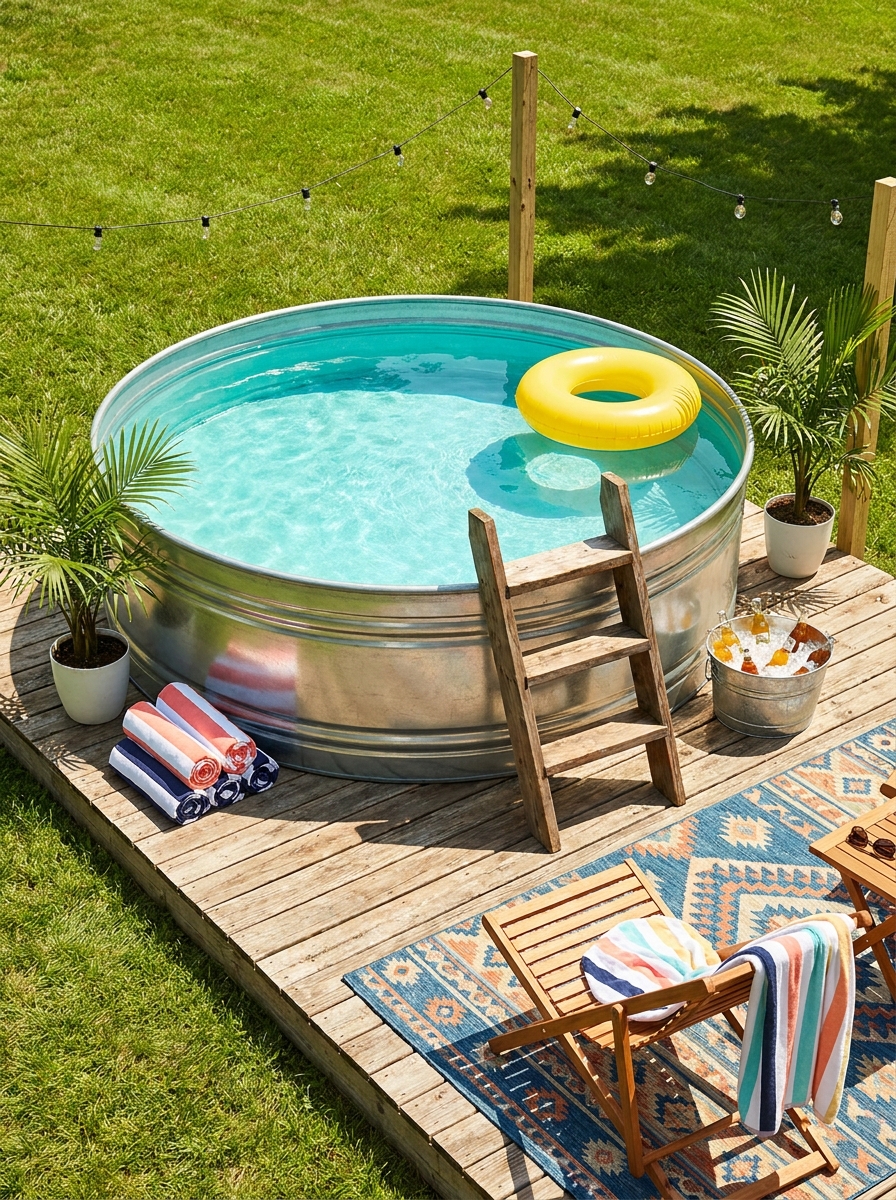
Galvanized stock tanks have completely taken over Pinterest, and honestly? I get it. These circular metal tubs were originally designed for farm animals, but they’ve become the chicest budget pool option out there. You can grab one from a farm supply store for around $400-600 depending on size, and suddenly you’ve got an eight-foot pool in your backyard. The beauty is in the simplicity. That raw metal finish looks intentionally industrial and cool, not cheap. Add a simple wooden deck around the perimeter, and it feels like something from a design magazine. I love how the galvanized metal catches the light differently throughout the day — it’s almost sculptural. What makes these work so well is that they don’t try to be something they’re not. They embrace that casual, utilitarian vibe. Pair yours with potted palms, some weathered wood furniture, and maybe string lights overhead. The contrast between the industrial tank and lush greenery creates this really beautiful, relaxed atmosphere. And here’s the best part — you can set one up in a single weekend without any digging or permits in most areas.
Pro Tip: Before filling your stock tank, coat the inside with a pond-safe sealant to prevent rust and make cleaning easier — it’ll extend the life of your pool by years.
Elevated Kiddie Pools for Grown-Up Lounging
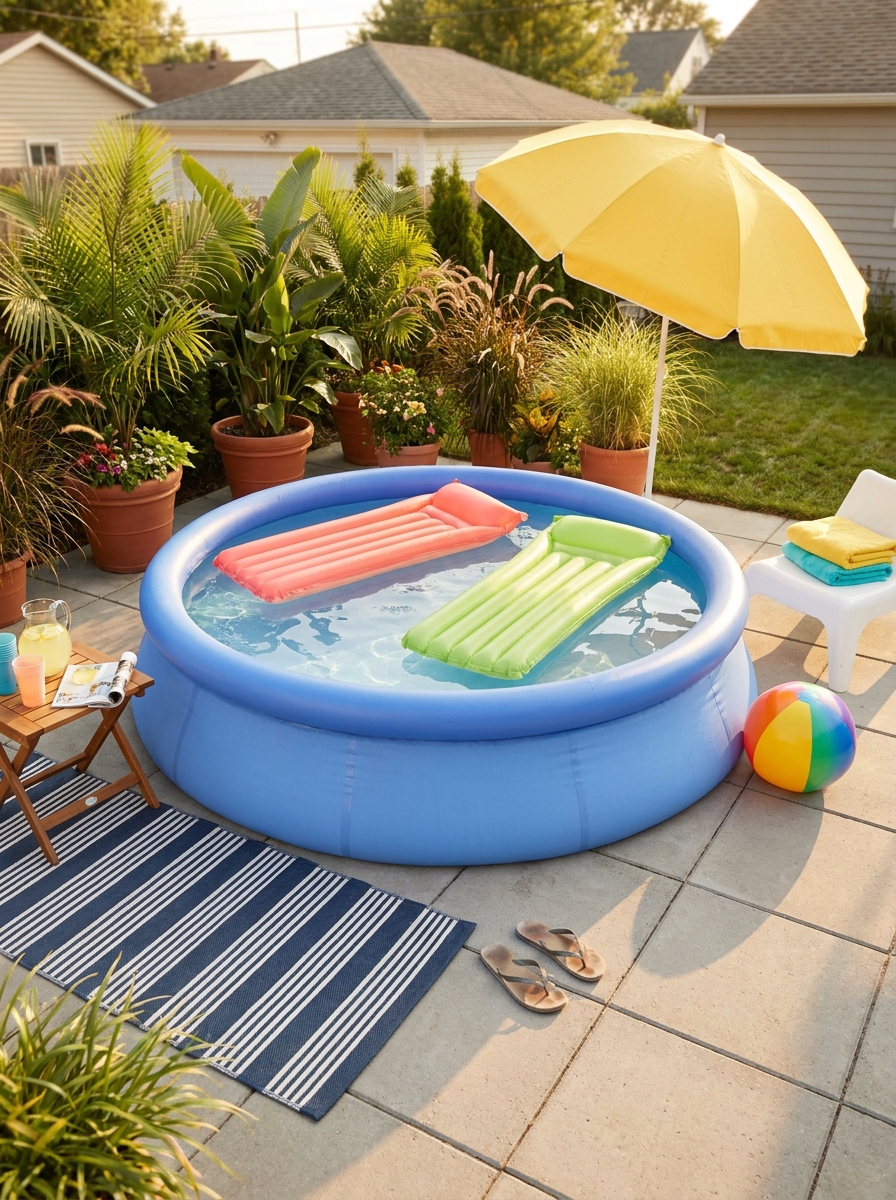
Okay, hear me out on this one. Those giant inflatable kiddie pools? They’re not just for toddlers anymore. I’ve seen people create the most amazing lounge setups with oversized kiddie pools, and they cost like thirty bucks. The key is in how you style the space around them. Go for the largest size you can find — we’re talking eight to ten feet in diameter. The newer designs come in prettier colors too, like soft blues and whites instead of those primary color cartoons. Set it up on a level patio area, and suddenly it’s not a kiddie pool anymore. It’s a plunge pool. The shallow depth actually becomes an advantage for lounging. You can drag in some waterproof cushions or pool floats and basically create an outdoor living room in the water. I love the idea of surrounding one with potted plants to create a little privacy screen. Add some solar lanterns for evening ambiance, and you’ve got yourself a legit backyard retreat. Sure, you’ll need to refill it more often than a permanent pool, but there’s something kind of nice about that fresh water every few days. Plus, easy setup means you can move it around your yard to follow the shade.
Pro Tip: Place a large tarp underneath your inflatable pool and extend it a foot beyond the edges — it protects your grass, makes cleanup easier, and creates a non-slip surface when getting in and out.
DIY Pallet Deck Pools That Maximize Small Spaces
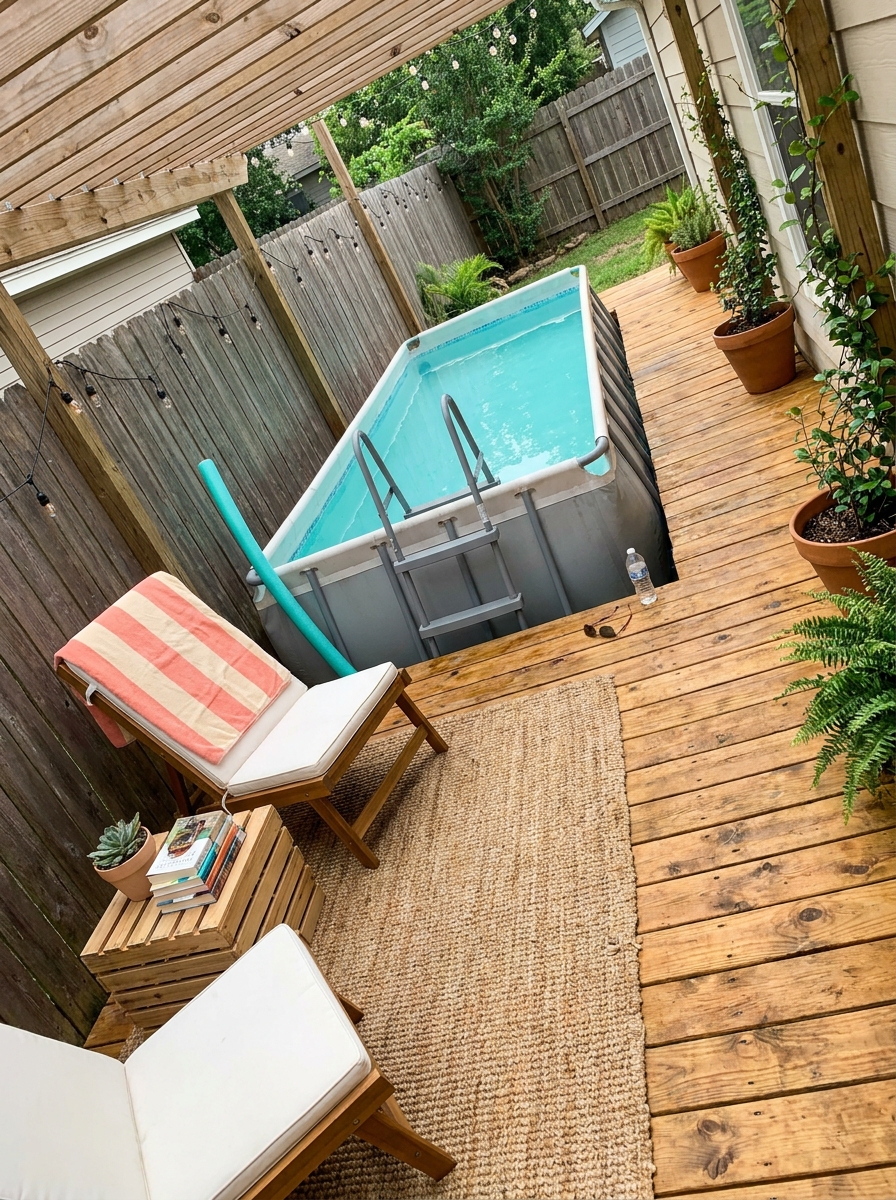
If you’ve got a narrow side yard or awkward outdoor space, a rectangular above-ground pool surrounded by a pallet deck might be your answer. I’m talking about those basic rectangular pools that cost a few hundred dollars, transformed with a custom-built deck that makes them look intentional and expensive. Pallets are your secret weapon here. You can often get them for free from local businesses, and with some sanding and staining, they become beautiful rustic decking. Build the deck to sit flush with the pool rim, and suddenly that utilitarian pool looks like it was always meant to be there. The rectangular shape actually works better in tight spaces than circular options. What I love about this approach is how customizable it becomes. You can build the deck as wide as you want on one side to create lounging space, add built-in bench seating, or even incorporate planters right into the design. Stain the pallets in a warm honey tone or keep them natural and weathered for a beachy vibe. The wood softens the whole look and makes it feel less like you just plopped a pool in your yard. Plus, the deck provides easy access and a place to sit with your feet dangling in the water on those evenings when you don’t want a full swim.
Pro Tip: Sand your pallet wood thoroughly and apply a waterproof deck stain designed for high-moisture areas — it prevents splinters, protects the wood from constant splashing, and makes the deck last several seasons.
Natural Swimming Ponds with a Boho Vibe
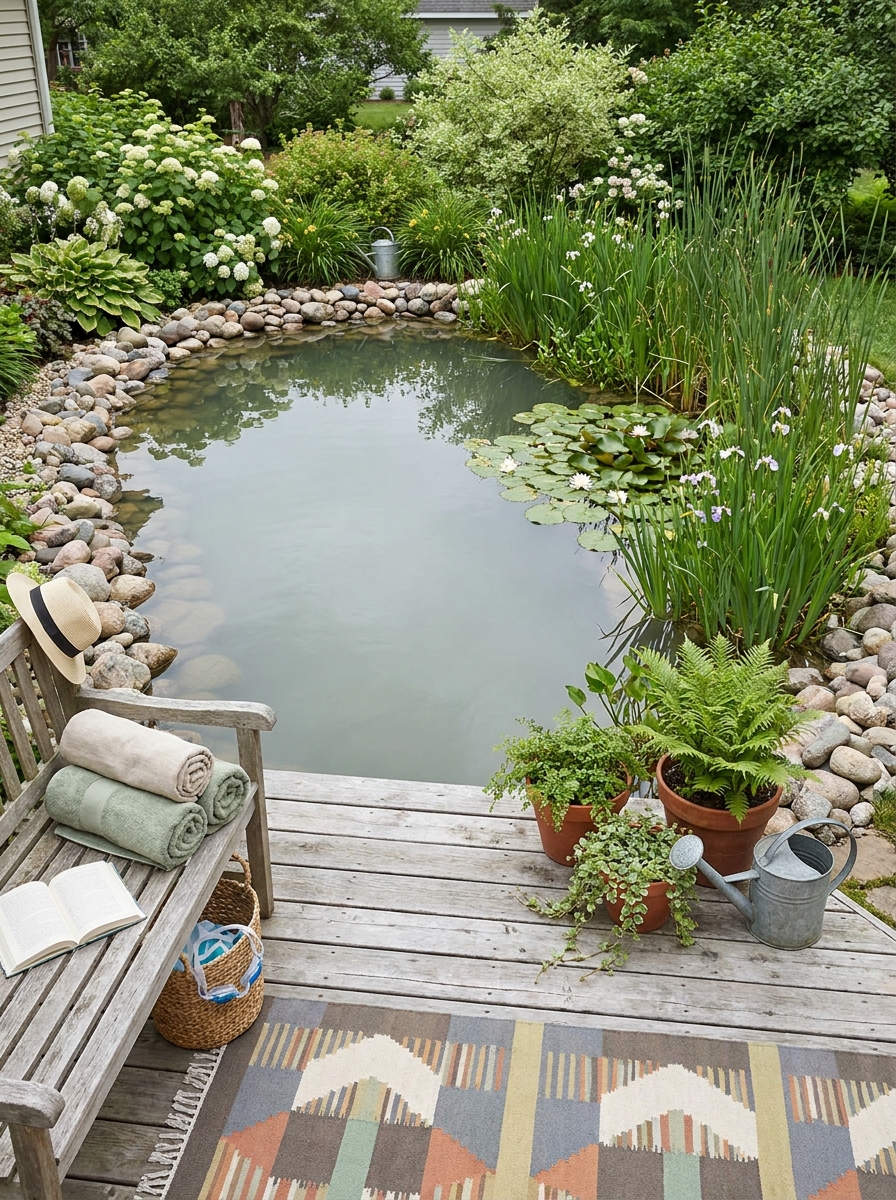
This one takes a bit more commitment, but if you’re dreaming of something truly unique, a small natural swimming pond might be your project. These blend a pool with a water garden, using plants to naturally filter the water instead of harsh chemicals. The result is this gorgeous, organic-looking feature that feels like you’re swimming in a secluded pond. You’ll need to dig a hole and create two zones — one for swimming and one for the regeneration area where plants do their filtering magic. It sounds complicated, but there are tons of DIY tutorials out there, and the material costs can be surprisingly reasonable if you do the labor yourself. We’re talking pond liner, gravel, aquatic plants, and a small pump. The aesthetic is absolutely stunning. Imagine water surrounded by ornamental grasses, water lilies floating on the surface, and maybe some smooth river rocks lining the edge. It has this cottage-in-the-countryside vibe that you just can’t get with a traditional pool. The water takes on this soft, natural color — not bright chlorine blue, but a gentle gray-green that looks earthy and intentional. Plus, you’re creating habitat for dragonflies and beneficial insects. It requires different maintenance than a regular pool, but many people find it more rewarding. There’s something really special about swimming in water that’s part of a living ecosystem.
Pro Tip: Start with a smaller pond (around 200 square feet) for your first natural pool — it’s easier to balance the ecosystem, requires less excavation, and you can always expand it later once you understand the maintenance rhythm.
Above-Ground Plunge Pools with Spa Vibes
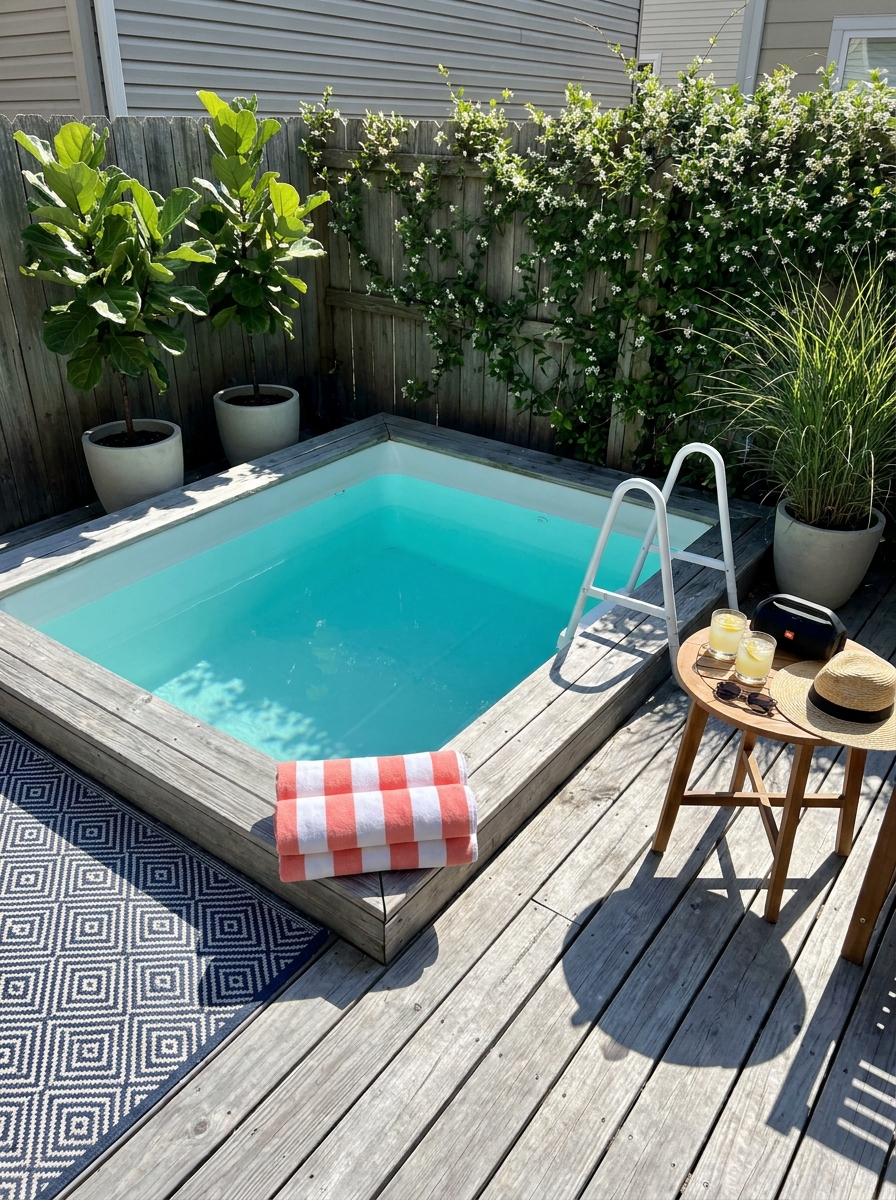
Okay, hear me out — those compact above-ground plunge pools are having a MOMENT. I’m talking about the sleek, modern ones that are deep enough to actually cool off in but small enough to tuck into a corner of your yard. They’re basically the grown-up version of a kiddie pool, except they look intentional and chic. What I love most? You can DIY the surround to make it look custom. Build a simple wood deck around it, add some waterproof outdoor cushions, and suddenly you’ve got yourself a backyard spa situation. The water stays cooler than a traditional pool because there’s less surface area heating up in the sun. These work brilliantly in tight spaces — think narrow side yards or small patios. You’re not swimming laps, but you ARE getting full-body relief from the heat. Add some solar string lights overhead and a few potted palms, and honestly? It feels like a mini resort. The best part is installation takes a weekend, not a summer.
Pro Tip: Paint the exterior of your plunge pool a dark color (charcoal or navy) to help the water absorb heat slower and stay refreshingly cool even on scorching days.
Sunken Fire Pit Pools for Ultimate Backyard Flex
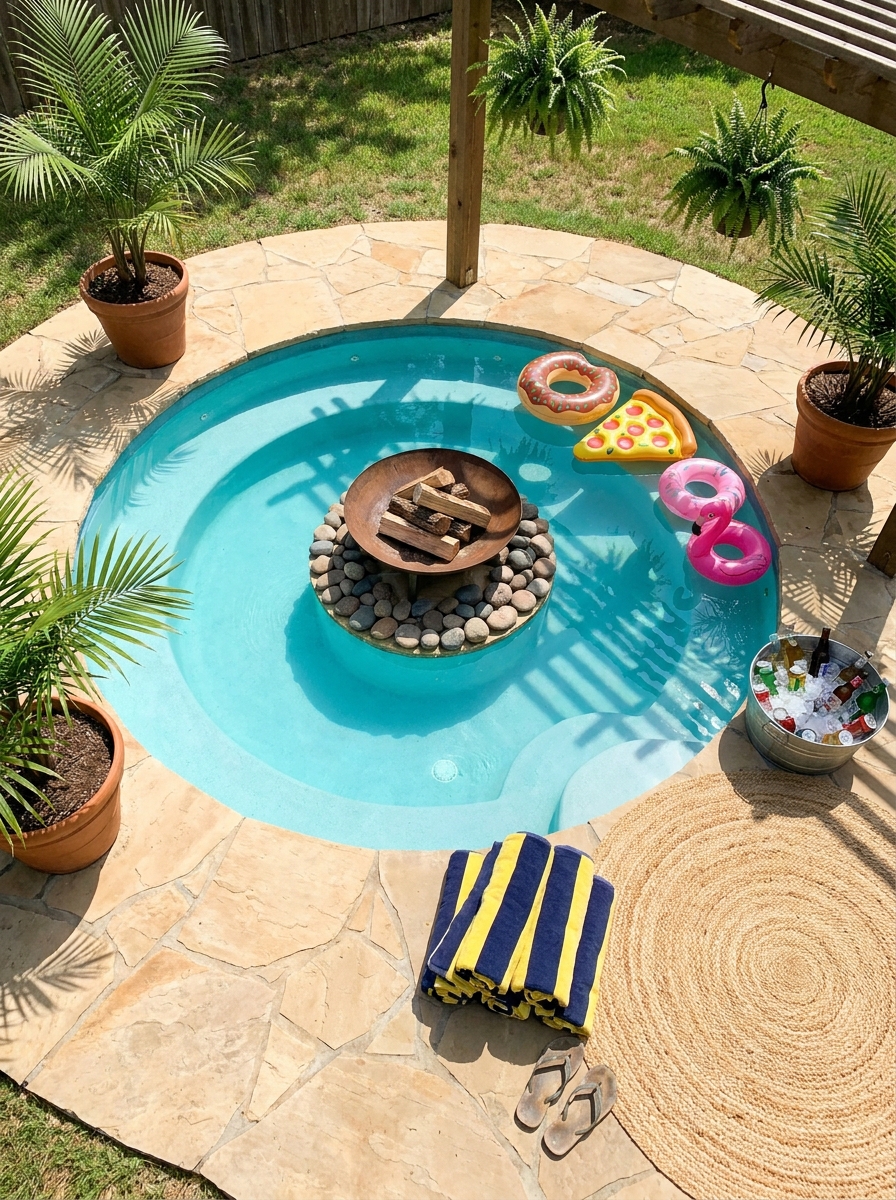
This one sounds wild but stick with me — imagine a shallow pool dug just a foot or two into the ground with a fire pit right in the center. It’s part pool, part conversation pit, and completely genius for entertaining. You’re basically creating a cool-off zone that doubles as the most interesting hangout spot in your neighborhood. The concept is simple: dig a shallow depression, line it with a heavy-duty pool liner, and build a raised stone or metal fire pit island in the middle. During hot days, you fill it with water and everyone lounges around the edges with their feet in. When temperatures drop, you drain it and light the fire. Multi-season magic! I’ve seen DIYers pull this off in a long weekend with basic excavation skills and about the cost of a decent grill. The key is keeping it shallow — you’re talking wading depth, not diving depth. Add some flat stones around the perimeter for seating and you’ve basically invented the coolest backyard feature ever.
Pro Tip: Use a sump pump with a timer to easily drain and refill your sunken pool weekly — keeps the water fresh without the hassle of chemicals or constant maintenance.
Shipping Container Pools That Scream Modern
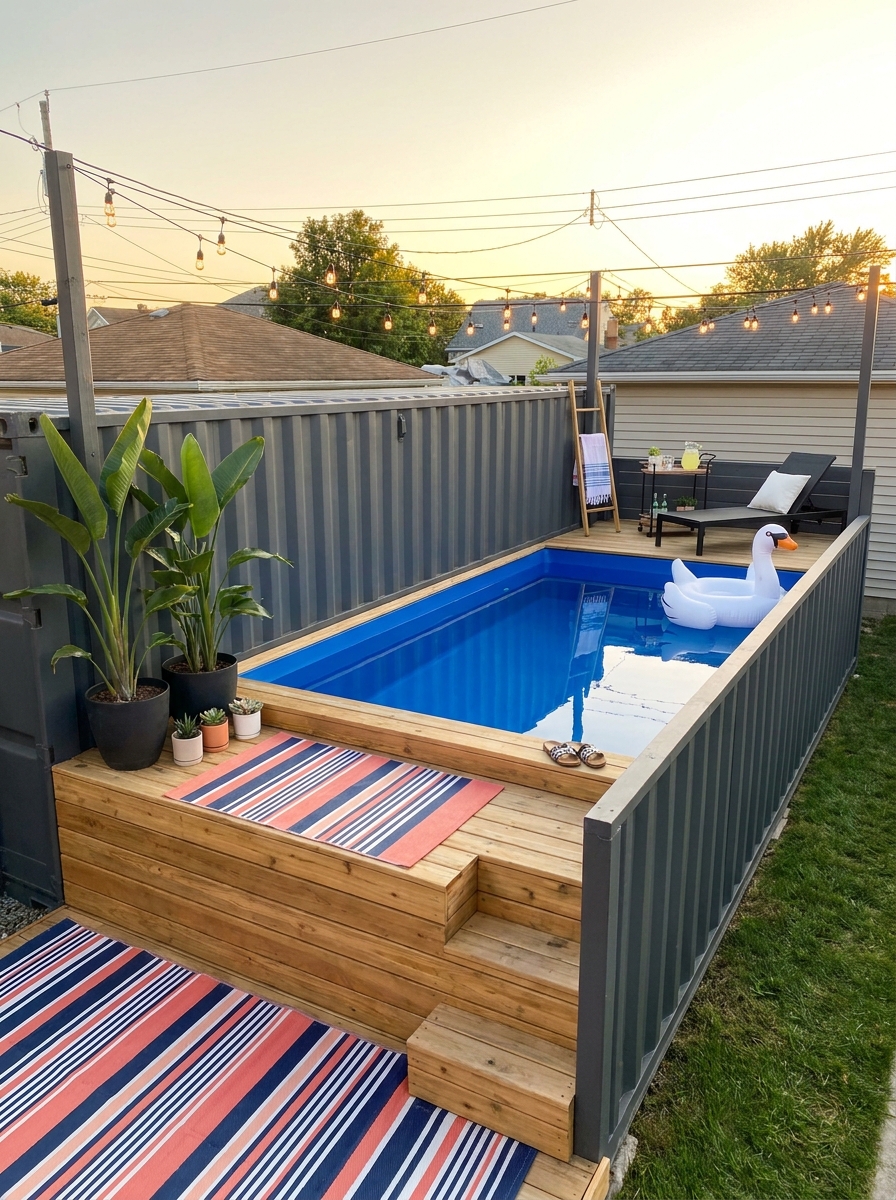
If you want to blow people’s minds, a repurposed shipping container pool is the way to go. These things look SO expensive and architectural, but you can actually score a used container for way less than you’d think and convert it into the sleekest lap pool ever. It’s like industrial chic meets backyard oasis. The container itself becomes the pool structure — you just seal it, add a liner, install a filtration system, and boom. Instant modern pool. I’ve seen people paint them matte black, add a wood deck on one end, and suddenly it looks like something from a design magazine. The narrow shape is perfect for small yards where a traditional pool would eat up everything. What really sells me on this idea is the flexibility. You can partially bury it for a sleek in-ground look, or leave it above-ground and build steps up to it. Either way, it’s a total statement piece that costs a fraction of a traditional pool installation.
Pro Tip: Insulate the container walls with spray foam before adding your liner — it’ll keep the water temperature more stable and prevent the metal from heating up too much in direct sun.
Splash Pad Zones with Built-In Seating
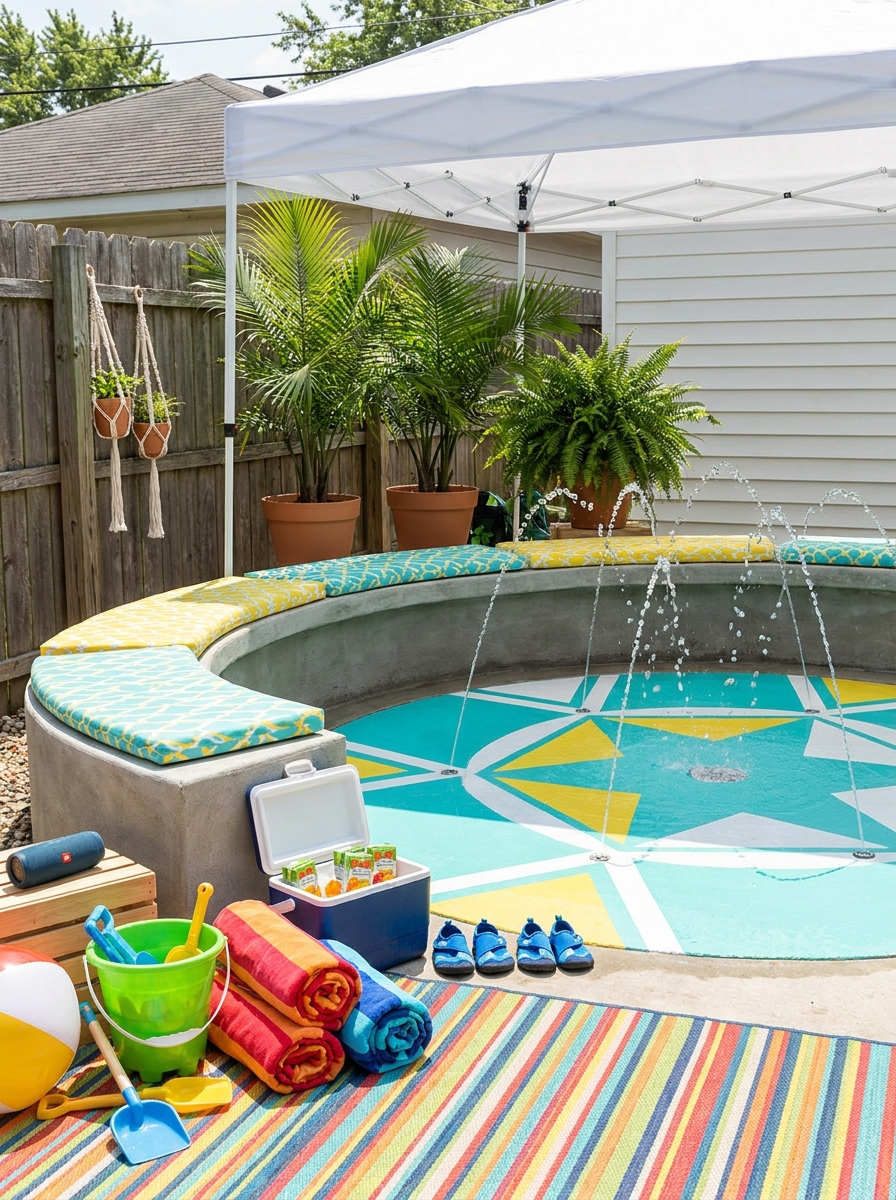
Not every cooling solution needs to be a full pool — sometimes a DIY splash pad situation is exactly what you need, especially with little kids. I’m talking about a shallow concrete or stone area with sprinklers, misters, or a simple fountain feature that everyone can run through. Add built-in bench seating around the perimeter and you’ve got a family hangout zone. The beauty here is that it’s low-maintenance and uses way less water than a pool. You can build it with basic masonry skills — pour a slightly sloped concrete pad with a drain, install some spray nozzles connected to your garden hose, and you’re done. Kids go absolutely bananas for these, and adults love that there’s actual seating. I’ve seen genius versions where people use colorful tile or paint fun patterns on the concrete to make it feel more playful. Add a pop-up canopy for shade and some outdoor cushions on those benches, and suddenly it’s the neighborhood gathering spot all summer long.
Pro Tip: Install a simple timer on your water supply so the splash pad runs for 15-minute intervals — saves water, keeps things exciting, and prevents your yard from turning into a swamp.
Cattle Trough Lap Pools for Tiny Yards
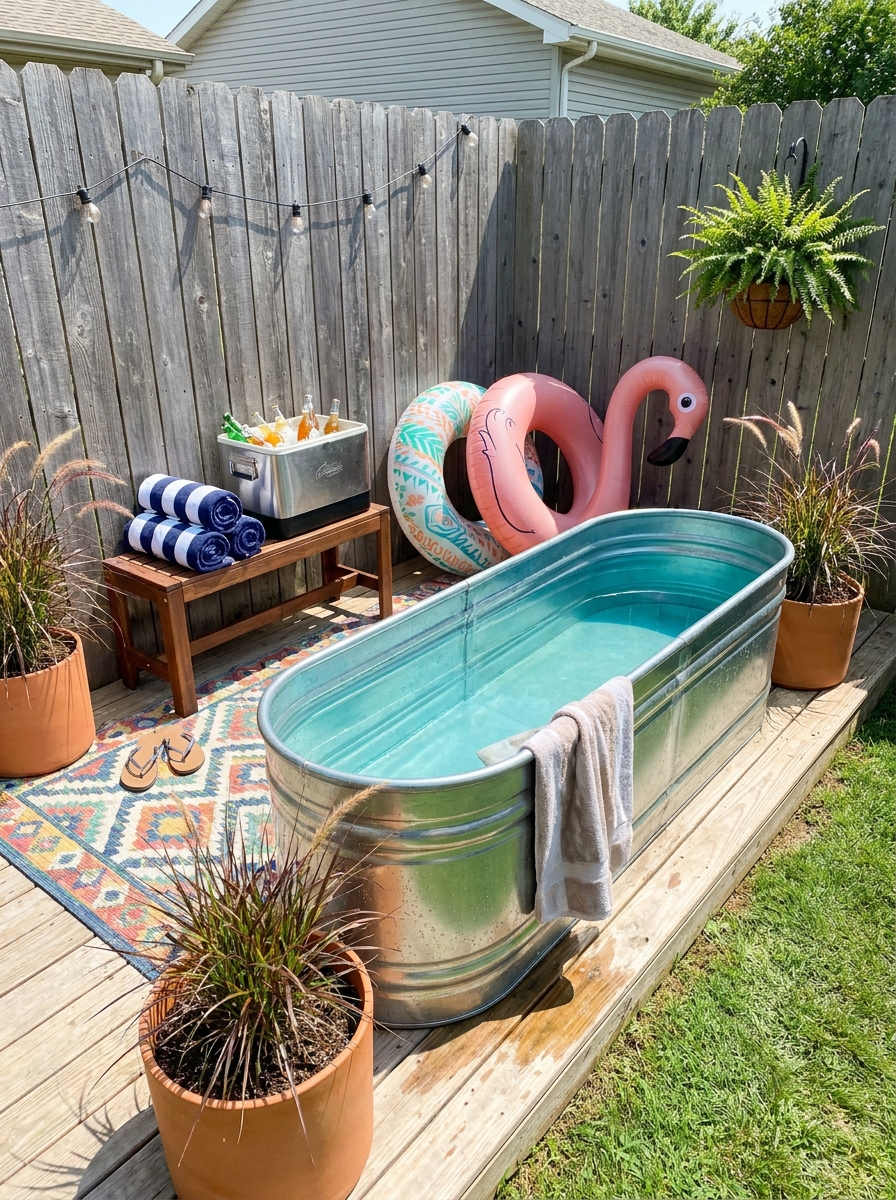
Okay, hear me out — those long, narrow cattle troughs aren’t just for livestock anymore. I’m talking about the sleek galvanized metal ones that are basically ready-made lap pools for compact spaces. They’re ridiculously affordable (like $300-$500), and if you’ve got a skinny side yard or a narrow patio, they’re perfect for cooling off with a few strokes. I love how industrial-chic they look without even trying. Drop one onto a simple gravel bed or wooden platform, add some potted grasses around the edges, and suddenly you’ve got this modern, minimalist pool situation that feels very intentional. You’re not swimming laps like an Olympian, but you can totally float, splash, and cool down on a scorching afternoon. The best part? These troughs are built tough. They’re designed to handle weather and weight, so you don’t need to baby them. Just fill, chill, and enjoy. It’s the kind of pool that makes your neighbors do a double-take — in the best way possible.
Pro Tip: Position your trough pool along a fence line to maximize your yard space and create a sleek, built-in look without any actual construction.
Recessed Trampoline Pools with a Clever Twist
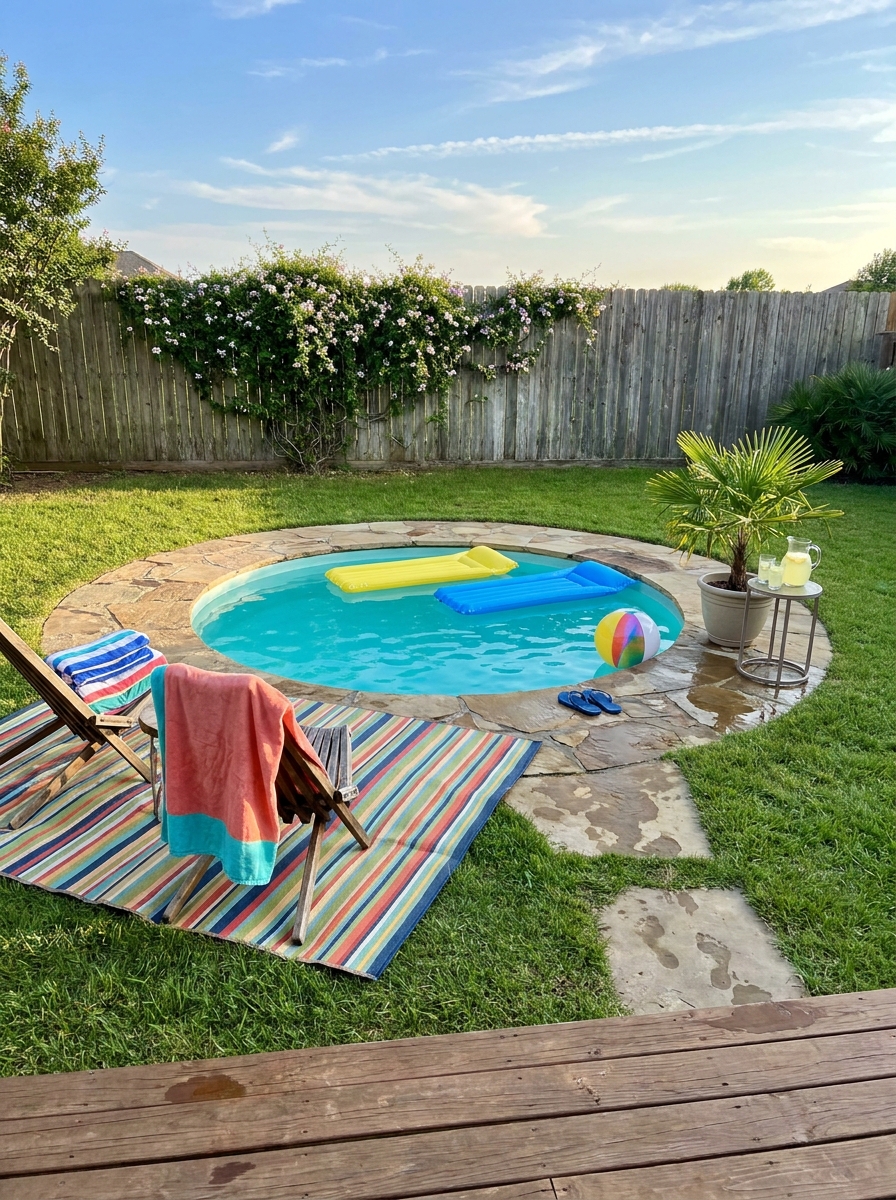
This one’s genius and kind of unexpected — take an old trampoline frame, dig a shallow pit, and line it with a heavy-duty pool liner. Boom, you’ve got a sunken circular pool that looks custom-built but costs a fraction of the price. I stumbled across this idea on Pinterest and couldn’t stop thinking about how smart it is. The circular shape feels really organic and fun, especially if you surround it with pavers or deck tiles. It’s deep enough to splash around and cool off, but shallow enough that it’s safe for kids and doesn’t require permits in most areas. Plus, the recessed design makes it feel more integrated into your yard instead of just plopped on top of the grass. You can DIY this in a weekend if you’re handy with basic landscaping. The trampoline frame gives you structure, the liner holds the water, and you’re basically creating a mini in-ground pool without the massive price tag. It’s creative, it’s budget-friendly, and it looks way more expensive than it actually is.
Pro Tip: Use sand as your base layer before adding the liner — it cushions the bottom, prevents punctures, and makes the pool floor more comfortable underfoot.
Cinder Block Plunge Pools with Desert Modern Style
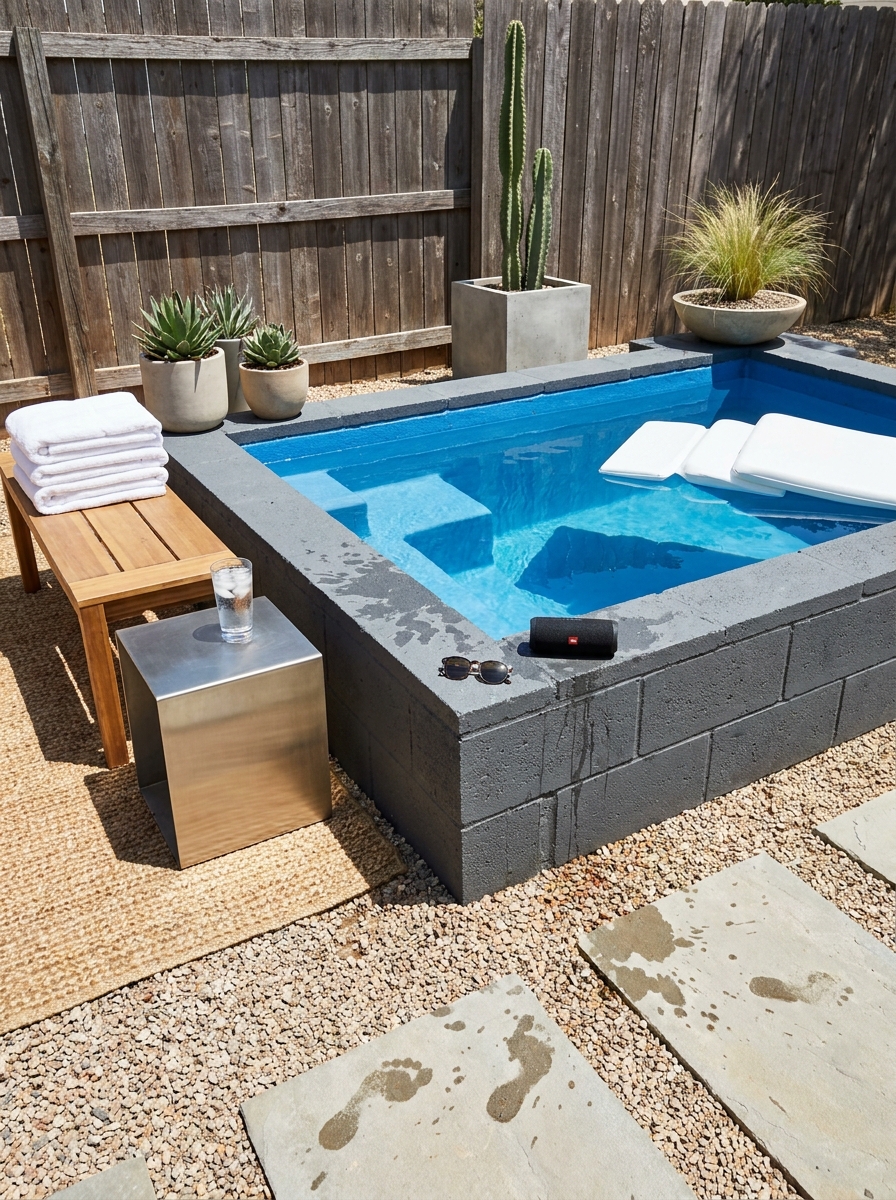
If you’re even a little bit handy, cinder blocks are your secret weapon for building a small plunge pool that looks seriously architectural. Stack them, mortar them together, line the inside with waterproof coating or a vinyl liner, and you’ve got a custom pool for under $1,000. I’m obsessed with how modern and clean they look, especially with a coat of white or charcoal paint on the outside. The beauty of cinder blocks is that you control the size and shape completely. Want a square? Done. Prefer a long rectangle? Easy. You can even build in bench seating along one side if you’re feeling ambitious. It’s like adult Legos but way more satisfying because you end up with a functioning pool at the end. This style screams desert modern or minimalist chic, especially if you keep the landscaping simple — think gravel, succulents, and maybe a statement cactus or two. It’s the kind of pool that makes people ask who your contractor was, and you get to smugly say you built it yourself.
Pro Tip: Seal the inside of your cinder block pool with a marine-grade waterproof coating before adding a liner — it creates a double barrier against leaks and makes your pool last way longer.
IBC Tote Pools for the Ultimate Upcycle Win
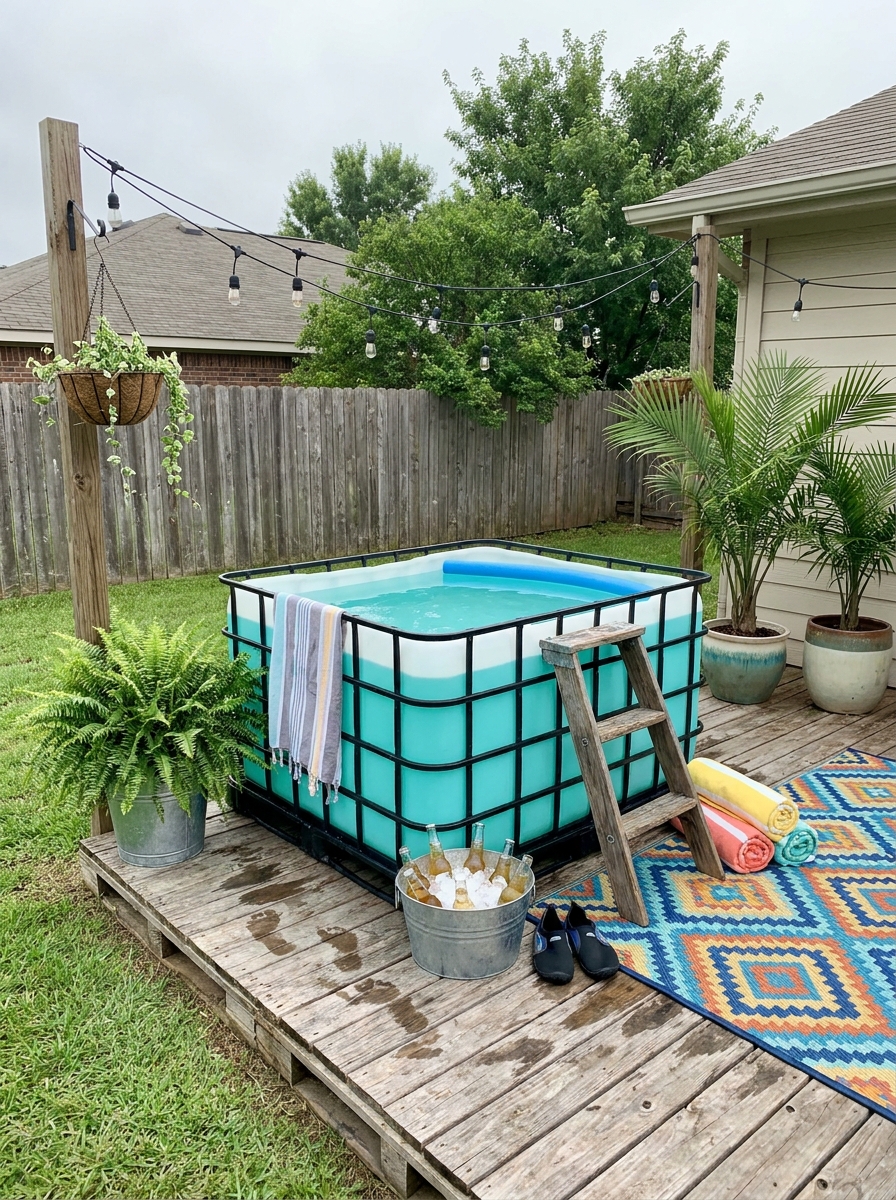
IBC totes — those big industrial water containers — are showing up in backyards everywhere as the ultimate upcycled pool hack. You can snag them used for $50-$150, cut out one side, reinforce the edges, and boom, you’ve got a quirky, functional pool that holds hundreds of gallons. They’re basically stock tanks’ cooler, more industrial cousin. I love how utilitarian they look in a really cool way. The metal cage gives them structure and a distinct vibe that works with modern, industrial, or even farmhouse aesthetics. Paint the plastic insert a fun color, leave the cage raw or spray it black, and suddenly you’ve got a conversation-starter pool that cost you almost nothing. These are especially great if you’re renting or don’t want anything permanent. They’re portable, easy to set up, and you can drain and move them whenever you want. Plus, there’s something deeply satisfying about turning something industrial into your personal summer oasis. It’s resourceful, it’s creative, and it’s so budget-friendly it almost feels like cheating.
Pro Tip: Line the cut edge of your IBC tote with foam pipe insulation before capping it with trim — it prevents sharp edges and makes the pool safer and more comfortable to lean against.
Inflatable Hot Tub Pools for Year-Round Chill
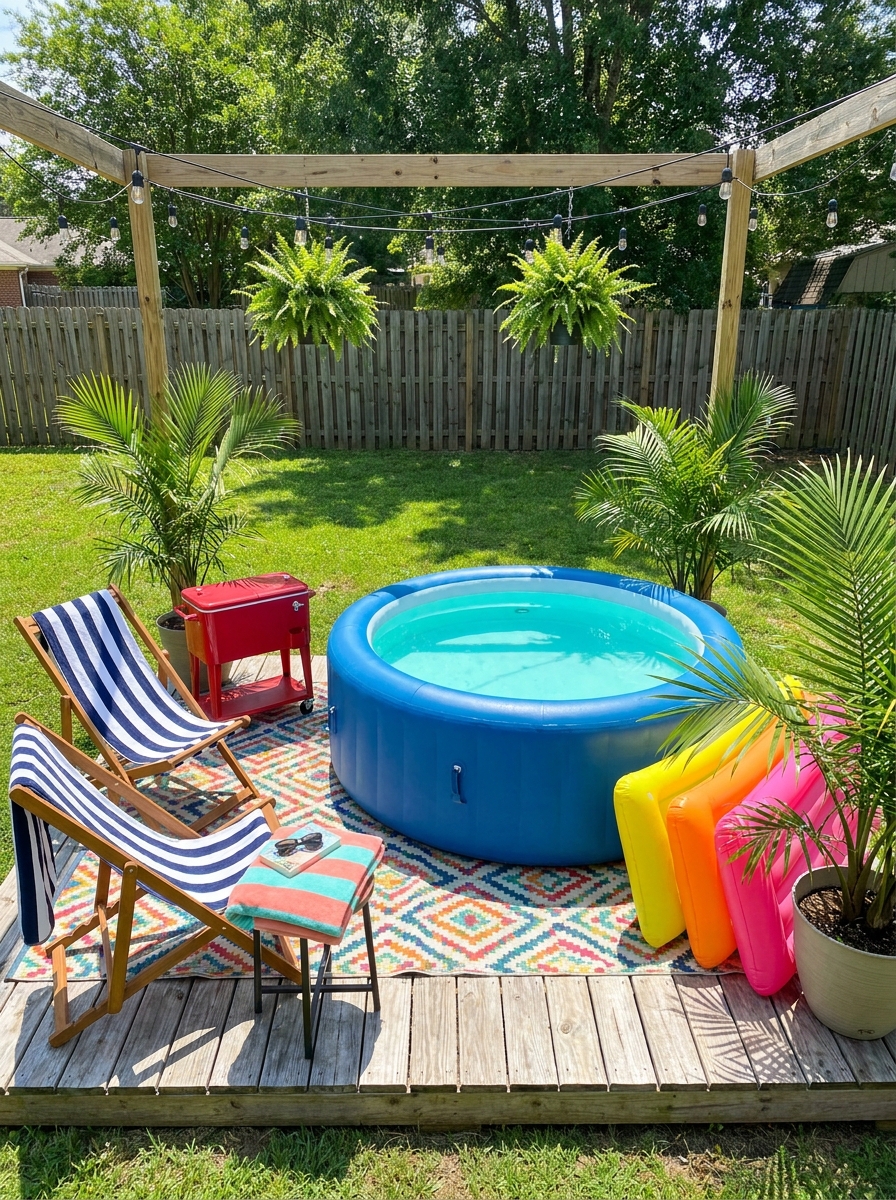
Okay, hear me out—those plug-in inflatable hot tubs? They’re not just for winter anymore. Fill one with cold water in summer, and boom, you’ve got an instant pool that doubles as a spa when the weather cools. The best part? They’re portable, affordable, and crazy easy to set up. No digging, no permits, just plug and play. I love how these work for renters or anyone who might move. You literally deflate it, pack it up, and take it with you. Plus, the built-in benches make them perfect for lounging with a drink in hand. Add some floating LED lights and a few tropical plants around the perimeter, and suddenly it feels like a legit backyard resort. Some models even have bubble jets you can turn off to save energy—genius for summer use. The temperature control means you can keep the water refreshing without constantly adding ice. And when fall rolls around? Just heat it up and you’ve got a cozy hot tub again.
Pro Tip: Use a solar cover between uses to keep debris out and maintain water temperature—it’ll cut your heating costs in half when you switch to hot tub mode in cooler months.
Half-Buried Kiddie Pool Oasis with Stone Surround
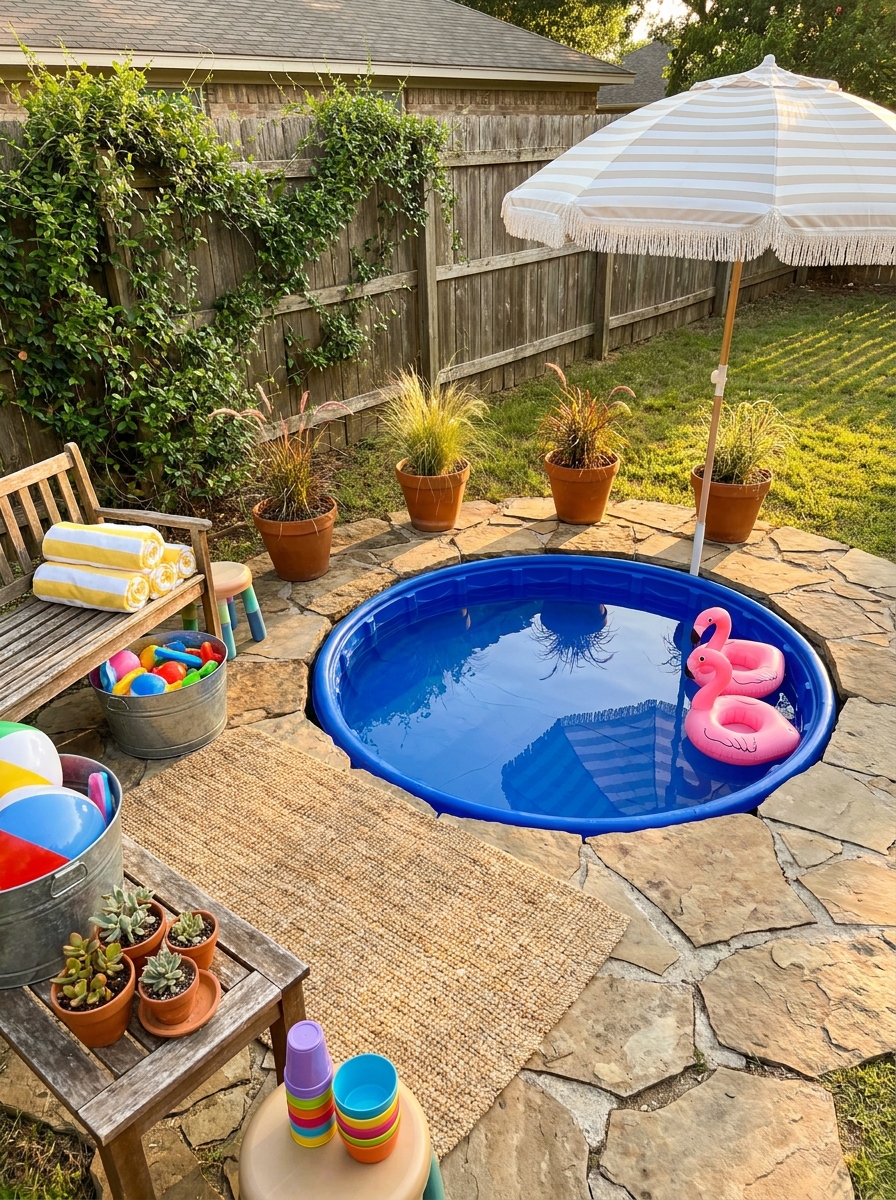
This trick makes a basic kiddie pool look like it belongs in a design magazine. Dig a shallow hole—just deep enough to sink the pool halfway into the ground—then surround it with flat stones or pavers. Suddenly that $30 plastic pool looks like a custom water feature. The sunken effect is everything. The stone surround gives you a place to sit, set drinks, or just admire your handiwork. I’ve seen people use flagstone, river rocks, even reclaimed bricks—whatever matches your yard’s vibe. The key is making it look intentional, not like you just plopped a kiddie pool on the lawn. Add some low-growing plants between the stones and maybe a small fountain feature, and people will genuinely ask who did your landscaping. This works especially well in sloped yards where you can dig into a hillside. The drainage is natural, and it creates this cool terraced effect. Plus, being partially underground keeps the water cooler on scorching days.
Pro Tip: Line the hole with landscape fabric before setting the pool in—it prevents weeds from growing up around the edges and makes the whole setup look cleaner and more permanent.
Rain Catchment Pools That Water Your Garden Too
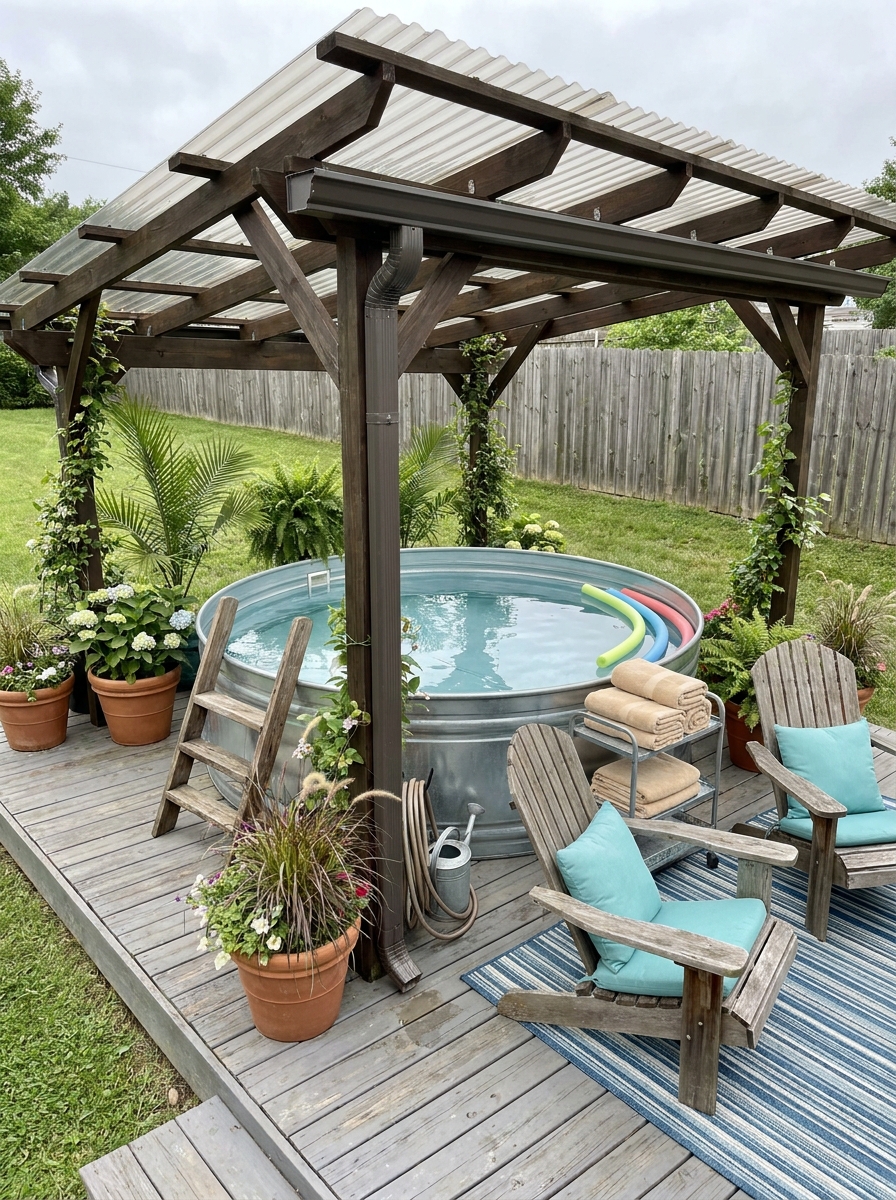
This is next-level genius for the eco-conscious crowd. Set up a shallow pool system that collects rainwater from your roof or pergola, then use that water for swimming and eventually for watering your garden. It’s like a stock tank pool meets a rain barrel, and I’m obsessed. You’re basically getting free pool water while being a sustainability rockstar. The setup is surprisingly simple—gutters funnel rainwater into a large stock tank or similar container. Add a basic filter system (you can DIY one with sand and gravel layers), and you’ve got clean water for splashing around. When you’re done swimming or want to refresh the water, drain it into your garden beds or use it to water plants. Nothing goes to waste. I love this for drought-prone areas where water bills make traditional pools feel guilty. Plus, there’s something deeply satisfying about swimming in water that fell from the sky. It feels primal and resourceful in the best way.
Pro Tip: Install a simple first-flush diverter on your gutter system—it automatically discards the first dirty runoff from each rain, so only clean water makes it into your pool.
Sandbag Berm Pools for Temporary Summer Fun
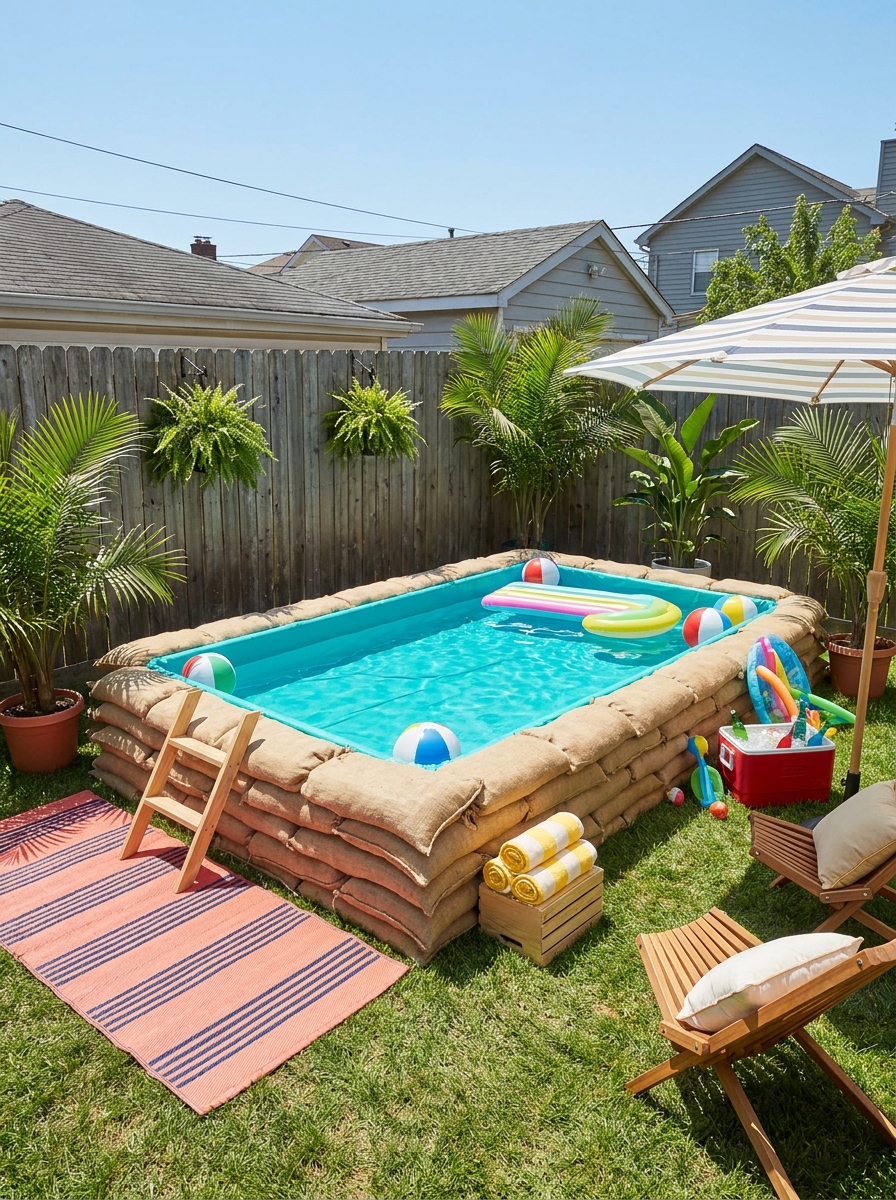
This is perfect for anyone who wants a pool right now but isn’t ready to commit to anything permanent. Use heavy-duty sandbags or water-filled barriers (the kind used for flood control) to create a temporary berm, then line the interior with a large pool liner. Fill it up, and you’ve got an instant pool that you can completely dismantle when summer ends. Zero construction required. The genius part is how customizable this is. Make it any shape or size your yard allows—rectangular, kidney-shaped, whatever. The sandbags are surprisingly sturdy when stacked properly, and they give you enough height for a decent swim without any excavation. I’ve seen people make these 3-4 feet deep, which is perfect for cooling off on brutal days. When fall arrives, drain it, remove the liner, and stack the sandbags in your garage. Next summer, set it up again in a totally different spot if you want. It’s like having a pop-up pool that adapts to your life.
Pro Tip: Cover the sandbags with outdoor fabric or burlap before adding the liner—it protects the liner from punctures and makes the whole thing look intentional instead of industrial.
Galvanized Water Trough Cocktail Pools with Deck Chairs
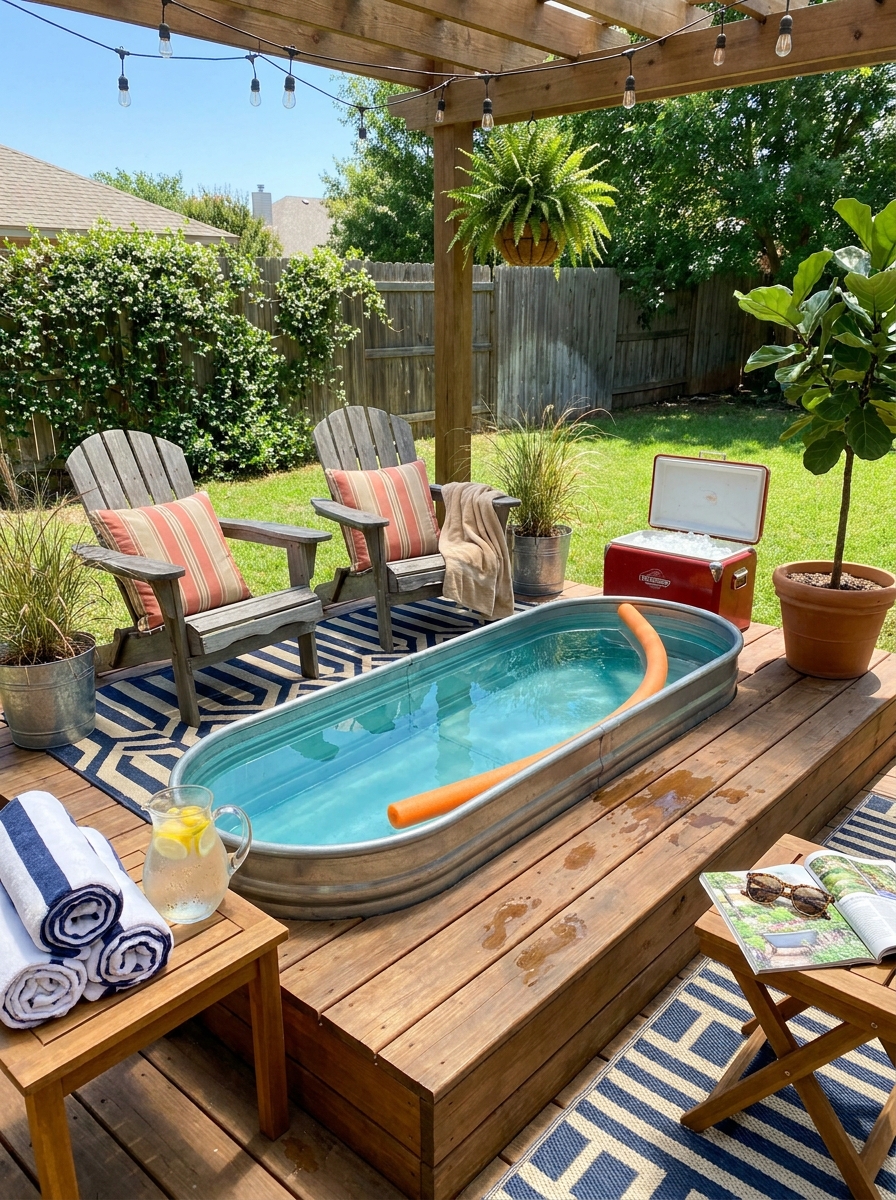
Okay, hear me out — those long, skinny galvanized troughs farmers use? They make the most unexpectedly chic little cocktail pools. I’m talking about the rectangular ones, maybe 8 feet long and just wide enough to sit in with your legs stretched out. They’re deep enough to keep you cool, shallow enough to feel safe, and they look insanely good lined up on a simple wood deck. What I love is how you can style them. Add a couple of weathered Adirondack chairs right next to the edge, string up some café lights overhead, and suddenly your backyard feels like a boutique hotel in the desert. The galvanized metal has this industrial-farmhouse vibe that works with literally everything — boho, modern, rustic, you name it. These troughs are stupid affordable at farm supply stores, and they last forever. Plus, they’re narrow enough to tuck along a fence line or fit in that weird skinny side yard you never knew what to do with. It’s like a lap pool’s cool younger sibling.
Pro Tip: Paint the inside with pool-safe epoxy paint in a soft sage green or matte black for a custom look that hides any water discoloration and makes the whole setup feel way more intentional and expensive.
Your Backyard Oasis Is Closer Than You Think
Here’s what I love most about these homemade pool ideas — they prove that you don’t need a massive budget or a huge backyard to create something really special. Whether you go for a sleek stock tank, a natural swimming pond, or something in between, you’re creating more than just a place to cool off. You’re building memories. Those summer afternoons with friends, the evening floats under string lights, the spontaneous dips after yard work — that’s what it’s really about. And honestly? Some of the most beautiful pools I’ve seen have been the DIY ones, because they have personality and creativity that cookie-cutter installations just can’t match. So pick the option that fits your space, your budget, and your vibe. Start with something simple if you’re nervous. You can always upgrade or change it next summer. The hardest part is just getting started. Trust me, once you take that first plunge in your own backyard pool — the one you created yourself — you’ll wonder why you waited so long. Now go make some summer magic happen.
Frequently Asked Questions
How much does it really cost to make a homemade pool in your backyard?
The cost ranges wildly depending on what you choose. A large inflatable kiddie pool runs $30-100, while a stock tank pool costs $400-700. If you’re building a small natural swimming pond yourself, expect $500-2000 in materials. Above-ground pools with DIY pallet decking fall somewhere in the middle at $300-800. The beauty of DIY is that you can start small and affordable, then upgrade over time as your budget allows.
Do I need a permit for a stock tank pool or homemade pool?
It depends on your local regulations and the pool’s permanence. Most areas don’t require permits for temporary above-ground pools under a certain size (often 24 inches deep or portable structures). Stock tanks and kiddie pools usually fall into this category. However, if you’re digging into the ground or building permanent structures, you’ll likely need permits. Always check with your local building department before starting — rules vary significantly by city and county.
How do you keep a stock tank pool or DIY pool clean without spending a fortune?
The key is circulation and filtration. For stock tanks, invest in a small pool pump and filter system (around $100-200) to keep water moving. Add a skimmer to remove debris daily. Use pool test strips to monitor chemical balance and add chlorine or natural alternatives as needed. For kiddie pools, the easiest method is actually draining and refilling weekly since they’re small. Natural ponds use plants for filtration, which costs less long-term but requires understanding the ecosystem balance.
Can you leave a homemade pool up all summer or do you need to take it down?
Stock tanks and above-ground pools can absolutely stay up all summer and even longer with proper maintenance. They’re designed to withstand outdoor conditions. Large inflatable pools can stay up for the season too, though you’ll want to check regularly for leaks or wear. Kiddie pools have shorter lifespans and may need replacing mid-season. The key is keeping water circulating, maintaining chemical balance, and covering the pool when not in use to prevent debris and algae.
What’s the easiest DIY pool option for renters or people who move frequently?
Inflatable kiddie pools are your best bet for maximum portability — they deflate, fold up, and can move with you anywhere. Stock tanks are also surprisingly portable since they don’t require installation, though they’re heavier to transport. Avoid anything that requires digging or permanent structures. Look for options that sit on top of the ground and can be drained, disassembled, and relocated in a day or two.