

You know that moment when you step into your backyard, side yard, or even that awkward sunny strip by the fence and think, I should be growing way more here than a sad pot of basil? I’ve been there. A lot of homeowners have the same problem: not enough room, too many ideas, and a Pinterest board full of gorgeous kitchen gardens that somehow look both dreamy and wildly expensive. The good news is you do not need a mini farm to grow a surprising amount of food. You need a smarter layout, better bed choices, and a few tricks that make every square foot pull its weight. Raised beds do that beautifully. They keep things tidy, productive, easier on your back, and honestly a lot prettier than random rows scratched into the lawn. What follows is a full set of practical raised bed home garden ideas you can actually use, whether you’ve got a compact suburban yard, a narrow side garden, or a tiny patio begging for purpose. Here’s what actually works.
Build a Simple Grid of Narrow Beds You Can Reach From Both Sides
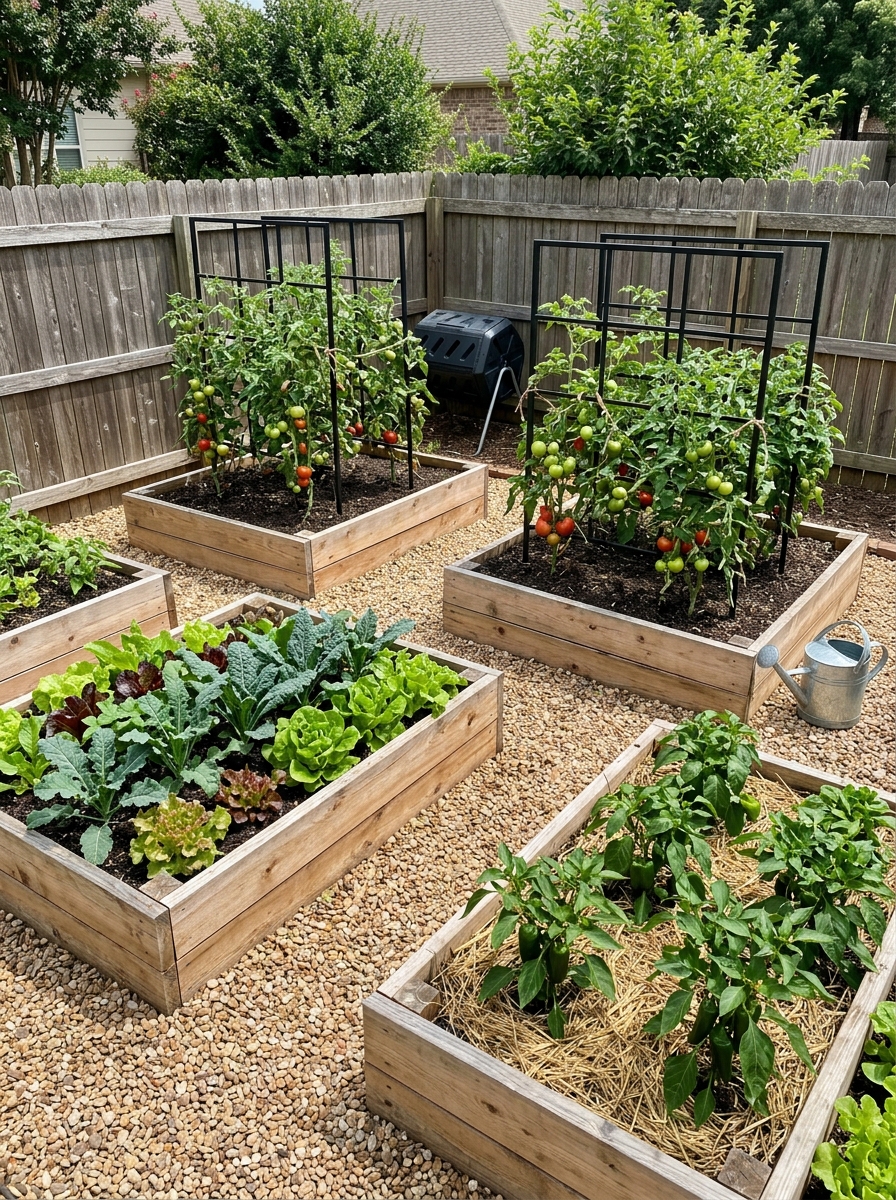
If you want to grow more without turning your yard into a maze, start with bed width. This sounds boring until you realize wide beds waste space because you can’t reach the middle without stepping in and compacting the soil. A better setup is a tidy grid of narrow raised beds, usually 3 to 4 feet wide, with just enough path space to move comfortably. You end up using nearly every inch for growing instead of awkward empty gaps. Picture walking out with your coffee, gravel crunching under your shoes, and seeing neat rows of greens, herbs, and trellised tomatoes all within arm’s reach. That kind of layout makes watering, harvesting, and weeding feel manageable instead of like a weekend punishment. Your garden also looks intentional, which matters more than people admit. From there, you can assign each bed a job: salad bed, tomato bed, herb bed, root crop bed. That little bit of structure helps you plant densely and rotate crops without confusion. It’s the kind of setup that keeps giving all season, especially when space is tight and every bed needs to earn its keep.
Pro Tip: Keep paths between beds at 18 to 24 inches wide for foot traffic, or 30 inches if you need to fit a wheelbarrow.
Use One Tall Trellis Bed as the Anchor of a Small Backyard
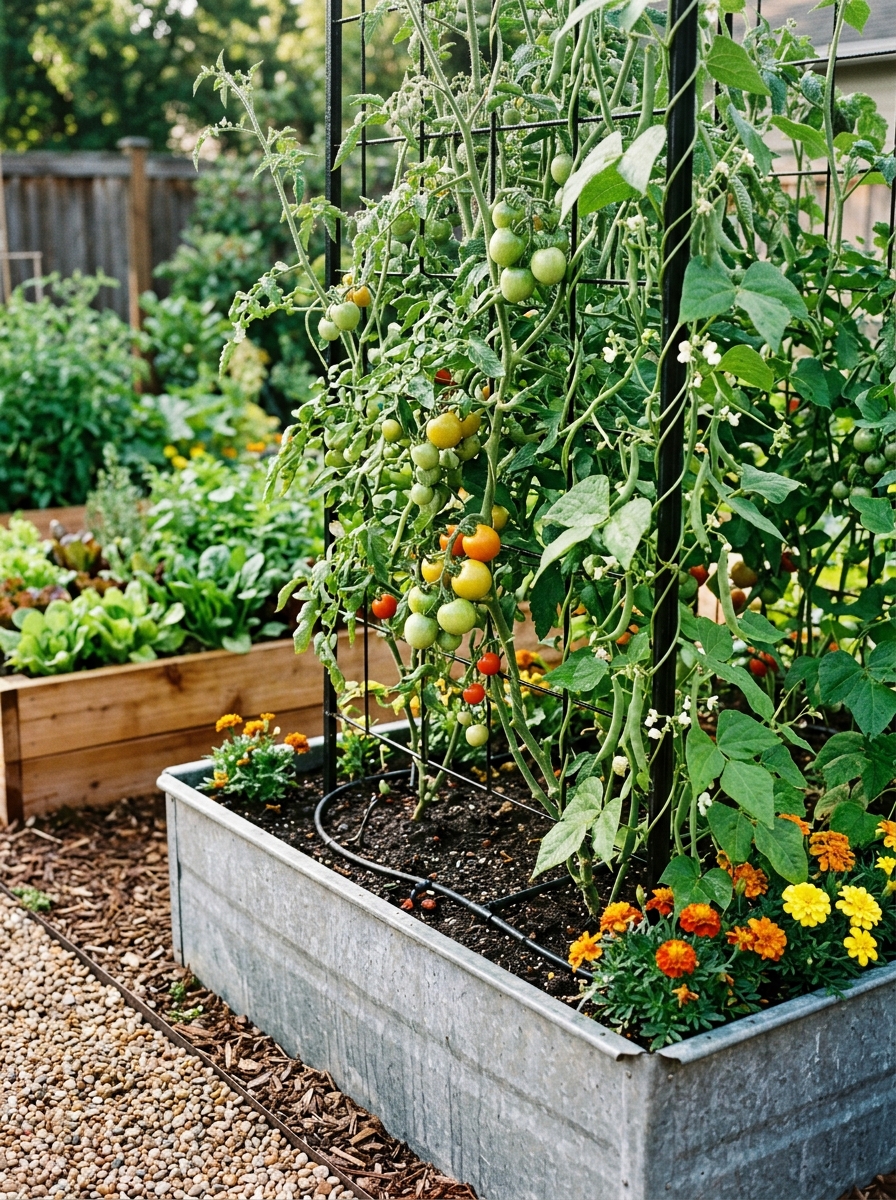
I’m a big fan of giving one bed the starring role. In a small yard, that usually means a tall trellis bed loaded with crops that want to climb. Tomatoes, cucumbers, pole beans, even small melons if you’re feeling ambitious. Instead of sprawling across precious ground, those plants head upward, and suddenly your little garden starts producing like it has something to prove. That vertical wall of growth also makes the whole space feel lush fast. You get the scent of tomato leaves in the heat, the flicker of vines moving in the breeze, and that satisfying sight of fruit hanging right at eye level. It’s practical, but it also has real garden charm. A plain yard starts to feel like a tiny kitchen garden with personality. Once your anchor bed is in place, the rest of the design gets easier. Shorter crops can fill the nearby beds without being shaded too heavily if you orient the trellis well. It creates a focal point, saves ground space, and gives your garden the kind of height that makes everything look fuller and more finished.
Pro Tip: Place your tallest trellis bed on the north or west side of the garden so it doesn’t cast too much shade over lower crops.
Create a Salad Bed Near the Back Door for Fast Daily Harvests
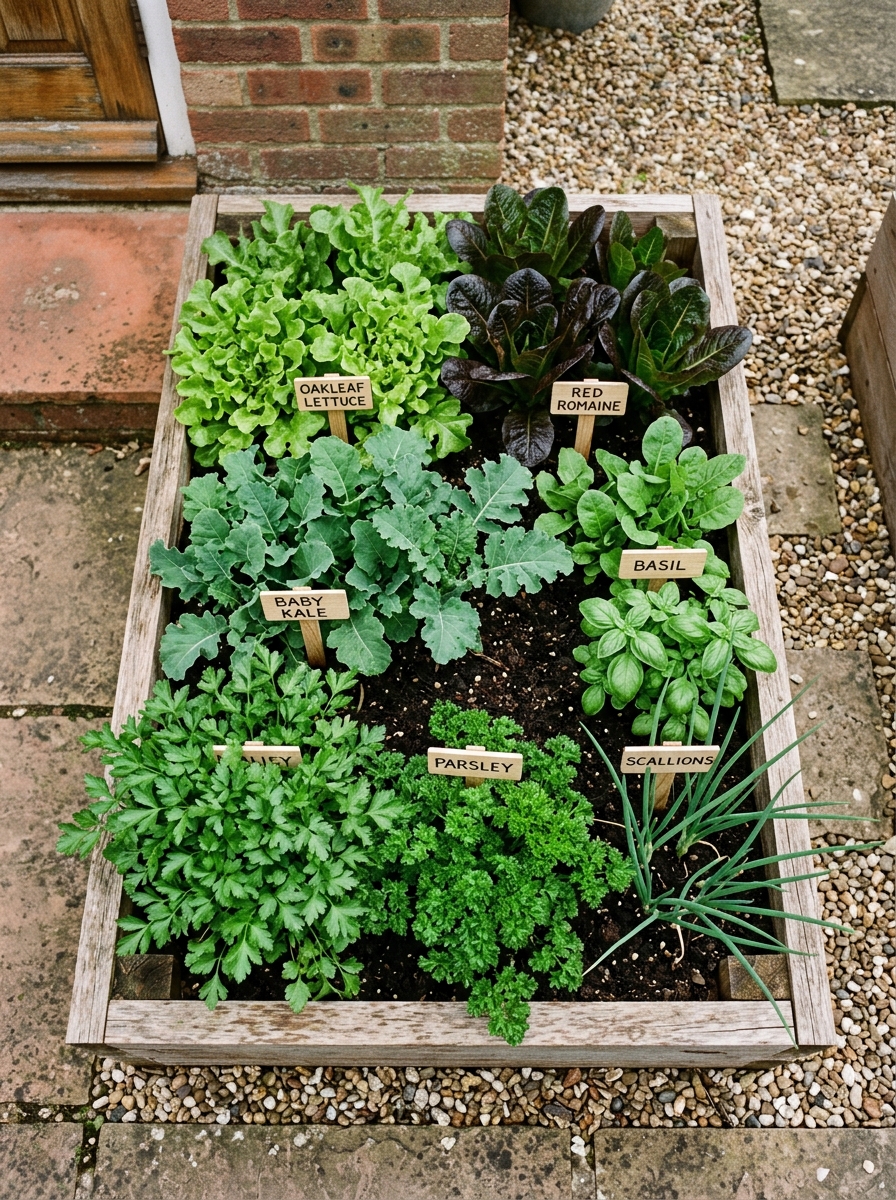
One of the smartest things you can do is place your quickest-use crops closest to the house. A dedicated salad bed near the back door sounds almost too simple, but it changes how often you actually harvest. When lettuce, arugula, spinach, baby kale, and herbs are just a few steps away, you snip more often, waste less, and somehow start feeling like the sort of person who tosses together lunch from the yard. An overhead look at a dense salad bed would probably surprise you. There’s not much bare soil if you plant it right. Soft green oakleaf lettuce tucked beside frilly parsley, red romaine edging into basil, a row of scallions filling a skinny gap. It’s efficient, pretty, and easy to keep productive because you’re in it constantly. That regular attention matters. You spot slugs sooner, water before things wilt, and reseed small patches before the bed ever looks tired. In a compact space, convenience is part of productivity. If a crop is close enough to grab while dinner’s on the stove, there’s a much better chance it earns its square footage all season long.
Pro Tip: Reseed a 12-inch strip of salad greens every 10 to 14 days so your harvest stays steady instead of peaking all at once.
Line Beds Along a Fence to Turn a Narrow Side Yard Into a Grow Zone
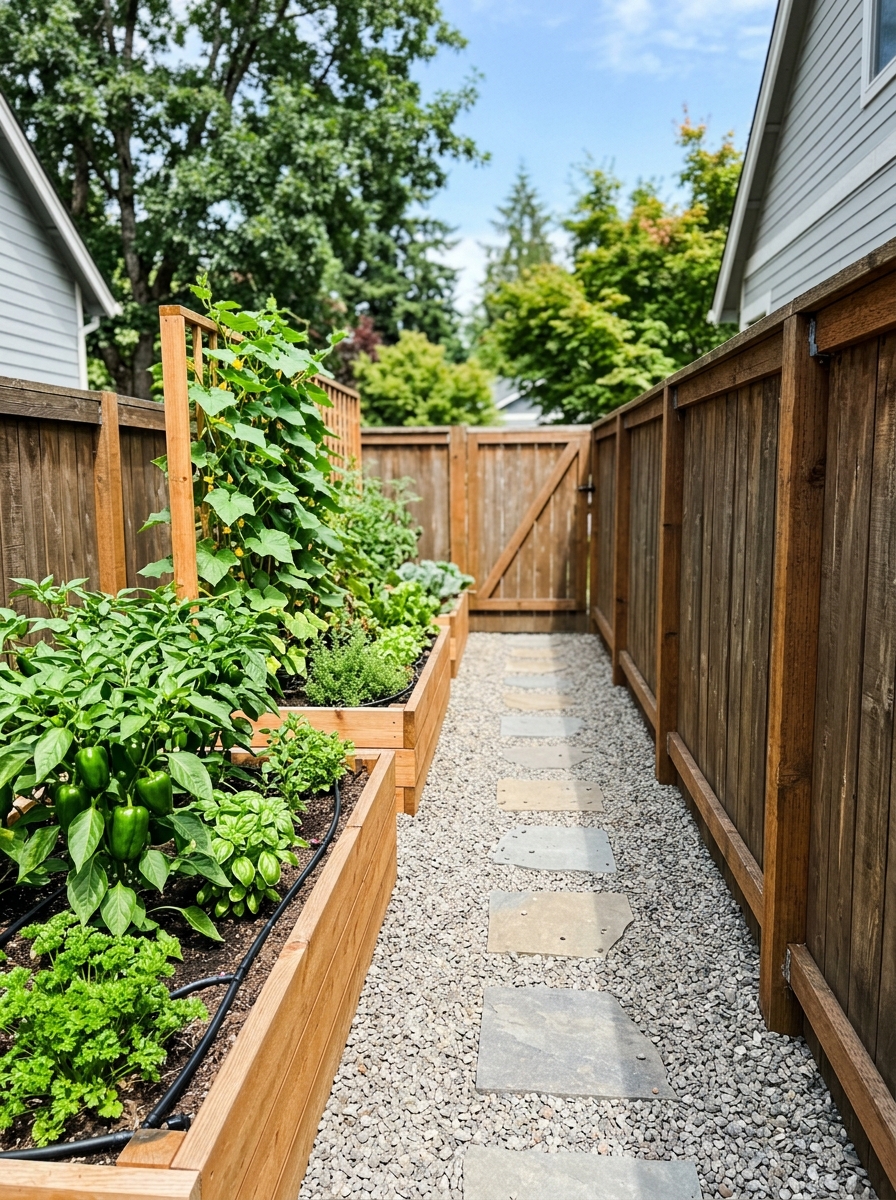
A narrow side yard is one of those spaces people ignore for years, mostly because it feels awkward and a little dull. But if it gets decent sun, it can become a ridiculously productive strip. Long raised beds set along the fence make use of that forgotten footprint without eating into the main backyard. Suddenly the place where you stored a broken hose becomes your pepper-and-herb corridor. The trick is keeping the layout lean. One or two long beds, a narrow but stable path, and vertical supports where needed. That’s enough. The fence itself helps define the space, and in some cases it can support hooks, espalier wires, or a little shelf for tools. There’s something satisfying about walking that skinny path and brushing past rosemary, basil, and compact peppers while the warm boards hold the day’s heat. Because the area is constrained, every plant choice matters more. Stick with crops that stay upright, produce heavily, and don’t flop everywhere. The result feels efficient instead of cramped. And once that side yard starts producing dinner ingredients, you’ll wonder why you ever treated it like dead space in the first place.
Pro Tip: Use long beds no wider than 2.5 to 3 feet in side yards so you can still reach the back row without awkward stretching.
Mix Herbs and Flowers Into Edges to Make Beds Work Harder
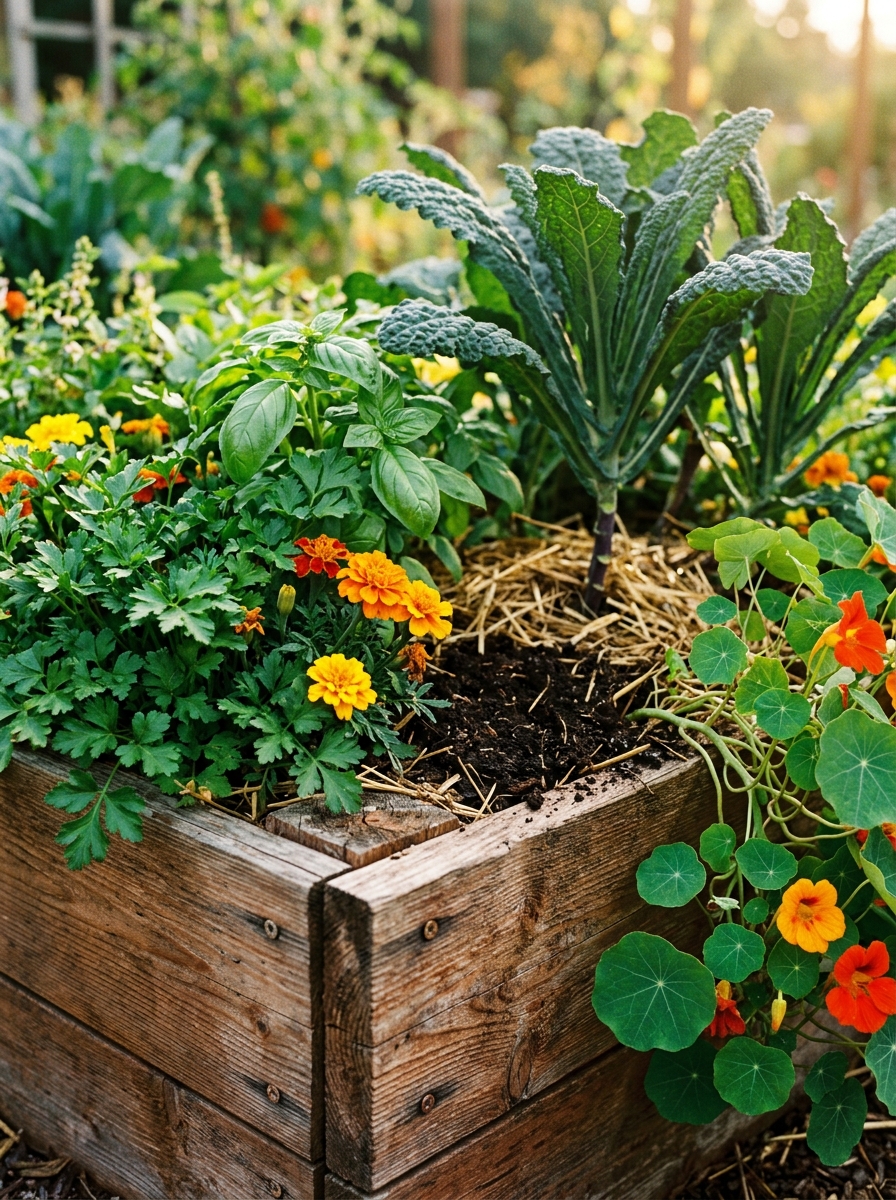
I’ll be honest, I used to treat bed edges like leftover space. Big mistake. Those outer inches are prime real estate, especially in small gardens. Tucking in basil, chives, thyme, parsley, marigolds, or nasturtiums around the edges gives you more harvest, more pollinator activity, and a softer look that keeps raised beds from feeling boxy and severe. There’s also a practical side to this that I love. Herbs near the edge are easy to snip while you walk by, and flowers pull in beneficial insects that help the whole garden function better. Plus, nasturtiums tumbling slightly over cedar boards or marigolds glowing against dark soil just make the space feel alive. A productive garden should be useful, yes, but it should also make you happy when you step outside barefoot after a summer rain. This edge planting idea works especially well when your main crops are bigger or more upright. Tomatoes and kale handle the center, while the margins carry all that extra flavor and color. It’s a simple layering trick, but in a tight footprint, those little additions add up fast and make the whole garden feel fuller.
Pro Tip: Plant basil or parsley 6 inches from the bed edge so foliage can spill slightly without shading shorter seedlings behind it.
Choose Deep Beds for Root Crops and Better Summer Moisture Control
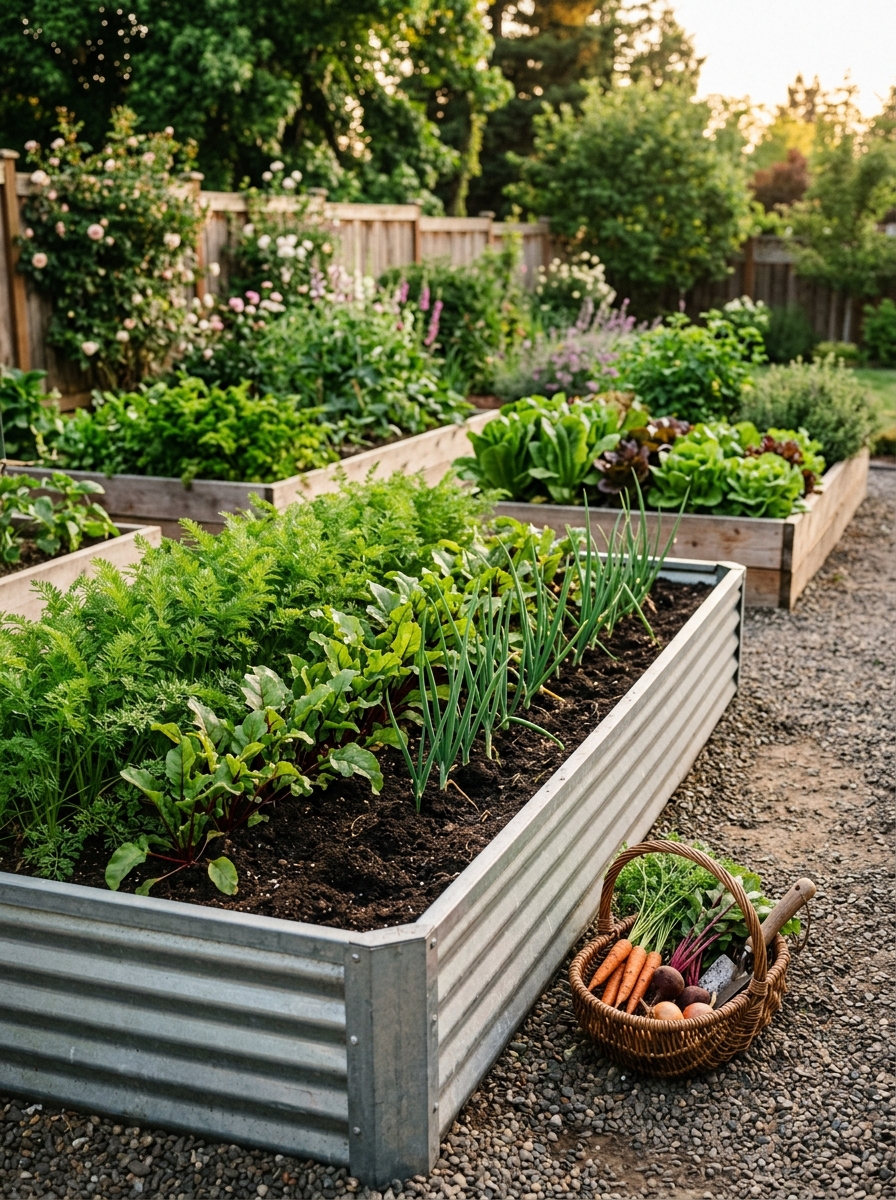
Not every raised bed needs to be extra deep, but having at least one deeper bed can solve a lot of problems in a small garden. Carrots, beets, onions, potatoes, and even long-rooted herbs appreciate that extra room. Deep beds also hold moisture more evenly in hot weather, which means less panic-watering when July starts acting rude. There’s a feel to a well-filled deep bed that gardeners know immediately. The soil stays loose, dark, and almost springy under your fingers instead of dense and stubborn. Roots slide down more easily, and harvests come out straighter, cleaner, and less forked. If you’ve ever pulled up a carrot that looked like it lost a bar fight, you know what I mean. This kind of bed is especially helpful if your native soil is rocky or compacted. Rather than spending years trying to fix the whole yard, you create one generous root zone and let it do the heavy lifting. That gives you a reliable place for root crops, steadier moisture for summer growth, and another way to make a small footprint produce beyond what it looks capable of.
Pro Tip: For carrots and beets, aim for at least 12 to 18 inches of loose soil depth and avoid mixing in chunky wood bits that can cause forked roots.
Stack Productivity With an Arch Trellis Between Two Beds
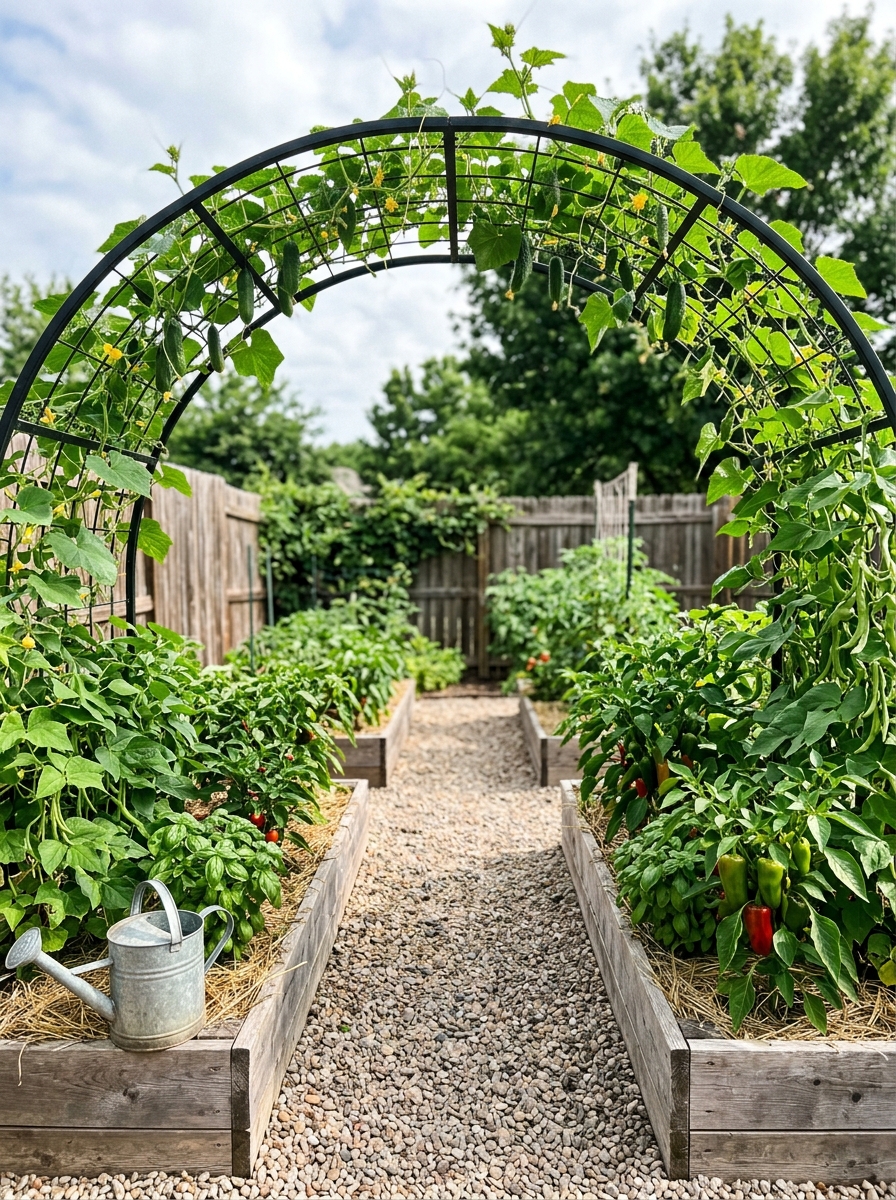
If you really want to squeeze more out of a compact layout, use the space above the path. An arch trellis spanning between two raised beds turns empty air into growing room, and it looks charming without being fussy. Pole beans, cucumbers, and small-fruited squash can climb overhead while the beds below keep producing greens, herbs, or peppers. It’s a smart little double shift. Walking under a leafy arch with dappled light flickering through the vines feels far more magical than a practical food garden has any right to feel. And yet it’s still doing real work. You get shade in the path, easier harvesting at eye level, and a stronger sense of structure in the garden. That matters in a small yard, where vertical elements help the space feel layered instead of flat. Because the path is already there, you’re not sacrificing growing area to add this feature. You’re just making that corridor useful. Pair it with sturdy beds on either side and the whole setup starts reading like a thoughtful garden room. It’s one of those ideas that looks Pinterest-pretty but actually earns its place season after season.
Pro Tip: Anchor arch trellises directly to the bed frames or with rebar at each side so they stay steady when vines get heavy after rain.
Use Corner Beds to Turn an Awkward Patio Into an Edible Courtyard
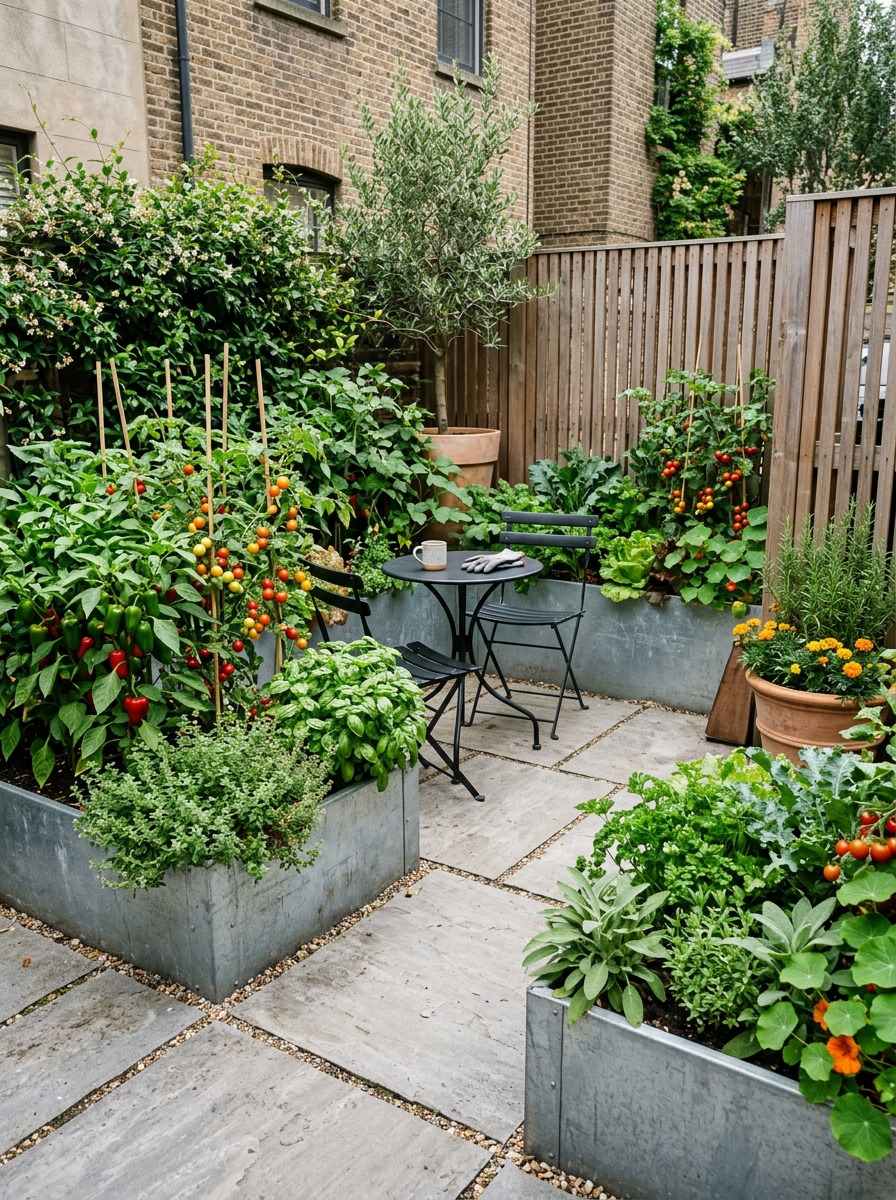
Patios can feel like all hardscape and no life if you don’t soften them with planting. One of the easiest ways to fix that is with raised corner beds or L-shaped planters that frame the space without swallowing it. You still keep room for a chair or grill, but now you’ve got herbs, peppers, dwarf tomatoes, and a little salad patch right where you actually spend time. I like this approach because it makes gardening feel woven into daily life instead of tucked away in some back corner you forget to visit. You smell basil when the sun warms the leaves. You brush past thyme on the way to sit down. Even a small paved courtyard starts to feel softer and more generous once there’s green growth rising from clean-lined beds. The key is choosing crops that look good and produce steadily. Compact varieties really shine here, especially if the beds are visible from the kitchen or back door. Keep the palette simple, repeat materials, and use vertical supports sparingly so the area still feels open. It’s practical, but it also gives a plain patio that fresh, lived-in look people are always trying to fake with expensive decor.
Pro Tip: Choose dwarf tomato and compact pepper varieties for patio beds so plants stay tidy and don’t crowd seating or walkways.
Add Drip Irrigation Early So Dense Planting Stays Easy
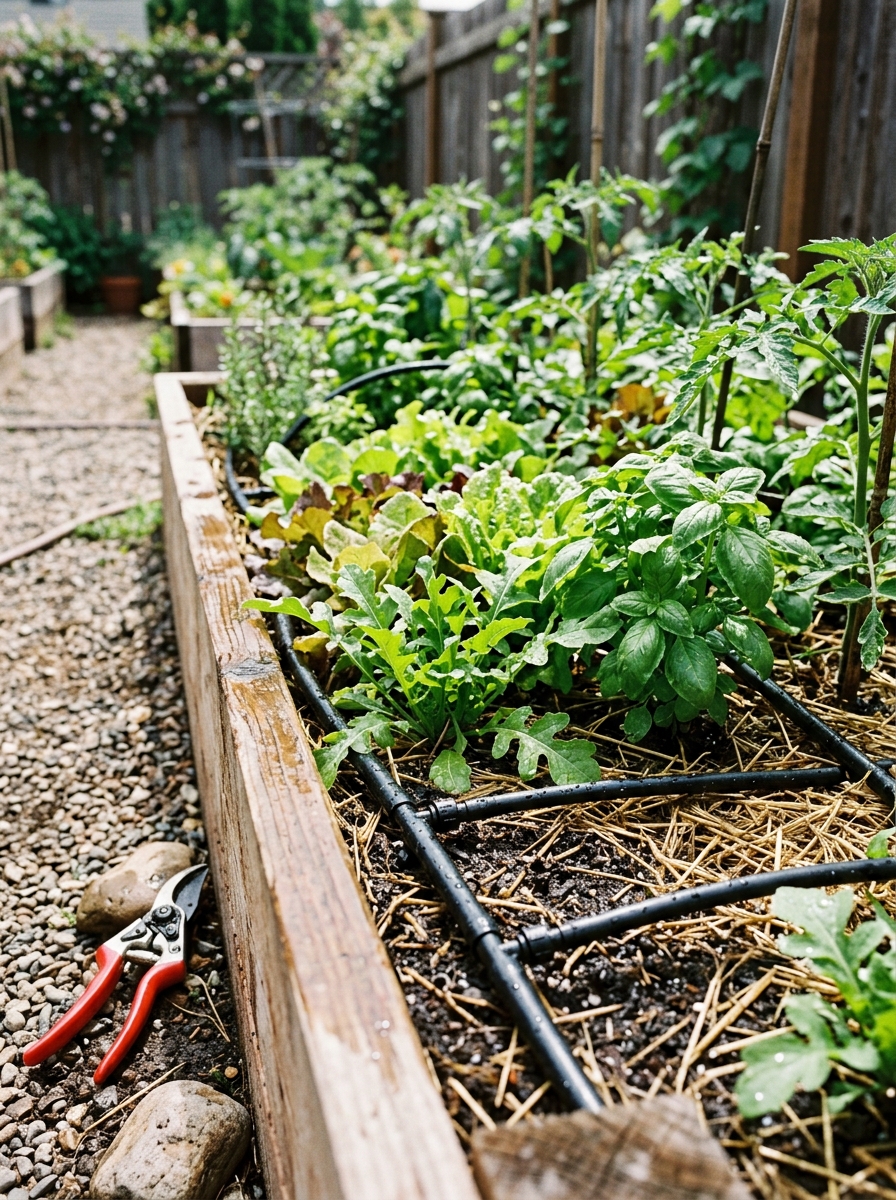
Dense planting is fantastic for small-space productivity, but it gets annoying fast if watering becomes a daily wrestling match with a hose. That’s why I always suggest installing drip irrigation sooner than you think you need it. Once your beds are full of tomatoes, lettuce, herbs, and flowers tucked close together, weaving a hose around everything feels like trying not to knock over a display at the garden center. A simple drip or soaker setup keeps water where it belongs: down at the roots, not splashed all over leaves and paths. It also makes it much easier to water deeply and consistently, which matters a lot in raised beds because they drain faster than in-ground rows. You’ll notice the difference in less stress, fewer wilted afternoons, and healthier growth through the hottest stretches. And honestly, there’s something deeply satisfying about hearing that quiet little hiss in the morning while the soil darkens and the leaves stay dry. Your garden keeps humming along even on busy days. In a compact setup, systems like this aren’t fancy extras. They’re part of what makes growing more in less space feel doable instead of exhausting.
Pro Tip: Run drip lines in a grid 6 to 8 inches apart in intensively planted beds so shallow-rooted greens and larger crops both get even moisture.
Plan One Bed for Succession Planting So Nothing Sits Empty
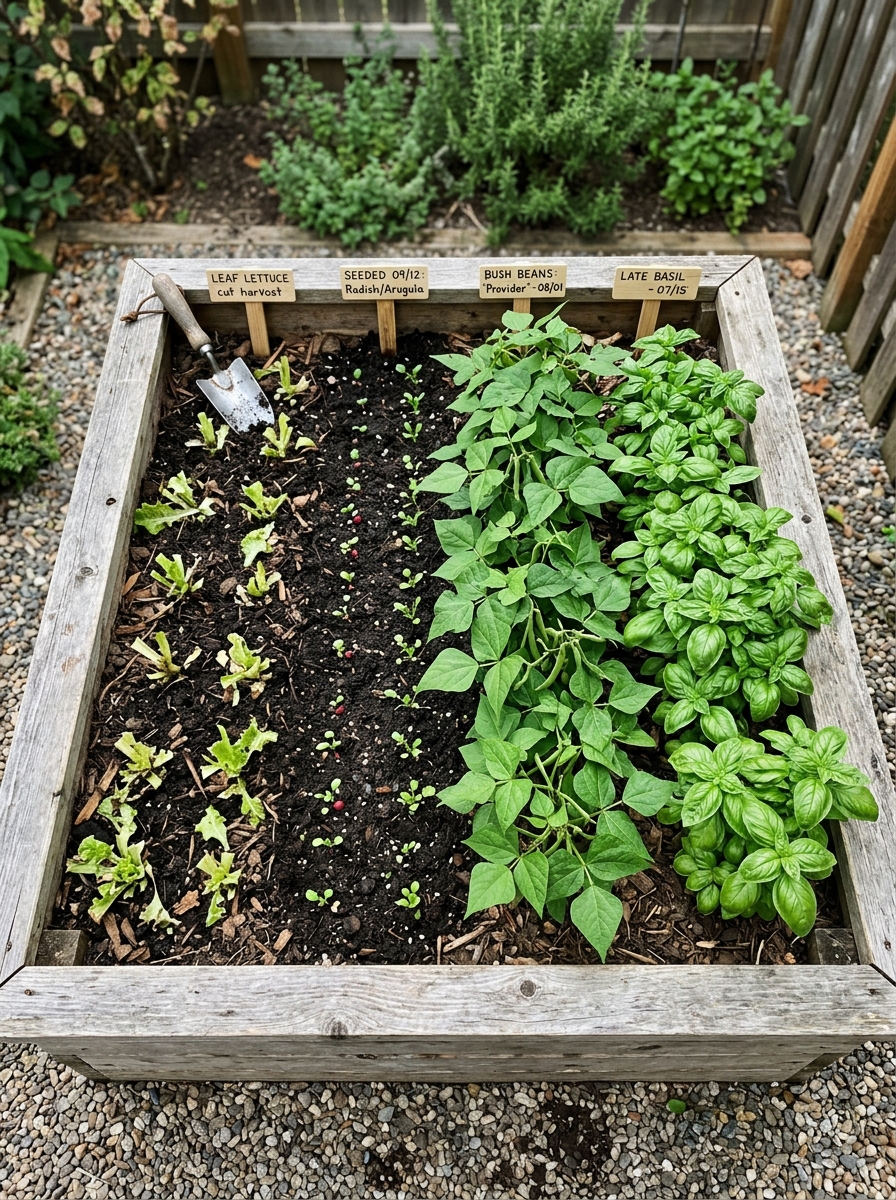
One of the easiest ways to grow more food in a small footprint is to stop thinking of a bed as a one-time spring project. A smart garden keeps rotating. That means one bed should be planned from the start for succession planting: cool-season greens first, then summer beans or basil, then a fall round of spinach or arugula. Same bed. Multiple harvest windows. Much better use of the space. Overhead, this kind of bed looks almost like a little calendar made of leaves and soil. One patch just cleared, one patch filling in, one patch ready to pick. It keeps the garden feeling active instead of peaking once and fading. More importantly, it keeps your harvest basket fuller across the whole season instead of all at once when you can barely keep up. You do need to stay a bit organized. Have seeds ready, know your rough timing, and refresh the soil surface with compost between rounds. But the payoff is huge. In a compact garden, empty soil is a missed opportunity. A succession bed helps you keep momentum going, and it teaches you to see every little open patch as the start of the next delicious thing.
Pro Tip: Keep a small container of finished compost beside the garden so you can top-dress cleared sections immediately before replanting the next crop.
Dedicate One Compact Bed to Cut-and-Come-Again Crops That Keep Producing
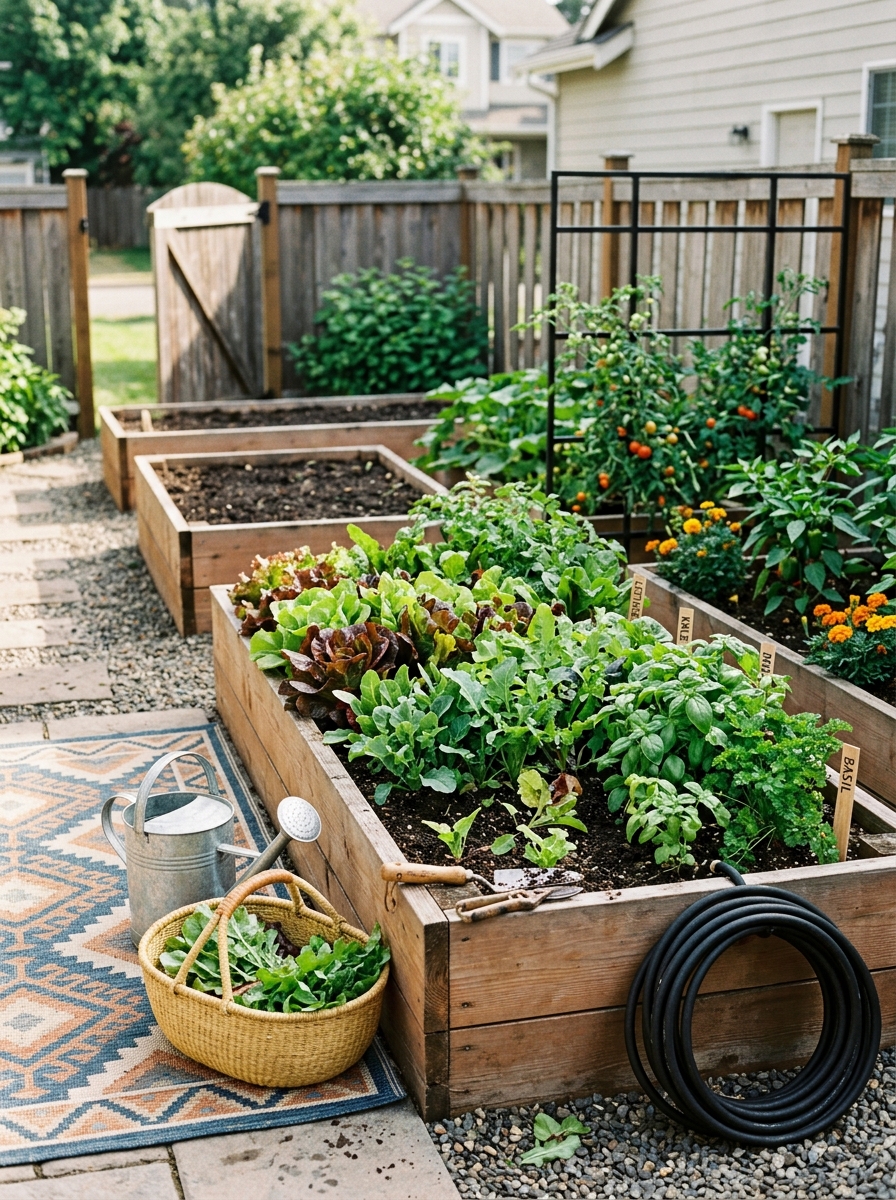
If you want a raised bed to earn its keep in a small garden, fill one with vegetables and herbs that bounce back after every harvest. I’m talking leaf lettuce, arugula, spinach in spring, baby kale, cilantro, parsley, scallions, and a tight row or two of basil once the weather warms. Instead of waiting for one big harvest, you snip a little here, pull a handful there, and the bed keeps giving. It’s the kind of setup that makes a tiny garden feel wildly generous. The beauty of this idea is how much food you can pull from a very small footprint without the stop-and-start rhythm of replanting whole sections all the time. Dense sowing works in your favor here, especially when the bed is rich and loose and easy to water. A bed like this also stays attractive longer than people expect. It always looks lush, slightly overflowing, and busy in the best way, with different leaf shapes and shades layered together like a little edible patchwork quilt. Honestly, it’s one of my favorite ways to make a compact garden feel full from edge to edge while still being practical enough for real weeknight cooking.
Pro Tip: Harvest outer leaves in the morning and leave the center crowns intact; a quick weekly feed with diluted fish emulsion helps leafy crops regrow fast.
Tuck In an Elevated Bed Where Bending Is Hard but Growing Space Still Matters
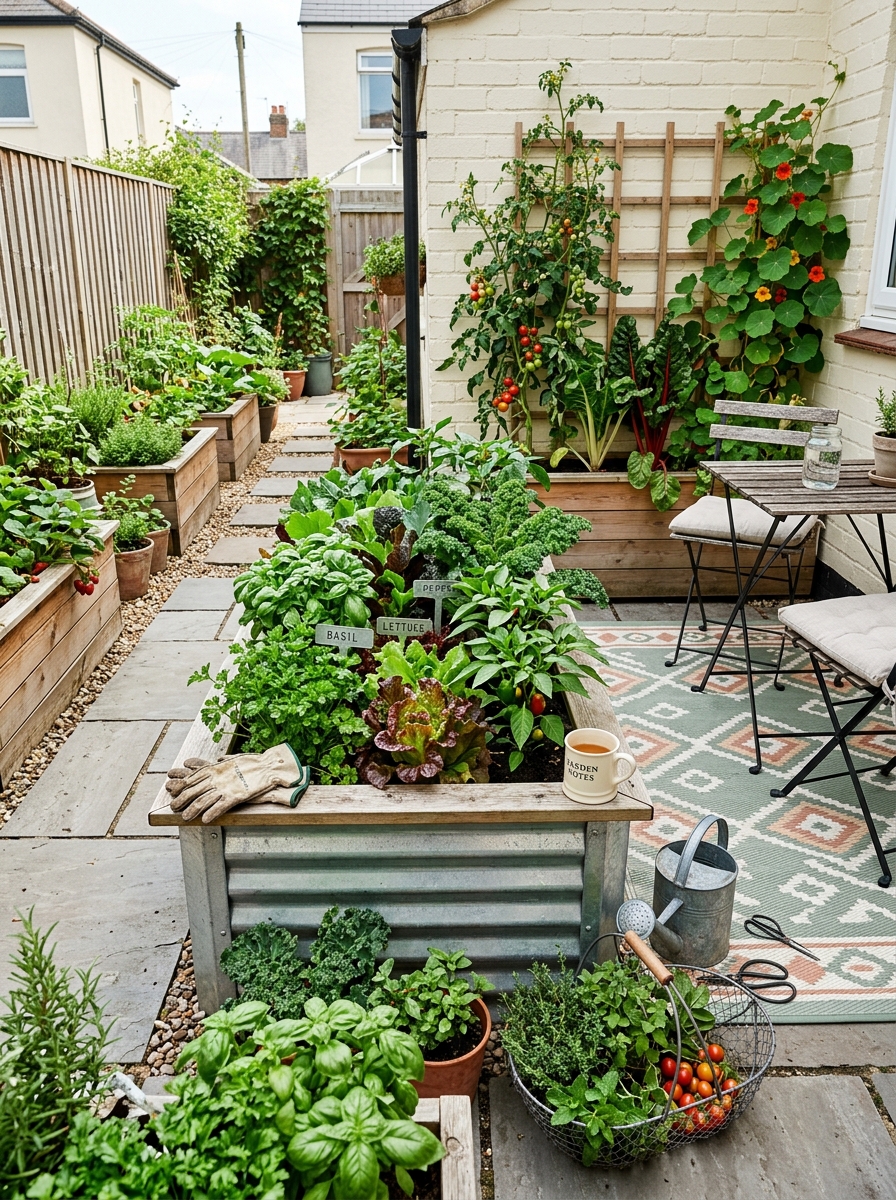
Not every raised bed idea is about squeezing in more square footage. Sometimes it’s about making the space you do have easier to use, which usually means you grow more because you actually keep up with it. An elevated planter bed on legs or a waist-high trough can turn a tight patio, courtyard, or sunny strip beside the house into a very productive little kitchen garden. It’s perfect for herbs, greens, dwarf peppers, and even a few compact bush beans. If your knees complain louder than they used to, this setup feels like a gift. I especially like elevated beds for homes where the main yard is tiny or mostly hardscape. You can slide one along a wall, near an outdoor table, or just outside the kitchen door and suddenly harvesting feels effortless. The soil also warms quickly, which helps in spring, and because the growing area is contained, it’s easier to keep things tidy and intentional. There’s something satisfying about walking out with scissors, clipping basil and lettuce at a comfortable height, and heading straight back inside. No crouching, no muddy knees, no dramatic groaning soundtrack from your back.
Pro Tip: Choose an elevated bed at least 10 to 12 inches deep so herbs and greens don’t dry out too fast, and line it with a simple reservoir tray if watering is a challenge.
Pair Fast Maturing Vegetables With Slow Crops to Fill Every Inch From Day One
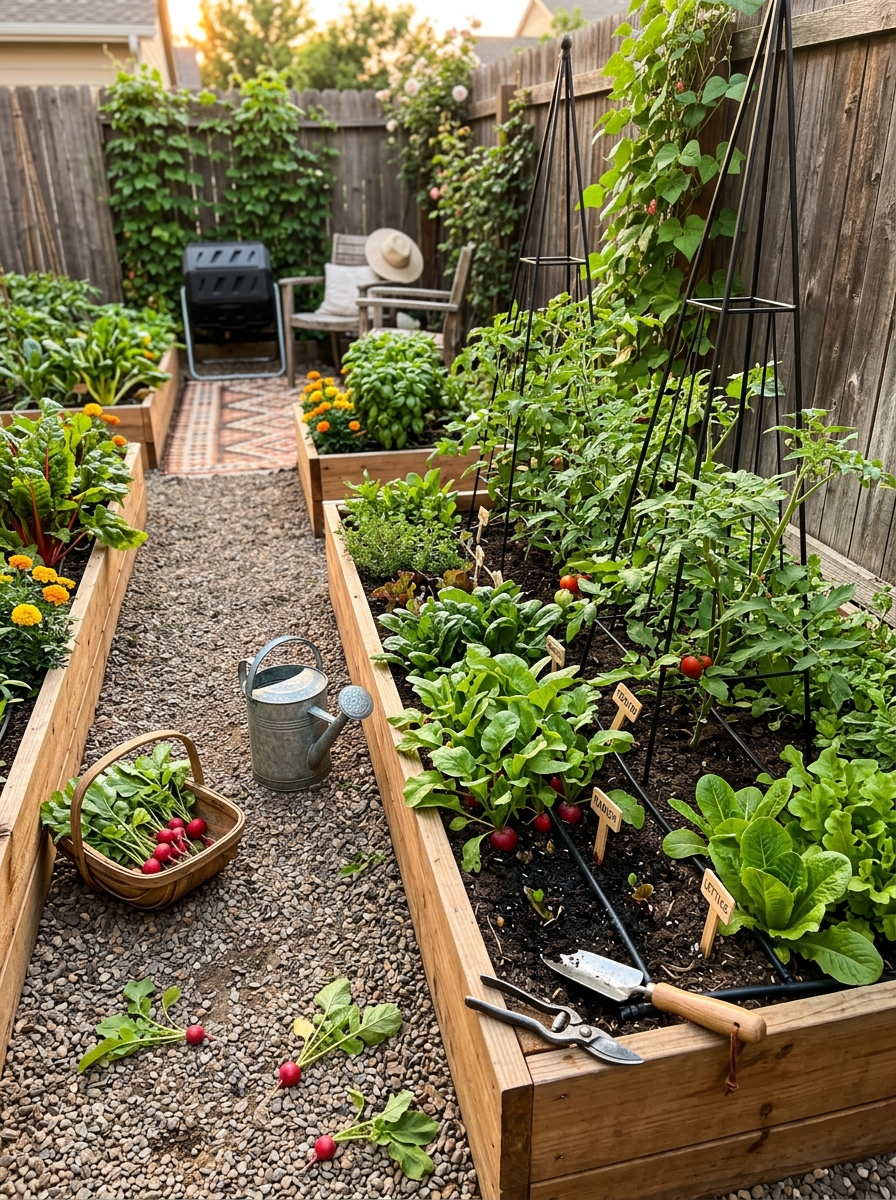
One of the smartest small-space tricks in a raised bed is pairing crops that grow at different speeds so the bed never has that awkward half-empty stage. Tuck quick growers like radishes, baby lettuce, spinach, or Asian greens around slower, larger plants such as tomatoes, peppers, broccoli, or cabbage. The fast crops are in and out before the bigger plants really spread, which means the same square footage pulls double duty without looking crowded for long. It’s a simple idea, but it makes a bed feel much more efficient. This is especially handy in neat little backyard gardens where every open patch of soil seems to shout, you could be growing something here. Early in the season, those quick crops act like productive placeholders, keeping weeds down and giving you a harvest while you wait for the main event. Then by the time the larger plants start casting shade and taking over, the early vegetables are mostly finished. It all feels very satisfying, like good timing in a small kitchen. A bed planted this way looks full, purposeful, and busy right from the start, which I think is half the fun when you’re trying to make a compact garden feel abundant.
Pro Tip: When transplanting tomatoes or peppers, leave a 6- to 8-inch ring open around each plant and direct-sow radishes or baby greens in the outer spaces for an early harvest before the canopy fills in.
Quick Guide
Quick Guide: Which raised bed style fits your yard? Small suburban backyard: Use a grid of 3×6 or 4×8 beds with gravel paths. Best if you want tidy structure and crop rotation. Narrow side yard: Choose long, slim beds along the fence. Best for herbs, peppers, trellised cucumbers, and easy access. Patio or courtyard: Try corner or L-shaped beds with compact vegetables. Best if you want edible planting without losing seating space. Beginner gardener: Start with 2 to 3 beds, drip irrigation, and one trellis. Keep it simple so maintenance stays fun. Heavy harvester: Add one deep root-crop bed and one succession bed. That combo quietly boosts output more than people expect.
Conclusion
The best small-space edible gardens are not the ones with the fanciest materials or the biggest budgets. They’re the ones that use space thoughtfully. Narrow beds you can actually reach, vertical supports that pull crops upward, herbs tucked into the edges, deep soil where roots need it, and a layout that makes harvesting feel easy on an ordinary Tuesday evening. That’s where the magic is. If you’ve been staring at your yard thinking it’s too small, too awkward, or too plain, raised beds are one of the most practical ways to make it productive and good-looking at the same time. You do not need to do all 13 ideas at once. Start with one solid layout choice, one bed near the kitchen, or one trellis that gives your plants somewhere to go besides all over the path. Gardens get better in layers. You build one bed, then another, then suddenly you’re outside picking basil with dirt on your knees and wondering why you waited so long. That’s usually how it starts. Which of these ideas are you trying first? Let me know in the comments.
Frequently Asked Questions
What are the best raised bed home garden ideas for a small backyard?
The most effective ideas are narrow beds you can reach from both sides, one strong vertical trellis bed, and a simple path layout that wastes very little space. Add a salad bed close to the house and you’ll get more daily use out of the garden too.
How deep should raised beds be for growing vegetables in limited space?
For most vegetables, 10 to 12 inches works well, especially for greens, herbs, and peppers. If you want carrots, beets, potatoes, or better moisture control in summer, go deeper at 12 to 18 inches.
How do you grow more food in less space with raised beds?
Use vertical growing, plant intensively, and avoid oversized paths or extra-wide beds. Succession planting also makes a huge difference because the same bed can produce multiple crops across one season.
What vegetables grow best in raised beds for beginners?
Lettuce, basil, parsley, kale, bush beans, peppers, and tomatoes are all friendly choices. They grow well in loose soil, give visible results, and make you feel successful fast, which honestly matters.